5 Financial Secrets of Eddie Murphy: Spending, Investments, and Net Worth
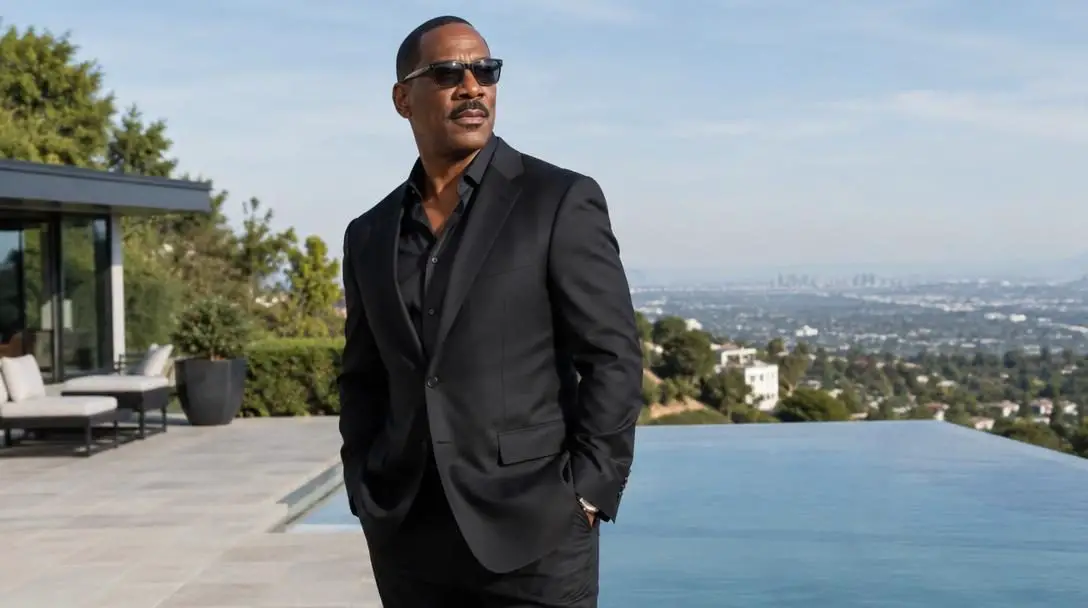
Eddie Murphy stands as one of the most prolific cultural forces in modern entertainment history. Propelled onto the national stage through stand-up comedy and legendary television appearances, he soon dominated global cinema with timeless blockbusters like Beverly Hills Cop, Coming to America, and The Nutty Professor. Achieving dizzying commercial heights in his early twenties, he entered an industry infamous for turning sudden multi-million-dollar windfalls into catastrophic bankruptcies, predatory management disputes, and lavish overspending.
Yet behind Murphy's animated screen presence and sharp humor lies an exceptionally sober, defensive financial mind. Rather than succumbing to the traps of Hollywood lifestyle inflation, Murphy quietly engineered a resilient financial foundation that has safeguarded an estimated net worth surpassing $200 million. By analyzing his personal expenditure patterns, venture capital bets, property stewardship, and absolute administrative oversight, everyday wealth builders can extract practical, enduring lessons on how to grow, shelter, and retain generational capital.
Key takeaways
- Maintaining an uncompromised net worth exceeding $200 million requires hands-on oversight and refusing to delegate signature authority.
- Calculated venture investments, such as a prescient equity stake in Netflix, can generate monumental asymmetric upside that eclipses conventional earnings.
- A non-extravagant baseline lifestyle paired with digital transaction tracking shields high earners from chronic cash leakage.
- Diversified revenue engines across multiple creative and commercial disciplines insulate long-term wealth from cyclical industry downturns.
The 5 core pillars of Eddie Murphy’s wealth strategy
Eddie Murphy’s lasting prosperity is not an accidental byproduct of massive box-office paydays. It is the direct consequence of five interdependent pillars designed to capture high upside while strictly curbing downside vulnerability.
High-value real estate holdings
Tangible property has consistently anchored Murphy's balance sheet, serving as both a private family sanctuary and a long-term capital preservation vehicle. Throughout his career, he has selectively acquired signature parcels in prime geographical locations across the United States. His portfolio has featured prominent properties in Granite Bay, California, a $15 million showcase estate in Beverly Hills, and a $5 million luxury compound on Long Island, alongside premier residential holdings across New Jersey, Atlanta, and Maui.
While prime physical real estate provides an intrinsic store of value, Murphy's transaction ledger also reveals the unavoidable volatility inherent in ultra-luxury property. His high-profile acquisition of an expansive mansion in Englewood, New Jersey, for $20 million culminated years later in a sale price of $12 million. By absorbing an $8 million decline on that single estate without compromising his broader solvency, Murphy proved the defensive strength of keeping real estate commitments proportional to overall net worth.
| Property holding | Location | Financial details | Portfolio role |
|---|---|---|---|
| Beverly Hills Estate | Beverly Hills, California | Acquired for $15 million | Flagship equity store and primary residence |
| Englewood Manor | Englewood, New Jersey | Purchased for $20 million; sold for $12 million | Long-term holding illustrating high-end market correction |
| Long Island Compound | Long Island, New York | Valued at $5 million | East Coast geographic footprint and asset security |
| Granite Bay Estate | Granite Bay, California | Expansive acreage | Tangible wealth preservation outside dense urban centers |
| Regional Residences | Maui, Hawaii and Atlanta, Georgia | Premier luxury acquisitions | Multi-market geographical real estate diversification |
Everyday spending discipline and frugality
Despite commanding eight-figure upfront fees per movie, Murphy has steadfastly rejected the identity of an extravagant spender. He deliberately shields his core capital from insidious lifestyle inflation, maintaining routine daily habits that mirror those of conventional households. Rather than accumulating fleets of transient supercars, he has routinely been seen driving a classic Mercedes-Benz SLS AMG for years, prioritizing craftsmanship and durability over constant automotive turnover.
Furthermore, Murphy actively avoids unnecessary markups on domestic commodities, regularly procuring everyday household staples from standard discount department stores. While he occasionally engages in high-end indulgences like chartered private aviation or the acquisition of rare timepieces, these expenses remain tightly tethered to a stable, modest daily expenditure ceiling.

Shrewd venture capital and high-growth investments
Murphy recognized early that conventional bank accounts and static bond yields cannot preserve purchasing power against institutional risk and inflation. Instead, he systematically routed a portion of his liquidity into private business ventures, early-stage technology startups, and consumer operations where he could capture asymmetric upside.
His most legendary investment maneuver unfolded in 2015 when he took a visionary 10% equity stake in the entertainment streaming giant Netflix. While financial commentators at the time questioned the speculative risk of pouring significant resources into digital platform infrastructure, that single investment position expanded into a massive valuation exceeding $400 million. Murphy supplemented this home-run position with equity stakes across varied emerging markets, including a commercial retail coffee chain, the entertainment production studio Picturestart, and Fizzit, a dedicated social platform tailored for stand-up comedians.
Comprehensive income stream diversification
Murphy never permitted his family's livelihood to depend upon the whims of a single studio contract or performance medium. From the outset of his career, he established parallel commercial engines that operate simultaneously. His earnings streams originate from theatrical lead acting, screenwriting, major studio producing, syndication residuals, global arena stand-up tours, studio musical recordings, and legendary voiceover franchises.
This multifaceted revenue architecture continues to pay substantial dividends in the modern streaming era. Releases such as Coming 2 America on Amazon Prime Video underscored his enduring worldwide reach, while his ongoing production deals ensure consistent backend participation. By retaining an active presence across live performing, voice acting, and digital distribution, an unexpected slowdown in one entertainment vertical leaves his broader financial apparatus entirely unbothered.
Structured family support and charitable giving
Generosity serves as an intentional pillar of Murphy's monetary life, executed with deliberate structure rather than spontaneous emotional spending. He has contributed millions of dollars to impactful philanthropic organizations, including sustained donations to the AIDS Foundation and the Martin Luther King Jr. Center for Nonviolent Social Change.
Equally central is his deployment of capital as an impermeable safety net for his personal circle. When his brother faced life-threatening health issues, Murphy intervened directly, underwriting the extensive costs of his cancer treatments. He consistently maintains dedicated emergency allocations to assist close relatives and trusted friends facing sudden medical, legal, or personal distress, viewing wealth as a tool for fundamental human security rather than mere vanity.
The philosophy of total oversight: protection, presence, and purpose
Beneath every tactical real estate purchase and venture capital bet sits a strict behavioral operating system: absolute personal accountability. The annals of entertainment history are littered with world-class performers who earned hundreds of millions of dollars only to discover their business managers, agents, or financial planners had embezzled their life savings through fraudulent shell companies and forged documents.

Murphy insulated himself from this fate by enforcing a permanent institutional rule across his administrative apparatus: nobody signs checks on his behalf. Every invoice, electronic transfer, wire, and outgoing payment requires his direct review and physical authorization. He intentionally tracks his accounts down to the exact dime, maintaining total awareness of his operational balances at all times.
"I know what's in my account down to the dime. Nobody signs checks for me."
To eliminate untracked monetary leakage, Murphy avoids carrying physical cash in daily life. Cash transactions are notoriously slippery and difficult to reconcile retroactively. By routing routine household expenditures through secure digital credit cards, he guarantees that every outgoing dollar produces an instantaneous, verifiable electronic paper trail that can be audited at a moment's notice.
Critically, this meticulous administrative hygiene has unlocked unmatched artistic autonomy. Because his wealth is fully sheltered and self-sustaining, Murphy never faces economic coercion to accept sub-par film scripts or grueling promotional tours merely to satisfy outstanding creditors. He retains the luxury to work exclusively on creative concepts that ignite his passion, frequently spending up to four continuous years refining a single screenplay until it meets his rigorous standards.
Actionable steps to implement Murphy’s financial playbook
Adopting the principles that preserved Murphy's fortunes does not require an eight-figure Hollywood contract. Everyday households can deploy the exact same defensive protocols to stabilize their financial trajectory:
- Conduct an uncompromising monthly net worth audit: On a fixed date each month, manually log every checking balance, brokerage account, retirement portfolio, mortgage principal, and consumer liability into a central ledger to guarantee total visibility over your capital.
- Retain exclusive signing and withdrawal authority: Never grant power of attorney or unmonitored transfer permissions to third-party bookkeepers, tax professionals, or advisory firms without requiring your personal, explicit approval on all major distributions.
- Eliminate untracked cash spending: Run family purchases through transparent digital payment tools or credit accounts paid in full each month, establishing a permanent, searchable audit trail that prevents everyday cash leakage.
- Cap lifestyle expenses following salary increases: When promotions, bonuses, or equity vesting events elevate your top-line earnings, maintain your baseline cost of living. Keep reliable vehicles longer and procure standard consumer necessities without paying brand-name premiums.
- Construct secondary income engines: Build revenue channels outside your primary employment by developing consulting services, rental properties, freelance creative assets, or dividend portfolios.
- Allocate controlled capital to asymmetric opportunities: Dedicate an intentional, controlled slice of investable savings to high-upside growth equities, startup initiatives, or private ventures in industries whose fundamental operations you thoroughly comprehend.
- Ring-fence a dedicated emergency family fund: Establish earmarked capital reserves specifically structured to shield loved ones during medical crises or sudden hardship, preventing unplanned emergencies from eating into your core assets.
Costly financial pitfalls to avoid
Scrutinizing Murphy's multi-decade trajectory highlights the recurring missteps that routinely destabilize otherwise high-earning professionals:
- Outsourcing financial vigilance entirely: Assuming that accredited financial advisors or accountants will protect your interests with the same ferocity as you do invites administrative neglect, unvetted fees, and potential embezzlement.
- Equating gross revenue with genuine net worth: High annual billings mean nothing if lifestyle burn consumes 100 percent of post-tax cash flows. True financial strength is measured exclusively by retained equity.
- Underestimating real estate holding costs: High-end residential property carries crushing overhead, including steep property taxes, continuous landscape and facility maintenance, and exposure to regional market corrections—exemplified by Murphy's $8 million loss on his Englewood estate.
- Over-relying on a single corporate employer: Anchoring an entire family's financial future to a solitary corporate paycheck leaves households exposed to sudden industry disruptions, mergers, and corporate restructuring.
- Accepting toxic professional compromises: Living without an adequate emergency cushion forces talented professionals into unfulfilling, exploitative employment arrangements simply to service monthly lifestyle debt.
Frequently asked questions
What is Eddie Murphy's current estimated net worth?
Eddie Murphy’s net worth is estimated to exceed $200 million, preserved through decades of disciplined budgeting, diversified commercial media streams, tangible real estate assets, and strategic venture investments.
How much did Eddie Murphy make from his investment in Netflix?
Murphy acquired a 10% equity stake in Netflix back in 2015. While considered speculative by traditional analysts at the time, that visionary venture grew to achieve a valuation surpassing $400 million.
Why does Eddie Murphy refuse to let financial managers sign checks?
Having observed numerous entertainment peers suffer catastrophic losses due to dishonest accountants and fraudulent business managers, Murphy insists that no third party holds signature authority over his money, personally authorizing every outgoing dollar.
Did Eddie Murphy lose money on his New Jersey mansion?
Yes. Murphy purchased an expansive estate in Englewood, New Jersey, for $20 million and later sold it for $12 million, realizing an $8 million loss that highlighted the volatility and high carrying costs of luxury real estate.
Why does Eddie Murphy avoid carrying physical cash?
Murphy avoids physical cash because untracked paper currency encourages untracked spending leaks. Using digital cards ensures every single expenditure creates an immediate, documented paper trail that can be reviewed in real time.
The bottom line
Eddie Murphy's enduring fortune proves that true financial longevity is not won through raw earning power alone, but through relentless defensive vigilance. By blending the growth potential of calculated venture bets with strict day-to-day spending moderation, extensive income diversification, and an uncompromising refusal to surrender administrative control, Murphy constructed an impenetrable financial fortress. Ultimately, the greatest reward of his wealth is not luxury possessions, but the complete freedom to control his own time, support those in need, and produce work strictly on his own terms.