5 Financial Secrets of Morgan Freeman: Spending, Investments, and Net Worth

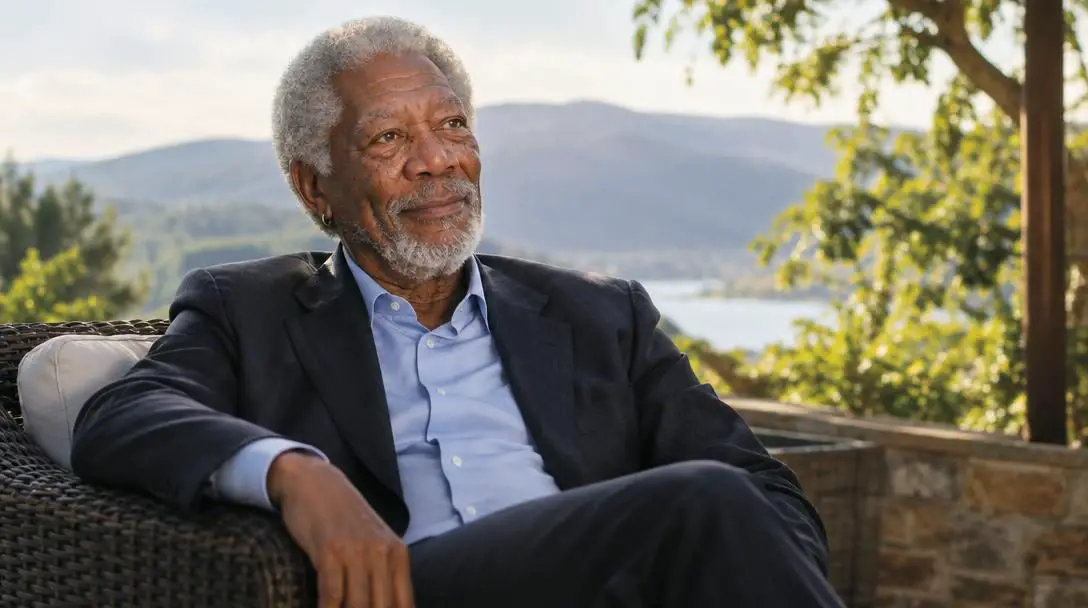
Morgan Freeman is celebrated across the globe as one of cinema's most commanding talents, bringing gravitas, depth, and an unmistakable voice to screens for more than five decades. Through iconic, award-winning performances in modern classics such as Million Dollar Baby and The Shawshank Redemption, Freeman has built an extraordinary artistic legacy alongside a rare reputation for calm, calculated financial stewardship. In an entertainment industry often characterized by volatile paydays, lavish lifestyles, and sudden bankruptcies, he stands out as an enduring model of stability and long-range discipline.
With an estimated net worth of $250 million, Freeman ranks among Hollywood's most financially secure figures. Yet his wealth is far from an accidental byproduct of studio salaries. It stems from a methodical, multi-decade approach to resource management that balances deliberate spending, multi-asset diversification, tax-advantaged retirement planning, and enduring community philanthropy. In his later years, this financial framework has granted Freeman total creative independence, freeing him to choose roles purely for their artistic merit rather than out of economic necessity.
Key takeaways
- Morgan Freeman has accumulated an estimated net worth of $250 million through disciplined spending and strategic wealth management.
- His investment strategy spreads risk across established public equities, cash-flowing real estate holdings, and fine art collections.
- Frugality and homebody habits protect Freeman's capital from the lifestyle inflation common among entertainment elites.
- Early and persistent use of formal retirement vehicles like 401(k) plans and IRAs provides long-term insulation from market shifts.
- Purposeful philanthropy, including disaster relief and educational endowments at his alma mater, anchors his generational legacy.
The Five Pillars of Morgan Freeman's Wealth Strategy
Freeman’s long-term financial security rests upon five foundational habits that bridge everyday choices with multi-decade objectives. Rather than seeking out speculative winds, his financial philosophy relies on steady, repeatable behaviors that protect capital from economic downturns.
Controlled Spending and Everyday Frugality
Despite commanding immense personal wealth, Morgan Freeman deliberately adheres to a modest, disciplined daily routine. Rather than chasing the ostentatious luxury often displayed across Hollywood, he carefully avoids unnecessary expenses and maintains a structured personal budget. Freeman has candidly described his low-key preferences, observing, "I’m not big on vacations or going out to restaurants. I’m more of a homebody."
By prioritizing a quiet home life over high-end nightlife, designer wardrobe collections, and fleets of exotic motor vehicles, Freeman prevents the lifestyle creep that drains even top-tier incomes. He views this restraint not as a sacrifice, but as an operational strength. Freeman credits his modest habits with keeping him grounded, healthy, and emotionally focused on his craft. Avoiding consumer distractions frees up significant investable capital year after year.
Multi-Asset Investment and Diversification
Earning top-dollar compensation is only the first step toward lasting wealth; safeguarding and compounding those earnings demands an intentional investment system. Freeman has avoided the common trap of concentrating his net worth in entertainment projects or a single volatile asset. Instead, he systematically diversifies his portfolio across public equities, income-producing real estate, and valuable fine art.
Within public equity markets, Freeman targets stable, cash-generative corporate giants such as Apple, Facebook, and Amazon. These enterprises possess proven track records of sustained profitability and market leadership. To counterbalance equity market volatility, his investments in physical real estate and rare art provide tangible stores of value that serve as strong hedges against economic inflation while delivering regular passive returns.

Accumulating a fortune is only half the battle; preserving and growing it demands a robust investment mechanism.
Philanthropy and Purposeful Giving
A core element of Freeman’s financial architecture is an active commitment to social responsibility. Rather than viewing wealth accumulation as a solitary exercise, he treats charitable contributions as an essential line item within his broader capital allocation. Freeman directs substantial financial backing toward community welfare, civic participation, and international humanitarian relief.
His documented giving demonstrates both civic engagement and global awareness. In 2008, Freeman donated $1 million to Barack Obama’s presidential campaign, backing his political priorities with decisive financial power. In the non-profit sector, he has provided continuous financial backing to organizations such as the Grenada Relief Fund, which aids hurricane-affected communities, and Artists for a New South Africa. By directing funds toward measurable social outcomes, Freeman integrates personal values directly into his balance sheet.
Deliberate Long-Term Financial Planning
Longevity in creative professions is notoriously unpredictable, and Freeman approached his career early on with a clear eye toward retirement security. Rather than expecting large studio contracts to continue indefinitely, he implemented structured retirement frameworks and disciplined wealth-preservation tools early in his journey. This forethought ensures that his lifestyle remains completely self-sustaining, whether or not he chooses to accept future acting roles.
Freeman’s approach combines tax-advantaged retirement accounts, including 401(k) accounts and IRAs, with alternative holdings that produce reliable passive income. His significant real estate holdings supply dependable rental revenue independent of box-office performance. This layered approach insulates his core wealth from broader market turbulence, granting him total occupational freedom to select acting roles purely on personal interest.
Preserving Net Worth and Building a Generational Legacy
With an estimated net worth of $250 million, Freeman evaluates money through the lens of generational endurance rather than short-term consumption. In his view, lasting wealth is not measured simply by accumulated cash reserves, but by creating permanent value that outlives the individual. This outlook directly shapes the tangible assets he acquires and the public institutions he supports.
Freeman targets durable, appreciating assets—such as carefully chosen real estate properties and rare art collections—that hold or build value over multi-decade time horizons. At the institutional level, he established an endowed scholarship fund at Jackson State University, his alma mater. This endowment provides lasting educational pathways for future scholars, ensuring that his financial impact remains productive, meaningful, and enduring for generations to come.
At a Glance: Freeman's Financial Architecture
The following table illustrates how Morgan Freeman organizes his primary financial pillars, the specific actions or assets associated with each, and their core economic functions.
| Financial Pillar | Primary Objective | Key Assets and Vehicles | Strategic Advantage |
|---|---|---|---|
| Controlled Spending | Preserve investable surplus | Modest living, home-cooked dining, restrained leisure expenses | Prevents lifestyle inflation; reduces baseline financial overhead |
| Asset Diversification | Shield capital from market swings | Equities (Apple, Amazon, Facebook), real estate, rare art | Balances growth equities with defensive, non-correlated assets |
| Targeted Giving | Support social and civic causes | $1M to 2008 Obama campaign, Grenada Relief Fund, Artists for a New South Africa | Transforms monetary wealth into meaningful, tangible social progress |
| Retirement Architecture | Ensure post-career self-sufficiency | 401(k) plans, traditional or Roth IRAs, passive rental properties | Provides predictable income streams independent of film roles |
| Generational Legacy | Create lasting educational impact | Jackson State University scholarship fund, appreciating real estate | Establishes generational impact that extends beyond individual lifetime |
The Financial Mechanics Behind Long-Term Wealth Accumulation
While Freeman operates with the resources of an elite actor, the underlying mechanics of his financial profile rely on standard economic principles available to any disciplined household. Understanding these mechanics explains why simple, consistent behaviors generate outsized results over a lifetime.
The first foundational mechanism is widening the savings gap between baseline consumption and total revenue. When an individual resists raising living expenditures alongside career promotions, they create a steady cash surplus. When directed into income-producing assets, this surplus unleashes compound growth, the mathematical phenomenon wherein capital returns generate their own subsequent returns over extended holding periods.
The second mechanism is uncorrelated asset allocation. Different asset categories react differently to macroeconomic shocks. Public equities depend on consumer demand and corporate earnings; real estate depends on geographic demand, rental occupancy, and prevailing interest rates; fine art serves as a physical, illiquid store of wealth. By distributing capital across these distinct sectors, Freeman ensures that a downturn in one market does not derail his broader financial security.
How to Apply Morgan Freeman's Wealth Principles
Translating Freeman’s financial approach into daily living does not require a Hollywood income. The same foundational strategy can be implemented systematically through clear, deliberate steps:
- Audit and cap recurring expenditures: Review your trailing three months of bank and card transactions. Identify discretionary leaks in dining and entertainment, set strict monthly ceilings, and commit to living comfortably below your monthly net income.
- Establish a mandatory purchasing delay: Implement a mandatory waiting period for non-essential purchases. Pausing gives emotional impulses time to cool, ensuring you only spend on items that provide genuine utility.
- Embrace home-centered living: Reduce reliance on restaurant meals and commercial entertainment by preparing meals at home, hosting gatherings, and exploring cost-efficient transit options to lower daily living expenses.
- Study alternative asset classes: Dedicate time to understanding how real estate, broad-market index funds, and alternative holdings behave across various economic cycles before deploying capital.
- Invest in profitable enterprises: Direct savings into established businesses with proven balance sheets, sustained competitive advantages, and long histories of profitability.
- Automate formal retirement vehicles: Set up automatic transfers to employer-sponsored 401(k) plans or individual retirement accounts (IRAs) every pay period, letting your nest egg compound in the background.
- Partner with vetted professionals: Work with an accredited, fee-only financial planner to structure tax-efficient distributions, insurance coverage, and asset protection.
- Establish targeted philanthropic goals: Select reputable charitable organizations whose missions align with your core values, verify their financial efficiency, and schedule regular donations.
- Formalize your legacy framework: Establish estate plans, designate beneficiaries, and explore educational savings options to ensure your resources support family and community well into the future.
Common Financial Mistakes to Avoid
Emulating Freeman's financial trajectory requires avoiding the classic pitfalls that quietly derail high and middle earners alike. Guard against these common balance-sheet hazards:
- Succumbing to lifestyle inflation: Automatically increasing housing, vehicle, and leisure budgets every time your earnings rise eliminates the cash surplus needed to build true wealth.
- Overconcentrating in a single asset: Placing an excessive share of net worth into one company stock, speculative trend, or individual property leaves you vulnerable to sudden sector declines.
- Postponing formal retirement savings: Delaying contributions to long-term accounts like 401(k)s or IRAs robs your portfolio of crucial early compounding years that cannot be reclaimed later.
- Draining cash on impulse leisure: Habitual spending on high-end dining, luxury travel, and designer accessories steadily strips away the capital required to purchase income-producing assets.
- Neglecting cash-flow stability: Relying entirely on theoretical portfolio appreciation without establishing predictable income streams can force asset sales during market downturns.
- Giving indiscriminately: Donating funds to unvetted or operationally inefficient charitable groups risks misallocating resources without creating the positive real-world impact you intended.
Frequently asked questions
What is Morgan Freeman's estimated net worth?
Morgan Freeman's net worth is estimated at $250 million, accumulated over more than five decades of acting, production work, disciplined personal spending, and diversified asset investing.
What stocks does Morgan Freeman own?
Freeman has directed equity capital into major blue-chip technology corporations with strong operational track records, including Apple, Amazon, and Facebook.
Why is Morgan Freeman known for frugality?
Despite his significant wealth, Freeman describes himself as a homebody who avoids lavish vacations, frequent restaurant dining, luxury vehicles, and designer clothing, keeping his everyday baseline costs modest.
What major charitable donations has Morgan Freeman made?
Freeman contributed $1 million to Barack Obama's 2008 presidential campaign, has backed non-profit organizations like the Grenada Relief Fund and Artists for a New South Africa, and established a scholarship fund at Jackson State University.
How does Morgan Freeman protect his fortune against inflation?
Freeman hedges against economic shifts and currency depreciation by maintaining investments across public equities, income-producing real estate properties, and high-value art pieces alongside traditional retirement tools.
The bottom line
Morgan Freeman’s financial longevity illustrates that sustained wealth is rarely an accident of raw earning power. While his iconic film roles earned him remarkable paychecks, his disciplined daily frugality, strategic diversification into real estate and blue-chip equities, and proactive retirement planning are what turned those earnings into an enduring $250 million fortune. By living below his means, protecting his capital against localized market swings, and anchoring his money in lasting educational philanthropy, Freeman built complete creative and financial freedom. Adopting his patient, methodical mindset can help any earner build a resilient, purpose-driven financial foundation that endures for decades.