5 Forge of Empires Tips Even Experienced Players Don’t Know
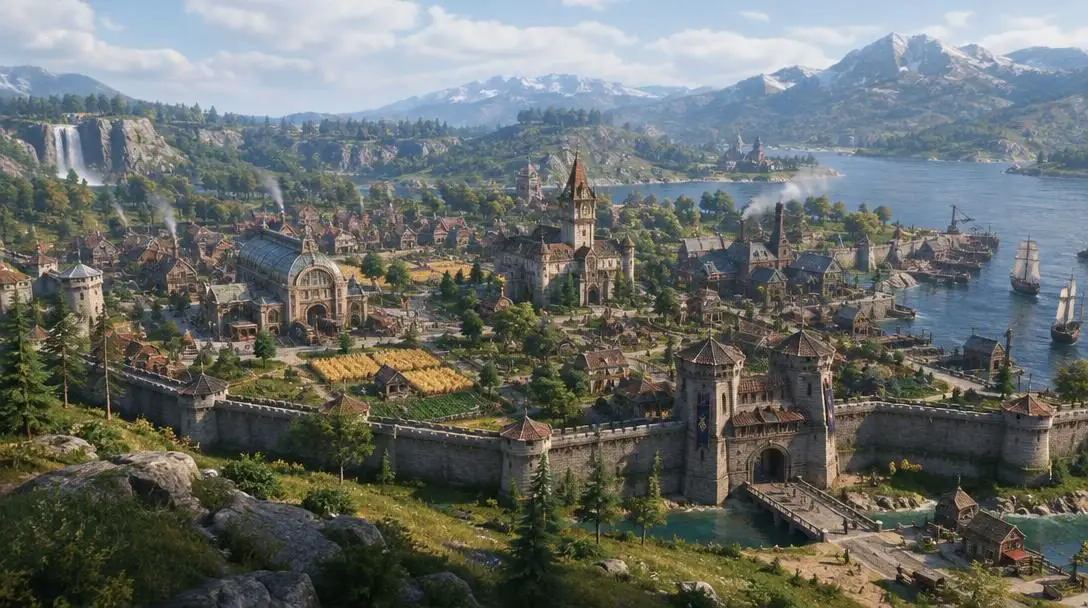
Mastering Forge of Empires is an exercise in long-term municipal planning, resource management, and strategic patience. Players take charge of a modest settlement in the Stone Age and shepherd it across human history into distant, futuristic eras. While unlocking new technologies and expanding borders is immediately satisfying, the vast scope of the game creates a steep learning curve. Without a disciplined approach, many aspiring mayors find their progression ground to an unexpected halt.
The secret to continuous imperial expansion lies in understanding how city layouts, cooperative guild mechanics, and technological investments intertwine. Rather than rushing blindly through the timeline, top players construct self-sustaining economies fueled by steady production of coins, supplies, goods, and Forge Points. By adopting five core strategies that even seasoned veterans often overlook, you can streamline your operations, protect your resources, and build a settlement capable of dominating any era.
Key takeaways
- Aligning with an active, top-tier guild provides essential Town Hall income boosts, expedition rewards, and late-era trading networks.
- Trading Forge Points to obtain high-impact Great Buildings early provides passive benefits that redefine your economy.
- Unlocking the Bronze Age technology of Cultivation is essential for securing powerhouse special event buildings.
- Premium diamonds should be preserved exclusively for city expansions rather than temporary or renewable commodities.
- Halting technological progression across eras allows your military strength, goods reserves, and Great Buildings to mature properly.
The Five Foundational Strategies for Advanced Players
Progressing through Forge of Empires demands more than simply gathering taxes and constructing barracks. Your long-term success is determined by how efficiently you leverage social infrastructure, prioritize architectural wonders, and allocate the game's tightest constraints: space and premium currency. Implementing these five core tips will protect your empire from the structural bottlenecks that trap inexperienced players.
Enlist in an Active, Top-Tier Guild
Many players treat guilds as casual social clubs, but belonging to an organized, high-ranking guild is one of the most powerful economic engines in the game. When you secure a roster spot in an established, top-tier guild—especially one focused outside of GvG conflicts—the municipal perks flow straight into your capital. An advanced guild improves the daily income boost generated by your Town Hall, putting more currency directly into your treasury every twenty-four hours.
Beyond passive revenue, active guilds maintain structured contribution circles that allow members to level their Great Buildings at speeds impossible for solo players. Collaborative members pool resources to help each other secure difficult blueprints and trade late-era goods down to lower-era players without predatory trade ratios. Furthermore, an ambitious guild coordinates efforts to unlock the lucrative rewards offered across Level 3 and Level 4 of Guild Expeditions, ensuring your empire receives a steady influx of high-tier resources, units, and premium items.
Target High-Yield Great Buildings Early
Great Buildings represent the pinnacle of architectural achievement in Forge of Empires. Unlike standard production facilities or residential blocks, these monumental structures cannot be unlocked simply through tech tree research, nor are they upgraded with common coins and supplies. Instead, placing a Great Building requires assembling a complete nine-piece blueprint set and gathering specific goods from that building's designated era. Once constructed, leveling these monuments requires dedicated investments of Forge Points.
A frequent dilemma among players is whether to spend Forge Points purchasing goods packages from higher-era players to construct late-stage wonders early. In practice, trading Forge Points for essential construction goods is one of the best investments you can make. The passive boosts and daily collections these structures yield will quickly repay the upfront cost. Prioritizing monuments like The Arc, The Innovation Tower, and the Temple of Relics fundamentally transforms how your empire operates, generating sustained population, expedition rewards, and contribution returns.

Using Forge Points to acquire the goods needed for elite Great Buildings is a worthwhile trade because their passive boosts fundamentally reshape city management.
Unlock Cultivation Early to Dominate Seasonal Events
Seasonal and special in-game events offer the most potent infrastructure available in the game, routinely outperforming standard Great Buildings in overall productivity. However, newer settlements are entirely locked out of these dynamic questlines until they research Cultivation, a key technology situated in the Bronze Age research tree. Prioritizing this specific technological node as soon as your settlement begins ensures you never miss a limited-time opportunity.
Event questlines reward players with extraordinary standalone and upgradeable assets, including structures like the Antiques Dealer, Oceanic Terminal, and Friends Tavern. These unique venues provide an extraordinary density of resources, combat statistics, and utility per square tile. Because event buildings deliver an exceptional balance of coins, supplies, goods, and Forge Points, clearing the Cultivation threshold early gives you immediate access to upgrades that outshine the standard production buildings of your era.
Dedicate Premium Diamonds Exclusively to Land Expansions
The single most constrained resource in Forge of Empires is not gold, materials, or even Forge Points—it is the physical grid space of your city. Expansions dictate your empire's ceiling, limiting how many military barracks, cultural installations, and sprawling monuments you can maintain at one time. While the game's premium currency, diamonds, can be used to rush timers, buy Forge Points, or purchase missing blueprints, spending diamonds on consumable items is a critical strategic blunder.
Diamonds should be guarded with absolute discipline and channeled entirely into premium land expansions. Blueprints drop through regular gameplay, goods accumulate through production and trade, and Forge Points generate naturally every single hour. Premium land, however, provides a permanent, compounding advantage that can never be made obsolete by future game updates. Increasing your city's footprint allows you to deploy more event structures and Great Buildings, creating an empire that scales effortlessly over time.
Halt Era Rushing to Build Economic Reserves
One of the most destructive habits among expanding empires is racing through the historical research tree as quickly as research points allow. Advancing into a new age fundamentally shifts the game's difficulty curve. Every time you cross into a new era, your daily challenges, neighborhood combatants, and Guild Expedition encounters become substantially tougher, scaling directly to your newest unlocked era.
If you cross into a new age without adequate military damage bonuses or a deep stockpile of previous-era goods, your settlement will struggle to complete basic tasks. Elite players adopt a deliberate pacing strategy: they park their city in an era for months at a time. During this pause, they focus on leveling core Great Buildings, accumulating massive reserves of trade goods, and refining their city grid. Only after your infrastructure comfortably overpowers your current era should you invest the resources to step forward into the next chapter of human history.

Comparing Essential Great Buildings
Selecting the right Great Building depends heavily on whether your empire emphasizes military domination, rapid technological advancement, or expedition profits. The following comparison highlights the primary operational roles and strategic focus of the game's most prominent monuments.
| Great Building | Primary Strategic Focus | Key Economic or Tactical Benefit | Recommended Player Archetype |
|---|---|---|---|
| The Arc | Guild support and investment returns | Increases contribution rewards from other players' Great Buildings; yields daily goods | Investors and active guild members |
| The Innovation Tower | Urban planning and tech acceleration | Generates massive population capacity alongside daily Forge Points | Mayors facing residential space shortages |
| The Temple of Relics | Expedition exploration | Boosts the probability of finding hidden relics in Guild Expeditions | Expedition specialists (Levels 3 and 4) |
| Rain Forest Project | Blueprint acquisition | Increases the chance of uncovering blueprints during support actions | Collectors targeting late-era structures |
| Statue of Zeus | Military combat | Provides a direct offensive fighting boost to attacking armies | Aggressive conquerors and battle tacticians |
| Castel del Monte | Hybrid combat and research | Supplies an offensive fighting boost paired with daily Forge Point generation | Balanced military and economic builders |
A Step-by-Step Blueprint for City Development
Executing an efficient expansion plan prevents wasted resources and ensures your settlement transitions smoothly from a primitive village to an advanced metropolis. Follow this structured roadmap to optimize your progression pipeline.
- Unlock Early Technologies: Concentrate your earliest Forge Points directly on the research tree until you unlock Cultivation in the Bronze Age, making your settlement eligible for all seasonal questlines and special events.
- Locate an Active Guild: Open the global rankings list and filter for top-ranking, non-GvG guilds. Review each organization's entry rules and activity standards, submitting applications to groups that offer active building swap threads.
- Select Your Great Buildings: Assess your settlement's immediate deficiencies. If you require combat strength, construct the Statue of Zeus or Castel del Monte. If blueprints are your main bottleneck, pursue the Rain Forest Project before saving for The Arc.
- Organize for Limited-Time Events: Review in-game announcements regarding seasonal calendars. Clear your daily schedule during active questlines to ensure you complete every stage and secure high-value event buildings.
- Reserve Diamonds for Land: Accumulate your earned and purchased diamonds, spending them solely within the building menu to acquire permanent diamond expansions to widen your construction perimeter.
- Establish a Sustainable Rhythm: Hold your position within your current era until your Great Buildings reach self-sustaining levels and your goods warehouses are fully stocked, relying on steady daily collections rather than rapid tech unlocks.
Costly Pitfalls That Derail Experienced Mayors
Even players who have spent months building their cities frequently fall into counterproductive routines that sap their momentum. Avoiding these widespread errors will keep your development trajectory pointed upward.
- Purchasing Consumables with Premium Currency: Using diamonds on Forge Points, premium residential housing, missing trade goods, or blueprints is a severe waste. These items replenish over time; city space does not.
- Lingering in Inactive Guilds: Staying within a dormant or solitary guild deprives you of critical benefits, including Town Hall gold bonuses, high-era goods exchanges, and the collective investment power required to level high-cost monuments.
- Prematurely Advancing Through Eras: Tech-rushing inflates the difficulty of Guild Expeditions, combat arenas, and daily challenges. Moving forward without adequate stockpiles or combat ratings creates an avoidable economic stall.
- Skipping High-Tier Guild Expeditions: Forfeiting Level 3 and Level 4 expedition sessions means losing access to valuable relic rewards, premium military units, and supplementary trade goods, especially if your empire supports a Temple of Relics.
- Failing to Complete Event Questlines: Because modern event buildings offer far denser economic, military, and Forge Point payouts than standard era architecture, abandoning seasonal quests leaves tremendous city efficiency on the table.
Frequently asked questions
Why is The Arc considered the most important Great Building in the game?
The Arc fundamentally alters player economics by drastically increasing the contribution rewards earned when investing in other players' Great Buildings, while also generating high volumes of guild goods every twenty-four hours to finance guild initiatives.
When is the right time to advance to the next historical era?
You should only age up after you have leveled your foundational Great Buildings, amassed a deep stockpile of your current era's goods, and built sufficient military attack bonuses to easily defeat Guild Expedition encounters at your current tier.
How do special event buildings compare to traditional Great Buildings?
Special buildings acquired through events—such as the Friends Tavern, Antiques Dealer, and Oceanic Terminal—often provide superior reward density per square tile, combining population, happiness, coins, goods, and Forge Points into a single compact footprint.
What is the single best way to spend diamonds in Forge of Empires?
Diamonds should always be reserved exclusively for purchasing permanent land expansions. Spending them on commodities that regenerate over time, such as blueprints, goods, or Forge Points, permanently limits your city's ultimate land size.
Why must players unlock Cultivation as quickly as possible?
Cultivation is the Bronze Age technology that unlocks access to limited-time seasonal events. Reaching this milestone ensures that your settlement can participate in event questlines and begin earning elite rewards immediately.
The Bottom Line
Achieving sustained greatness in Forge of Empires requires shifting your mindset from rapid expansion to meticulous optimization. The mayors who build the most resilient empires are not those who sprint across eras, but those who construct a sound economic base, value every square tile of urban space, and lean into the collaborative power of a dedicated guild.
Take time to audit your current settlement today. Clear out outdated structures, streamline your road networks to eliminate dead space, and trade Forge Points to acquire the blueprints and goods for transformative monuments like The Arc. By holding your era steady and dedicating your premium diamonds strictly to land expansions, you will forge a settlement capable of weathering any historical epoch.