D&D: A Brief Introduction To Dungeons And Dragons
Dungeons and Dragons stands as the world's most recognizable tabletop role-playing game and a towering entertainment franchise in modern popular culture. Once viewed as an obscure pastime confined to suburban basements, the game has undergone a sweeping cultural renaissance. Celebrities, online streaming networks, and live public demonstrations have brought tabletop storytelling into mainstream view, inviting an entirely new generation of curious adventurers to gather around the table.
Yet, because the game rejects traditional gaming conventions, taking your first steps into the hobby can occasionally feel daunting. There are polyhedral dice to interpret, extensive rulebooks to browse, and no predetermined finish line to cross. Instead of competing to knock opponents out of the game, participants engage in a cooperative conversation guided by imagination and collective choice. Understanding the fundamental architecture of play allows any beginner to step up to the table with confidence.
Key takeaways
- Dungeons and Dragons is a collaborative storytelling experience without traditional winners or losers.
- The Dungeon Master acts as the narrative architect, referee, and environmental guide, while players control individual heroes.
- Outcomes of uncertain actions are determined by dice rolls that create both triumphant successes and dramatic, comedic failures.
- Players shape unique adventurers by selecting from 12 distinct character classes and tailoring essential ability scores.
From tactical wargames to modern collaborative storytelling
The origins of Dungeons and Dragons trace back to the 1970s, when creators Gary Gygax and Dave Arneson revolutionized the hobby game market. Prior to publishing their fantasy system, both designers were active participants in traditional military wargames. These classic tabletop games typically simulated massive historical battles, requiring players to maneuver miniature regiments and vast armies across scale terrain. Gygax and Arneson reimagined that dynamic by shifting the camera from the battlefield down to the individual soldier.
Rather than managing entire divisions, players assumed control of a single persona exploring perilous ruins, treacherous wilderness environments, and subterranean dungeons. This shift laid the groundwork for modern role-playing games. Over time, the game evolved from a grassroots hobby into a global cultural phenomenon published by Wizards of the Coast.
The modern era has expanded accessibility through digital media. Online video broadcasts and high-profile streaming series have showcased seasoned groups embarking on grand adventures, illustrating the emotional depth, theatrical role-play, and spontaneous humor inherent to the medium. What once required strict geographic proximity and physical rulebooks can now be shared dynamically across international audiences, demonstrating how social and compelling collaborative storytelling can be.
Instead of competing against one another to cross a finish line, the game revolves entirely around collective storytelling.
How the tabletop conversation works
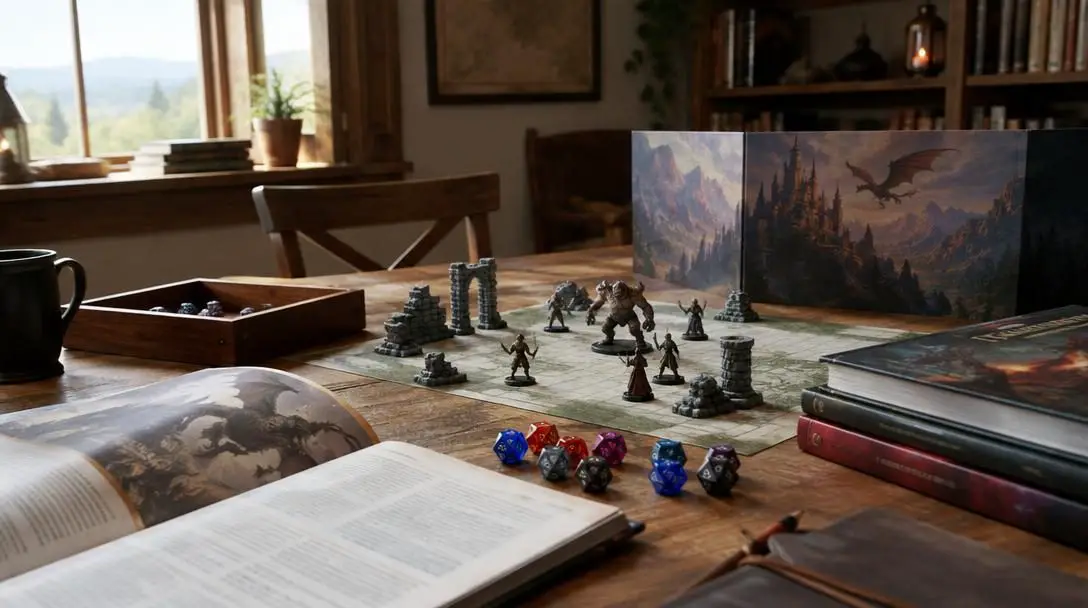
At its core, a session of Dungeons and Dragons operates as an interactive conversation governed by structured mechanics and shared imagination. The game unfolds in a shared setting known as a campaign, which may span a single afternoon or run continuously across months or years. While games can be set in predesigned worlds created by Wizards of the Coast, many groups play on custom-made maps crafted by independent creators on platforms like Etsy. Regardless of visual format, the narrative is driven by two distinct participant roles.
The Dungeon Master (commonly abbreviated as the DM) serves as the world's narrator, environmental architect, and impartial referee. The DM describes the surroundings, presents situational hazards, and portrays all non-player characters (NPCs) that populate the towns, wilds, and dungeons. Crucially, the DM is not the players' adversary; their responsibility is to present fair challenges and make the narrative flow logically.
The players, meanwhile, control their personal characters within the DM's world. When the DM presents a scenario—such as an ancient stone doorway covered in glowing runes or a bustling tavern in a foreign city—the players determine their heroes' actions through spoken dialogue. Whenever a player attempts an action with a questionable outcome, the game turns to the dice.
Essential tools for your first session
Getting started does not require an overwhelming collection of gear. A handful of fundamental materials will establish your table and keep your early games structured.
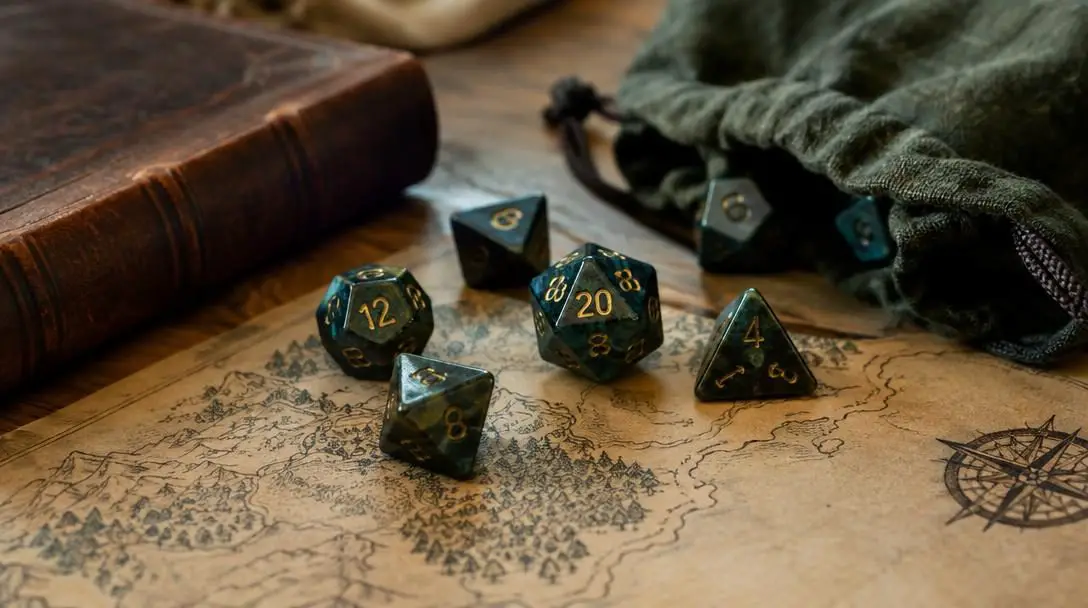
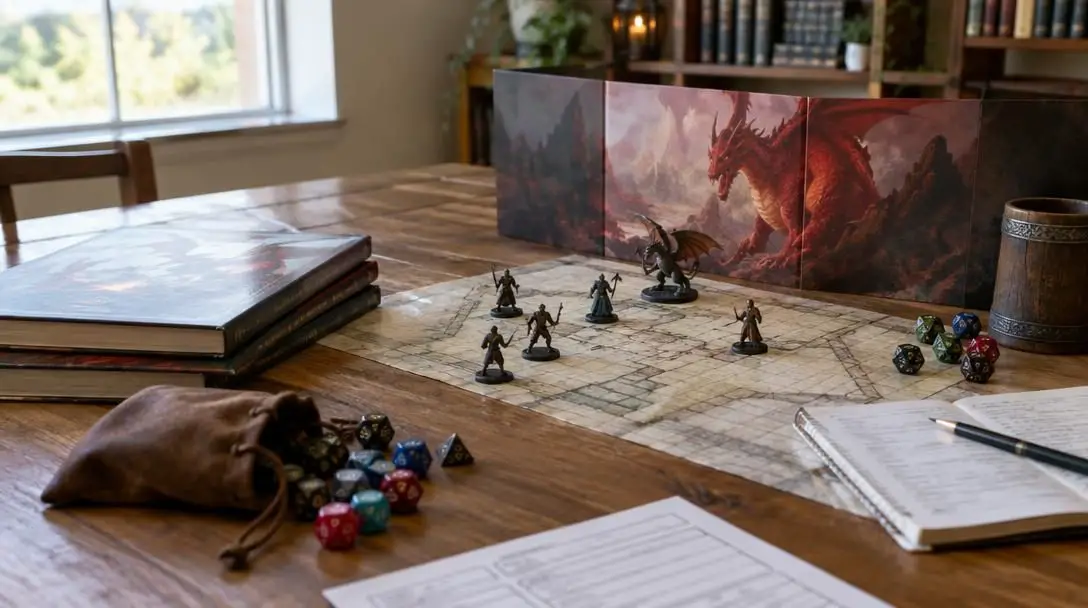
- Polyhedral dice: The game's primary mechanical engine. Dice determine whether an attempted feat succeeds or fails. Rolling a natural 20 can bring legendary triumphs, such as slaying a mythical dragon with a single strike, while rolling a 1 can cause humbling missteps, such as tripping over your own boots and knocking yourself unconscious.
- The character sheet: A standardized document that records your hero's numerical statistics, equipment, personality traits, and progression metrics.
- Battle maps and visual boards: While purely narrative groups can run theater-of-the-mind games, physical maps help players maintain positional awareness during tactical encounters.
- Official sourcebooks: Printed manuals provide the baseline frameworks for spells, environments, and monsters.
| Resource | Primary Audience | Core Role at the Table |
|---|---|---|
| The Player's Handbook | All participants | Covers character generation, class mechanics, gear, spells, and general play rules. |
| The Dungeon Master's Guide | The narrator / referee | Provides world-building advice, adventure frameworks, and adjudication guidance. |
| The Monster Manual | The Dungeon Master | Catalogs statistics, behavior, and lore for creatures, monsters, and non-player adversaries. |
The 12 character classes
During character creation, players assign scores to core attributes including strength, dexterity, intelligence, wisdom, and charisma. Your most crucial thematic choice, however, is your character class. The game offers 12 core classes, each offering unique strengths and play styles.
Barbarian
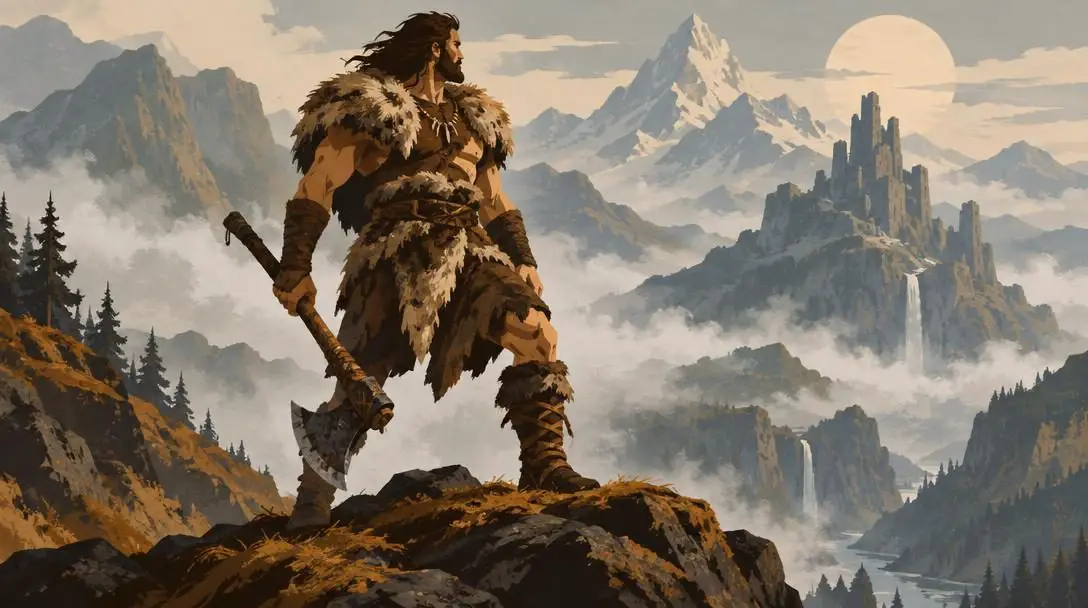
- Archetype: Primal warrior
- Combat Role: Frontline combatant relying on resilience and rage
The Barbarian is a fierce, physical combatant driven by raw instinct and primal power. Rather than relying on rigid military discipline or heavy plate armor, Barbarians absorb punishing blows through natural endurance, channeling ferocious battle fury to overpower enemies in melee encounters.
Bard
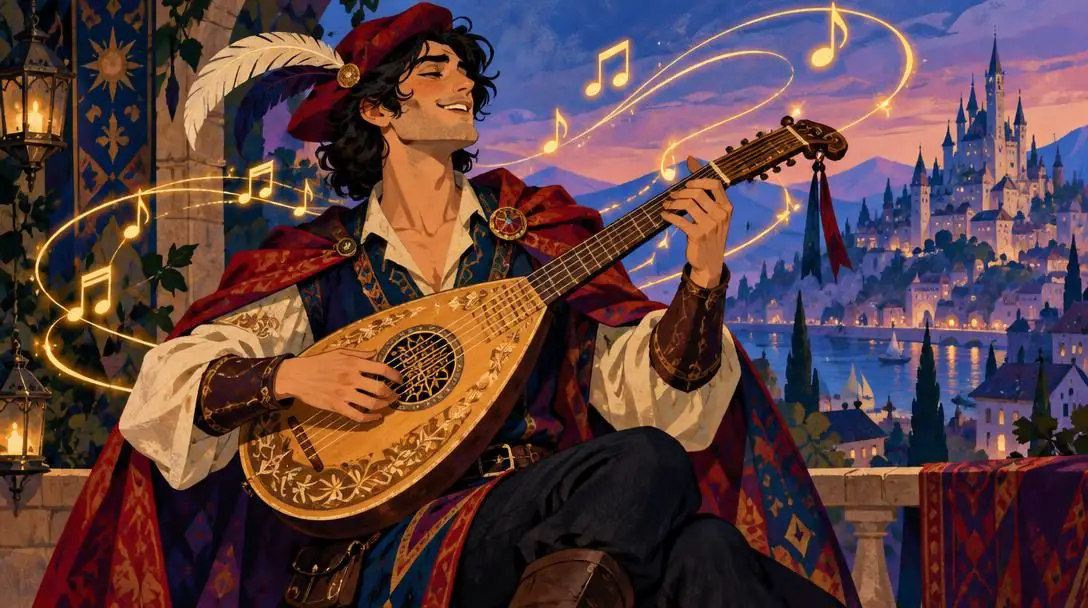
- Archetype: Master of performance and charm
- Combat Role: Versatile support and social manipulator
The Bard uses artistic expression, wit, and charisma to influence the battlefield. By weaving magical power into music, poetry, or spoken prose, Bards provide essential inspiration to their companions, manipulate social interactions, and disorient hostile targets.
Cleric
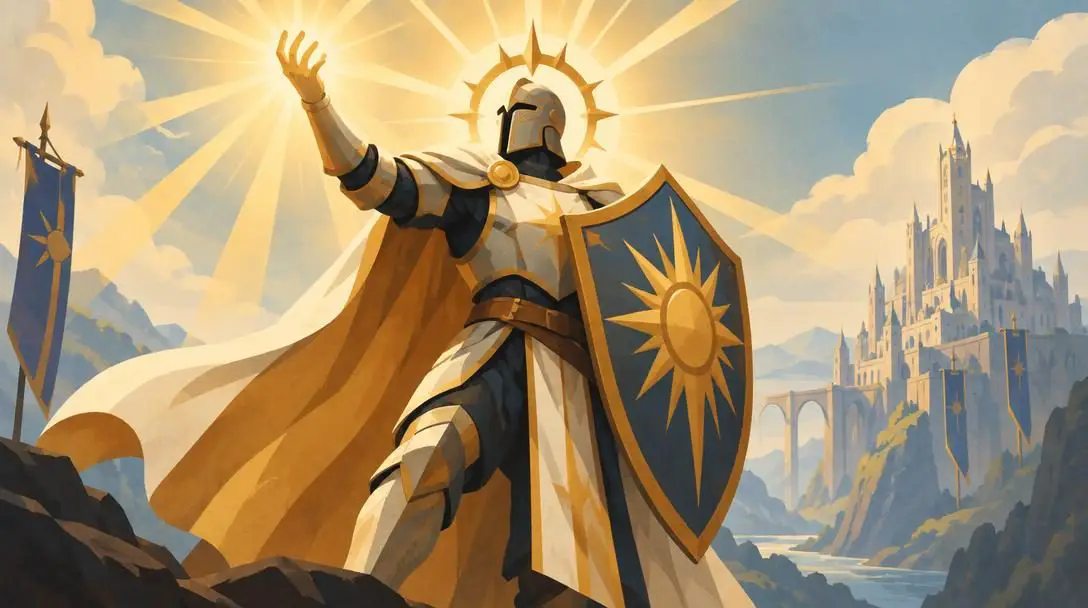
- Archetype: Divine champion
- Combat Role: Healer, supportive buffer, and offensive holy striker
The Cleric acts as an emissary of divine forces, channeling sacred energy to protect allies and punish transgressors. Equipped to wield capable armor and weapons, Clerics balance healing spells with offensive magic designed to purge the land of unnatural threats.
Druid
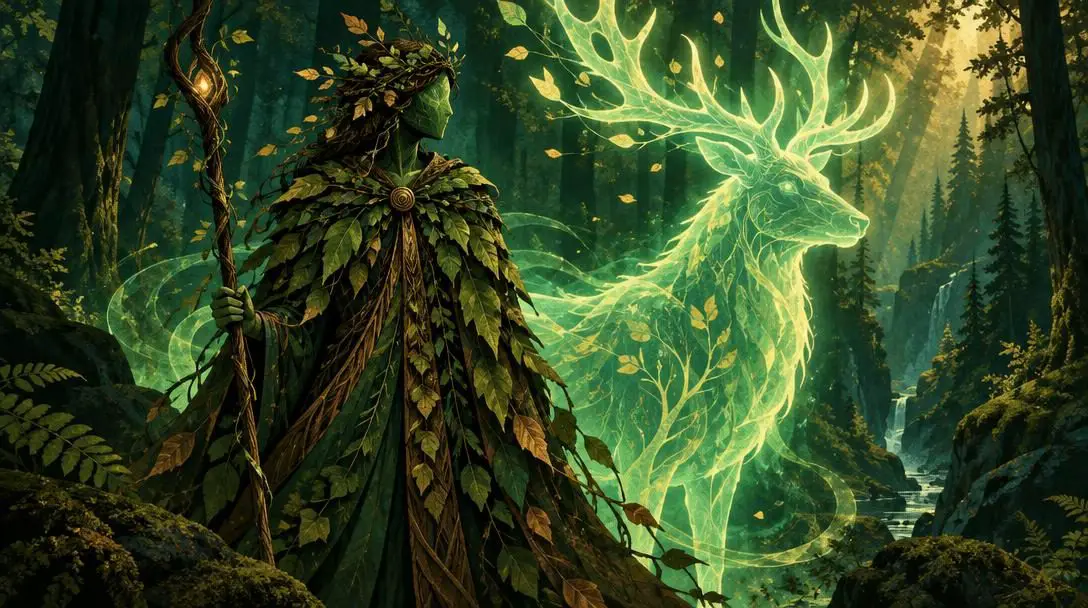
- Archetype: Warden of nature
- Combat Role: Nature caster and shapeshifting scout
The Druid embodies the raw power of the natural wilderness. Calling upon elemental forces, Druids manipulate terrain, summon natural phenomena, and assume wild beast shapes to track enemies, absorb damage, or traverse difficult landscapes.
Fighter
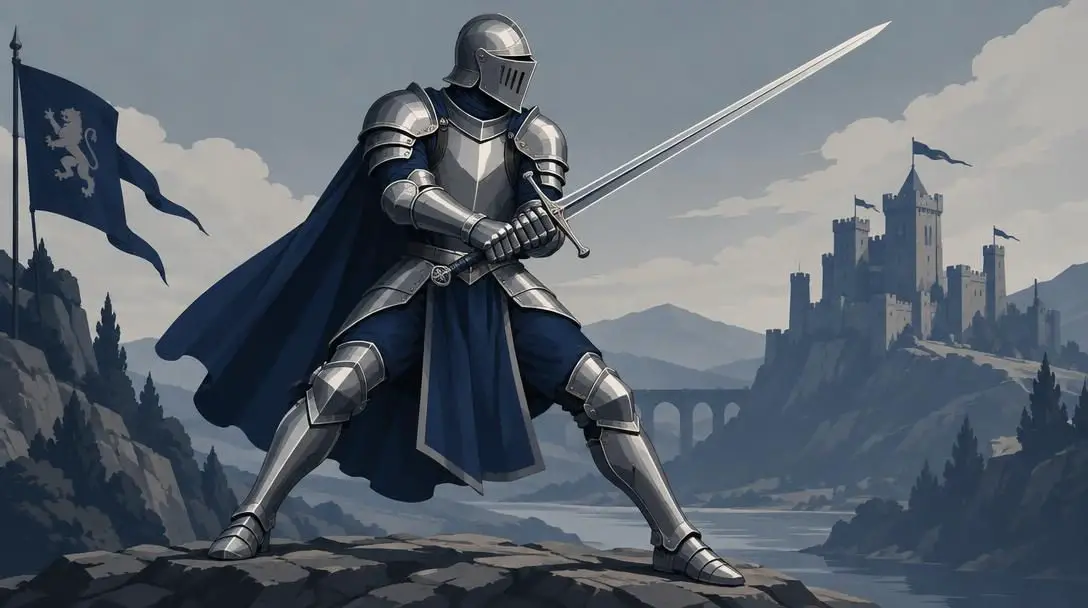
- Archetype: Master of weapons and tactics
- Combat Role: Adaptable, frontline martial expert
The Fighter represents the pinnacle of martial discipline and weapon mastery. Fighters rely heavily on strength and dexterity to excel in direct physical engagements, displaying unmatched versatility with diverse arsenals, armor types, and tactical maneuvers.
Monk
- Archetype: Disciplined martial artist
- Combat Role: High-mobility physical skirmisher
The Monk harnesses internal spiritual energy to perform swift physical feats. Moving rapidly across the battlefield without heavy armor, Monks deploy coordinated unarmed strikes, evade incoming missile fire, and disrupt enemy positions through disciplined physical control.
Paladin
- Archetype: Holy knight bound by sacred oath
- Combat Role: Armored combatant blending martial skill with divine magic
The Paladin is an armored champion bound to a dedicated sacred oath. Combining rigorous martial combat training with supportive divine spellcasting, Paladins stand as defensive bulwarks who protect comrades and channel holy power through their weapon strikes.
Ranger
- Archetype: Frontier tracker and hunter
- Combat Role: Wilderness scout, marksman, and ambusher
The Ranger is a survivalist specialized in navigating remote frontiers. Seasoned in tracking beasts and surviving unforgiving environmental conditions, Rangers utilize stealth, precise ranged weaponry, and practical fieldcraft to neutralize threats from a distance.
Rogue
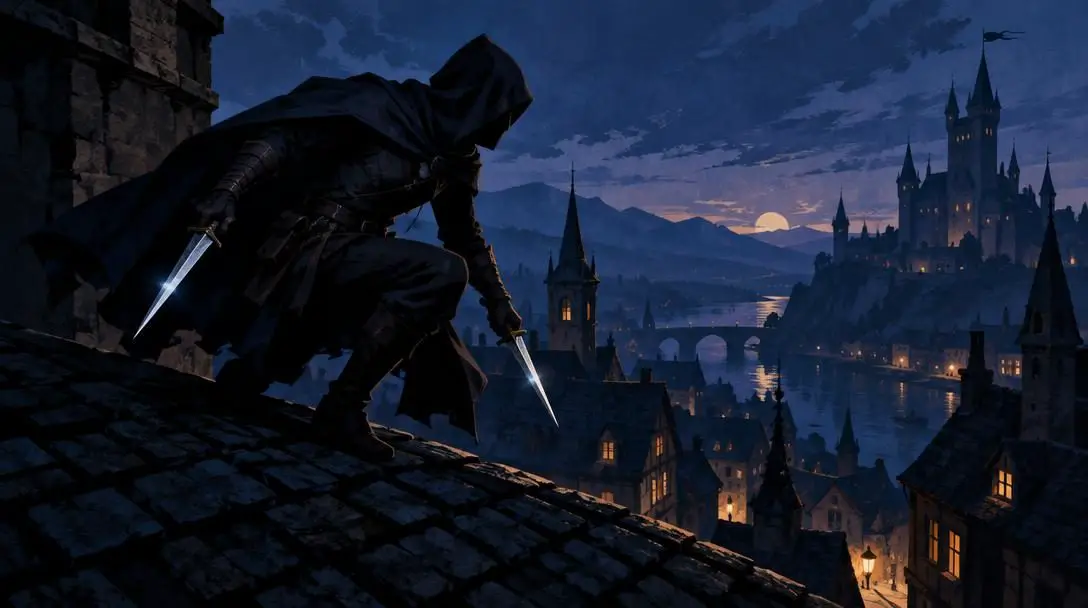
- Archetype: Stealth specialist
- Combat Role: Infiltrator, scout, and precision striker
The Rogue solves complex challenges through agility, precision, and stealth. Whether picking secure locks, disarming ancient mechanical traps, or slipping behind enemy lines to land a critical surprise strike, Rogues excel in high-stakes problem-solving.
Sorcerer
- Archetype: Innate spellcaster
- Combat Role: Spontaneous magical damage dealer
The Sorcerer wields arcane energy not through study, but through birthright. Carrying ancient magical power directly in their bloodline, Sorcerers manipulate magic instinctively, reshaping spells on the fly to produce dramatic offensive and defensive effects.
Warlock
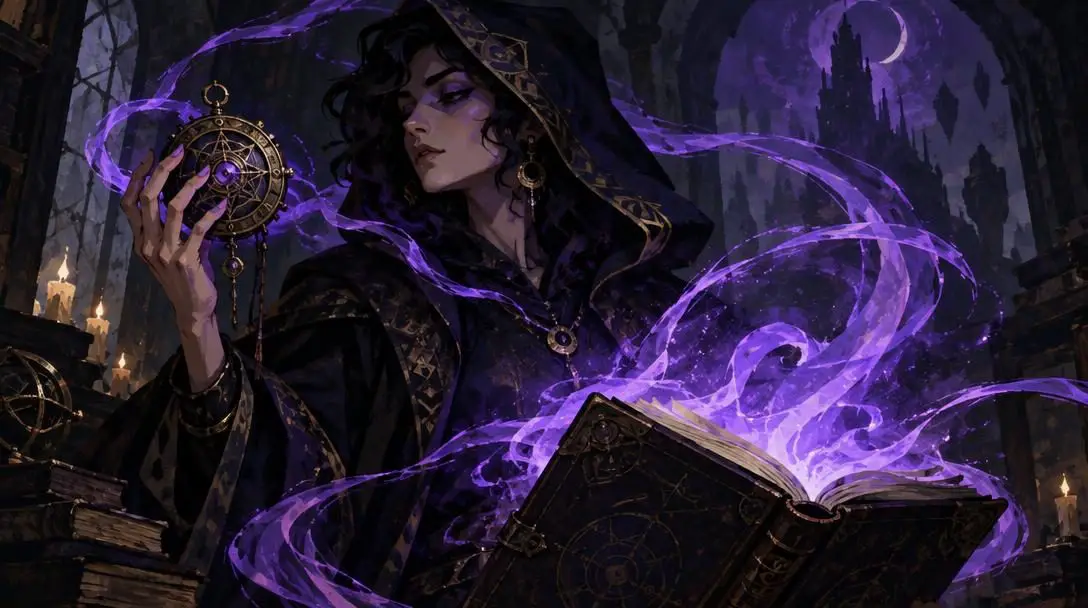
- Archetype: Bound arcane practitioner
- Combat Role: Specialized spellcaster powered by otherworldly patrons
The Warlock gains access to esoteric secrets by forging a binding pact with an enigmatic entity. Warlocks rely heavily on intelligence and wisdom to master arcane mysteries, perceive subtle nuances in their surroundings, and command unique supernatural gifts.
Wizard

- Archetype: Scholarly student of the arcane
- Combat Role: Broad utility and devastating tactical spellcaster
The Wizard is a dedicated researcher who views magic as a meticulous academic discipline. Through continuous study, recording spells in specialized grimoires, and analyzing the foundational laws of the cosmos, Wizards master a vast repertoire of versatile spells.
How to set up your first game session
Organizing a debut session is straightforward if your group breaks preparation into clear logistical phases. Follow these steps to get your first campaign underway smoothly.
- Designate table roles: Select one member of your group to serve as the Dungeon Master and have the remaining participants play as individual adventurers.
- Choose an introductory adventure: Beginners should start with an official starter pack published by Wizards of the Coast, which contains pre-scripted scenarios that introduce game rules incrementally.
- Assemble character sheets: Direct each player to pick one of the 12 character classes, allocate attribute scores across strength, dexterity, intelligence, wisdom, and charisma, and record their starting equipment.
- Prepare the gaming area: Set up your table with your chosen battle map or custom board, provide writing utensils, and distribute designated polyhedral dice sets to every seat.
- Start with a modest encounter: Begin the session with an accessible scene—such as arriving at an unfamiliar village inn or solving a simple mechanical puzzle—so players can practice rolling dice without high stakes.
Common beginner mistakes to avoid
Novice groups often encounter recurring pitfalls that can slow down gameplay or create unintended friction. Keeping these common errors in mind will ensure a smoother gaming experience.
- Approaching sessions competitively: Dungeons and Dragons has no final winner or loser. Players who treat the Dungeon Master or their fellow party members as opponents undermine the collaborative spirit of the game.
- Misallocating core ability scores: Neglecting class-defining statistics—such as failing to allocate strength or dexterity to a Fighter, or disregarding mental attributes on a Warlock—can make standard skill checks needlessly frustrating.
- Fearing low dice rolls: While rolling a 20 feels thrilling, rolling a 1 is equally valuable for the narrative. Unlucky rolls introduce tension, unexpected complications, and memorable comedic relief.
- Overcomplicating initial equipment: Beginners do not need sprawling collections of custom terrain, miniature figures, or memorized sourcebooks. Starting small prevents cognitive fatigue.
- Debating the referee's rulings mid-game: The Dungeon Master acts as the final judge on situational mechanics. Halting the game for lengthy manual checks disrupts the storytelling rhythm for everyone.
Frequently asked questions
Do I need to memorize all the rulebooks before playing?
No. Players only need to understand the basic mechanics on their character sheets and follow the instructions of the Dungeon Master, who will prompt you whenever a specific dice roll is required.
How many people do you need to play Dungeons and Dragons?
A typical group consists of one Dungeon Master and three to five players, though games can be run with as few as two participants or scaled up for larger tables.
What is the difference between a natural 1 and a natural 20?
A natural 20 represents an automatic, triumphant success often capable of turning the tide of an entire encounter, whereas a natural 1 indicates a critical failure that introduces narrative mishaps or comedic setbacks.
Can our group use custom boards and miniatures?
Yes. While official published materials are widely available, many gaming groups use custom-crafted wooden boards, printed battle grids, and artistic terrain purchased from independent makers on platforms like Etsy.
Is Dungeons and Dragons a competitive game?
No. The game is entirely cooperative. The players work together to navigate environmental challenges and narrative plots orchestrated by the Dungeon Master rather than attempting to defeat one another.
The bottom line
Dungeons and Dragons thrives because it transforms social gatherings into memorable, shared adventures. Free from rigid game boards and traditional victory conditions, the hobby offers unlimited room for personal creativity, strategic problem-solving, and lighthearted camaraderie. As your group grows more comfortable with baseline mechanics, you can expand your library with supplemental rulebooks, design intricate homebrew settings, or watch expert streaming groups to discover varied storytelling techniques. With a set of polyhedral dice, an open imagination, and a willing group of friends, your journey is just beginning.