5 Games Similar to Qwirkle
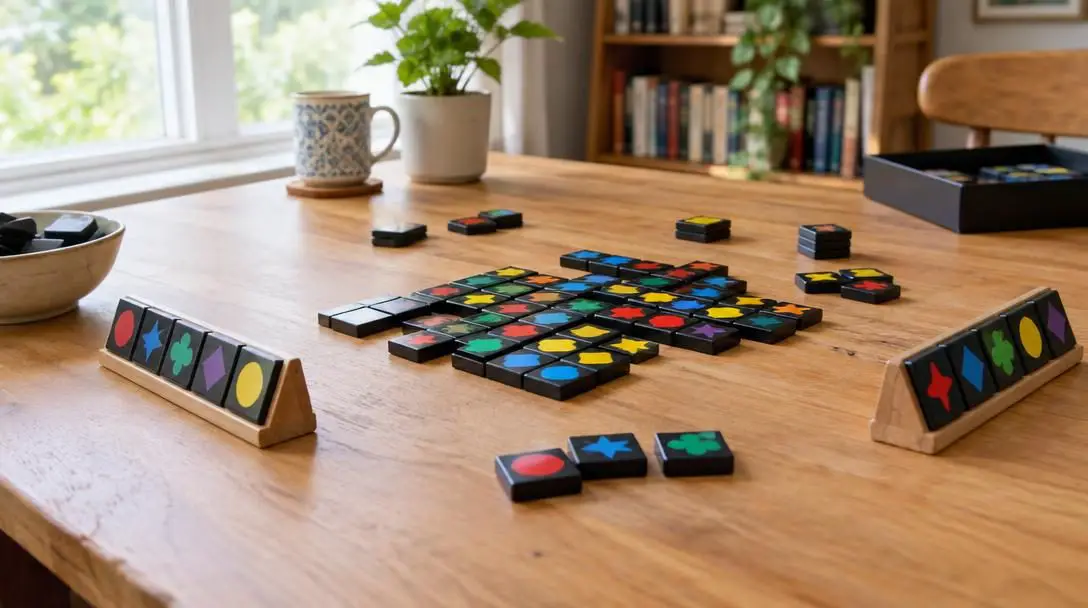
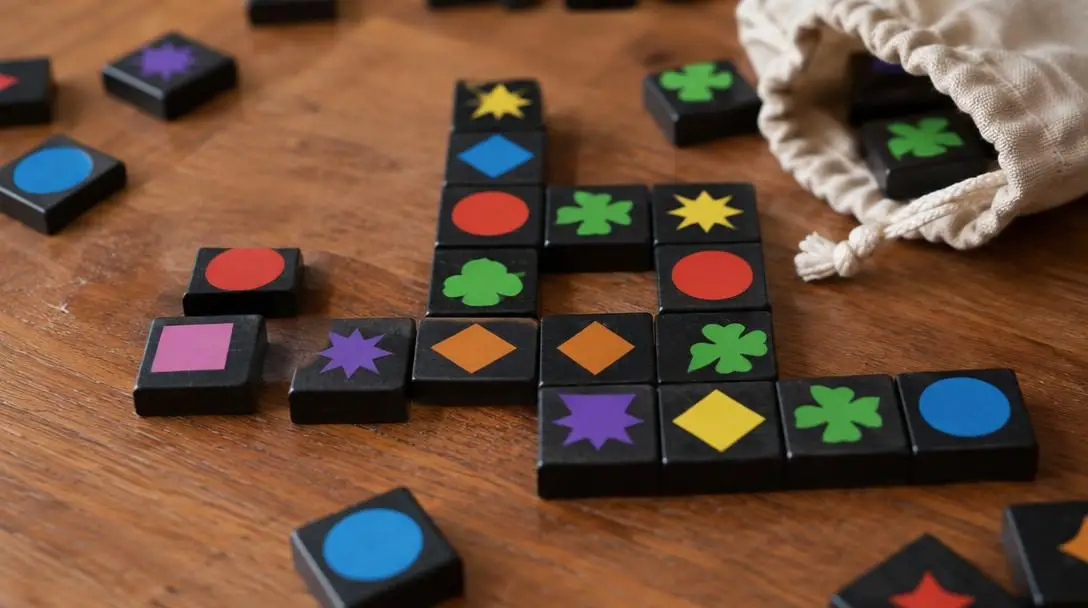
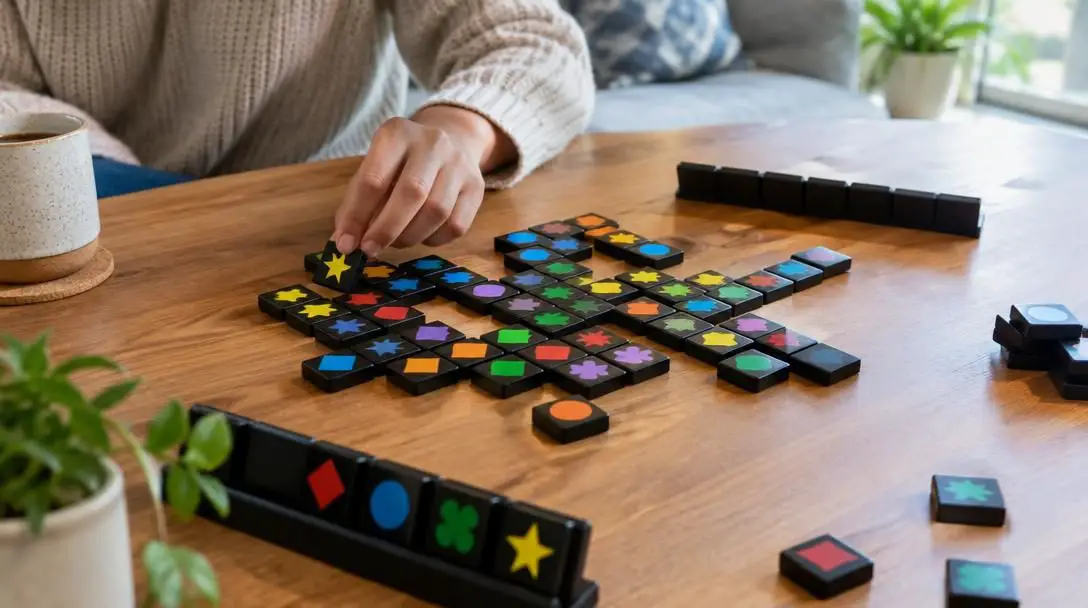
Ever since its debut in 2006, Qwirkle has maintained a commanding presence in the modern tabletop landscape. By merging accessible tile-laying mechanics with visual pattern matching, it bridges the gap between casual family get-togethers and analytical abstract gaming. Players draw sturdy wooden tiles from a velvet bag, seeking to construct intersecting lines of matching colors and shapes across an open, ever-expanding grid. The satisfaction of triggering a scoring cascade—or orchestrating a six-tile line to score a game-changing bonus—stems from a mix of tactile feedback and spatial problem-solving.
For enthusiasts who have logged dozens of sessions of Qwirkle, exploring comparable titles is a natural next step. The wider world of tabletop gaming features a variety of experiences built around tile placement, spatial logic, and component manipulation. Whether you appreciate the direct defensive maneuvering of bug-themed tiles, the geometric turf wars of colorful polyominoes, or the satisfying numerical reorganization of rummy-style sets, the modern board game space provides rich alternatives that challenge spatial reasoning in completely new ways.
Key takeaways
- Abstract tile games offer varied spatial puzzles, ranging from open-ended boardless play to tightly constrained grid combat.
- Hive delivers a deep two-player tactical duel that plays without a fixed board, using insect movement rules to trap opposing pieces.
- Blokus and Ingenious emphasize spatial geometry and color balancing, forcing players to manage multiple pathways simultaneously.
- Azul and Rummikub highlight drafting and pool manipulation, rewarding players who can anticipate opponent moves and reorganize shared sets.
At a glance: comparing Qwirkle alternatives
While every game featured here relies on physical tiles, their formats, player requirements, and underlying mechanics differ considerably. The table below outlines how each title compares across core structural attributes.
| Game | Designer / Origin | Release Year | Player Count | Average Play Time |
|---|---|---|---|---|
| Hive | John Yianni (Gen42 Games) | 2001 | 2 players | Around 20 minutes |
| Blokus | Bernard Tavitian (Sekkoïa / Mattel) | 2000 | 2 to 4 players | 20 to 30 minutes |
| Rummikub | Ephraim Hertzano | Early 1970s (U.S.) | 2 to 4 players | Varies by group |
| Azul | Michael Kiesling | 2017 | 2 to 4 players | Multiple rounds |
| Ingenious | Reiner Knizia (Kosmos) | 2004 | 1 to 4 players | Varies by group |
Abstract strategy titles strip away cumbersome setups to celebrate visual logic, tactical foresight, and spatial reasoning.
Five standout tile games for Qwirkle enthusiasts
Each of the following five board games channels the spirit of tile manipulation while presenting a distinct twist on scoring, movement, or component drafting. Depending on whether your game group prefers high player interaction or individual optimization, these titles serve as natural successors to Qwirkle.
Hive
- Designer: John Yianni
- Publisher: Gen42 Games
- Release Year: 2001
- Player Count: 2 players
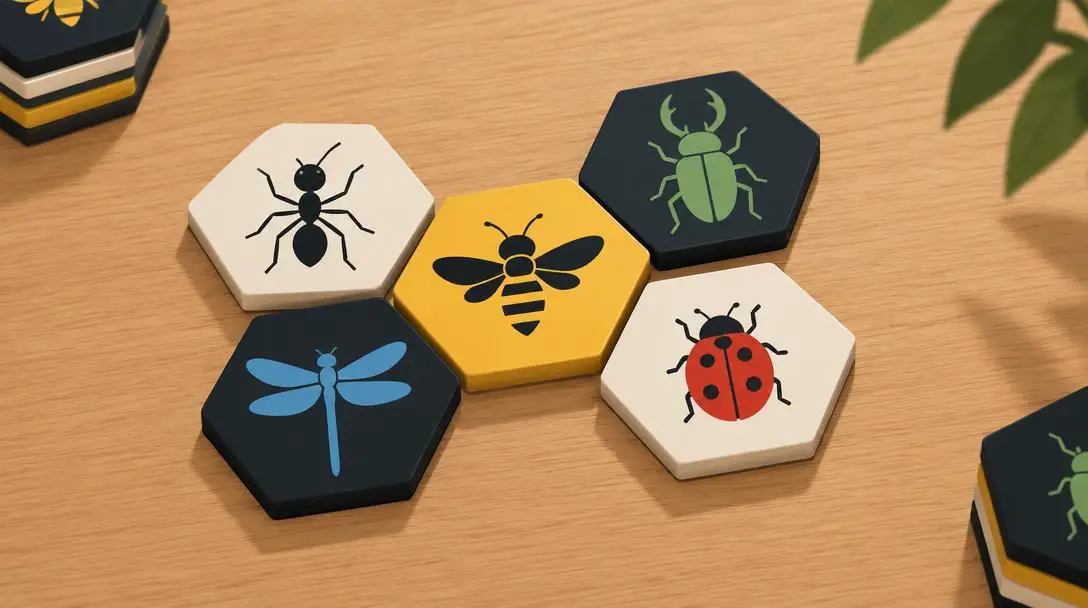
Designed by John Yianni and released in 2001 by Gen42 Games, Hive is an abstract strategy duel built entirely around chunky hexagonal tiles decorated with stylized insects. Unlike traditional board games, Hive does not feature a fixed playing board; instead, the surface is generated dynamically by the pieces themselves as they are placed onto the table. The game takes approximately 20 minutes to complete and is frequently likened to chess because every insect possesses its own unique movement capabilities once introduced to the cluster.
The primary objective in Hive is to safeguard your own Queen Bee while maneuvering your remaining tiles to completely surround your opponent's Queen Bee. Because placed tiles can crawl over, pin down, or slide around other pieces, spatial control shifts with every move. The tactile heft of the hexagonal components and the clean, boardless design make it an exceptionally portable choice for players who want the pure tactile joy of Qwirkle inside an intense, two-player duel.
Blokus
- Designer: Bernard Tavitian
- Original Publisher: Sekkoïa (sold to Mattel in 2009)
- Release Year: 2000
- Board Dimensions: 400 squares (20x20 grid)
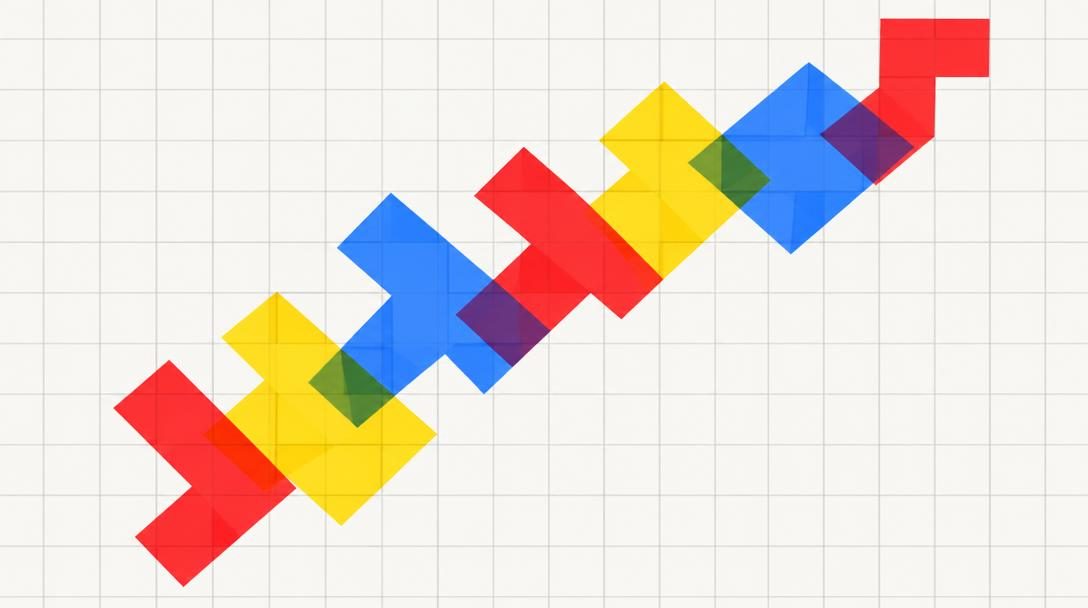
Originally conceived by French mathematician Bernard Tavitian, Blokus made its debut in 2000 under the Sekkoïa banner before Mattel acquired the property in 2009. Designed for 2 to 4 players and lasting 20 to 30 minutes, Blokus takes place on an expansive grid of 400 squares arranged into 20 rows and 20 columns. The game components include 84 translucent polyomino pieces split evenly across four colors: 21 blue, 21 yellow, 21 red, and 21 green tiles, each featuring a variety of geometric configurations.
The fundamental rule of Blokus is deceptive in its simplicity: every tile you play must touch at least one of your previously placed pieces, but strictly at the corners. Edge-to-edge contact between tiles of your own color is strictly prohibited, while pieces of opposing colors can touch along flat edges freely. The objective is to claim territory and place as many of your tiles onto the board as possible before running out of legal moves. Over the years, the game's popularity has inspired several spin-offs, including Blokus Duos, Blokus Trigon, Blokus 3D, Blokus Jr, and Blokus XL.
Rummikub
- Creator: Ephraim Hertzano
- Origin: Romania (Introduced to U.S. in early 1970s)
- Tile Components: 104 numbered tiles plus 2 jokers
- Colors Included: Blue, yellow, black, and red
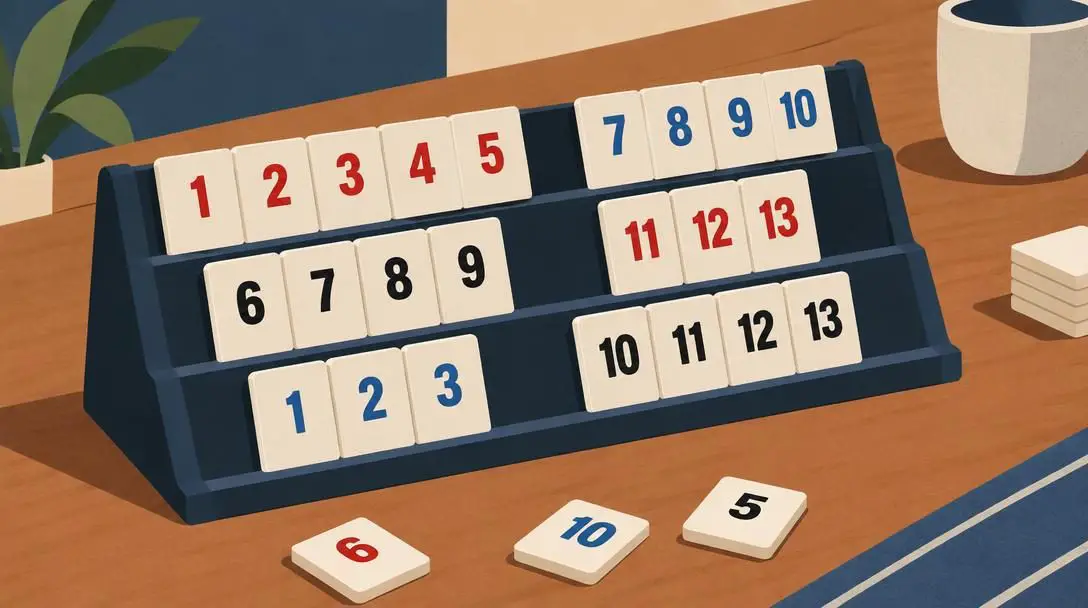
Created by Romanian-born inventor Ephraim Hertzano, Rummikub blends the foundational rules of Rummy and the visual logic of Mahjong into a beloved classic. After arriving in the United States in the early 1970s, the game surged in popularity, becoming a best-selling title by the end of that decade. While several variations exist across global markets, the Sabra variant stands as the most recognized and widely played edition today.
Rummikub is played with 106 durable plastic tiles: 104 numbered tiles spanning values from 1 to 13 across four colors (blue, yellow, black, and red), alongside two wild jokers. Players maintain a hidden rack of tiles, working to form runs (consecutive sequences of the same color) and groups (identical numbers in differing colors). The core objective is to empty your personal rack by laying down valid combinations onto the central table. Once a player lays down all of their tiles, they announce "Rummikub" to claim victory.
Azul
- Designer: Michael Kiesling
- Release Year: 2017
- Theme: Portuguese azulejos (ceramic tiles)
- Player Space: Individual 5x5 mosaic wall boards
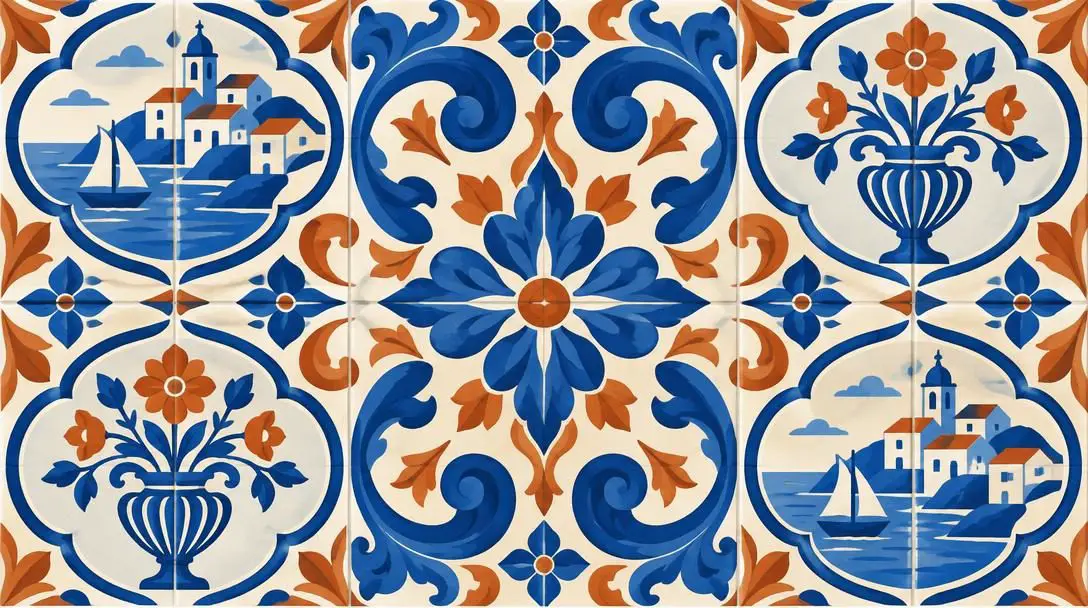
Released in 2017 to wide critical acclaim, Azul was designed by Michael Kiesling, who drew inspiration from the ornate, historically renowned ceramic tiles of Portugal known as azulejos. Translating to "Blue" in English, Azul challenges 2 to 4 players to build a decorative palace wall across individual 5x5 player boards. Each round presents a fresh puzzle as players draft tiles from circular factory displays positioned in the center of the table.
During the drafting phase, a player selects all matching tiles of a single color from a factory display, sending the unchosen tiles into a shared center pool. Those drafted tiles must then be staged along stepped pattern lines on the player's personal board. Scoring occurs across multiple rounds, with points tabulated as completed rows transfer onto the main decorative grid. A match reaches its conclusion as soon as any player completes a full horizontal line of five tiles. While some tabletop newcomers find the spatial placement and floor-line penalties tricky to learn, mastering these subtleties provides deep strategic satisfaction.
Ingenious
- Designer: Reiner Knizia
- Publisher: Kosmos (commissioned by Sophisticated Games)
- Release Year: 2004
- Components: 120 tiles, 4 racks, 4 boards, 24 pegs
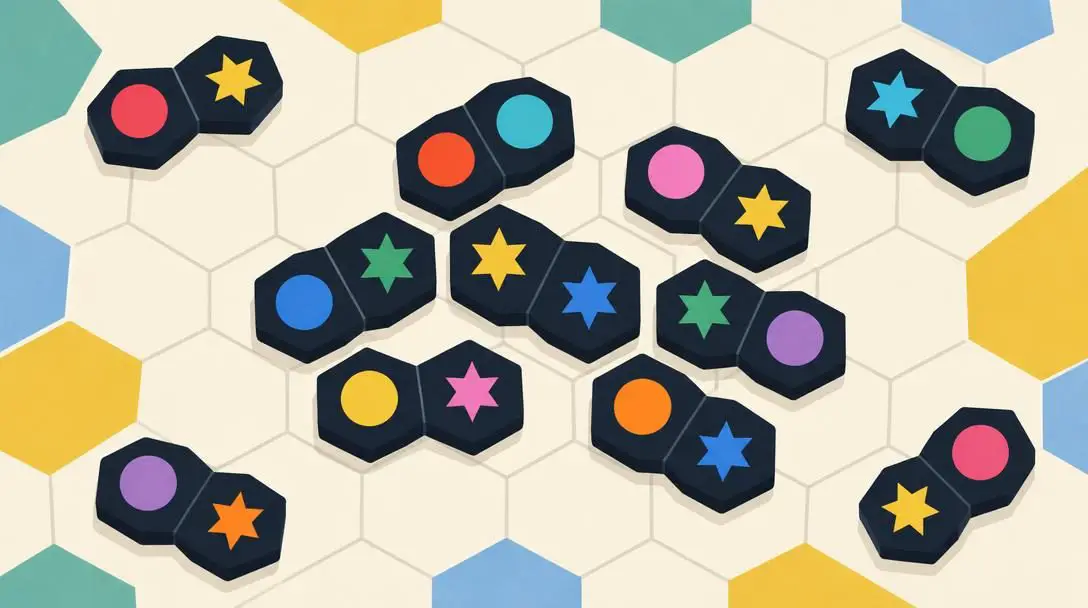
Commissioned by Sophisticated Games and published by Kosmos in 2004, Ingenious—originally released in Germany as Einfach Genial ("Simply Ingenious")—is the brainchild of celebrated board game designer Reiner Knizia. Tailored for 1 to 4 players ages 10 and up, the game includes 120 two-hex domino-style tiles, four plastic holding racks, four individual scoreboards, and 24 color-coded scoring pegs. Tiles feature six distinct abstract symbols rendered in bright colors.
Players draw a hand of six tiles from an opaque cloth bag and take turns placing them onto the central hexagonal board. When a tile touches matching symbols, points are scored along straight lines extending outwards from the placement point. However, Knizia introduced an ingenious twist to the scoring engine: your final standing is determined strictly by your single lowest-scoring color. This prevents players from hyper-focusing on one or two patterns and demands constant, calculated balance across all six scoring tracks.
How mechanical systems differ across these tile games
Although each of these titles shares the satisfying tactile feel of Qwirkle's wooden pieces, their core mechanics engage player reasoning in distinct ways. Evaluating how these games handle movement, drafting, and area control makes it easier to select the right title for your gaming group.
- Boardless spatial confinement (Hive): Instead of relying on a pre-printed grid, Hive requires players to create and modify the playing field directly. The continuous structure of the insect cluster forces players to balance outward expansion against the defense of their Queen Bee.
- Corner-contact territorial control (Blokus): Blokus emphasizes geometric area denial. By restricting friendly connections solely to diagonal corners, players must weave their polyominoes around rival walls while attempting to choke off opposing expansion corridors.
- Shared-table manipulation (Rummikub): While Qwirkle locks tiles into place once scored, Rummikub encourages players to dismantle, rearrange, and split existing groups and runs on the table, creating a dynamic shared puzzle that evolves constantly.
- Drafting and penalty management (Azul): Azul introduces a zero-sum drafting dynamic where taking tiles from displays forces remaining pieces into the center. Players must balance the acquisition of needed colors against the danger of overflowing their staging lines into negative floor points.
- Radiating lines and weakest-link scoring (Ingenious): Rather than rewarding line completion like Qwirkle, Ingenious scores points outward in radiating paths from newly placed tiles, using a clever scoring threshold where a player is only as strong as their least-developed color.
A step-by-step guide to choosing and learning a new game
Transitioning from Qwirkle to a new abstract strategy game is straightforward when approached systematically. Follow these steps to find the ideal match for your table and run a successful first session.
- Assess your primary player count: Determine who will be sitting at your table. If you primarily play head-to-head matches, Hive provides a dedicated two-player challenge, whereas Blokus, Azul, and Rummikub scale comfortably up to four players.
- Select your preferred interaction level: Decide whether your group enjoys direct defensive blocking (Hive and Blokus), central drafting tension (Azul), dynamic shared manipulation (Rummikub), or simultaneous color tracking (Ingenious).
- Perform a thorough component inventory: Unpack your chosen title and verify that all necessary parts are accounted for before hosting game night. Confirm that you have all 104 numbered tiles and two jokers for Rummikub, or the full supply of 120 tiles and 24 pegs for Ingenious.
- Review the scoring and round-end triggers: Read through the rulebook to understand precisely how victories are earned. In Azul, familiarize yourself with round-end scoring and horizontal line completion; in Ingenious, emphasize the lowest-color victory condition.
- Play a three-turn open-handed trial: Set up the game and play the first three turns with all racks or hands visible. Walking through legal placement conditions and scoring lines together removes confusion and builds confidence before starting competitive play.
Common tactical traps and rules mistakes to avoid
Players making the jump from Qwirkle often fall into tactical habits formed by that game's specific rule set. Being aware of these pitfalls will help your group master each title's nuances much faster.
- Playing too passively in territorial games: In Qwirkle, players frequently focus exclusively on maximizing their personal line scores. In Blokus and Hive, passive play is disastrous; failing to actively intercept and block an opponent's path will quickly leave you cornered.
- Violating Rummikub's initial meld requirement: A common rules violation involves attempting to manipulate table tiles immediately. A player must first lay down combinations valued at 30 points or more drawn entirely from their own personal rack before they are allowed to interact with shared sets.
- Overdrafting into the floor line in Azul: Taking a large pile of tiles from the factory displays without sufficient space on your pattern lines pushes the excess onto the floor line. These penalty deductions can easily wipe out an entire round's scoring progress.
- Tunnel-visioning on single colors in Ingenious: Pushing a single color track to the maximum limit while ignoring your lagging markers guarantees defeat. Because your lowest-scoring color determines your final score, balanced placement across all six symbols is essential.
- Breaking the "One Hive" rule: In Hive, all tiles must remain connected in a single continuous structure at all times. A common beginner mistake is attempting to move a piece that is currently acting as the sole bridge between two clusters of tiles, which is an illegal move.
- Accidental edge-to-edge alignment in Blokus: Novices often position their polyominoes flat edge against flat edge. Always remember that tiles of your own color can only make contact at the corners, leaving flat sides open for opposing colors to maneuver through.
Expanding your tabletop collection further
Once you have spent time with these games, you can continue exploring the genre by considering several structural elements of game design. First, think about how your group responds to rules complexity. If your group enjoyed the accessible spatial puzzle of Bernard Tavitian's Blokus, exploring its alternative variants—such as Blokus Duos for quick head-to-head play, Blokus Trigon for triangular grid layouts, or Blokus 3D—delivers fresh spatial geometry without requiring you to digest an entirely new rulebook.
Second, evaluate the balance between direct conflict and indirect competition. Head-to-head abstract games like Hive pit players against each other in zero-sum battles where every move directly impacts the opponent's chances of survival. In contrast, drafting games like Azul focus on personal pattern construction, where interaction happens indirectly through tile availability and factory denials. Finding the right interaction style ensures that your game nights remain engaging for every participant.
Frequently asked questions
Which game similar to Qwirkle is best for exactly two players?
Hive is widely regarded as the premier two-player option among tile-placement strategy games. Designed specifically for head-to-head competition, it plays in about 20 minutes without a board and features tactical movement mechanics comparable to chess.
How does scoring in Ingenious differ from Qwirkle?
In Qwirkle, points are earned by placing tiles to form lines of matching colors or shapes, with your final score being the sum of all points gained. In Ingenious, you track six individual color tracks using 24 pegs, and your final standing is determined solely by your lowest-scoring color, requiring you to develop all tracks evenly.
Can you manipulate tiles on the table in Rummikub like you do in Qwirkle?
In Qwirkle, tiles remain fixed once placed on the grid. In Rummikub, players are actively encouraged to rearrange, split, and add to existing groups and runs already on the table, provided each resulting set contains at least three valid tiles and the player has already met the initial 30-point threshold.
What makes the placement rules in Blokus unique?
Blokus requires that every newly placed polyomino tile touch at least one of your own existing pieces strictly corner-to-corner. Edge-to-edge contact between pieces of the same color is prohibited, creating an intricate spatial challenge across the 400-square board.
When does a game of Azul come to an end?
A match of Azul concludes at the end of the round in which at least one player has successfully completed a full horizontal line of five tiles across their individual 5x5 mosaic wall, after which final bonuses are tallied.
The bottom line
Qwirkle earned its modern reputation by proving that an abstract game does not need complex rules to offer profound spatial depth. If you are ready to expand beyond matching shapes and colors on a shared grid, each of these five alternatives offers a distinct puzzle. From the tight territorial maneuvering of Blokus and the cutthroat bug battles of Hive to the careful tile drafting of Azul, the numerical rearrangements of Rummikub, and the balanced tracks of Ingenious, these titles ensure your table will stay challenged for countless game nights to come.