5 Most Popular Styles of Solitaire
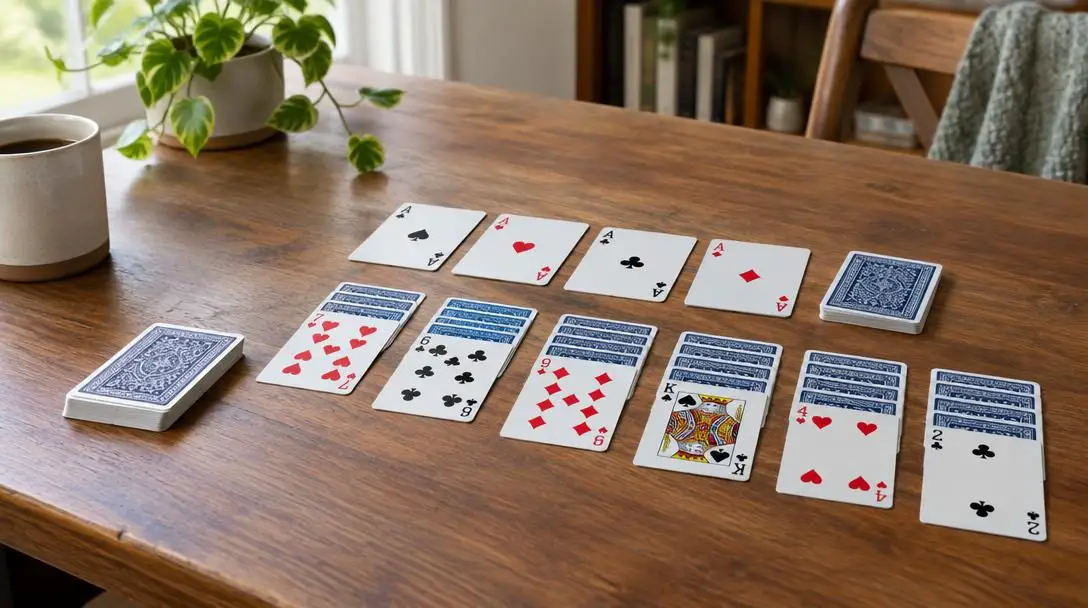
Solitaire stands as one of the most recognized and enduring card games in history. Its lasting appeal rests on straightforward rules, an extensive range of variations, and unparalleled accessibility. For generations of players—particularly those navigating early personal computers or spotty network connections—solitaire delivered an immediate, reliable form of entertainment that required neither an internet hookup nor a second participant.
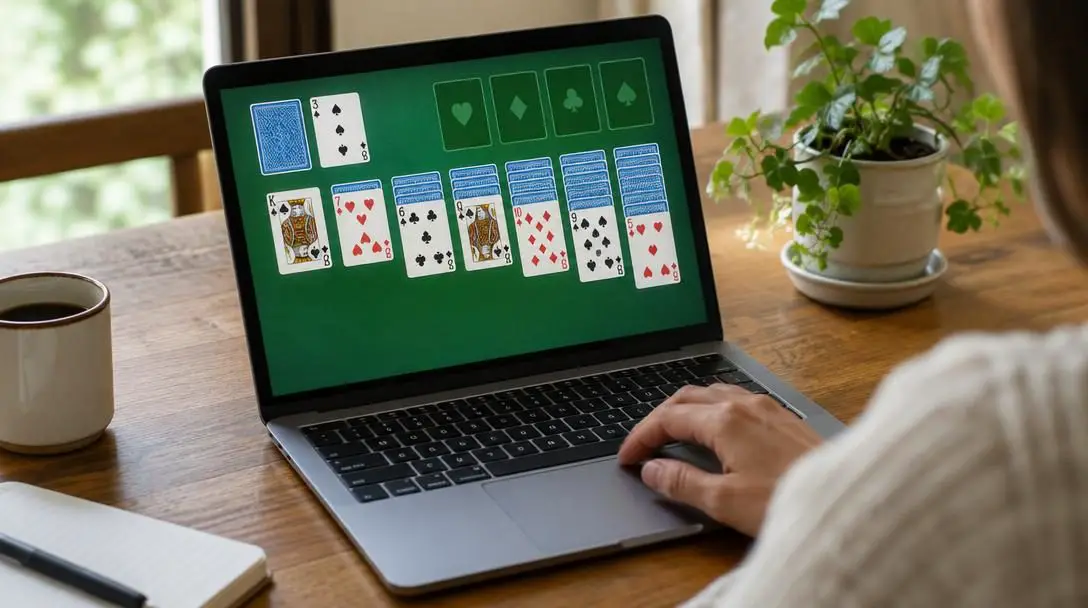
The leap from felt tabletops to digital screens cemented solitaire as an everyday worldwide habit. When Microsoft began packaging digital editions into its operating software, it sparked a global phenomenon; today, the company estimates that players log more than 100 million hands every single day. Beyond simply filling idle moments, research indicates that solitaire can enhance cognitive function and improve mood, delivering a meditative, focused reset. Yet while millions engage with the game daily, many remain familiar with only a single format, overlooking the vast mechanics and varying challenges offered by the wider family of patience games.
Key takeaways
- Microsoft estimates that players engage in more than 100 million hands of solitaire worldwide every day.
- Gameplay offers documented mental health perks, with research showing gains in mood and cognitive performance.
- While Klondike remains the most culturally recognized format, other major styles include Spider Solitaire, Pyramid, Forty Thieves, and Yukon.
- Win rates vary dramatically across variants; Forty Thieves, for example, offers mathematical winning odds of roughly 1 in 10.
- Structural differences—such as the total absence of a draw deck in Yukon or addition-based clearing in Pyramid—drastically alter table strategy.
The enduring appeal and mechanics of card patience
Patience games have survived across centuries because they transform an ordinary deck of playing cards into an engaging spatial puzzle. Moving cards between columns and building foundations requires foresight, pattern recognition, and calculated risk. The digital revolution did not change these core attributes; it merely automated dealing and reshuffling, allowing players to dive straight into problem-solving.
Solitaire provides a calm, focused mental break that functions as an accessible daily zen phenomenon for millions of players worldwide.
Because each variant establishes distinct parameters for column layouts, build directions, and reserve management, mastering the game requires looking past surface similarities. The five most popular styles demonstrate just how flexible the basic format can be.
At a glance: comparing the top 5 solitaire styles
| Style | Deck Count | Tableau Setup | Primary Clearing Mechanism |
|---|---|---|---|
| Spider Solitaire | Two 52-card decks | Tableau with 8 target build piles | Sequential descending suit assembly |
| Pyramid | Single 48 to 52-card deck | 28 cards in a geometric pyramid | Pairing uncovered cards summing to 13 |
| Klondike | Single 52-card deck | 7 tableau columns | Building 4 foundation piles from king to ace |
| Forty Thieves | Two 52-card decks | 10 columns of 4 cards each (40 total) | Building 8 foundation suits from ace to king |
| Yukon | Single 52-card deck | 7 tableau columns (no draw deck) | Building 4 suit foundations from ace to king |
The 5 most popular solitaire styles explained
Each leading solitaire style alters the board architecture, reshapes the balance between luck and strategy, and demands its own tactical approach.
Spider Solitaire
- Origins: Emerged in the mid-1900s
- Deck requirement: Two standard 52-card decks
- Target structure: Eight completed foundation sequences
- Variant family: Seven distinct recognized versions
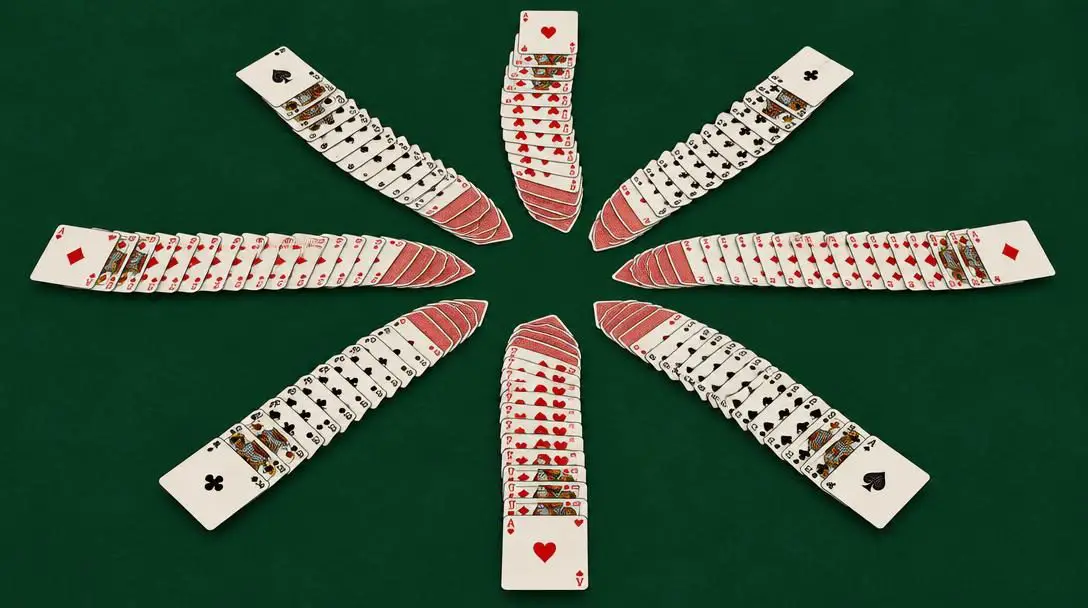
Dating back to the mid-20th century, Spider Solitaire derives its memorable title from its playing architecture: players must coordinate card arrangements to complete eight foundation sequences, mirroring the eight legs of a spider. The game incorporates two full 52-card decks. As participants maneuver cards through the playing space to form descending sequences, resolved card groupings clear away from the active tableau.
Spider Solitaire has produced a prominent family of seven offshoot variations tailored to different player preferences. These include Spider 1 Suit, Spider 2 Suit, Relaxed Spider, Will O’ The Wisp, Simple Simon, Mrs. Mop, and Spiderette. Shifting between single-suit and multi-suit rules allows players to calibrate the game from a relaxing pastime to an exacting mental workout.
Pyramid
- Deck requirement: Single set of 48 to 52 cards
- Pyramid size: 28 face-up cards
- Pairing target: Values combining to 13
- Key exception: Kings discarded individually
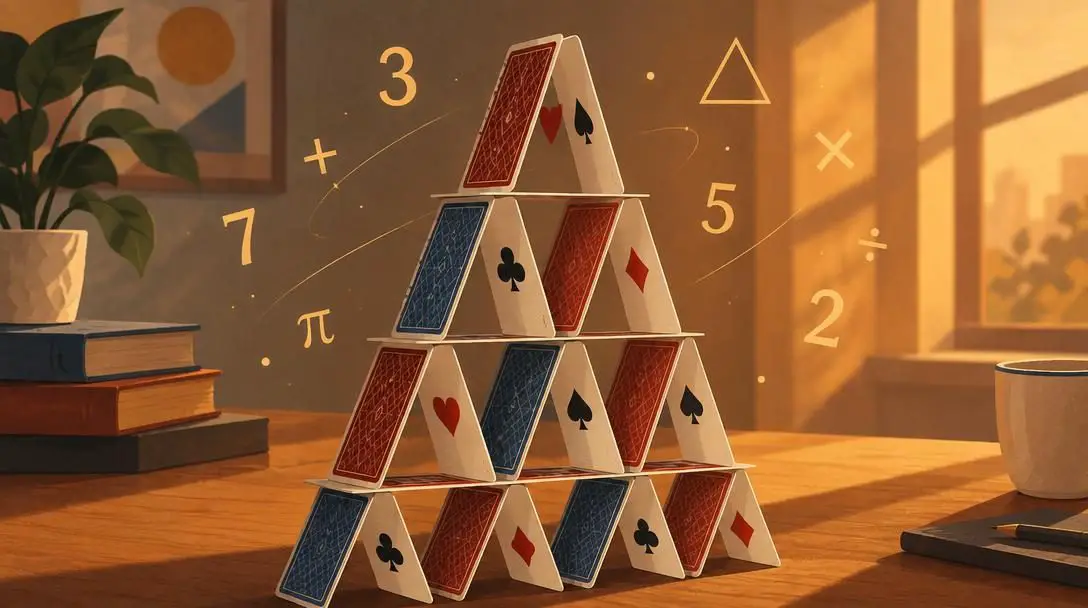
Unlike traditional column-clearing patience formats, Pyramid functions primarily as a game of arithmetic and careful board evaluation. The layout arranges 28 cards face up into a large, overlapping triangle, drawn from a single deck of 48 to 52 cards. Rather than building runs of ascending or descending cards, players remove cards in pairs that total a numerical value of 13.
Only completely uncovered cards within the pyramid can be paired, either with each other or with cards turned from the reserve deck. The sole standalone card is the King: because its face value is 13, it can be extracted independently without a secondary partner. Achieving victory requires clearing every card from both the pyramid and the reserve stock.
Klondike
- Alternative name: Canfield
- Deck requirement: Standard 52-card deck (minus jokers)
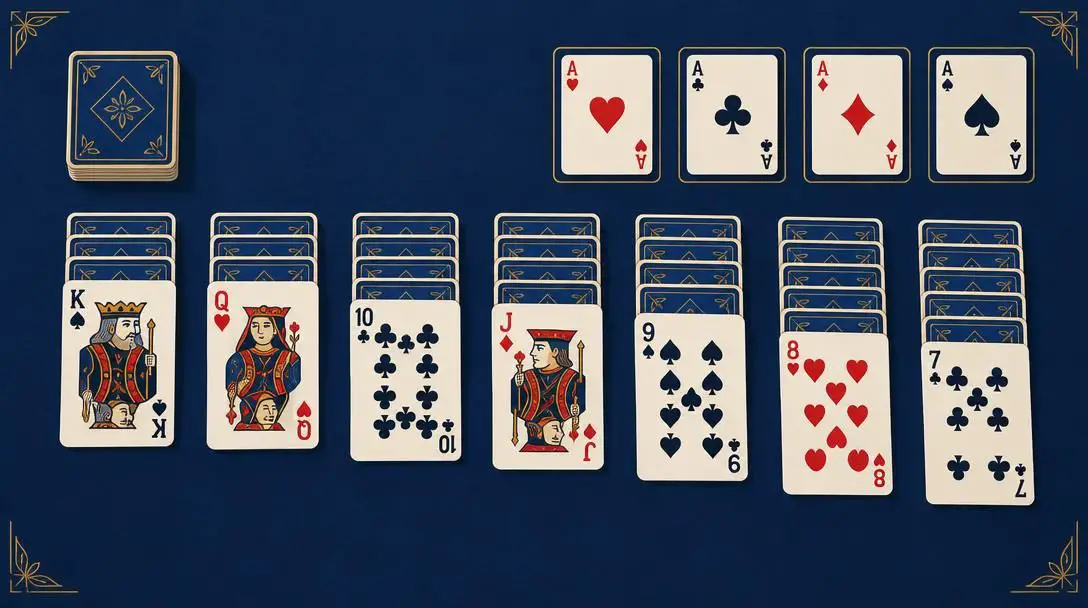
- Tableau width: Seven distinct columns
- Foundation goal: Four piles built from king down to ace
Often referred to simply as classic solitaire—and known historically as Canfield—Klondike is the format most people recognize from desktop software. Despite its ubiquity, Klondike is deceptively difficult. It features a surprisingly low success rate, turning what looks like a simple card game into a persistent tactical trial that regularly thwarts casual players.
Klondike uses a standard 52-card deck with the jokers removed. The layout establishes seven tableau columns rather than ten. Players flip through the reserve deck while rearranging face-up cards across the tableaus, working toward the ultimate goal of assembling four target piles that run systematically from king down to ace.
Forty Thieves
- Historical alias: Napoleon at St Helena
- Deck requirement: Two full 52-card decks
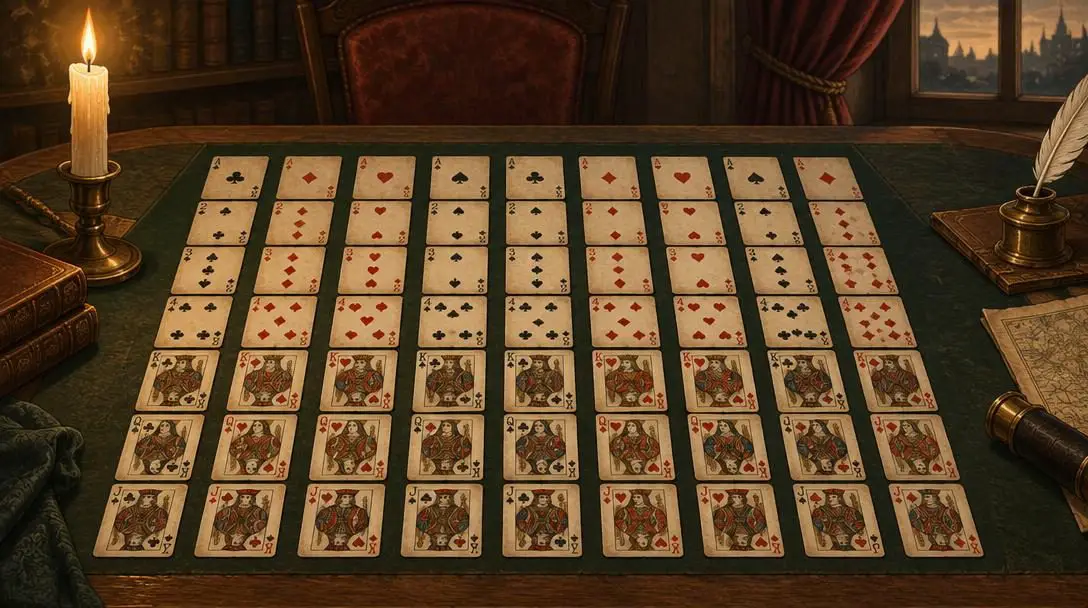
- Tableau layout: 10 columns of 4 face-up cards
- Win rate: Approximately 1 out of 10 games
Renowned for its rigorous demands on planning and memory, Forty Thieves is one of the steepest challenges in the solitaire world. Outside English-speaking regions, it is frequently called Napoleon at St Helena, following persistent lore that Emperor Napoleon Bonaparte spent his final years playing this exact game during his Atlantic exile.
The math underlying Forty Thieves underscores its reputation: documented odds of winning hover around just 1 in 10 hands. The opening layout deals two complete 52-card decks across ten columns, placing four face-up cards in each column to form a starting tableau of forty cards. Eight foundation piles must be systematically assembled from aces up to kings. Crucially, players may cycle through the remaining stock pile exactly once, leaving no margin for reckless discards.
Yukon
- Deck requirement: Standard 52-card deck (no jokers)
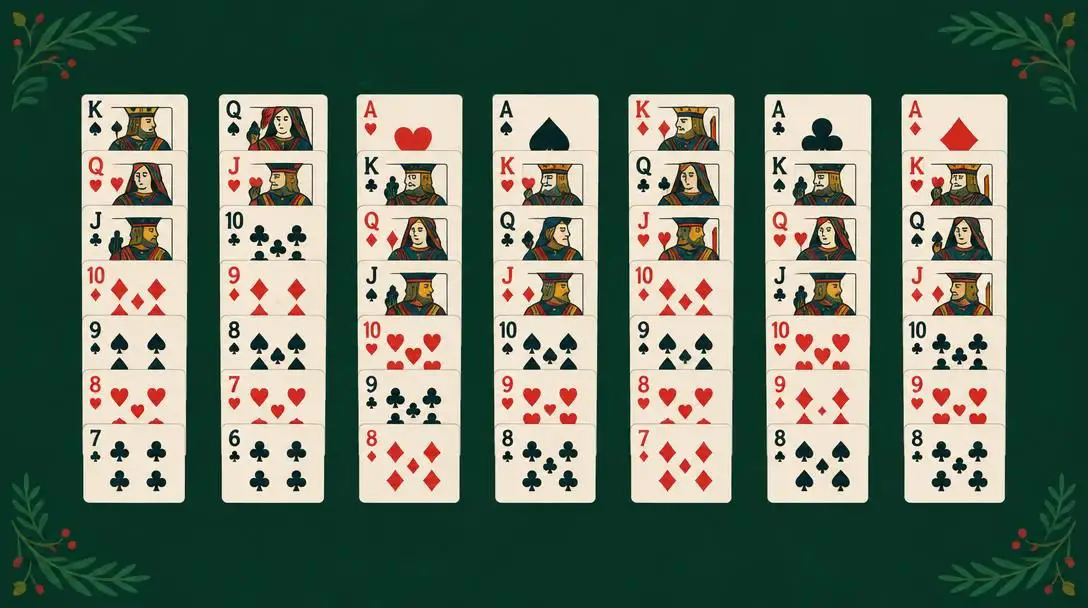
- Tableau structure: Seven tableaus
- Reserve deck: None (all cards dealt at start)
- Related variants: Russian, Alaskan, and Australian Patience
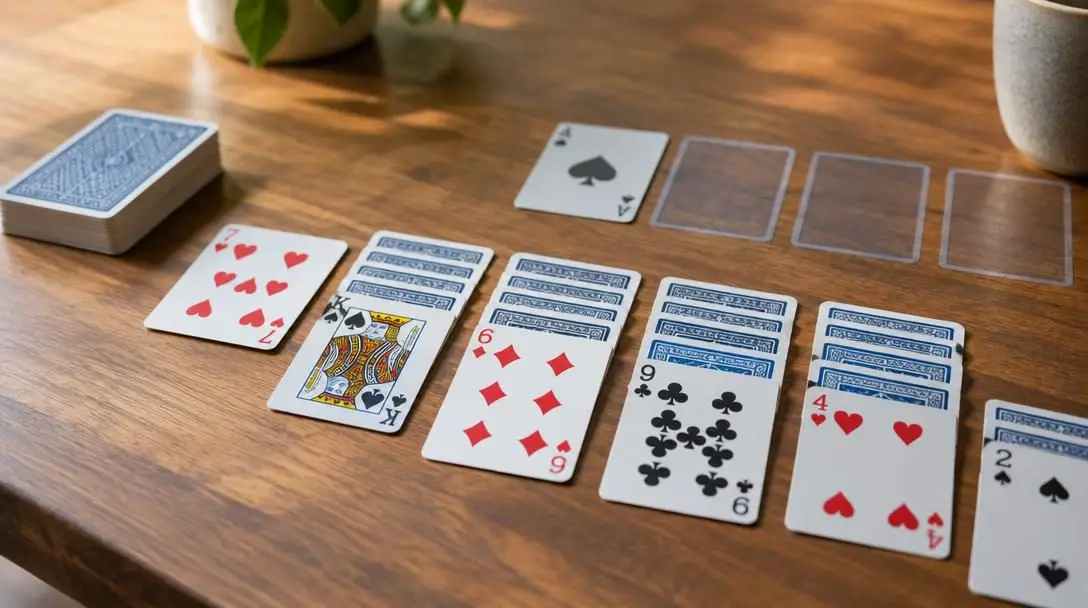
At first glance, Yukon closely resembles Klondike, but it removes a defining element of traditional solitaire: there is no draw deck or reserve stock. Every card from the 52-card deck is distributed directly across seven tableaus at the opening deal. While the majority of the cards sit face up, several remain face down beneath the top cards of each column.
The primary objective mirrors conventional patience: players must assemble all cards across four suit foundations starting with aces and terminating at the king. Because there is no fresh stock to rely upon later, winning depends entirely on exposing hidden, face-down cards as early as possible. Players seeking alternate rules within this open-board format can branch out into Russian Solitaire, Alaskan Patience, and Australian Patience.
How to play each solitaire variant step by step
Because each variant establishes unique table conditions, players will find it helpful to follow specific procedural steps when learning to navigate these layouts.
Playing Spider Solitaire
- Set up your layout using two standard 52-count decks and deal the cards across the tableau area, preparing to track the eight build piles necessary for victory.
- Organize descending sequences within the tableau to manage open spaces and prepare complete suits.
- Choose among the seven known versions—such as Spider 1 Suit, Spider 2 Suit, Relaxed Spider, Will O’ The Wisp, Simple Simon, Mrs. Mop, or Spiderette—depending on your preferred challenge level.
- Clear completed eight-card families from the board until all eight foundation targets are filled.
Playing Pyramid Solitaire
- Deal 28 cards face up into an overlapping pyramid formation, keeping the remaining cards set aside as your draw deck.
- Scan the pyramid for exposed Kings, immediately removing them since their value is already 13.
- Identify unblocked, fully uncovered cards that can pair together to total 13 (such as a 10 and a 3, or a Queen and an Ace).
- Draw cards from your remaining deck to create valid 13-point pairings with the exposed pyramid cards.
- Continue pairing uncovered elements until all cards from both the pyramid and the reserve deck have been eliminated.
Playing Klondike
- Construct seven tableau columns using a standard 52-card deck (leaving out any jokers).
- Examine the face-up cards to identify descending build opportunities and uncover underlying face-down cards.
- Direct completed descending sequences to the four target piles, organizing them carefully from king to ace.
- Manage the draw deck thoughtfully, understanding that its naturally low success rate makes careful sequencing essential.
Playing Forty Thieves
- Deal two complete 52-card decks across ten distinct columns, placing four face-up cards in each column to form the initial forty-card tableau.
- Establish the eight foundation spaces where complete card families will ultimately be collected from aces up to kings.
- Move available cards carefully across columns, keeping in mind that the odds of winning are 1 out of 10.
- Turn cards from the stock pile strictly when necessary, remembering that you can only cycle through the stock pile once throughout the entire game.
Playing Yukon
- Deal the entire deck across seven tableaus at the very start of the match, ensuring most cards are face up with the remaining cards situated face down beneath them.
- Note that there is no reserve stock or draw deck in this variant; every play must be made using the cards already on the board.
- Target maneuvers that immediately reveal the hidden, face-down cards to expose unavailable resources early.
- Build cards onto the four suit piles starting from the aces and ending at the king, exploring offshoots like Russian Solitaire, Alaskan Patience, or Australian Patience if you want variations on the rules.
Common tactical mistakes across solitaire styles
Approaching diverse solitaire variants with a one-size-fits-all strategy quickly creates unplayable layouts. Avoiding these frequent tactical missteps will keep your games alive longer:
- Treating all variants like standard solitaire: Applying identical building rules across every style disrupts play. Trying to play Yukon with a draw deck, or expecting to cycle through the draw deck multiple times in Forty Thieves, violates the core mechanics of those games.
- Failing to prioritize face-down cards in Yukon: In Yukon, all cards are dealt at the outset, with hidden cards buried under face-up cards. Moving visible cards without working toward unlocking the face-down cards underneath stalls momentum. Revealing those hidden cards as soon as possible is critical to finishing the suits.
- Rushing through the stock in Forty Thieves: Because the rules of Forty Thieves dictate that you can only go through the stock once, carelessly flipping through the deck burns through resources that cannot be recovered. Every card drawn from the stock must be evaluated carefully against the ten columns.
- Overlooking unblocked pairs in Pyramid: Players sometimes focus so heavily on the draw deck in Pyramid Solitaire that they miss pairings available directly on the pyramid itself. Only fully uncovered cards can be used; missing an open pair on the board can cause you to exhaust your draw deck unnecessarily.
- Ignoring Kings in Pyramid: Kings do not need a partner because their value is already 13. Forgetting to pick them out of the pyramid immediately leaves valid cards beneath them unnecessarily blocked.
- Getting discouraged by low win rates: Games like Klondike feature surprisingly low success rates, while Forty Thieves offers win odds around 1 out of 10. Expecting to win every single hand leads to frustration; these variants are built specifically as rigorous tests of patience.
How to expand your solitaire practice
Once you understand the basic structures of these five variations, you can tailor your playing routine to your personal goals and preferences.
Selecting variants based on difficulty: If you are looking for an approachable addition game, Pyramid offers a straightforward mathematical objective. If you prefer a demanding challenge where victory is rare, games like Forty Thieves (with its 1-in-10 odds) or Klondike provide a much stricter test of patience.
Exploring specialized spin-offs: After mastering the primary formats, look into specific family variants. Fans of Spider Solitaire can explore Spider 1 Suit, Spider 2 Suit, Relaxed Spider, Will O’ The Wisp, Simple Simon, Mrs. Mop, or Spiderette. Similarly, Yukon enthusiasts can branch out into Russian Solitaire, Alaskan Patience, and Australian Patience.
Embracing the cognitive benefits: Given that studies show gameplay can improve cognitive function and mood, solitaire can serve as a dependable, non-stressful mental exercise during breaks in the day.
Transitioning between physical cards and digital play: While computer versions made solitaire a global phenomenon capable of logging over 100 million hands daily, testing your skills with physical 52-card decks provides tactile practice and helps reinforce the setup rules for complex, multi-deck layouts like Forty Thieves and Spider Solitaire.
Frequently asked questions
Why is Forty Thieves called Napoleon at St Helena?
Forty Thieves earned the alternative name Napoleon at St Helena because Emperor Napoleon Bonaparte was rumored to have played this specific variation of solitaire while exiled on the remote island of St Helena.
How does Yukon differ from traditional Klondike?
Yukon shares the seven-tableau structure of Klondike but eliminates the draw deck entirely. All cards are dealt onto the table at the very beginning of the match, requiring players to clear face-down cards directly from the tableau.
Which cards can be removed individually in Pyramid Solitaire?
Kings can be removed individually in Pyramid Solitaire without needing a partner card. Because the goal is to pair cards totaling 13, and a King's inherent numerical value is already 13, it can be discarded immediately once uncovered.
How many variations belong to the Spider Solitaire series?
There are seven recognized variants in the Spider Solitaire family: Spider 1 Suit, Spider 2 Suit, Relaxed Spider, Will O’ The Wisp, Simple Simon, Mrs. Mop, and Spiderette.
Can you flip through the stock pile multiple times in Forty Thieves?
No. In Forty Thieves, the rules strictly limit players to cycling through the stock pile only once, which contributes to its low winning rate of roughly 1 in 10 hands.
The bottom line
Solitaire is far more than a single default desktop application; it is an expansive genre of logic puzzles spanning arithmetic pairing, intricate tableau building, and multi-deck sequencing. Whether you are pairing cards to 13 in Pyramid, testing your perseverance against the 1-in-10 odds of Forty Thieves, or working through the full open deal of Yukon, each style offers its own distinct balance of chance and strategic mastery.