5 Most Memorable Call of Duty Maps
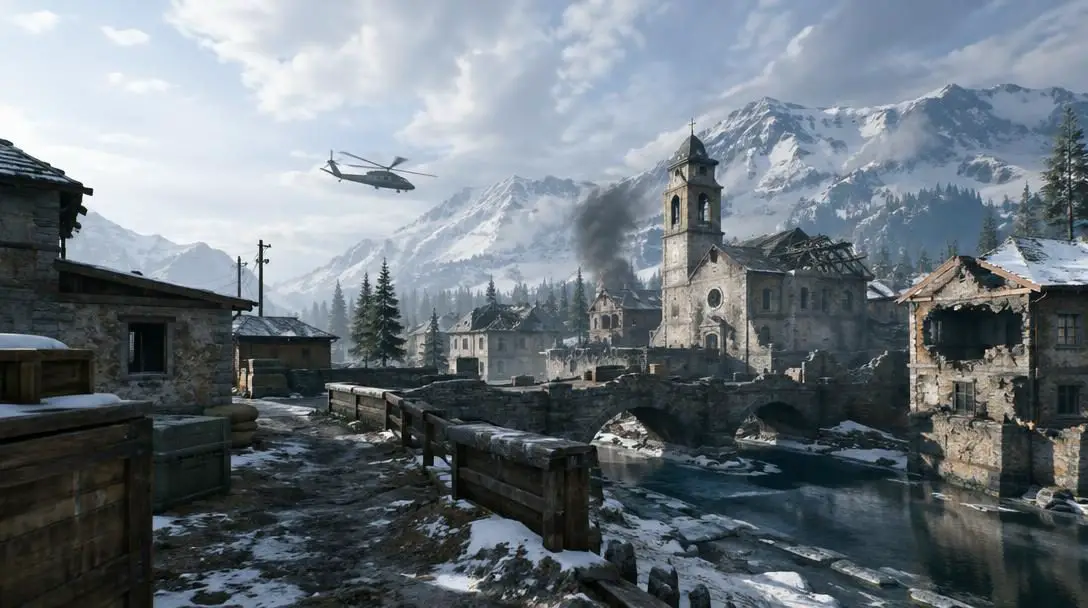
The Call of Duty video game series got its start back in 2003 and has served as an enduring pillar of the gaming industry ever since. Releasing installments on an almost annual cadence comparable to sports franchises like Madden or FIFA, the brand originally made its mark through cinematic, narrative-driven campaigns. Over the decades, however, its fast-paced multiplayer combat has become the true heart of the franchise. The layout of hallways, obstacles, vantage points, and spawn zones shapes every encounter, making virtual geography fundamental to how players fight and strategize.
While the franchise has introduced hundreds of arenas across varied theaters of war, only a select group of battlegrounds has achieved true legendary status. Maps originally crafted for titles like Call of Duty: Modern Warfare 2 and Call of Duty: Black Ops struck a rare equilibrium between sightlines, vertical vantage points, and frenetic close-quarters engagements. Understanding what makes these combat arenas endure requires examining their specific architecture, their single-player roots, and the high-intensity combat loops that keep players returning years after their initial debut.
Key takeaways
- Multiplayer arena design in Call of Duty relies on balancing tight chokepoints, deliberate sightlines, and vertical positions to direct player movement.
- Three of the series' most celebrated battlegrounds—Terminal, Highrise, and Rust—originated in 2009's Call of Duty: Modern Warfare 2.
- Treyarch's Call of Duty: Black Ops introduced Firing Range and Nuketown, both celebrated for relentless pacing and rapid respawns.
- Mastering these iconic layouts demands peripheral navigation, careful monitoring of second-story windows, and disciplined management of tactical gear.
At a glance: Iconic Call of Duty battlegrounds
| Map Name | Debut Title | Primary Setting | Signature Feature | Key Hazard |
|---|---|---|---|---|
| Terminal | Modern Warfare 2 | Commercial Airport | Boarded passenger jet at the gate | Sniper sightlines in the Hallway of Death |
| Highrise | Modern Warfare 2 | Skyscraper Rooftop | Exposed central construction zone | Cross-map bullet fire between opposing offices |
| Rust | Modern Warfare 2 | Desert Industrial Yard | Towering central oil rig structure | Airborne throwing knives and wide-open spawns |
| Firing Range | Black Ops | Military Training Facility | Vantage tower and multi-lane ranges | Campers tucked into the pistol firing range |
| Nuketown | Black Ops | Nuclear Testing Suburb | Symmetrical dual-house neighborhood | Grenade barrages into the central street |
The 5 most memorable Call of Duty maps
Every era of multiplayer gaming features select environments that define how fans play, debate, and compete. These five battlegrounds represent the gold standard of map layout across the entire franchise.
Terminal

- Debut Game: Call of Duty: Modern Warfare 2
- Campaign Link: "No Russian" mission
- Central Feature: Commercial airliner at terminal gate
- Notable Chokepoint: Hallway of Death
One of the most memorable campaign missions throughout the entire series is "No Russian." Set inside a bustling commercial travel hub, the single-player map was repurposed for multiplayer use in Modern Warfare 2 and has since made return appearances across multiple titles. Terminal stands out because of its distinct commercial airport aesthetic combined with wildly varied combat zones. A passenger airplane parked directly at the boarding gate serves as the functional middle ground between the two primary spawn points, providing a confined battleground of its own.
The map achieves a satisfying blend of wide-open combat across the exterior tarmac and claustrophobic interior corridors like the luggage claim, security plaza escalators, and airplane cabin. The most dangerous sector is the Hallway of Death, a long glass-walled walkway connecting the primary concourse to the apron. While snipers routinely utilize the windows to pick off targets moving across the open tarmac, the narrow corridor makes them vulnerable to opponents flanking silently from behind for close-quarters melee takedowns.
Highrise

- Debut Game: Call of Duty: Modern Warfare 2
- Other Appearances: Call of Duty Online, Call of Duty: Mobile
- Setting: Rooftop construction site
- Layout Structure: Two opposing offices flanking an open middle
When players want an immediate, high-intensity firefight without downtime, Highrise delivers like few other environments. Set high atop an unfinished corporate skyscraper, the arena is defined by two opposing office structures that face each other across an open, crane-laden rooftop construction yard. The verticality and lack of heavy central cover produce instant friction right from the opening countdown.

While subterranean service tunnels run beneath the foundation to offer discreet flanking routes, the overwhelming majority of encounters take place directly in the open center. Players sprint toward the midsection to trade fire through unfinished walls, office cubicles, and mechanical equipment. Objective game modes on Highrise dial this frantic pace up even further. During matches of Domination, the rooftop becomes pure mayhem as players aggressively deploy tactical insertion flares to respawn directly back into contested sectors.
Rust

- Debut Game: Call of Duty: Modern Warfare 2
- Campaign Link: "Endgame" mission
- Subsequent Appearances: Four other games, including 2020's Call of Duty: Mobile
- Signature Purpose: 1v1 grudge matches
Whenever players debate individual skill or seek to settle an argument in Call of Duty, Rust is the undisputed proving ground. First introduced in Modern Warfare 2 and featured in the campaign's climactic "Endgame" mission, Rust has gone on to appear in four additional franchise releases, including 2020's Call of Duty: Mobile. Built within an arid desert industrial parcel, the layout features a towering central oil rig surrounded by pipes, shipping crates, and sandy perimeter paths.
There is virtually nowhere to find safety on Rust. Bullets fly continuously from every vector, and fighting your way up into the catwalks of the central oil rig is a perilous feat in itself. The map's tiny scale also makes it famous for trick shots, where airborne throwing knives hurled blindly over structures land unexpected eliminations across the yard. The relentless crossfire cements Rust as one of the ultimate endgame environments in competitive first-person shooters.
Firing Range
- Debut Game: Call of Duty: Black Ops
- Later Appearances: Black Ops III, Black Ops 4, and two other releases
- Key Structures: Tower, unfinished house, trailer, shed
- Campaign Presence: None (dedicated multiplayer arena)
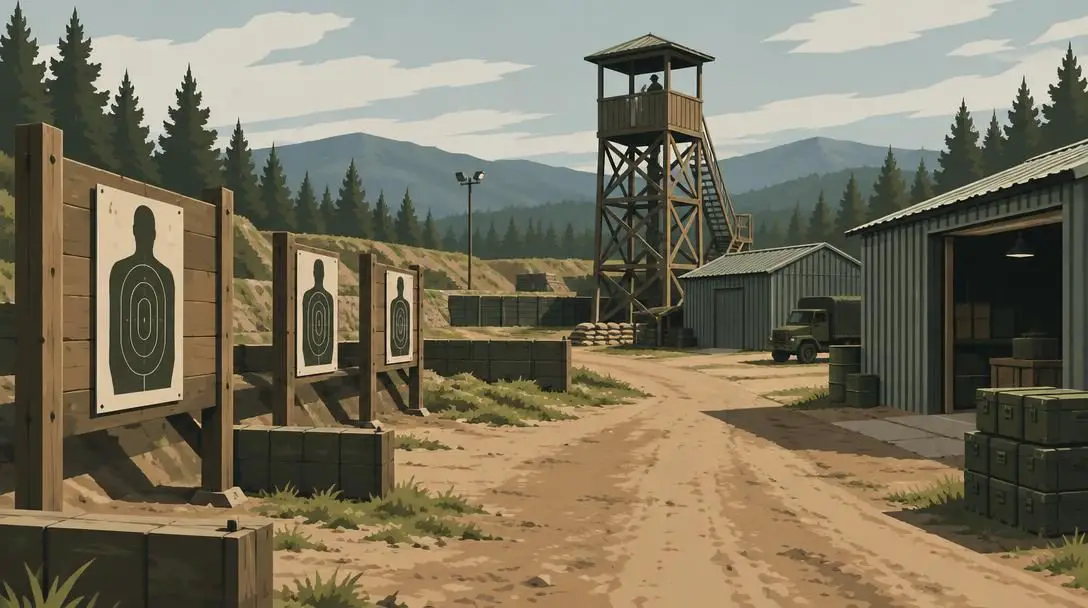
First introduced in Treyarch's original Call of Duty: Black Ops, Firing Range quickly cemented itself as a fan-favorite competitive staple, later returning in four additional franchise titles including Black Ops III and Black Ops 4. Unlike its peers from Modern Warfare, Firing Range has no tie to the single-player campaign. It was crafted purely from the ground up as a dedicated competitive arena, resulting in an exceptionally balanced flow across standard match modes.
The layout features an array of distinct practice facilities that channel action across clear lanes. At one corner sits the pistol firing range, a notorious haven for defensive players looking to dig in behind low cover. Adjacent to the pistol range stands an elevated observation tower overlooking an unfinished plywood house. Across the yard, a long-arm rifle range, an administrative trailer, and a rear storage shed tie the perimeter paths together, ensuring that close-quarters brawls and mid-range shootouts occur simultaneously across the facility.
Nuketown

- Debut Game: Call of Duty: Black Ops
- Setting: 1950s nuclear test site
- Centerpiece: Cul-de-sac street with moving truck and school bus
- Defining Characteristic: Nonstop explosive barrage and rapid engagements
Nothing is more synonymous with the fast-paced multiplayer identity of Call of Duty than Nuketown. Modeled after an artificial residential neighborhood constructed to evaluate the explosive impact of a nuclear blast on suburban housing, Nuketown offers players zero breathing room. Two mirror-image two-story homes flank a narrow cul-de-sac containing an open garage, a delivery truck, and a school bus.
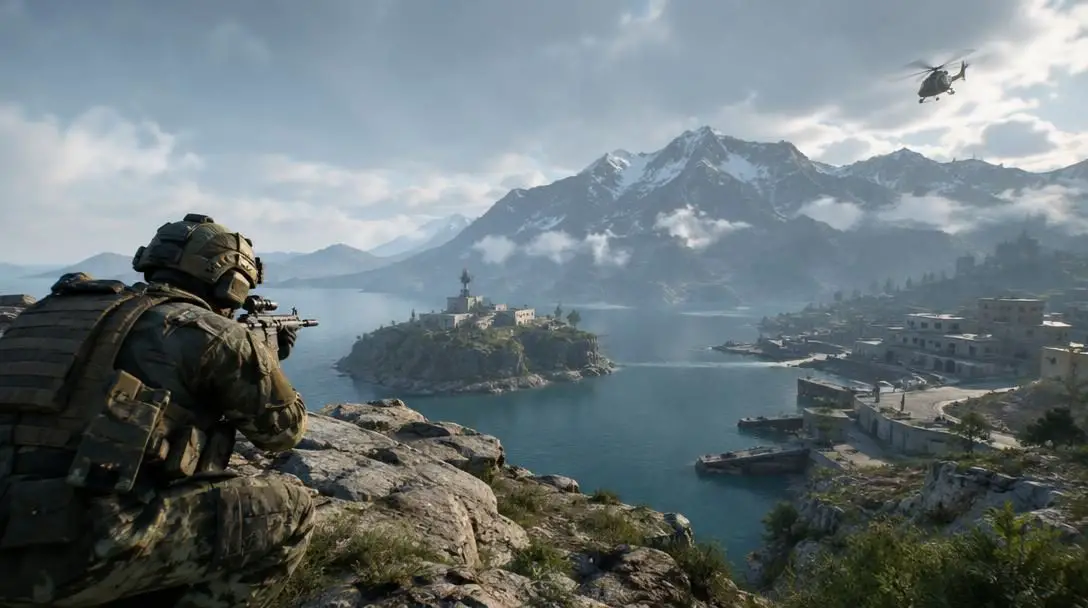
Attempting to sprint through the center street requires dodging crossfire from opposing second-story bedroom windows, as well as an endless rain of fragmentation grenades tossed over rooftops right at the start of a match. The spatial footprint is so compact that firefights ignite within seconds of respawning. Its chaotic energy and frantic pacing have turned Nuketown into a recurring cultural landmark that has been reimagined across multiple generations of the Black Ops sub-series.
Multiplayer architecture relies on a balance between sightlines, cover density, and chokepoints to ensure continuous action without leaving players defenseless.
The principles of fast-paced map architecture
The staying power of these five battlegrounds stems from how their physical layouts direct player movement and psychology. When map geometry is tuned properly, matches maintain a rapid tempo while preserving room for tactical counter-play.
- Lane structure and routing: Arenas like Firing Range rely on three distinct operational paths that channel opposing teams toward central collision zones. By anchoring routes with recognizable structures such as the trailer, the shed, and the plywood house, players always have clear visual reference points.
- Sightlines balanced with tight chokepoints: Effective map design contrasts open stretches with confined quarters. Terminal pairs the long sightlines of the exterior runway with the tight seating rows of the passenger airliner and the narrow corridor of the Hallway of Death. Highrise forces combatants across an exposed gravel rooftop to breach fortified interior offices.
- Verticality and high-ground trade-offs: Elevated stations such as the observation tower on Firing Range, the central oil rig on Rust, and the second-story bedrooms overlooking Nuketown grant superior targeting angles. However, these vantage points lack complete perimeter protection, turning aggressive campers into high-priority targets for opponents below.
- Spatial density and spawn dynamics: In miniature arenas like Rust and Nuketown, the short distance between team bases guarantees immediate action. By keeping respawn locations in close proximity to active skirmishes, the design creates a continuous cycle of spawning, engaging, eliminating, and repositioning.
How to master classic multiplayer arenas
Succeeding consistently on legacy maps requires adjusting your routes, weapon loadouts, and positioning based on the unique geometry of each battleground. Follow these core operational steps to gain control of the match:
- Match your loadout to specific map sectors: Evaluate the zone you intend to patrol before locking in your class. Equip high-fire-rate submachine guns or shotguns when pushing through the airplane cabin on Terminal or clearing the narrow rooms of Nuketown, while keeping assault rifles and sniper setups reserved for long sightlines like the Highrise rooftop.
- Avoid sprinting directly across central open ground: The middle zones of Highrise, Nuketown's cul-de-sac, and the dirt paths encircling the Rust oil rig are bullet magnets. Advance along peripheral walls, navigate subterranean tunnels, or leap between vehicle obstacles to minimize line-of-sight exposure.
- Anticipate opening projectile barrages: On ultra-compact maps, expect thrown equipment immediately upon spawning. In Nuketown, delay your push through the side alleys by a few seconds to let opening grenade volleys detonate safely ahead of you.
- Continuously monitor rear flanking paths: When securing an elevated sniper post, such as the windows along Terminal's Hallway of Death or the second floor in Nuketown, never stay focused solely through your scope. Regularly check doorways and rear stairwells to avoid silent close-quarters melee attacks.
- Counter enemy tactical equipment: In objective modes like Domination on Highrise, scan high-traffic perimeter crates and cubicle corners to destroy hidden tactical insertion markers before opponents can respawn behind your front line.
Common tactical mistakes to avoid
Because these legacy arenas are thoroughly understood by veteran players, routine positional errors are punished almost immediately. Avoid these common missteps during competitive play:
- Charging blindly through known chokepoints: Funneling straight through Terminal's Hallway of Death or sprinting across the central courtyard in Firing Range without checking elevated corners routinely results in quick eliminations.
- Remaining stationary in popular power positions: Digging into the pistol range bunker on Firing Range or perching atop the Rust oil platform makes your location predictable. Competitors will quickly dislodge static defenders using coordinated flanks, cooked explosives, or airborne throwing knives.
- Ignoring elevated window threats: Stepping into Nuketown's center roadway without checking both opposing second-story windows gives elevated snipers an effortless angle. Always sweep upper architectural features before advancing into open territory.
- Hesitating after respawning on small maps: Environments like Rust and Highrise feature rapid combat tempos. Pausing in open spawn territory to inspect inventory menus leaves you completely exposed to fast-moving opposition.
Frequently asked questions
Why is Rust considered the quintessential 1v1 map in Call of Duty?
Rust's exceptionally small spatial footprint, central elevated oil rig, and lack of safe hiding spots create non-stop engagements. Because there is nowhere to retreat, players adopted it during the Modern Warfare 2 era as the definitive proving ground for settling personal rivalries and testing raw gun skill.
Which Call of Duty multiplayer map originated from the "No Russian" mission?
Terminal was directly repurposed from the controversial "No Russian" single-player campaign mission in Call of Duty: Modern Warfare 2. The commercial airport environment was adapted into a balanced multiplayer arena featuring the terminal plaza, security gates, and a boarded passenger jet.
Why is crossing the center of Nuketown so dangerous?
Nuketown's central cul-de-sac is overlooked by opposing second-story bedroom windows from both residential structures. Combined with open sightlines around parked vehicles and a constant barrage of grenades tossed over the rooftops, crossing the street leaves players vulnerable from multiple elevated angles simultaneously.
What makes Highrise unique among Modern Warfare 2 maps?
Highrise is set on an unfinished skyscraper rooftop featuring two opposing office buildings flanking an exposed construction yard. Its distinct layout creates immediate cross-map sniper battles at round start, alongside intense tactical insertion battles during objective modes like Domination.
Was Firing Range featured in a Call of Duty single-player campaign?
No, Firing Range was not adapted from a single-player campaign mission. Debuting in Call of Duty: Black Ops, it was built specifically as a dedicated multiplayer training-ground arena, later returning in titles such as Black Ops III and Black Ops 4.
The bottom line
The enduring popularity of Terminal, Highrise, Rust, Firing Range, and Nuketown highlights the timeless nature of great level design. Decades after their initial debuts across Modern Warfare 2 and Black Ops, these arenas continue to serve as the benchmark for multiplayer pacing, sightline management, and vertical balance. While new game engines, movement mechanics, and updated weapon systems inevitably reshape the modern franchise, the rock-solid architectural fundamentals of these five battlegrounds ensure their status as the most memorable combat environments in first-person shooter history.