5 Most Popular Call of Duty Games
In the autumn of 2003, an intense historical first-person shooter arrived on personal computers and permanently altered the landscape of mainstream interactive entertainment. Developed around the gripping infantry battles of World War II, the original Call of Duty quickly escaped its niche origins on PC to evolve into an unmatched commercial powerhouse across home consoles. While dozens of rival military shooters have challenged its supremacy over the past two decades, none have rivaled the sustained multi-billion-dollar dominance achieved by this flagship brand.
The catalog spans several narrative branches, shifting from the shadowy Cold War espionage of the Black Ops lineage to the high-stakes contemporary battlefields of the Modern Warfare series. Although standout entries such as Modern Warfare 2, Advanced Warfare, and Call of Duty: WWII captivated millions, a select tier of releases pushed commercial milestones to extraordinary heights. Driven by generational hardware leaps, iconic multiplayer loops, and beloved cooperative game modes, the five best-selling installments collectively reshaped modern gaming history.
Key takeaways
- The original Call of Duty: Black Ops remains the commercial peak of the franchise, having sold more than 31 million units worldwide since its 2010 debut.
- Cross-generational console launches significantly boosted unit totals for releases like Call of Duty: Ghosts and Black Ops III by tapping into both outgoing and incoming hardware user bases.
- Franchise sales momentum often operates on reputational carryover, enabling divisive entries to achieve historic retail numbers based on the goodwill earned by previous hits.
- Cooperative offerings—most notably the round-based Zombies survival mode—transformed from bonus mini-games into primary commercial drivers that sustained year-round player engagement.
At a glance: The best-selling installments
Reaching the pinnacle of retail performance in interactive software requires perfect alignment across marketing campaigns, brand goodwill, and multi-platform distribution. The following table highlights the verified sales performance and launch contexts for the five most popular entries in the history of the series.
| Game Title | Initial Release | Lead Developer | Global Copies Sold | Hardware Generation Context |
|---|---|---|---|---|
| Call of Duty: Black Ops | 2010 | Treyarch | Over 31 million | Single generation (PS3, Xbox 360, PC) |
| Call of Duty: Modern Warfare 3 | 2011 | Infinity Ward / Sledgehammer | 30.97 million | Single generation (PS3, Xbox 360, PC) |
| Call of Duty: Black Ops II | 2012 | Treyarch | Just under 30 million | Single generation (PS3, Xbox 360, PC) |
| Call of Duty: Ghosts | 2013 | Infinity Ward | Over 28.8 million | Cross-generational transition window |
| Call of Duty: Black Ops III | 2015 | Treyarch | 26.72 million | Cross-generational transition window |
The top five best-selling Call of Duty games
Ranked strictly by verified unit sales across home consoles and personal computers, these five releases represent the commercial zeniths of the franchise. Each title arrived at a critical juncture in the brand's lifespan, leaving a lasting mark on competitive multiplayer design and cooperative gaming culture.
Call of Duty: Black Ops

- Global Sales: Over 31 million copies
- Release Window: Late 2010
- Primary Setting: Cold War covert operations
- Key Milestone: All-time franchise sales leader
Reigning supreme over both its immediate narrative sub-series and the broader entertainment catalog, the original 2010 release of Call of Duty: Black Ops stands as the single best-selling installment in franchise history. Developed by Treyarch and published by Activision, this Cold War-era thriller pushed the series past 31 million units sold. Arriving at the absolute height of console shooter enthusiasm, it kicked off what historians and long-time fans widely recognize as the golden era of the brand.
The title garnered glowing critical reviews thanks to its gripping historical fiction campaign, but its multiplayer infrastructure set unprecedented engagement records on seventh-generation consoles. More crucially, the game elevated the round-based Zombies survival mode from a modest unlockable novelty into a standalone cultural phenomenon. By building rich atmospheric lore, intricate hidden Easter eggs, and deeply satisfying cooperative survival loops, Treyarch secured a fiercely loyal player base that remained glued to the release long after its launch window.
Call of Duty: Modern Warfare 3

- Global Sales: 30.97 million copies
- Release Window: Late 2011
- Primary Setting: World War III contemporary conflict
- Key Milestone: Climax of original Modern Warfare narrative
Securing the runner-up spot on the historical sales leaderboard is 2011's Call of Duty: Modern Warfare 3, which closed out its retail run with 30.97 million copies moved worldwide. Serving as the explosive finale to the original contemporary warfare narrative, the title arrived amid frenzied public anticipation. While critical consensus acknowledged that the campaign leaned heavily into familiar cinematic tropes without reinventing the wheel, the core multiplayer mechanics were refined to an absolute razor-sharp polish.

The release democratized high-intensity online competition through an intuitive, accessible progression structure that made weapon unlocks and prestige rank grinding irresistible for players of every skill bracket. Furthermore, the launch transformed interactive entertainment marketing forever through high-profile corporate partnerships. By collaborating with major consumer brands like PepsiCo to distribute in-game Double XP rewards on everyday snacks and beverages, the publisher elevated the game from a standard software release into a pervasive mainstream pop-culture milestone.
Call of Duty: Black Ops II
- Global Sales: Just under 30 million copies
- Release Window: Late 2012
- Primary Setting: Dual-era 1980s Cold War and 2025 near-future
- Key Milestone: Moved 7.5 million copies in its first month
Following up on a universally beloved cultural heavyweight is one of the most perilous challenges in game development, yet Call of Duty: Black Ops II met astronomical expectations head-on. The 2012 sequel shattered retail records straight out of the gate by moving an astounding 7.5 million units during its opening month alone, eventually climbing just shy of the 30-million-unit mark over its operational lifespan.
The game expanded every pillar of the series, introducing branching narrative storylines in the single-player campaign alongside a re-engineered multiplayer suite that improved competitive map balance. In addition, the signature Zombies experience received extensive mechanical upgrades, morphing into an expansive cooperative world with dedicated sub-modes and complex survival objectives. What makes this sales milestone especially staggering is that the title operated entirely within a single hardware generation, racking up near-record figures on the PlayStation 3, Xbox 360, and PC without the advantage of dual-generation transition sales.
Call of Duty: Ghosts
- Global Sales: More than 28.8 million copies
- Release Window: Late 2013
- Primary Setting: Post-cataclysmic alternate future
- Key Milestone: High sales despite critical and community backlash
Landing in fourth place with more than 28.8 million copies sold, 2013's Call of Duty: Ghosts serves as a fascinating case study in commercial brand momentum. Arriving at the dawn of the eighth console generation, the title launched across four major home systems simultaneously, bridging the gap between the established PlayStation 3 and Xbox 360 audiences and the early adopters of the PlayStation 4 and Xbox One.
However, developing software across disparate architectures compromised the overall technical execution. The game suffered from performance inconsistencies and lacked tailored optimization for any single machine. Fans voiced severe frustrations over sprawling map designs, slower pacing, and controversial competitive balances, earning the title a lingering reputation as one of the least-liked chapters in the franchise. Yet despite pervasive negative word-of-mouth, the release generated monumental sales numbers, demonstrating that an elite brand identity can withstand immediate consumer dissatisfaction when buoyed by years of accumulated goodwill.
Call of Duty: Black Ops III
- Global Sales: 26.72 million copies
- Release Window: Late 2015
- Primary Setting: Dystopian 2065 cybernetic future
- Key Milestone: Paved the way for a fourth sub-brand entry
Rounding out the top five with 26.72 million copies sold is 2015's Call of Duty: Black Ops III. Released during a major platform transition cycle, the sci-fi shooter appeared across both console hardware generations. While the older PlayStation 3 and Xbox 360 versions received cut-down ports that omitted the single-player narrative campaign entirely, the newer PlayStation 4, Xbox One, and PC editions received glowing praise for their visual fidelity, fluid momentum-based movement systems, and expansive cooperative campaign.
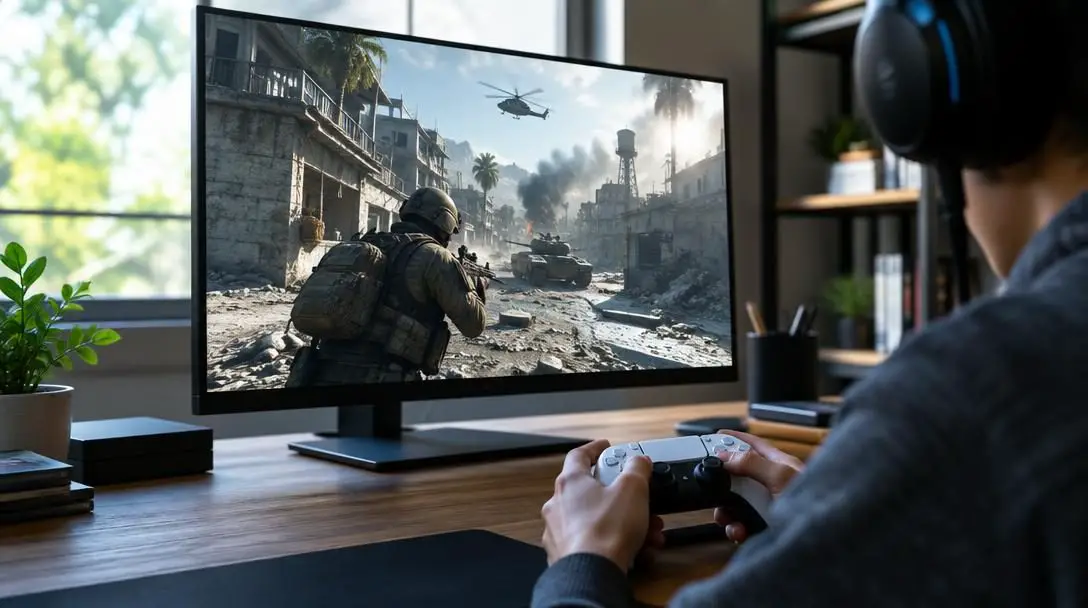
Although it stands as the second-least successful title in the overarching Black Ops narrative thread by unit count, its commercial output completely outclassed nearly every competing action game released that calendar year. The massive financial windfall produced by the game reaffirmed the supremacy of its sub-series, guaranteeing that Treyarch would develop a fourth installment, even though that subsequent sequel was unable to replicate these top-tier historical sales.
Accumulated franchise goodwill can propel an unpolished game to record-breaking commercial heights long before player sentiment catches up.
The underlying mechanics of franchise sales momentum
Analyzing how these titles reached historic retail heights reveals systemic patterns behind modern entertainment blockbusters. The multi-million-copy performance of the series stems from structural marketing advantages and platform timing rather than gameplay innovation alone.
- Reputational Lag and Carryover Momentum: Video game purchasing habits rely heavily on the perceived quality of the preceding installment. A masterpiece generates widespread pre-orders and day-one interest for its follow-up, while the negative fallout from a lackluster release typically dents the sales of the subsequent project rather than its own immediate revenue.
- Cross-Generational Transition Windows: Launching a title during the multi-year changeover between console cycles provides an immense commercial safety net. Distributing across both legacy hardware with established install bases and cutting-edge hardware with software-hungry early adopters allows publishers to maximize sales volume across four distinct home consoles.
- High-Retention Secondary Modes: While five-hour scripted military campaigns capture critical headlines, sustained year-round disc retention relies on cooperative replayability. The round-based Zombies mode created long-term community rituals, preventing second-hand store trade-ins and keeping friend groups active until the next annual release arrived.
- Mainstream Promotional Scale: Reaching 30 million customers demands marketing reach far outside specialized enthusiast media. National retail partnerships, cross-promotional retail displays, and real-world beverage rewards normalized each autumn launch as a mainstream cultural gathering.
Practical steps for experiencing legacy Call of Duty titles today
For players, preservationists, and video game historians interested in returning to these classic best sellers on modern consumer hardware, following a deliberate setup process prevents costly purchasing errors and technical hurdles.
- Select the superior hardware generation: When revisiting cross-generational releases like Black Ops III or Ghosts, prioritize the PC, PlayStation 4, or Xbox One versions. Legacy seventh-generation versions (PS3 and Xbox 360) suffer from unstable frame rates, reduced visual assets, and, in some cases, completely missing campaign modes.
- Verify backward compatibility support: If you use modern Xbox hardware, verify which physical Xbox 360 discs and digital entitlements are supported by the modern emulation architecture. Players on other ecosystems will require original legacy hardware or dedicated PC ports to launch older titles properly.
- Investigate server populations before purchase: Online multiplayer communities fluctuate heavily across older games. Check community forums and server tracking sites to confirm whether public matchmaking lobbies remain populated or if third-party custom clients are necessary to play online safely.
- Assess the value of local and offline modes: If multiplayer servers are deserted or compromised, verify the offline feature set. Releases like the original Black Ops and Black Ops II include offline local split-screen options, offline bot support, and fully accessible offline Zombies maps that retain substantial solo value.
- Track down complete or bundled editions: Base game releases omit critical post-launch map packs that contain some of the finest multiplayer arenas and definitive Zombies chapters. Look for "Game of the Year" or complete digital bundles to acquire the full legacy experience without buying individual expansions a la carte.
Common misconceptions when evaluating franchise performance
Retrospective commercial assessments frequently foster mistaken assumptions regarding why certain military shooters succeed while others stall. Examining the hard data behind the brand dispels several widespread industry myths.
- Equating High Sales with Critical Universal Praise: Commercial volume is not a direct reflection of artistic quality or fan approval. The historic numbers posted by Call of Duty: Ghosts confirm that brand loyalty and promotional hype can carry a release past 28 million units even when the game itself receives widespread community criticism.
- Comparing Raw Numbers Without Platform Context: Evaluating single-generation releases side-by-side with multi-generation titles creates a misleading comparison. Black Ops II approaching 30 million units solely across seventh-generation consoles represents a significantly deeper market penetration than later titles distributing comparable numbers across four separate machines.
- Overestimating Single-Player Campaign Influence: Casual observers often assume narrative campaigns drive general consumer interest. Historical engagement data shows that multiplayer progression systems and cooperative survival modes serve as the real commercial anchors that justify full retail purchases for the vast majority of buyers.
- Dismissing Near-Miss Commercial Hits: Highlighting only the top five entries can create the impression that other installments were commercial disappointments. In truth, titles like Modern Warfare 2, Advanced Warfare, and Call of Duty: WWII achieved massive global audiences, narrowly missing the 26-million-copy threshold required to break into this historic tier.
Frequently asked questions
What is the single best-selling Call of Duty game of all time?
The original Call of Duty: Black Ops, launched in late 2010, holds the all-time franchise sales record with more than 31 million units sold worldwide across consoles and personal computers.
Why did Call of Duty: Ghosts sell so well despite negative community reception?
Call of Duty: Ghosts benefited enormously from the immense goodwill generated by its acclaimed predecessors, Modern Warfare 3 and Black Ops II. Additionally, launching across two distinct console generations simultaneously allowed it to capitalize on both established and newly emerging hardware user bases.
Did any single-generation Call of Duty game reach the 30-million-unit mark?
Yes. Both Call of Duty: Black Ops (over 31 million) and Call of Duty: Modern Warfare 3 (30.97 million) reached the 30-million threshold while releasing exclusively on seventh-generation home consoles (PlayStation 3, Xbox 360) and PC. Black Ops II finished just shy of the milestone on the same hardware.
What role did the Zombies mode play in driving franchise sales?
The cooperative Zombies mode evolved into a primary commercial driver, particularly in the Black Ops series. Its intricate progression, atmospheric storytelling, and high replayability kept player groups engaged year-round, turning casual first-person shooter players into long-term franchise loyalists.
Which titles just missed the top five best-seller list?
Major commercial powerhouses such as Modern Warfare 2, Advanced Warfare, and Call of Duty: WWII generated massive worldwide sales but fell just short of the 26.72 million copies needed to surpass fifth-place Black Ops III.
The bottom line
The commercial ascendancy of the Call of Duty brand represents an unprecedented chapter in the history of interactive entertainment. By continually iterating on its twitch-reflex multiplayer mechanics, perfecting engaging secondary modes like Zombies, and timing releases alongside generational console transitions, the franchise turned annual software launches into international cultural events. While individual community favorites will always be debated, the sales records set by the Black Ops and Modern Warfare titles remain a monumental benchmark that few gaming properties will ever surpass.