5 Most Unbelievable Hacking Incidents

Popular cinema has long relied on a familiar dramatic trope: the lone computer hacker frantically typing lines of code against an impossible deadline, breaching a secure corporate mainframe with seconds to spare. While these cinematic portrayals exaggerate the visual spectacle of digital intrusions, real-world events prove that actual security breaches can be just as dramatic, unexpected, and consequential as Hollywood fiction.
Over the past several decades, the rapid growth of computer networks has fundamentally reshaped global finance, aviation, hospitality, and personal communications. When critical systems are compromised, the fallout can disrupt worldwide commerce and expose vulnerabilities in technologies that society takes for granted. Examining landmark digital intrusions provides vital perspective on how modern cyber threats developed and why cybersecurity remains an urgent priority.
Key takeaways
- The 1995 Citibank intrusion proved that international banking transactions could be manipulated remotely from thousands of miles away.
- Michael Calce's 2000 distributed denial-of-service campaign demonstrated how a lone teenager could inflict an estimated $1.2 billion in economic damage on major internet platforms.
- The 2004 Sasser worm crippled Delta Airlines and infected tens of millions of systems worldwide without requiring any interaction from end users.
- Cyber intrusions evolved from perimeter wire fraud and network flooding into sophisticated extortion schemes and social engineering attacks targeting cloud storage.
- Modern digital resilience requires layered defenses, including multi-factor authentication, timely operating system patching, and offline data backups.
At a glance: Historic breaches that transformed cybersecurity
| Incident | Year | Perpetrator | Attack Method | Primary Impact |
|---|---|---|---|---|
| Citibank Hack | 1995 | Vladimir Levin | Unauthorized financial network routing | Roughly $10 million drawn from global accounts |
| MafiaBoy Attacks | 2000 | Michael Calce | Distributed denial-of-service (DDoS) | $1.2 billion in losses across Amazon, CNN, eBay, Yahoo, eTrade, and Dell |
| Delta Airlines Outage | 2004 | Sven Jaschan | Self-replicating Sasser network worm | Grounded Delta Airlines IT; tens of millions of Windows PCs infected |
| Marriott Extortion | 2010 | Attila Nemeth | Corporate malware intrusion and extortion | Infected hotel network paired with demand for company employment |
| iCloud Celebrity Breach | 2014 | Hackers across various US locations | Targeted phishing and credential theft | Compromised personal backups of celebrities, including Kate Upton and Jennifer Lawrence |
Five unbelievable hacking incidents in computing history
Vladimir Levin (1995 Citibank Intrusion)

- Perpetrator: Vladimir Levin
- Hacker Location: St. Petersburg, Russia
- Primary Target: New York IT system of Citibank (1995)
- Legal Outcome: Extradited to the United States; served three years in prison
In 1995, Russian software programmer Vladimir Levin carried out an audacious digital theft that caught international financial institutions entirely off guard. Operating from his apartment in St. Petersburg, Russia, Levin managed to access the New York IT system of Citibank without ever stepping foot inside an American financial office. He authorized a chain of fraudulent transactions that siphoned roughly $10 million out of individual accounts around the globe.
At the time, commercial banking defenses were largely unprepared for an overseas attacker manipulating electronic funds transfer networks. Citibank and the Federal Bureau of Investigation tracked the illicit money movements, recovering many of the transactions. Levin was eventually arrested, extradited to the United States, and sentenced to three years in prison. The incident served as a wake-up call, demonstrating that electronic account access required far more robust authentication than legacy telecommunication systems possessed.
Michael Calce (2000 MafiaBoy Attacks)
- Online Alias: MafiaBoy
- Perpetrator Age: 15-year-old Canadian teenager
- Targeted Platforms: Amazon, CNN, eBay, Yahoo, eTrade, and Dell
- Estimated Financial Losses: $1.2 billion
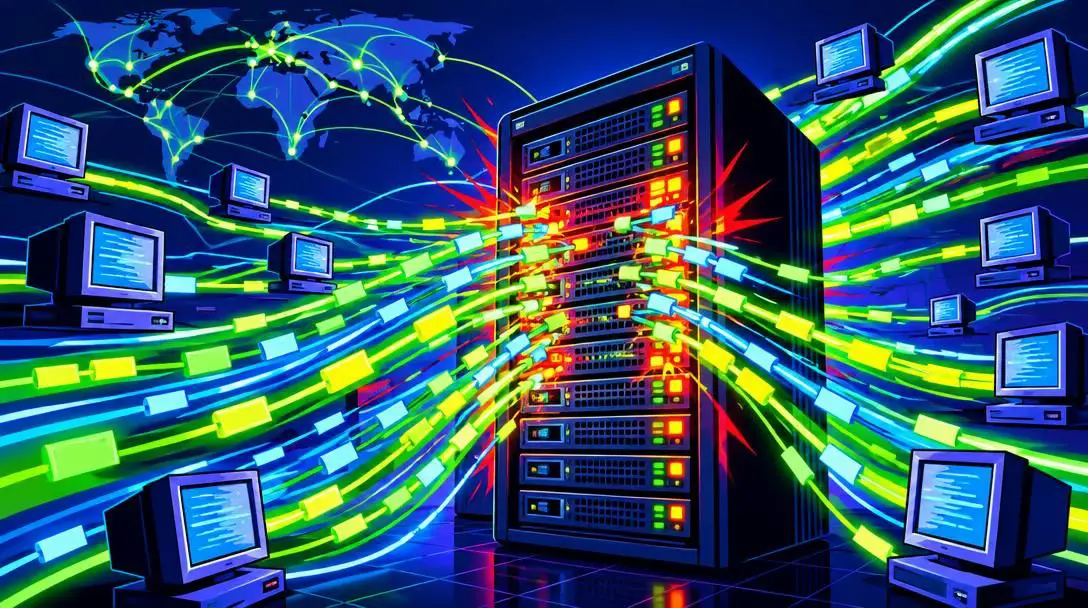
During February 2000, the commercial internet was brought to a grinding halt by an attacker operating under the handle MafiaBoy. When authorities unmasked the perpetrator as Michael Calce, a 15-year-old Canadian high school student, the computing world was stunned that a single youth could orchestrate such comprehensive disruption. Using a coordinated distributed denial-of-service (DDoS) technique, Calce overwhelmed the IT infrastructures of internet giants including Yahoo, Amazon, CNN, eBay, eTrade, and Dell.
The campaign prevented legitimate customers from visiting web portals or completing e-commerce transactions, inflicting estimated financial losses of $1.2 billion. After his capture, Calce conceded that his sprawling attack was not intended to steal funds or extract data, but was carried out simply to impress fellow members of the underground hacker community. The event exposed the fragility of web-facing services when confronted with massive volumes of automated traffic.
Sven Jaschan (2004 Delta Airlines Sasser Outage)
- Perpetrator: Sven Jaschan
- Perpetrator Background: 18-year-old German college student
- Created Malware: Sasser worm
- Major Entity Affected: Delta Airlines
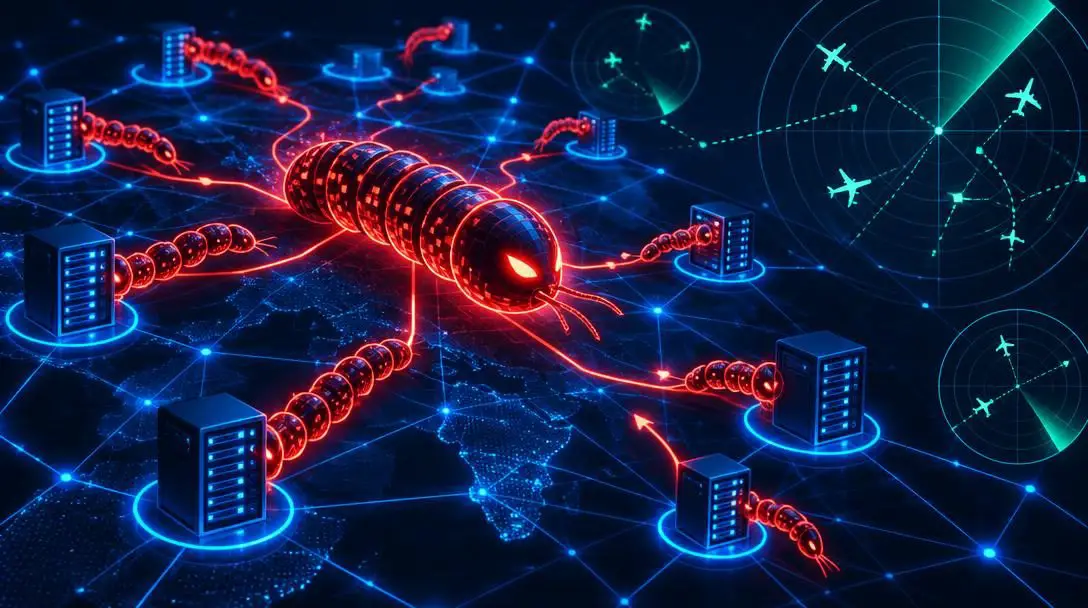
In 2004, another teenage programmer shook the foundations of commercial computing when 18-year-old German college student Sven Jaschan released the notorious Sasser worm. Unlike standard computer viruses that depend on an unsuspecting user opening an infected email attachment or running an untrusted program, Sasser was an autonomous, self-distributing worm. It scanned public networks looking for unpatched vulnerabilities in Microsoft Windows operating systems and executed automatically once a target was found.
The worm spread across continents at blistering speed, infecting tens of millions of computers. Among the most visible corporate victims was Delta Airlines, whose entire IT system crashed as the worm propagated through its infrastructure. The breakdown paralyzed operations and grounded flights, highlighting how vulnerable critical commercial travel systems were to network-level software flaws that lacked rapid security patching.

Real-world digital security breaches demonstrate that digital intrusions can be just as dramatic, unexpected, and consequential as Hollywood fiction.
Attila Nemeth (2010 Marriott International Extortion)
- Perpetrator: Attila Nemeth
- Nationality: Hungarian citizen
- Target Enterprise: Marriott International
- Stated Demand: Employment within the target company
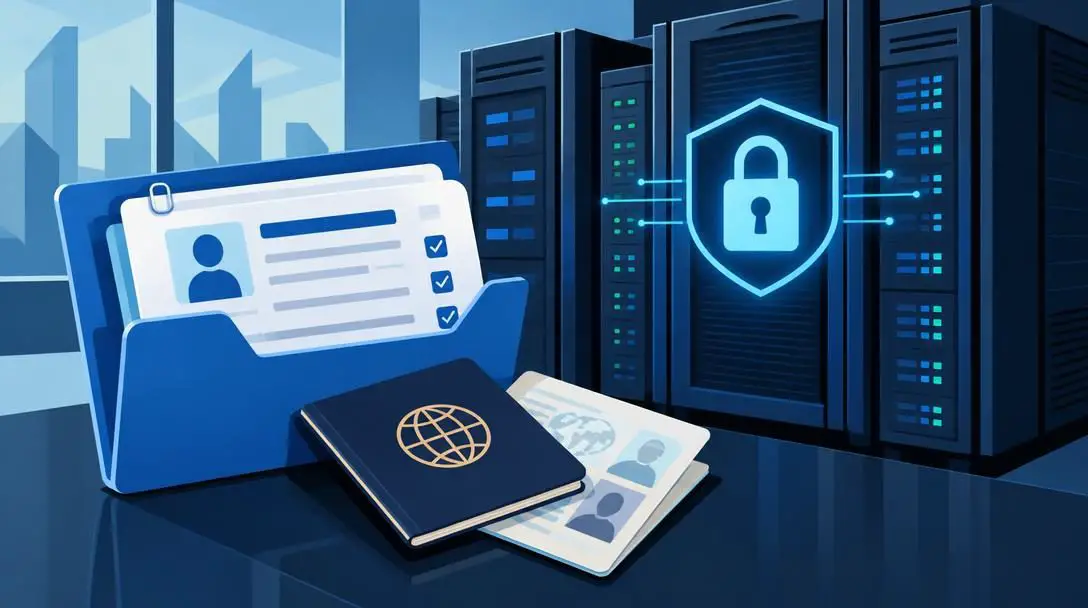
One of the most peculiar cyber incidents on record occurred in 2010 when Hungarian citizen Attila Nemeth breached the internal IT systems of Marriott International. Nemeth injected a malicious computer virus into Marriott's infrastructure, gaining unauthorized operational access. Rather than demanding a conventional cash payout, Nemeth used the threat of further network disruption as leverage in an aggressive attempt to secure a job at the hospitality corporation.
Marriott's security and management personnel opted for an unorthodox countermeasure. They created a fictional employee account for Nemeth and maintained correspondence that dangled the promise of formal employment. Believing his extortion scheme had succeeded, Nemeth provided Marriott with personal identification documents, including his passport and resume. Marriott turned the materials directly over to the United States Secret Service, leading to Nemeth's swift arrest.
Apple iCloud (2014 Celebrity Account Breach)
- Attack Method: Phishing and credential harvesting
- Targeted Service: Apple iCloud storage
- Prominent Victims: Kate Upton, Jennifer Lawrence, and other A-list celebrities
- Legal Consequences: Two affiliated hackers sentenced to roughly one year in prison
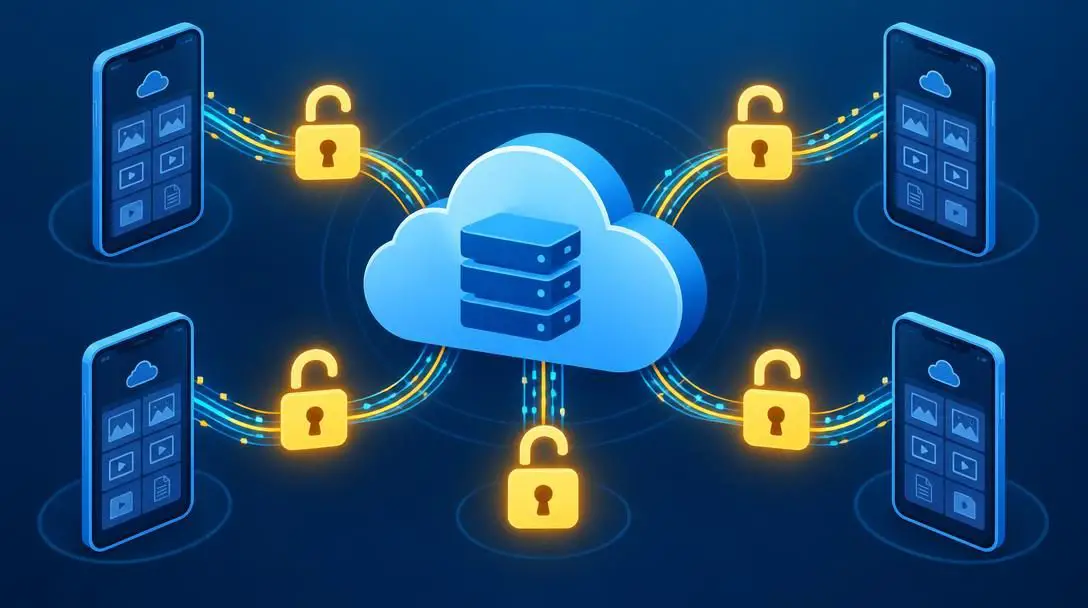
In 2014, digital privacy vulnerabilities became a global news focus when a group of hackers located in various parts of the United States breached the Apple iCloud accounts of prominent Hollywood celebrities, including Jennifer Lawrence and Kate Upton. The perpetrators obtained unauthorized access to private personal data, extracting intimate videos and photographs, some containing nudity, which were subsequently distributed across the public internet.
Rather than exploiting a zero-day flaw in Apple's cloud server software, the perpetrators relied on deceptive phishing campaigns. By posing as administrative security staff, they tricked account holders into disclosing account passwords and security answers. The incident sparked intense federal investigations, culminating in federal prosecutions and prison terms of approximately one year for two affiliated hackers, while pushing consumer tech firms to embrace two-factor authentication.
Deconstructing the technical attack vectors
To grasp why these five incidents caused such extensive damage, it is helpful to analyze the distinct technical mechanisms exploited by each perpetrator. While popular entertainment depicts hacking as rapid keystrokes breaking encryption, real-world breaches target specific structural weaknesses:
- Wire transfer and transaction diversion: Intrusions targeting financial networks, such as Levin's attack on Citibank, seek out internal messaging and clearing systems. Once an attacker obtains valid administrative credentials, they issue transaction instructions that appear authentic to clearing systems, moving money before fraud reconciliation teams identify discrepancies.
- Distributed denial-of-service (DDoS): Demonstrating high-volume disruption, Calce's MafiaBoy campaign harnessed numerous networked devices to flood targeted web servers with an unsustainable influx of connection requests. This saturation exhausts server memory, processing power, and bandwidth, rendering web applications unavailable to real visitors.
- Self-replicating network worms: Jaschan's Sasser worm exploited an architectural flaw in vulnerable Microsoft Windows implementations. By actively scanning network ports for unpatched operating systems, the worm pushed its malicious payload across networks and initiated automated execution without human intervention.
- Malware-driven corporate extortion: Intruders who implant malicious software inside a corporate network often seek leverage. By demonstrating an ability to disrupt core operations, an attacker like Nemeth attempts to coerce an enterprise into complying with financial or personal demands under threat of operational ruin.
- Targeted social engineering and phishing: Exploiting the human element, the 2014 iCloud attacks utilized misleading emails designed to impersonate legitimate platform administrators. When users provided login credentials to spoofed verification forms, attackers bypassed account protections directly through authorized login channels.
The historical evolution of cybersecurity
The timeline running from the 1995 Citibank intrusion to the 2014 iCloud breaches reflects the rapid transition of the internet from an academic and corporate novelty into a vital global utility. During the mid-1990s, enterprise IT architectures often relied on perimeter isolation. Network administrators operated under an assumption of implicit trust, presuming that anyone who possessed a connection to an internal system had legitimate authorization to be there.
By the arrival of the 2000s, commercial web platforms exploded in popularity before defensive frameworks had mature standards. The disruptive exploits of teenage hackers like Michael Calce and Sven Jaschan revealed that individual actors armed with consumer-grade personal computers could disrupt multinational businesses and ground commercial air travel. These events forced software vendors to shift toward automated operating system patch delivery and compelled hosting providers to build specialized infrastructure for filtering network floods.
By the 2010s, consumer computing migrated into centralized cloud storage repositories. As users synchronized personal smartphones, documents, and private photos with remote data centers, the attacker focus shifted from attacking raw network infrastructure to targeting individual identity credentials. Deceptive phishing operations became the preferred attack path, as exploiting human trust proved far simpler than cracking hardened encryption algorithms.
Practical steps to protect digital systems
The core weaknesses exploited in these famous intrusions remain relevant today. Organizations and everyday computer users can implement the following systematic defensive measures to protect digital environments from similar attack vectors:
- Apply software updates and security patches immediately: Configure operating systems and application software to update automatically. Prompt patching closes known vulnerabilities that self-propagating worms rely on to jump across networks.
- Enforce multi-factor authentication across all accounts: Require an independent secondary verification factor, such as a hardware security key or an authenticator application code. This prevents attackers from accessing accounts using stolen passwords.
- Audit communications for deceptive phishing markers: Scrutinize unsolicited messages, unexpected password reset prompts, and requests for verification details. Always confirm sender validity through independent channels before entering account credentials.
- Establish segregated, offline data backups: Keep copies of vital databases and personal files on disconnected, offline media. Isolated backups allow full recovery if a network is hit by destructive malware or operational disruption.
- Deploy network rate limiting and traffic scrubbing: Implement edge filtering tools that monitor inbound connection volumes. Traffic scrubbing mitigates packet-flooding denial-of-service campaigns before they saturate internal servers.
- Segment internal enterprise networks: Partition operational systems, financial transaction environments, and general employee networks into isolated subnets. Restricting lateral movement prevents an intrusion in one sector from compromising critical core infrastructure.
Common mistakes in managing cyber risk
Even security-conscious professionals frequently commit preventable errors that leave networks exposed to preventable compromise. Typical oversights include:
- Relying entirely on perimeter firewalls: Believing that a strong external border protects internal databases allows any intruder who steals legitimate credentials to roam unimpeded through sensitive directories.
- Postponing critical software updates: Delaying patches out of fear that new software might disrupt legacy operational applications leaves known vulnerabilities wide open to automated exploitation tools.
- Assuming obscurity provides adequate defense: Believing a system is too insignificant to attract attackers ignores the reality of modern cyber threats, which employ indiscriminate scanners to locate any exposed device.
- Permitting single-factor password authentication: Utilizing simple passwords without secondary validation tools exposes personal and enterprise repositories to brute-force attacks and credential-stuffing campaigns.
- Neglecting to monitor outbound network traffic: Focusing exclusively on incoming connections leaves organizations blind to data exfiltration, unauthorized fund movements, and malware communications pinging external command servers.
Strategic questions for future system resilience
As digital architecture continues to evolve, organizations and individuals must continually reassess their operational safeguards. Technical managers should evaluate the following systemic questions:
- How are internal databases isolated to prevent unauthorized fund transfers or document modifications if an initial perimeter boundary is breached?
- What operational protocols govern emergency response and communication if a threat actor attempts network-level extortion?
- How frequently are user permissions audited to ensure former staff members and dormant administrative accounts are fully revoked?
- What redundant bandwidth and routing mechanisms exist to keep public web platforms online if external infrastructure faces a massive flood of illegitimate traffic?
Frequently asked questions
How did Vladimir Levin breach Citibank in 1995?
Vladimir Levin accessed Citibank's New York IT system from his apartment in St. Petersburg, Russia, by tapping into the bank's wire transfer and electronic funds routing systems. He initiated unauthorized wire transfers totaling approximately $10 million into accounts located around the world before Citibank and federal authorities tracked and recovered the transactions.
What motivated MafiaBoy to target major websites in 2000?
Michael Calce, operating under the alias MafiaBoy, admitted after his arrest that he launched distributed denial-of-service attacks against Amazon, CNN, eBay, Yahoo, and other platforms simply to impress his peers within the online hacker community. The coordinated attacks caused an estimated $1.2 billion in economic damage.
Why was the 2004 Sasser worm able to spread so rapidly?
Unlike typical viruses that require a computer user to download or open a malicious file, the Sasser worm was autonomous. Written by German student Sven Jaschan, it actively scanned public networks for vulnerable, unpatched installations of Microsoft Windows, exploited memory flaws, and replicated itself across millions of computers without any human interaction.
How was Attila Nemeth apprehended during the Marriott extortion attempt?
After Nemeth infected Marriott's corporate systems and demanded a job under the threat of continued network damage, Marriott set up a fictitious employee account and led him to believe he was being hired. Nemeth provided his real resume and passport as identification, which Marriott immediately delivered to the United States Secret Service.
What technique allowed hackers to breach celebrity iCloud accounts in 2014?
The attackers did not breach Apple's cloud servers through software exploits; instead, they used targeted phishing campaigns. By sending deceptive communications that mimicked official security notices, the hackers deceived account holders, including celebrities like Jennifer Lawrence and Kate Upton, into revealing their usernames, passwords, and security answers.
The bottom line
The most unbelievable cyber intrusions in history reveal a common pattern: whether driven by financial greed, teenage bravado, self-replicating code, or social engineering, digital threats continually exploit the gap between technological innovation and defensive vigilance. From Vladimir Levin's remote banking infiltration to the mass phishing of consumer cloud accounts, each major breach has forced the computing industry to abandon outdated assumptions about perimeter trust and system invulnerability.
Building meaningful cybersecurity resilience is an ongoing process rather than a static goal. By understanding how past attackers leveraged wire transfer weaknesses, packet flooding, operating system vulnerabilities, and human deception, both organizations and individuals can implement layered defenses that safeguard vital systems in an increasingly interconnected world.