How to Become a Cybersecurity Expert

Cybersecurity has rapidly shifted from a specialized technical concern into one of the most critical elements of modern society. As businesses, governments, and everyday consumers route their financial records, personal identities, and operational functions through digital infrastructure, the demand for resilient network defense has never been greater. According to the U.S. Bureau of Labor Statistics, employment opportunities within the information security sector are expanding at a much faster pace than the average across all professions.
This unprecedented demand has triggered a profound labor shortage throughout the cybersecurity landscape. Companies around the world frequently struggle to find enough qualified candidates to handle live networks, analyze evolving threats, and protect sensitive data. For motivated newcomers and transitioning professionals, this talent gap presents an exceptional opportunity to build a long-term, lucrative career as a cybersecurity expert through deliberate planning and hands-on skill development.
Key takeaways
- Cybersecurity is experiencing a pronounced labor shortage, creating substantial hiring opportunities for new practitioners.
- A traditional computer science degree is valuable, but self-directed study combined with entry-level certifications offers an accessible alternative.
- Budget-friendly starter credentials like CompTIA Security+, MTA Security Fundamentals, and ISACA CSX validate baseline knowledge without prior work experience.
- Hands-on operational experience in an entry-level role is essential for qualifying for senior positions and advanced industry credentials.
- Long-term mastery requires choosing a dedicated subfield, such as network architecture, threat intelligence, or intrusion defense.
How the Cybersecurity Career Path Works
Achieving expert status in information security is rarely a linear journey, but successful practitioners consistently follow a recognizable progression. The field combines theoretical understanding, practical troubleshooting, and continuous learning. Because threats, vulnerabilities, and exploitation frameworks change continuously, cybersecurity rewards practitioners who treat education as an ongoing professional habit rather than a one-time milestone.
The foundation of any security career rests on practical execution. Unlike fields where academic credentials alone dictate advancement, cybersecurity places a premium on real-world troubleshooting. Work experience is crucial because it provides the operational context needed to handle unexpected system behaviors, network traffic anomalies, and user errors under pressure. Daily exposure to active systems is also the key requirement for qualifying for the industry's most respected advanced credentials later in your career.
You get to the expert level faster if you pick one specialty instead of trying to learn everything at once.
Alongside practical experience, formal certifications provide standard, third-party proof of technical competence. Because security applicants arrive from varied backgrounds—ranging from university computing programs to military operations and independent self-study—standardized credentials provide hiring teams with an objective baseline of what an applicant understands. Finally, the journey culminates in deliberate specialization, where security practitioners transition from general system defense to mastering a distinct niche.
Educational Pathways: Formal Degrees and Self-Directed Study
Aspiring security professionals do not need to follow a single, rigid educational track. Depending on your current lifestyle, schedule, financial resources, and previous technical exposure, you can establish your foundational understanding through formal higher education or focused independent study.
For individuals who thrive in structured environments with dedicated lab setups and cohort interaction, earning a two-year associate degree or a four-year bachelor's degree in information systems or network security is an excellent route. These collegiate degree tracks provide comprehensive training in systems analysis, software development logic, relational database concepts, and regulatory compliance. They also supply guided laboratory projects that mirror enterprise network configurations.
Conversely, self-directed study on the internet offers a flexible, cost-effective alternative for candidates unable to commit to university schedules. Countless technical guides, operating system documentation resources, vendor manuals, and interactive communities are available online. Independent learners can build their own home labs to experiment with virtual networks, firewalls, and command-line management. While self-study can provide enough knowledge to get your foot in the door, candidates must prepare thoroughly for technical interviews, where hiring managers rigorously probe fundamental concepts.

Foundational Certifications to Launch Your Career
To bridge the gap between initial study and your first job offer, introductory credentials provide verifiable proof of your competence. Many starter certifications require no previous on-the-job experience, making them ideal resume builders for career changers.
| Certification | Approximate Cost | Prerequisites | Key Coverage |
|---|---|---|---|
| Microsoft Technology Associate Security Fundamentals | A little over $100 | None | Operating system security, network layers, data defense |
| ISACA CSX Cybersecurity Fundamentals Certificate | Under $200 | None (2-hour exam) | Core defensive literacy, threat identification, security concepts |
| CompTIA Security+ | $381 | None (DoD-approved) | Enterprise security baseline, incident response, government standards |
Microsoft Technology Associate Security Fundamentals
- Price Point: A little over $100
- Exam Format: Single certification exam
- Core Scope: Operating system, network, and data protection
The Microsoft Technology Associate (MTA) Security Fundamentals credential offers an accessible entry point for students seeking validation in core defensive principles. The program covers essential security layers, including operating system hardening, local user permissions, firewall rules, and data encryption techniques. Because the preparation is self-paced and costs just a little over one hundred dollars, it represents a budget-friendly option for establishing formal qualifications.
ISACA CSX Cybersecurity Fundamentals Certificate

- Price Point: Less than $200
- Exam Duration: 2 hours
- Target Audience: Beginners and cross-discipline professionals
Offered by ISACA, an organization renowned for its senior-level governance and auditing credentials, the CSX Cybersecurity Fundamentals Certificate is designed specifically for novices. The program requires no prior employment history in IT. Candidates complete a self-paced study course and take a two-hour examination to prove their understanding of modern digital defense, vulnerability concepts, and incident handling basics.
CompTIA Security+

- Price Point: $381
- Industry Standing: U.S. Department of Defense approved
- Credential Level: Industry baseline for junior security roles
CompTIA Security+ serves as an established benchmark across the technical sector. While it demands a higher investment of 381 dollars for the examination voucher, it offers widespread employer recognition. Notably, the certification holds the formal approval of the U.S. Department of Defense, making it an invaluable asset for candidates seeking entry-level security positions within defense contractors or government agencies. Like the MTA and ISACA tracks, Security+ can be mastered through self-paced, independent study.
Step-by-Step Guide to Breaking into Cybersecurity
Transitioning into the cybersecurity sector requires steady, calculated steps. By following a structured approach, you can turn foundational learning into an entry-level role and gradually progress toward an expert specialty.
- Build core knowledge: Master the underlying mechanics of computer systems. Study how computer hardware operates, learn operating system administration in Windows and Linux, and understand core network protocols like TCP/IP, DNS, and routing. You can accomplish this through a college degree in network security or independent study using online documentation.
- Earn a starter credential: Select an accessible, entry-level certification that requires no prior professional background. Whether you choose the MTA Security Fundamentals, the ISACA CSX Fundamentals, or CompTIA Security+, schedule your exam date early to establish an accountable study timeline.
- Prepare for technical interviews: Review fundamental concepts in depth before meeting with hiring managers. You must be able to articulate the function of firewalls, describe common attack vectors, explain defensive configurations, and demonstrate clear problem-solving logic under technical scrutiny.
- Secure an entry-level position: Leverage the widespread labor shortage by applying for starting roles that offer on-the-job training. These roles allow you to earn an income while building real-world context that cannot be duplicated in theoretical study environments.
- Accumulate professional work experience: Concentrate on day-to-day operational execution. Hands-on experience working with live infrastructure is the single most critical asset for qualifying for advanced security credentials and gaining the respect of your engineering peers.
- Select a focus area: Once you understand how enterprise systems function and where your personal strengths lie, narrow your studies toward a specialized cybersecurity track to achieve genuine subject-matter expertise.
Pathways to Specialization
Cybersecurity is a vast umbrella term that encompasses distinct functional responsibilities. Attempting to master every facet of the discipline—from hardware hacking to policy writing—inevitably leads to cognitive overload and superficial capabilities. Selecting a specific domain enables you to develop deep, nuanced proficiency.
Secure Network Architecture
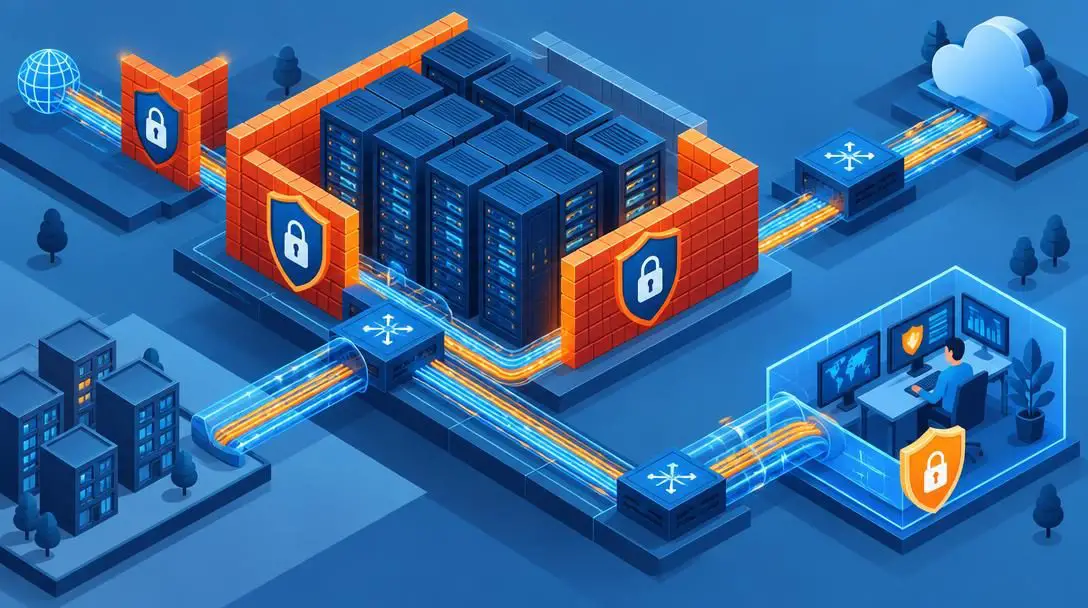
- Primary Objective: Designing resilient infrastructure
- Key Responsibilities: Perimeter defense, segmentation, and access control
Professionals focusing on network architecture build the structural defenses that keep systems safe. They decide how data travels across an enterprise, where internal firewalls should be placed, how virtual private networks are encrypted, and how zero-trust access controls are implemented. Architects ensure that even if an attacker penetrates the outer boundary of a network, internal segmentation prevents them from moving freely between critical database servers.

Threat Intelligence and Research
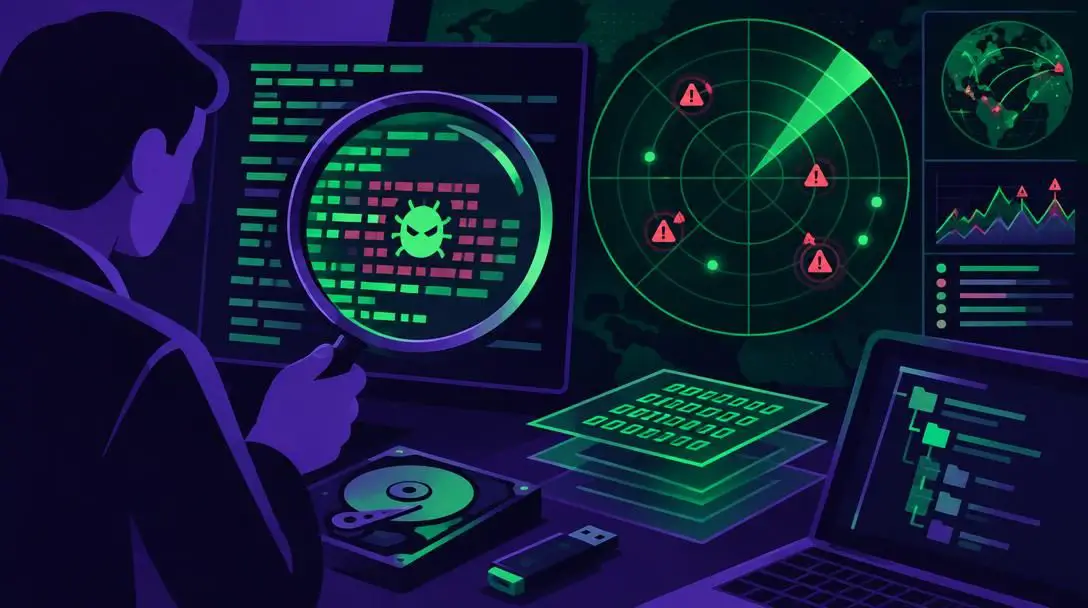
- Primary Objective: Analyzing evolving adversary methodologies
- Key Responsibilities: Tracking hacker groups and publishing threat warnings
Threat intelligence specialists focus on staying up to date on trends in hacking. Rather than configuring routers and switches every day, these researchers monitor malicious actor groups, reverse-engineer emerging exploit kits, and inspect dark web forums. By gathering and analyzing data on upcoming attack methodologies, threat researchers help security teams preemptively patch vulnerable systems before wide-scale intrusion campaigns occur.
Testing Connections and Defenses

- Primary Objective: Validating system integrity and hunting intruders
- Key Responsibilities: Traffic analysis, intrusion detection, and perimeter testing
This hands-on operational role requires monitoring network traffic and actively testing connections to locate unauthorized intruders. Analysts inspect telemetry data, examine system logs for unusual behavior, and run scans against external interfaces to find unsecured openings. When anomalous activity occurs, these specialists investigate the incident, identify the attack path, and neutralize unauthorized connections.
Avoidable Career Mistakes
Because the cybersecurity field demands high attention to detail, newcomers frequently encounter roadblocks that slow their professional momentum. Avoiding these common traps can keep your career trajectory on schedule.
- Overlooking foundational IT concepts: Novices often attempt to jump directly into advanced exploitation frameworks without understanding network switching, IP routing, user permissions, or system administration. If you do not know how a corporate network operates under normal circumstances, you cannot detect when it has been compromised.
- Neglecting interview preparation: Relying on memorized buzzwords rather than a clear mechanical understanding of security principles will undermine technical job interviews. Interviewers test your practical troubleshooting process, not just your vocabulary.
- Over-diversifying your studies: Trying to learn penetration testing, incident response, network design, malware analysis, and cloud auditing simultaneously dilutes your attention. Concentrating on one core competency accelerates your journey to the expert level.
- Procrastinating on job applications: Due to the current labor shortage, entry-level roles exist specifically to train candidates while they work. Postponing your job search in pursuit of endless certificates delays critical hands-on experience.
Frequently asked questions
Do I need a university degree to become a cybersecurity expert?
No. While a two- or four-year degree in information systems or network security offers structured learning and lab experience, self-study using online resources is an equally viable route to land an entry-level position. Many employers value practical understanding and starter credentials over formal degrees.
Which starter certification is best for obtaining a government job?
CompTIA Security+ is the ideal option for candidates targeting public-sector roles. At 381 dollars, it holds the formal approval of the U.S. Department of Defense, satisfying administrative requirements for entry-level government and defense contractor positions.
Why is hands-on work experience so important in cybersecurity?
Cybersecurity depends on managing operational risk on live networks. Practical experience teaches you how systems behave under real-world stress and is a mandatory prerequisite for qualifying for advanced professional certifications later in your career.
How much do introductory cybersecurity certifications cost?
Introductory certification costs vary. The Microsoft Technology Associate Security Fundamentals exam costs a little over 100 dollars, the ISACA CSX Fundamentals Certificate costs under 200 dollars, and the CompTIA Security+ examination voucher costs 381 dollars.
What are the main areas of specialization in cybersecurity?
Key areas of specialization include secure network architecture, where professionals design defended networks; threat intelligence and research, which tracks evolving hacking trends; and intrusion defense, which focuses on testing connections to detect and expel intruders.
The Bottom Line
The road to becoming a cybersecurity expert requires patience, deliberate practice, and continuous learning. With the U.S. Bureau of Labor Statistics highlighting faster-than-average employment growth and organizations grappling with persistent talent shortages, there has never been a better time to break into the industry.
Evaluate your immediate next steps by taking stock of your technical background, financial budget, and weekly schedule. If resources are tight, begin self-directed study and prepare for an affordable starter exam like the MTA Security Fundamentals or ISACA CSX certificate. If you have the budget and aim to pursue public-sector roles, invest in the CompTIA Security+ credential. Alternatively, look into college degrees in information systems or network security if you prefer structured academic environments.
Once you acquire foundational literacy and earn an initial credential, prioritize landing an entry-level job where you can earn an income while training on active networks. As your operational confidence grows, select a distinct specialty—whether engineering network architectures, tracking emerging adversary trends, or hunting intruders—to establish your authority as a trusted cybersecurity expert.