5 Myths About Living In The Country
Moving from a bustling metropolitan center to a rural setting is a major life transition that continues to capture the imagination of city dwellers seeking a deliberate change of pace. The appeal of rural living is easy to understand, filled with visions of picturesque landscapes, tranquil mornings, fresh air, and immediate relief from the relentless noise and density of urban centers. For many, the countryside represents an opportunity to trade crowded transit and high stress for open skies, scenic views, and a healthier everyday rhythm.
Yet the broader public conversation about relocating to the country is frequently distorted by polarized assumptions. In popular culture, rural life is often romanticized as an effortless, pastoral paradise, or dismissed as an uncomfortable, isolated exile completely disconnected from contemporary infrastructure. These exaggerated narratives leave prospective movers wondering whether moving to a smaller community means sacrificing community engagement, technological convenience, career prospects, or financial security. Evaluating whether a rural move aligns with your long-term goals requires looking past the folklore and examining the practical realities of modern country life.
Key takeaways
- Countryside living offers practical access to essential retail and nearby metropolitan hubs without leaving residents isolated.
- Rental prices vary widely across rural regions, meaning popular and scenic locations often command high housing rates.
- Local rural culture thrives after dark through year-round creative gatherings, open mic nights, gigs, film screenings, and art exhibitions.
- Modern broadband networks provide high-speed internet and unlimited data plans that easily accommodate streaming, gaming, and remote work.
- Flexible remote work arrangements and localized openings allow professionals to sustain rewarding careers outside major economic hubs.
At a glance: Rural myths vs. modern realities
Prospective movers often discover that long-standing stereotypes about non-urban living fail to reflect how modern communities operate. Comparing common expectations with everyday facts clarifies what living outside the city actually entails.
| Topic | Widespread Assumption | Practical Reality | Everyday Impact |
|---|---|---|---|
| Proximity & Access | Complete physical isolation from modern amenities | Everyday supermarkets and shops are within straightforward reach | Errands require intentional planning rather than emergency stockpiling |
| Housing Costs | Rock-bottom rents and cheap housing across the board | Costs vary heavily based on regional appeal and scenery | Popular countryside destinations often command premium price points |
| Evening Culture | Communities completely shut down by 8pm or 9pm | Vibrant local social calendars with gigs, films, and exhibitions | Evenings center around regional hubs, arts centers, and creative venues |
| Digital Connectivity | Unusable dial-up speeds and persistent buffering | High-speed broadband with unlimited data packages | Seamless remote work, video streaming, and online multiplayer gaming |
| Employment | Scarce jobs due to regional employer detachment | Abundant remote positions and regional opportunities | Hiring managers evaluate talent independent of city center addresses |
Deconstructing the five major rural living myths
To make an informed relocation decision, prospective movers must separate outdated tropes from current village and small-town dynamics. Below, we examine the five most common assumptions held by prospective transplants.
Myth 1: The Countryside Is Too Remote
A primary hesitation for prospective movers is the deep-seated fear of becoming entirely cut off from civilization, essential services, and fellow human beings. People often picture vast, unreachable expanses where obtaining a simple loaf of bread or a package of medicine requires a multi-hour trek over treacherous backroads. In reality, modern rural life does not require you to surrender the fundamental conveniences of civilization.
While rural hamlets and small villages rarely host specialized high-end boutiques or 24-hour retail megastores, supermarkets and shops stocking everyday necessities are usually not far away. Routine errands remain straightforward and manageable. Furthermore, major cities generally remain within accessible driving or transit distance, making day trips, medical appointments, or cultural outings entirely practical. Living rurally is not about total physical detachment; it simply requires a slightly more organized approach to your weekly calendar while preserving regular contact with regional centers.
Myth 2: Rent Is Affordable Everywhere
Another prevalent belief is that leaving the municipal borders of a major metropolis instantly delivers rock-bottom housing costs. Many renters envision securing sprawling farmhouses or charming historic cottages for a fraction of their current apartment budget. While it is true that rural rents are frequently lower than those found in dense metropolitan cores, housing is definitely not uniformly cheap across all rural locations.
Rental rates fluctuate considerably across regions, heavily influenced by natural beauty, architectural charm, and proximity to regional commercial hubs. In highly sought-after, picture-perfect districts, housing demand outpaces supply, driving prices to unexpected heights. Newcomers who assume all non-urban locations are affordable often experience severe sticker shock when exploring prime scenic areas. Thorough research into regional rental trends is essential to avoid unexpected budgetary strain.
Myth 3: Everything Stops at 9pm
City dwellers accustomed to round-the-clock convenience stores, midnight dining, and late-night nightlife often assume that the countryside goes entirely dormant the moment daylight fades. A pervasive myth asserts that rural streets clear out and entire towns shut down completely between 8pm and 9pm, leaving residents with nothing to do after supper.
While it is accurate that local community events wrap up somewhat earlier than sprawling metropolitan warehouse parties, rural culture does not dissolve when darkness falls. In fact, many country towns maintain energetic creative calendars throughout all four seasons. Residents regularly enjoy live gigs, open mic sessions, local film screenings, and art gallery exhibitions organized in community halls, local pubs, and independent arts venues. Rather than facing monotonous silence, country residents encounter close-knit social circles and lively evening entertainment grounded in regional community life.
Local culture does not simply vanish once evening arrives; countryside communities sustain vibrant creative calendars and lively social venues throughout the entire year.
Myth 4: The Internet Is Slow Everywhere
In an era defined by digital connectivity, many households worry that trading asphalt for pasture means trading modern fiber connections for spotty, frustrating dial-up speeds. Decades ago, sparse population density and lacking telecommunication infrastructure did indeed make internet access in rural locales slow and erratic. However, substantial infrastructure developments have completely transformed this landscape.
Over recent years, high-speed broadband availability has expanded deep into rural territories. Today, rural residents regularly select from modern high-speed internet plans featuring unlimited data usage, delivering speeds comparable to urban residential lines. Consequently, running high-bandwidth online video games, streaming ultra-high-definition television, and hosting demanding multi-party video conferences for work are routine activities that function smoothly without disruptive lag or endless buffering.
Myth 5: You Can't Find a Job Easily in the Countryside
The fifth misconception claims that moving to the country is economic suicide, predicated on the idea that local employment is nonexistent and regional employers remain unaware of talent living outside metropolitan limits. This assumption overlooks the monumental shifts that have revolutionized modern work cultures over the past decade.
Advancements in workplace technology have made remote employment standard practice across countless industries, enabling professionals to interface seamlessly with colleagues around the globe from a home office. Progressive employers prioritize expertise, output, and capability over an employee's physical proximity to a downtown corporate tower. By combining remote opportunities across diverse sectors with local enterprise openings, building and sustaining a prosperous, forward-moving career in the countryside is entirely feasible.
How modern rural infrastructure and daily life actually function
To comfortably adjust to a rural lifestyle, one must understand how daily infrastructure functions outside of dense municipal grids. In cities, systems like transit, delivery, and entertainment operate continuously in the background, requiring little personal forethought. Country living, by contrast, invites residents to engage more directly and deliberately with their local surroundings.
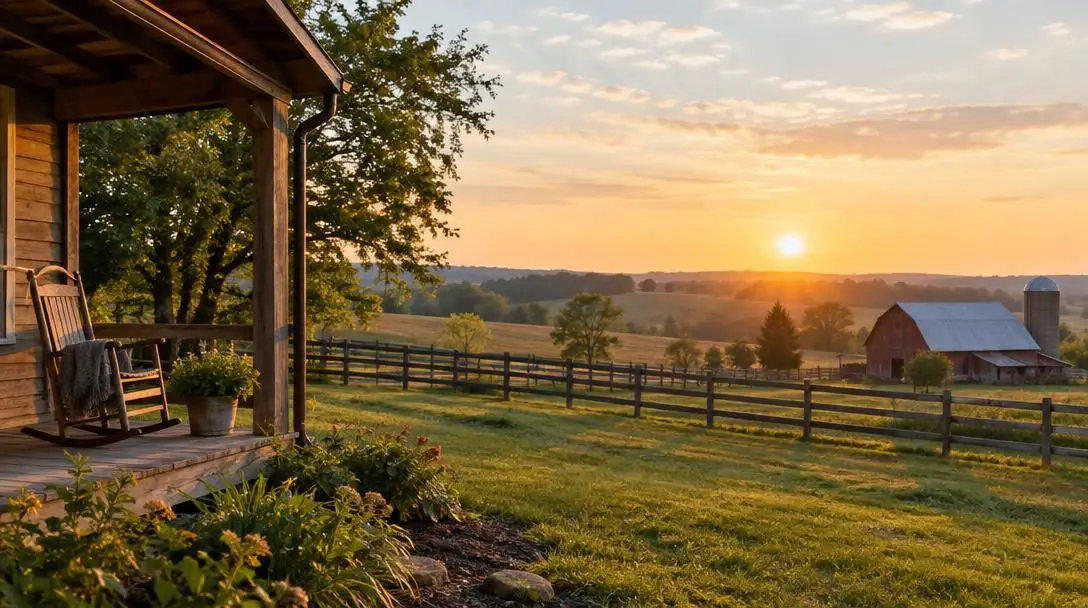
Sourcing provisions illustrates this dynamic clearly. Rather than popping into a corner bodega three times an evening, country dwellers rely on local village shops for daily staples and make regular trips to nearby supermarkets for comprehensive grocery runs. When specialized tools, designer goods, or niche retail items are required, residents take advantage of straightforward regional road networks or rail links to visit neighboring cities for an afternoon excursion.
Digital and social connectivity follow similarly robust patterns. Upgraded rural broadband links households to digital commerce, remote professional networks, and global entertainment streams. Meanwhile, community socialization flourishes in distinctive venues. Instead of impersonal commercial nightlife districts, evening activity revolves around local community centers, independent creative spaces, and historic meeting houses. These settings foster authentic relationships, where neighbors gather for seasonal art shows, acoustic showcases, and community screenings, blending modern lifestyle standards with deep-rooted communal ties.
Practical steps for planning a seamless rural relocation
Relocating from a metropolitan core to a countryside community requires structured preparation. Following an organized sequence of steps helps ensure that your transition remains practical, enjoyable, and financially viable.
- Define your regional boundary: Establish an acceptable travel radius from major metropolitan centers to ensure you can reach urban hubs easily for specialized needs, cultural outings, or medical care.
- Investigate local housing markets: Examine rental rates and property prices across multiple villages and towns, keeping in mind that scenic spots and high-demand rural destinations carry higher price tags.
- Assess retail and service proximity: Map out the distance from prospective addresses to the nearest supermarkets, healthcare facilities, and everyday shops to understand how your weekly errand routine will look.
- Verify physical connectivity: Contact local service providers to confirm that specific prospective homes have access to high-speed broadband packages with unlimited data allowances.
- Explore local community calendars: Review regional notice boards, municipal websites, and community event listings to gauge the frequency of local art exhibitions, musical performances, open mics, and film screenings.
- Broaden your professional horizons: Structure your resume for remote roles across various sectors, ensuring you tap into employers that hire nationwide rather than limiting yourself to nearby physical storefronts.
Common pitfalls when transitioning away from cities
While moving to the country is a rewarding adventure, relying on generalizations instead of grounded research can lead to frustration. Being mindful of frequent missteps helps newcomers settle in smoothly.
- Assuming universal affordability: Factoring baseline regional averages into your budget without checking local pricing can cause financial distress in sought-after countryside enclaves.
- Underestimating errand travel times: Neglecting to identify the closest essential shops prior to moving can turn routine weekly groceries into an exhausting chore.
- Presuming an absence of local culture: Retreating indoors under the false impression that rural life ceases after dark prevents you from discovering thriving local arts, music, and dining scenes.
- Fearing complete disconnection: Viewing rural life as an all-or-nothing exile can cause unnecessary anxiety about leaving behind friends, family, and urban conveniences that remain readily reachable.
- Constraining your employment search: Overlooking remote work possibilities and seeking only nearby brick-and-mortar postings unnecessarily restricts your career advancement and earning potential.
- Skipping property-specific broadband checks: Assuming an entire postal district has uniform high-speed internet without verifying the specific address can compromise your ability to work and stream efficiently.
Frequently asked questions
Can I maintain a demanding corporate career while living in the country?
Yes. Thanks to the widespread availability of high-speed rural broadband and the increasing prevalence of remote work, professionals across many sectors work for national and international firms without living near corporate headquarters. Employers frequently hire talent based on capability rather than physical location.
Is it true that country communities have no social life after dark?
No. While community functions often end earlier than late-night urban parties, rural towns maintain active evening scenes. Local venues, pubs, and community organizations host open mic nights, film screenings, live gigs, and art exhibitions throughout the year.
Are groceries and basic household necessities difficult to obtain rurally?
No. Everyday household items are easily found at local village stores, and full-scale supermarkets are typically located a short drive away in neighboring commercial centers. While specialized boutique items may require an occasional trip to a nearby city, essential errands remain convenient.
Will I save money on rent no matter which countryside town I choose?
Not necessarily. While rural rents are often lower than inner-city rates, prices fluctuate dramatically depending on location. Desirable, scenic, or historically significant towns often command premium rental rates that rival urban outskirts.
Is rural internet reliable enough for modern online gaming and 4K streaming?
Yes. Substantial infrastructure updates across rural districts have brought modern broadband packages with unlimited data to many country regions. These connections easily handle the bandwidth demands of video conferencing, high-resolution streaming, and online multiplayer gaming.
The bottom line
Trading the constant stimulation of a major metropolis for the spacious tranquility of the countryside is a significant life milestone, but it does not require stepping backward in time. Today's rural communities are dynamic, well-connected, and culturally active environments that balance scenic tranquility with practical modern conveniences.
By discarding outdated caricatures of total isolation and recognizing the realities of local infrastructure, housing markets, and digital connectivity, you can design a move that supports both your personal well-being and professional aspirations. With thorough advance research, a clear assessment of local retail and broadband access, and an open mind toward community involvement, making a home in the countryside offers an enriching, sustainable, and truly balanced chapter of life.