5 Myths About Small Town Life That City Dwellers Still Think Are True
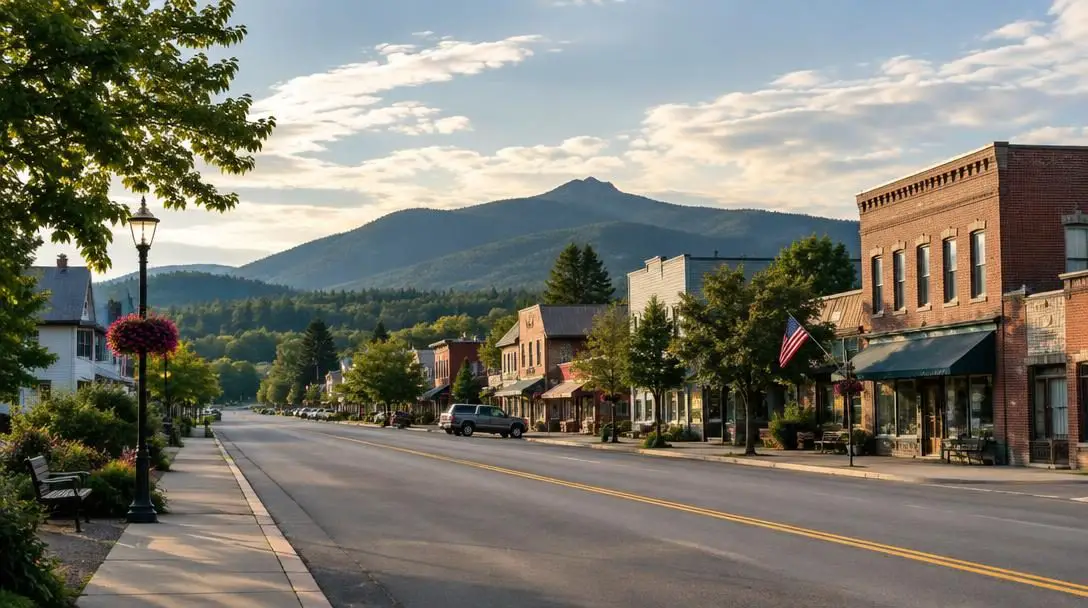
For individuals who have spent their formative or professional years navigating dense metropolitan corridors, the concept of small-town life often evokes a predictable set of visual tropes. Popular media and urban folklore tend to paint non-urban existence as either an idyllic, timeless postcard of sleepy front porches or a desolate cultural desert where time stands still. While smaller municipalities certainly offer a different rhythm than high-density urban centers, equating a lower population density with social stagnation, technological backwardness, or cultural deprivation is a significant misjudgment.
The persistent perception gap between metropolitan residents and small-town citizens is largely rooted in outdated stereotypes. Modern regional hubs and rural municipalities have evolved alongside modern infrastructure, cultivating active civic communities, high-performing schools, and dependable digital services. By taking an evidence-based look at the everyday mechanisms of small-town living, we can separate persistent fictions from practical realities.
Key takeaways
- Small towns provide rich cultural and recreational avenues, balancing nature-based adventure with active community-driven arts.
- Familiarity among neighbors creates a culture of mutual accountability and personal respect rather than pervasive surveillance.
- Research shows that smaller school districts with under 1,000 pupils frequently outperform larger institutions on standard proficiency tests and graduation rates.
- Modern broadband infrastructure commonly delivers connection speeds up to 1000 Mbps, debunking the idea of rural digital isolation.
Deconstructing the Five Prevalent Small-Town Myths
Urban observers frequently measure community value through metropolitan benchmarks, assuming that without towering commercial entertainment districts or professional sports arenas, a town must be devoid of vitality. A closer inspection of five pervasive myths illustrates how significantly daily life in smaller communities differs from common assumptions.
Myth 1: There Is Not Much to Do in a Small Town
The assumption that entertainment requires high-density commercial infrastructure causes many city dwellers to conclude that smaller locales offer little recreation. In major metropolitan areas, entertainment is predominantly commercialized and concentrated in massive concert venues, convention centers, and multi-tiered arenas. Without these massive installations, visitors often mistakenly believe nothing is happening.
In reality, small towns leverage their geographic footprint and natural topography to offer direct access to outdoor adventure. Activities such as whitewater rafting and zip lining are frequently located minutes from residential neighborhoods rather than hours away. Culturally, these communities lean into their distinct identities through locally guided historic walking tours, community theatre productions, and recurring street festivals. Recreation is not absent; it is simply organic, accessible, and community-centered.
An absence of towering skyscrapers does not mean an absence of recreation, culture, or civic vitality.
Myth 2: Everyone Knows Your Business
Because residents in a smaller municipality recognize one another in public spaces, outsiders often assume that personal boundaries do not exist. The standard trope portrays small-town residents as perpetually engaged in neighborhood gossip, monitoring each other's private lives, and scrutinizing every newcomer.
Familiarity, however, is not the same as intrusiveness. While people routinely encounter acquaintances at the market or post office, residents place a high premium on individual character and privacy. The visibility inherent in smaller communities tends to foster mutual consideration rather than nosiness. People take pride in being recognized for their dependability, neighborliness, and civic contributions, establishing a baseline of respect that protects privacy rather than destroying it.
Myth 3: Small Towns Have Inferior Education Systems
A prevalent misconception assumes that primary and secondary schools outside metropolitan hubs lack the resources, standards, and instructional rigor needed to prepare students for higher education or modern careers. While funding variations exist across all municipal models, categorizing non-urban public education as universally deficient is flatly contradicted by data.

According to findings published by Education Week magazine, students enrolled in educational institutions with fewer than 1,000 pupils consistently outscore peers at larger institutions across several critical academic measures. These measurable outcomes include standardized reading proficiency tests, mathematics proficiency tests, science proficiency tests, and overall high school graduation rates. The manageable scale of smaller learning environments allows educators to maintain stronger visibility and tailored instruction, driving academic excellence.
Myth 4: Residents Lack High-Speed Internet and Modern Tech
Because metropolitan areas are dense hubs of digital services, urban residents often assume that moving past city borders means entering a technological dead zone. Many imagine that remote work, streaming, and modern digital collaboration are virtually impossible outside major metro boundaries.
Modern telecommunications networks have largely closed this divide. Most small towns are serviced by infrastructure that delivers high-speed broadband connections ranging from 10 megabits per second (Mbps) to 1000 Mbps. Connections operating at the upper boundary easily support simultaneous high-definition teleconferencing, large data transfers, and multi-user streaming. Moreover, public libraries serve as comprehensive digital hubs, offering free community Wi-Fi, computer terminals, digital research databases, and extensive catalogs of downloadable ebooks.
Myth 5: Daily Life Is Inherently Boring and Monotonous
The idea that small-town living entails endless, unvarying routine stems from an outsider's inability to see community-level momentum. Without massive digital billboards or centralized commercial ticketing agencies, events and gatherings can appear invisible to casual observers.
A review of a typical town calendar shows a vibrant schedule of recreational, natural, and civic events. Weekends offer uncrowded regional hiking trails and pristine night skies ideal for stargazing away from light pollution. Regular weekly gatherings include bustling farmers markets, while monthly and seasonal schedules feature holiday parades, outdoor carnivals, and cultural festivals that draw together multi-generational crowds. Life moves at an intentional pace, but it is far from dull.
At a Glance: Myths vs. Small-Town Realities
Comparing metropolitan perceptions directly against local conditions shows how small-town systems structure daily life, education, and recreation.
| Myth | Metropolitan Assumption | Documented Reality | Key Features & Evidence |
|---|---|---|---|
| Recreation | No major venues means nothing to do | Decentralized, accessible recreation | Whitewater rafting, zip lining, historic walking tours |
| Privacy | Constant gossip and zero boundaries | Mutual respect and personal integrity | Familiarity fosters accountability rather than intrusion |
| Education | Chronic underperformance and low standards | High standardized performance | Education Week: Higher math, reading, science, and graduation rates in schools <1,000 pupils |
| Connectivity | Dial-up speeds and technological isolation | Modern broadband infrastructure | Speeds from 10 to 1000 Mbps; libraries with tech databases and free Wi-Fi |
| Lifestyle | Monotonous, repetitive, and dull | Dynamic seasonal and civic engagement | Farmers markets, community theatre, holiday parades, carnivals, stargazing |
Structural and Social Dynamics of Small-Town Living
The operational logic of a small town differs from a major city across several clear structural categories. Recognizing these mechanics helps explain why modern smaller communities remain remarkably resilient and socially connected.
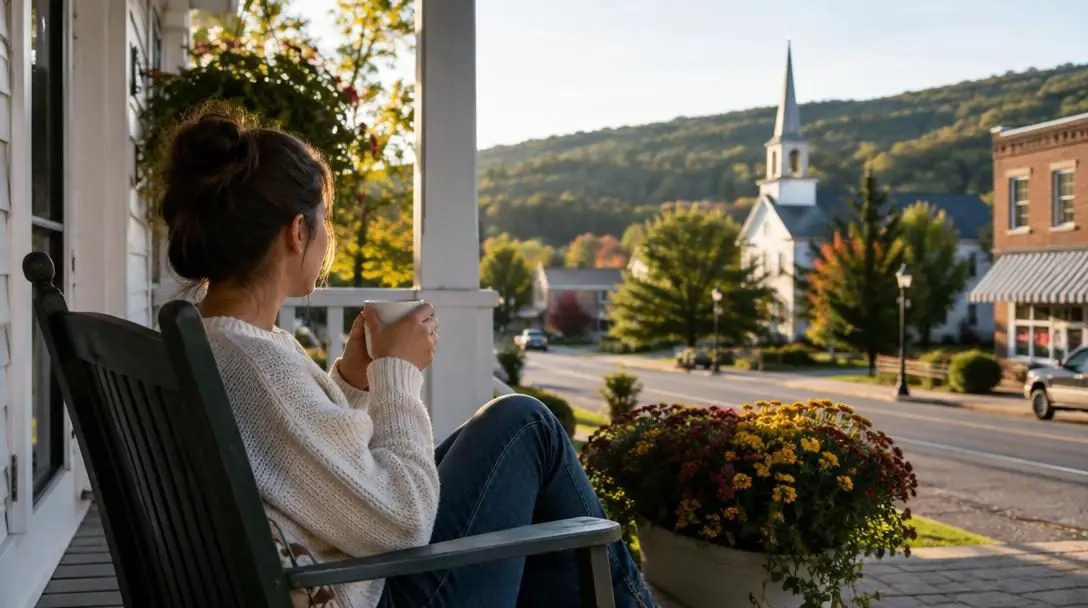
First, recreation is decentralized rather than bundled into paywalled commercial complexes. Instead of spending hours commuting to an indoor venue, residents incorporate natural geography—such as riverbanks, forested trails, and historic downtown streets—into their daily exercise and relaxation. Civic traditions like community theatre and seasonal carnivals serve as communal touchpoints rather than transactional entertainment products.
Second, social networks rely on repetitive, face-to-face interaction across diverse civic settings. Because people see their peers at municipal meetings, youth athletic events, and local markets, individuals naturally uphold standards of personal accountability. Rather than generating rumors, this consistent contact creates an incentive to act with fairness, courtesy, and integrity.
Finally, community institutions operate at a human scale. Public libraries do not simply store physical books; they function as digital anchor institutions offering community computer terminals, digital lending platforms, and educational databases. Similarly, small public schools maximize individual instructional attention, explaining why institutions with fewer than 1,000 students consistently excel across fundamental academic benchmarks.
How to Authentically Explore or Relocate to a Small Town
Whether you are planning an extended visit, looking for a change of pace, or exploring a permanent move, engaging with a smaller community requires a deliberate, respectful approach.
- Consult local municipal boards and community calendars: Look beyond national search engines to find real-time notices about farmers markets, regional theatre performances, holiday parades, and seasonal outdoor festivals.
- Verify available broadband infrastructure: If you plan to work remotely, contact regional service providers to confirm speed tiers (which regularly run from 10 to 1000 Mbps) and check the public library's Wi-Fi hours and technical services.
- Examine regional school cohort metrics: Research localized state performance data, focusing on districts with fewer than 1,000 students to evaluate historical achievement in reading, mathematics, science, and high school graduation rates.
- Map natural and historic recreation: Identify area assets such as hiking trail networks, designated stargazing clearings, historic downtown walking tours, and river access for kayaking or whitewater rafting.
- Practice community-first etiquette: Support independently owned downtown retailers, engage courteously with long-time residents, and respect the natural boundaries and civic traditions that shape local life.
Common Evaluation Mistakes City Dwellers Make
When assessing a non-urban community, metropolitan observers frequently fall into predictable analytical traps by imposing big-city metrics onto small-scale ecosystems:
- Expecting urban entertainment models: Measuring a town's vitality solely by whether it possesses commercial sports stadiums or arena-scale concert halls causes observers to overlook rich local assets like community theatre, outdoor carnivals, and cultural festivals.
- Equating low population density with digital isolation: Assuming that physical distance prevents technical connectivity ignores the widespread availability of broadband speeds reaching up to 1000 Mbps and modern library technology infrastructure.
- Misinterpreting civic visibility as nosiness: Assuming that close-knit personal relationships eliminate privacy overlooks the high value small-town citizens place on mutual respect, personal integrity, and boundaries.
- Assuming school size guarantees educational quality: Overlooking small public school districts ignores proven data indicating that schools under 1,000 pupils regularly outperform larger schools in foundational academic testing.
- Ignoring non-commercialized recreation: Expecting all leisure activities to be promoted through commercial billboard campaigns leads people to miss outdoor assets such as secluded stargazing spots, hiking trails, and whitewater rafting.
Frequently asked questions
Do small towns have fast enough internet for remote professionals?
Yes. Most small towns are served by telecommunications providers offering broadband speeds ranging between 10 Mbps and 1000 Mbps. Modern high-speed connections can easily handle data-heavy remote work, video conferencing, and simultaneous multi-device streaming.
Are students at an academic disadvantage in smaller rural schools?
No. Research from Education Week demonstrates that students in schools with fewer than 1,000 students frequently outscore their peers in larger educational systems on standardized tests for reading, mathematics, and science proficiency, while also recording strong graduation rates.
How can there be entertainment in towns without major sports stadiums or arenas?
Small-town entertainment focuses on outdoor adventure, local culture, and seasonal gatherings. Residents have immediate access to activities like whitewater rafting, zip lining, hiking trails, stargazing, community theatre, holiday parades, and farmers markets.
Does living in a small community mean giving up personal privacy?
No. Although community members often recognize one another, familiarity usually fosters personal respect and mutual accountability rather than unwarranted intrusion. Residents value integrity and privacy, avoiding intrusive gossip in favor of strong character.
Where can newcomers find modern tech tools if their home service is interrupted?
Local public libraries serve as essential technological hubs in smaller municipalities. They regularly offer free high-speed public Wi-Fi, modern desktop computer terminals, digital academic and research databases, and vast catalogs of downloadable ebooks.
The bottom line
Moving past widespread misconceptions about small-town living requires discarding outdated caricatures and examining how smaller municipalities actually operate. Rather than standing as isolated outposts detached from modern life, small towns provide high-speed digital connectivity, exceptional educational outcomes, accessible natural landscapes, and rich civic traditions. While the density and scale of large metropolitan centers offer undeniable appeal, small towns present a compelling, dynamic alternative grounded in community accountability, active recreation, and lasting local culture.