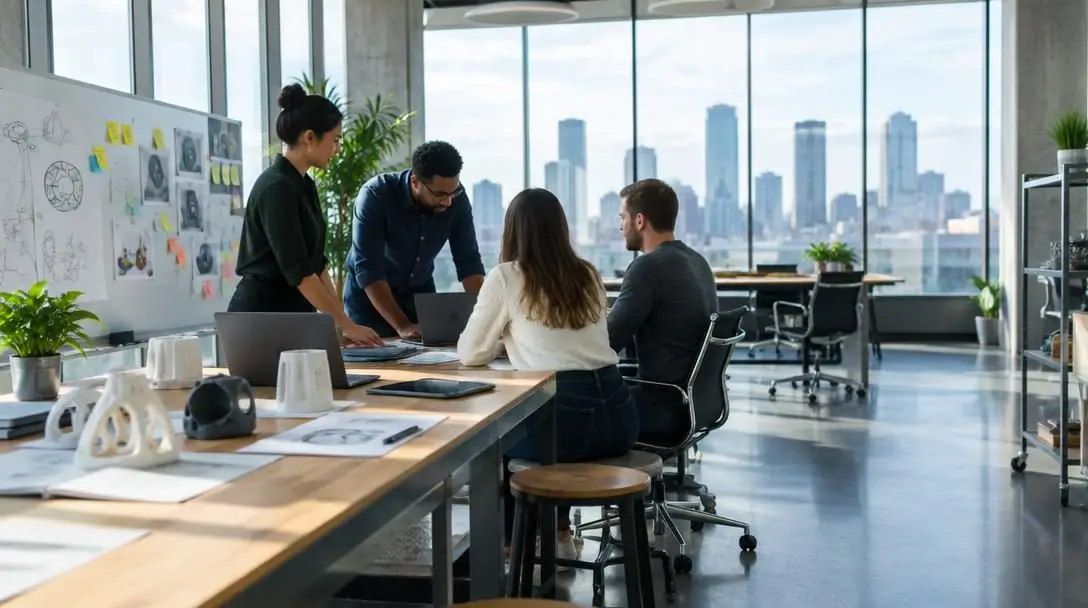
5 Reasons Why Business Want Employees In Office
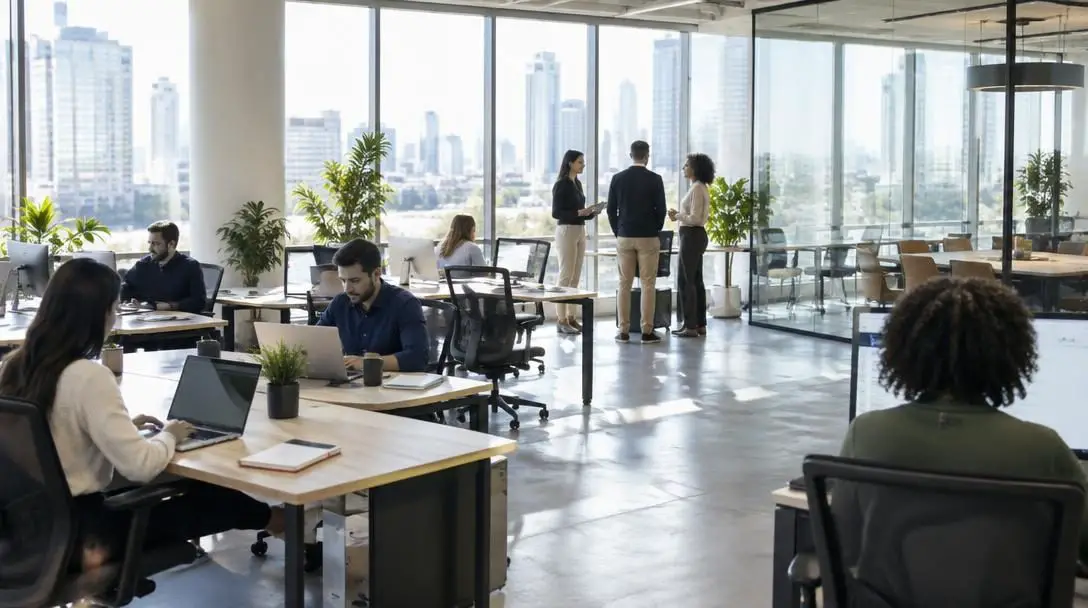
Working from home experienced a steady, decades-long rise in popularity alongside the expansion of high-speed digital networks and accessible video-calling software. For generations prior to this technological shift, standard corporate employment demanded a daily commute to centralized facilities built around shared physical infrastructure, including paper filing systems, administrative resource pools, and dedicated landline telephone networks. When the COVID-19 emergency arrived, this long-standing operational model transformed overnight, shifting millions of employees away from traditional cubicles and turning residential dining tables, spare bedrooms, and home workspaces into remote headquarters. As public health conditions normalized, executive leadership teams across various industries issued sweeping mandates requiring employees to repopulate physical offices. This pushback sparked considerable friction. Workers who had adapted to remote arrangements valued the substantial savings in commute times, transportation expenses, and wardrobe maintenance, while insisting their productivity remained equal to or higher than it was in commercial offices. To understand why leadership teams continue pressing for physical presence despite employee resistance, one must examine the operational, financial, and managerial priorities guiding executive suites. <div class="takeaways"> <h2>Key takeaways</h2> <ul> <li>Heavy financial commitments to multi-year commercial leases and campus amenities drive corporate urgency to repopulate headquarters.</li> <li>Leadership values in-person presence to rebuild workplace chemistry and spontaneous collaboration that often erode over digital messaging channels.</li> <li>Executives who resumed on-site work early in the pandemic often established unwritten expectations for rank-and-file workers to return.</li> <li>The shift away from centralized facilities threatened the viability of middle managers whose core competencies centered on in-person coaching.</li> <li>Hands-on onboarding and employee development generated the lowest levels of return-to-office pushback across corporate departments.</li> </ul> </div> <h2>The Structural Divide Between Workers and Corporate Leadership</h2> <p>The friction surrounding return-to-office policies stems from fundamentally different methods of measuring workplace value. For rank-and-file team members, the benefits of remote work are immediate, personal, and quantifiable. Workers eliminate stressful daily commutes, reduce automobile wear and fuel consumption, bypass transit fares, and spend less on expensive professional wardrobes. Home working environments also allow employees to manage domestic tasks alongside their daily deliverables, resulting in a perceived boost in overall quality of life.</p> <p>Corporate executives, by contrast, assess the physical workplace through institutional continuity, administrative oversight, and asset optimization. When staff work entirely from remote locations, executives perceive an erosion in organizational alignment, spontaneous problem-solving, and cross-departmental relationships. Furthermore, physical facilities represent substantial ongoing line items on corporate balance sheets, creating financial pressure to justify those spaces through active daily occupancy.</p> <table> <thead> <tr> <th>Internal Priority</th> <th>Primary Corporate Motivation</th> <th>Workforce Perspective</th> <th>Typical Implementation Model</th> </tr> </thead> <tbody> <tr> <td>Real Estate Investments</td> <td>Justifying multi-year leases and facility investments</td> <td>Preference for eliminating transit costs and time</td> <td>Mandated minimum days on-site per week</td> </tr> <tr> <td>Workplace Chemistry</td> <td>Sparking spontaneous ideas and personal connection</td> <td>Reliance on instant messaging and virtual meetings</td> <td>Designated collaborative hybrid days</td> </tr> <tr> <td>Executive Presence</td> <td>Aligning staff attendance with leadership habits</td> <td>Disparity between private offices and open bullpens</td> <td>Top-down departmental attendance targets</td> </tr> <tr> <td>Management Duties</td> <td>Preserving coaching roles and oversight structures</td> <td>Questioning the utility of daily supervisory check-ins</td> <td>Manager-led enforcement of in-office rules</td> </tr> <tr> <td>Employee Training</td> <td>Accelerating hands-on skill transfer and onboarding</td> <td>Widespread acceptance of in-person instruction needs</td> <td>On-site mentorship hubs and instructional sessions</td> </tr> </tbody> </table> <h2>Five Core Drivers Behind Corporate Return Mandates</h2> <p>While many employees struggle to understand why leadership remains committed to centralized desks, corporate policies are typically anchored in five organizational realities. These drivers encompass everything from commercial real estate obligations to the daily mechanics of employee onboarding.</p> <h3>Real Estate</h3> <p>Commercial real estate represents one of the largest ongoing capital commitments a corporation carries. While top executives rarely highlight facility expenses as their primary public argument, the sheer volume of capital tied up in physical buildings, corporate campuses, and multi-level parking garages creates intense pressure for active utilization. Companies frequently negotiate binding, multi-year commercial lease commitments that cannot be abandoned without severe financial penalties. Leaving expansive office parks empty while continuing to pay insurance, property maintenance, and contractual lease terms creates a visible balance-sheet liability.</p> <p>Beyond basic square footage costs, centralized office complexes are frequently designed to operate as internal revenue generators. Corporate campuses often incorporate on-site cafeterias, restaurants, and vending operations that may be directly owned, operated, or franchised by executive groups. When thousands of employees report to a shared facility daily, these integrated service ecosystems generate predictable cash flow. When facilities remain unoccupied, those secondary revenue streams vanish entirely.</p> <aside class="callout note"><strong>Good to know:</strong> Corporate campuses do not simply represent sunk lease costs; centralized facilities often house company-operated dining and retail amenities that rely directly on foot traffic to remain financially viable.</aside> <h3>Chemistry</h3> <p>The interpersonal dynamic of an organization shifts considerably when teams communicate exclusively across digital channels. In remote environments, interactions are frequently reduced to brief text messages, truncated chat threads, and video calls where participants routinely disable their cameras. Corporate leaders argue that this reliance on fragmented digital communication degrades team unity and inhibits authentic workplace chemistry.</p> <p>Executive teams maintain that face-to-face interaction forms the bedrock of <strong>spontaneous problem-solving</strong> and creative ideation. Unplanned hallway encounters, casual kitchen conversations, and collaborative whiteboarding sessions allow colleagues to build interpersonal rapport that rarely emerges over scheduled video conferences. While remote setups can support task completion, corporate leadership views physical proximity as an irreplaceable catalyst for long-term organizational cohesion.</p> <h3>They Didn't Stop Working In Office</h3> <p>Leadership behavior during the pandemic created an influential internal expectation. Although senior corporate executives worked from home alongside staff during the opening weeks of the health emergency, many returned to their physical offices after just a few months on a limited-capacity schedule. Once executive teams resumed working within company headquarters and felt secure operating there, their perspective on organizational safety and presence shifted.</p> <blockquote class="pull">Corporate leaders who returned to private offices within months of the initial lockdowns often established an unwritten expectation that rank-and-file staff in open bullpens should follow suit.</blockquote> <p>This dynamic fostered an informal sentiment of <em>"if I have to be here, so do you."</em> While return-to-office announcements were often marketed under slogans emphasizing collective teamwork, employees frequently noticed a significant disparity in physical working environments. Rank-and-file workers were asked to repopulate crowded, open bullpen configurations, whereas senior managers and executives occupied private corner suites equipped with closing doors and personal space.</p> <h3>Management Duties</h3> <p>The rise of remote working prompted widespread scrutiny regarding the structural utility of supervisory hierarchies. When employees transitioned home and continued completing their deliverables independently, workers increasingly questioned what direct supervisors and middle managers contributed to weekly operational outputs. Within many corporate frameworks, middle managers had functioned primarily as workplace cheerleaders, morale builders, and cultural coaches.</p> <p>Replicating this motivational, hands-on coaching function proved exceptionally difficult across digital channels. Managers whose daily value rested on in-person energy and communal oversight suddenly faced a lack of defined, tangible responsibilities. To justify their organizational relevance, these supervisory layers were often repurposed into institutional mouthpieces, responsible for monitoring compliance and convincing hesitant staff members that returning to the office served their personal interests.</p> <h3>Training</h3> <p>Workforce development and the onboarding of new personnel highlighted a critical operational friction point for remote corporate models. Although basic administrative duties and software workflows can be demonstrated over video conferences and documented in shared digital libraries, complex operational roles frequently demand <strong>hands-on instruction</strong> and real-time guidance.</p> <p>Because direct training was deemed vital to sustaining institutional knowledge, corporate instructors and mentorship leads were among the very first groups summoned back to company campuses. When economic revenues surged to historic highs, businesses hired large cohorts of new staff members, further expanding the need for dedicated on-site trainers. Notably, training mandates faced the lowest resistance among employees, as staff universally acknowledged that mastering nuanced operational workflows occurs faster under personal guidance.</p> <aside class="callout tip"><strong>Tip:</strong> If your employer mandates on-site days, use those hours specifically for tasks that benefit from face-to-face interaction, such as technical training, cross-team alignment, and complex collaborative planning.</aside> <h2>Practical Steps for Navigating Office Return Demands</h2> <p>Balancing personal workflow routines against mandated workplace schedules requires intentional adaptation. Staff members can minimize stress and optimize their career visibility by establishing structured routines for their physical office days.</p> <ol class="steps"> <li><strong>Audit commuting and wardrobe expenses:</strong> Review monthly expenditures to budget accurately for transportation passes, vehicle fuel, parking garage fees, and workplace attire that were minimized during remote work periods.</li> <li><strong>Establish distinct operational boundaries:</strong> Map designated in-office days to collaborative group meetings, brainstorming sessions, and stakeholder presentations, reserving deep-focus analytical work for remote days whenever possible.</li> <li><strong>Leverage on-site instructional resources:</strong> Use in-person office days to interface directly with senior leaders, mentors, and corporate trainers, asking targeted technical questions to accelerate professional development.</li> <li><strong>Engage in deliberate interpersonal communication:</strong> Replace brief instant-messaging exchanges with direct, face-to-face conversations during facility days to build rapport and demonstrate collaborative presence.</li> <li><strong>Align weekly priorities with direct managers:</strong> Schedule recurring touchpoints with middle managers to clarify performance expectations, project milestones, and bullpen work hours to eliminate ambiguity.</li> </ol> <h2>Common Mistakes in Return-to-Office Transitions</h2> <p>Both corporate decision-makers and staff members frequently stumble when shifting policies between home and physical office environments. Avoiding these strategic missteps helps prevent workplace resentment and operational friction.</p> <ul> <li><strong>Ignoring physical workplace disparities:</strong> Executive teams make a critical error when they assume office conditions are identical across all tiers, disregarding the sensory distractions of dense bullpens compared to private offices with doors.</li> <li><strong>Treating physical desks like home offices:</strong> Employees undermine their professional positioning when they spend their entire in-office shift wearing noise-canceling headphones and avoiding spontaneous interactions with coworkers.</li> <li><strong>Dismissing facility balance-sheet realities:</strong> Workers frequently misunderstand corporate motives by overlooking the substantial financial commitments tied to long-term commercial leases and corporate campus ecosystems.</li> <li><strong>Failing to redefine middle-management duties:</strong> Organizations create operational bottlenecks when they mandate office returns without establishing clear, value-driven daily objectives for supervisory personnel.</li> <li><strong>Relying on digital tools for complex training:</strong> Companies stumble when they attempt to onboard new team members purely through recorded videos and shared manuals rather than leveraging experienced personnel on-site.</li> </ul> <aside class="callout warn"><strong>Watch out:</strong> Isolating yourself behind headphones for eight hours in a corporate bullpen negates the primary organizational justification for physical presence and can damage your collaborative standing with leadership.</aside> <h2>Long-Term Workplace Outlook and Facility Viability</h2> <p>The ongoing negotiation between remote work flexibility and physical headquarters will continue shaping corporate policies over the coming years. Organizations are closely analyzing facility utilization metrics to evaluate whether expansive commercial leases, parking complexes, and on-site corporate amenities remain economically sustainable. If multi-year lease agreements expire without full desk repopulation, many companies may eventually downsize their physical footprints rather than maintaining underutilized square footage.</p> <p>Meanwhile, the metrics governing employee performance evaluations are shifting. In hybrid environments, leadership teams increasingly measure organizational value not merely by individual output, but by an employee's contribution to team chemistry, peer mentorship, and culture building. Middle managers will also face continuous pressure to prove their operational worth, demonstrating that their coaching translated into tangible output rather than basic administrative policing. Because hands-on onboarding remains essential for organizational continuity, centralized regional hubs designed primarily for instructional programs and cross-functional project planning will remain central to corporate operational strategy.</p> <section class="faq"> <h2>Frequently asked questions</h2> <details> <summary>Why do companies care so much about real estate leases if remote work saves operational costs?</summary> <p>While companies can reduce routine utility bills when facilities are empty, commercial real estate agreements are typically long-term, multi-year contracts that carry severe financial penalties if broken early. Additionally, many large corporate campuses house internal amenities, such as cafeterias, retail hubs, and vending networks that generate active revenue only when hundreds or thousands of workers are present on-site.</p> </details> <details> <summary>Is in-person workplace chemistry genuinely superior to digital communication?</summary> <p>Executive teams believe face-to-face interactions foster spontaneous discussions and creative problem-solving that rarely happen over text messaging or camera-off video meetings. While individual task execution can thrive remotely, leadership views in-person collaboration as critical for organizational cohesion and long-term team dynamics.</p> </details> <details> <summary>Why was employee pushback lowest regarding in-person training requirements?</summary> <p>Employees widely recognize that mastering the intricacies of a complex operational role requires direct, hands-on mentorship. Because virtual instruction through recorded videos and screen shares is often slower and less interactive, staff members generally accept that face-to-face instruction provides a far more effective learning environment.</p> </details> <details> <summary>How did executive behavior during the pandemic affect return-to-office policies?</summary> <p>Many senior executives returned to company facilities on a limited basis within months of the initial lockdowns. After establishing regular on-site routines within their secure, private offices, corporate leaders often developed an expectation that the broader workforce should follow suit, even though rank-and-file workers operated in dense, open bullpens.</p> </details> <details> <summary>What role do middle managers play in return-to-office mandates?</summary> <p>The shift to remote work called into question the practical necessity of middle managers whose strengths were tied to in-person morale boosting and cultural coaching. To re-establish their functional purpose within centralized offices, these managers were frequently tasked with communicating and enforcing executive return-to-office guidelines.</p> </details> </section> <h2>The bottom line</h2> <p>The push to bring employees back to corporate offices is driven by structural forces that extend well beyond simple executive preference. Multi-year commercial real estate leases, campus revenue streams, supervisory roles, team chemistry, and complex training programs all influence institutional decision-making. While remote work demonstrated that individual productivity can thrive outside the office, corporate leadership remains committed to physical facilities as essential tools for preserving corporate culture, training future talent, and protecting capital investments. Navigating this evolving environment requires both employers and workers to recognize these underlying priorities and build balanced hybrid models that serve organizational and personal needs alike.</p>