5 SEO And Keyword Strategies For Maximum Online Visibility

In an increasingly crowded digital landscape, carving out a recognizable presence is one of the most pressing challenges facing modern websites. Millions of pages compete daily for the attention of searchers, meaning that even well-written, informative material can easily go unnoticed if it lacks deliberate technical and structural alignment. Search engine optimization, widely known as SEO, serves as the primary bridge connecting thoughtful content creators with an active audience actively seeking their answers, products, or services.
Search engines work by constantly indexing the web to surface the most authoritative, relevant resources in response to specific user queries. Understanding the mechanics behind how search engines evaluate information enables site managers to present their material in an accessible, search-friendly format. Rather than relying on temporary traffic spikes from paid promotion, a disciplined approach to keyword research and on-page optimization generates sustained organic visibility, laying the groundwork for long-term audience trust and continuous digital growth.
Key takeaways
- Effective SEO hinges on uncovering exact search phrases using specialized research tools and matching them with genuine user intent.
- On-page optimization requires placing keywords thoughtfully across titles, meta descriptions, headings, and body copy while strictly avoiding keyword stuffing.
- High-quality backlinks from reputable domains signal authority and trust to search engines far more effectively than a high volume of low-quality links.
- Active distribution on social media platforms amplifies content exposure and drives qualified referral traffic directly back to primary digital assets.
- SEO is an ongoing process that requires routine performance tracking of rankings, traffic sources, bounce rates, and conversion metrics in Google Analytics.
How Search Engines Process and Value Online Content
To establish search presence, site owners must first grasp how automated search algorithms operate. When a user submits a search query, automated web crawlers review available pages that have been cataloged within their index. To choose which pages appear at the top of result pages, algorithms weigh two fundamental factors: subject matter relevance and domain credibility.
Relevance is communicated through deliberate keyword optimization. Keywords represent the exact language, terminology, and queries entered by searchers. When these phrases are thoughtfully woven into a webpage's architecture, search engines can easily determine what topic the page addresses and whether it fulfills the searcher's intent. When the alignment between a page's content and a query is strong, the engine marks the page as a helpful candidate for high-ranking positions.
Credibility, on the other hand, centers on authority. Search algorithms look for external validation confirming that other independent voices vouch for your work. External links, or backlinks, function as digital citations that signal reliability to automated evaluators. When trustworthy websites link to your content, algorithms view your material as an authoritative source. Combined with user engagement metrics like time on page and bounce rates, these signals inform the search engine whether real visitors find the content valuable.
The Five Foundational Visibility Strategies
Navigating search engine optimization successfully requires combining analytical research with editorial refinement. Below is an overview of the five fundamental pillars that drive sustained online exposure.
| Strategy | Primary Objective | Key Tools or Channels | Core Focus Area |
|---|---|---|---|
| Keyword Research | Identify real user search demand | Google Keyword Planner, SEMrush, Ahrefs | Search volume and topical alignment |
| Content Optimization | Clarify on-page topical signals | Content management systems, HTML editors | Metadata, header hierarchy, and readability |
| Backlink Building | Establish domain authority and trust | Industry outreach, guest blogging | Link quality and domain relevance |
| Social Media Utilization | Amplify reach and direct referral visits | Twitter, Facebook, Instagram | Audience engagement and content sharing |
| Performance Monitoring | Guide iterative improvements with data | Google Analytics | Rankings, bounce rates, and conversions |
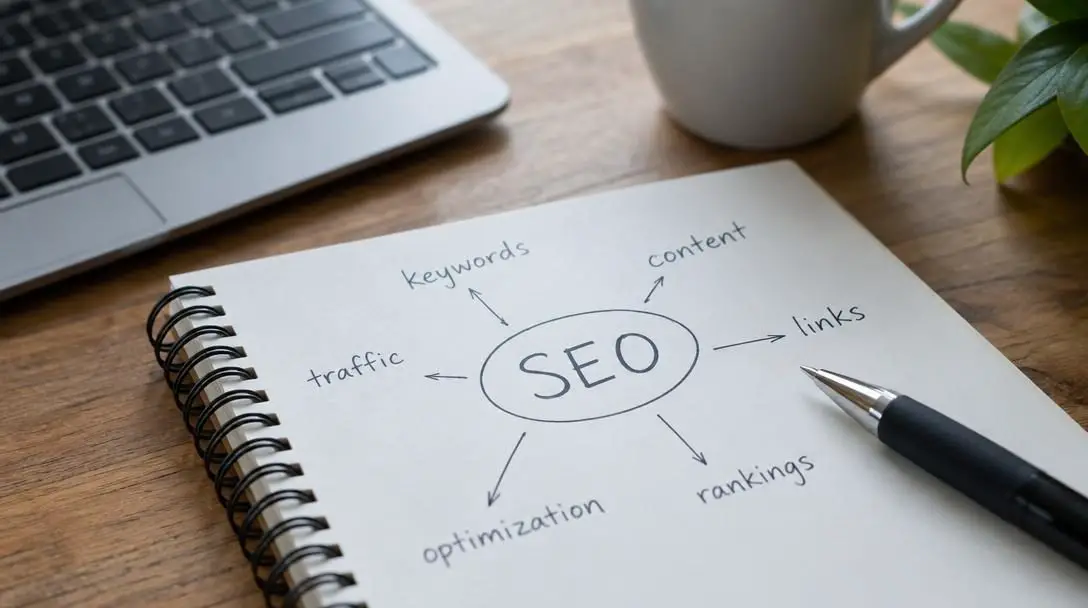
Conduct Thorough Keyword Research
Keyword research is the cornerstone of every productive SEO campaign. Instead of making unverified assumptions about what an audience might want, site managers must identify the precise terminology searchers type when seeking solutions. Targeting actual search terms ensures your editorial roadmap reflects authentic public demand rather than internal guesswork.
Carrying out comprehensive research requires specialized discovery platforms. Utilizing tools such as Google Keyword Planner, SEMrush, or Ahrefs enables you to uncover relevant phrases, examine historical search volume, and gauge the level of market competition. The most advantageous targets are terms that are deeply relevant to your core industry while maintaining sufficient search frequency to drive meaningful traffic.
Optimize Website Content
Once you compile your target keyword inventory, the next stage is integrating those terms across your site's infrastructure. Strategic content optimization guarantees that search engine bots immediately register the primary focus of your articles while visitors receive an informative, smooth reading experience.
Search bots prioritize specific structural zones when crawling a webpage. Target phrases should be included within page titles, meta descriptions, structural headers, and the main body copy. Placing terms in headers establishes clear sections for human scanning, while crisp title tags and meta descriptions persuade users to click your listing on search result pages.
Build Quality Backlinks
Producing exceptional written material is only one half of the visibility equation; establishing external validation through backlinks is just as crucial. A backlink represents an external vote of confidence, signaling to search algorithms that an independent platform considers your content reliable enough to cite as a reference.
Having a few high-quality backlinks from respected, relevant sources is far more beneficial than amassing numerous links from low-quality, untrustworthy domains.
Acquiring valuable inbound links calls for deliberate relationship-building and industry networking. Creators can reach out to respected industry publishers, organizations, and bloggers to propose collaborative resources or guest blogging opportunities that feature organic links back to their primary site. In link acquisition, strict standards matter: algorithms easily spot link farms and directories, rewarding genuine editorial mentions instead.
Utilize Social Media Platforms
Although social media networks operate separately from search engine index databases, they serve as vital distribution engines that expand content reach. Relying solely on organic search can leave early-stage content stranded; social channels provide immediate distribution pathways directly to prospective readers.
Maintaining an active profile across networks such as Twitter, Facebook, and Instagram enables businesses to introduce their work to diverse, highly engaged audiences. By sharing compelling excerpts, utilizing focused hashtags, and attaching direct links back to published site articles, managers generate inbound referral traffic. This broader exposure also raises the odds that other digital creators, writers, and journalists will stumble upon your content and reference it in their own future work.
Monitor and Analyze Performance
Search optimization is not a static task that can be set and forgotten; it demands constant data review and strategic adaptation. Analyzing behavioral trends and traffic shifts reveals which parts of your optimization plan are producing results and which require immediate attention.

Using comprehensive tools such as Google Analytics, website administrators must routinely track core performance indicators. Key metrics include keyword rankings, organic traffic sources, bounce rates, and conversion rates. Tracking keyword positions shows whether on-page adjustments are lifting rank over time. Analyzing organic traffic sources clarifies which engines drive your visitors, while monitoring bounce rates reveals whether visitors find your landing pages helpful or immediately navigate away. Finally, conversion tracking indicates whether incoming traffic actually completes valuable actions, such as signing up or purchasing.
A Step-by-Step Implementation Workflow
Approaching optimization systematically prevents feeling overwhelmed by the sheer volume of technical and editorial tasks. By moving sequentially through each stage of development, teams can execute a cohesive strategy that balances discovery, optimization, outreach, and analysis.
- Conduct initial keyword discovery: Open platforms like Google Keyword Planner, SEMrush, or Ahrefs to identify questions, themes, and phrases central to your industry, selecting keywords that combine strong search volumes with topical relevance.
- Audit existing website assets: Review your current inventory of pages to catalog what topics are currently addressed and determine where newly uncovered keywords can be naturally woven into older material.
- Upgrade core page metadata: Refresh page title tags and meta descriptions across your catalog, ensuring target keywords are featured clearly to help search crawlers understand page focus and encourage user click-throughs.
- Refine on-page editorial copy: Update headers and paragraph copy to naturally include target phrases, paying careful attention to sentence flow and preventing excessive repetition.
- Launch an outreach link-building campaign: Identify reputable industry blogs and digital publications, sending customized pitches for guest articles or resource partnerships that incorporate relevant links back to your site.
- Distribute material through social networks: Create an ongoing publishing calendar across Twitter, Facebook, and Instagram to share page links accompanied by relevant topical hashtags.
- Review data and refine performance: Monitor Google Analytics dashboards to observe fluctuations in organic traffic, bounce rates, search positions, and goal completions, adjusting your tactics based on real user behavior.
Critical SEO Mistakes to Avoid
Increasing organic visibility is as much about avoiding self-inflicted penalties as it is about applying best practices. Many well-intentioned digital teams unintentionally damage their standing by leaning on outdated or shortcuts that modern algorithms actively penalize.
- Overusing keywords: Cramming target phrases into every header and paragraph creates awkward prose that frustrates readers and alerts search engine spam filters.
- Chasing high volume over relevance: Optimizing for broad, unrelated terms simply because they generate massive search volume produces high bounce rates, as incoming visitors quickly realize the content does not answer their question.
- Relying on low-grade link schemes: Buying backlinks from disreputable networks, automated directories, or unrelated sites triggers algorithmic penalties that can strip your website of its existing ranks.
- Neglecting analytics platforms: Failing to review tools like Google Analytics leaves site managers blind to sudden ranking losses, declining conversion rates, or underperforming landing pages.
- Operating in an SEO silo: Neglecting social channels isolates your content, missing out on immediate reader feedback, early referral visits, and organic link opportunities.
- Treating optimization as a finished task: Assuming an optimized page requires no further updates allows competitors to overtake your position as algorithms and industry terminology evolve.
Evolving Your Long-Term SEO Roadmap
The digital environment is inherently dynamic. Search engines continuously update their evaluation systems to better interpret user intent, semantic context, and technical site performance. To protect and grow visibility over time, businesses must view optimization as an ongoing practice of maintenance and refinement.
Scheduling periodic content audits helps prevent library decay. Reassessing older articles every few months using Google Keyword Planner, SEMrush, or Ahrefs ensures your catalog stays aligned with current search volumes and emerging user queries. Updating outmoded references, refreshing metadata, and replacing stale internal links keeps search crawlers returning to your site regularly.
Finally, tie your search metrics directly to organizational goals. While raw traffic gains can be encouraging, assessing the relationship between organic search channels, user bounce rates, and ultimate conversion rates reveals the true quality of your visitors. Aligning on-page answers directly with what searchers need guarantees that your hard-earned visibility translates into lasting organizational value.
Frequently asked questions
How long does it take for SEO strategies to show measurable results?
Search engine optimization is inherently a long-term strategy rather than an instantaneous fix. Because search engines must discover, crawl, and evaluate updated pages and newly acquired backlinks, noticeable improvements in organic search rankings and traffic typically unfold gradually over weeks and months of sustained optimization.
What is the difference between keyword research and content optimization?
Keyword research is the exploratory process of using analytical tools like SEMrush or Ahrefs to identify the actual terms and search volume of user queries. Content optimization is the subsequent application phase, where those discovered terms are woven into page titles, meta descriptions, headings, and body copy.
Why are backlinks from authoritative sites better than having many cheap links?
Search engine algorithms use backlinks as independent indicators of trust and quality. A single link from an established, highly regarded industry domain serves as an authentic endorsement, whereas hundreds of links from low-quality directories or spam platforms can look manipulative and risk search ranking penalties.
Does social media activity directly impact search engine rankings?
Social media platforms like Twitter, Facebook, and Instagram operate independently from search result pages and do not directly pass traditional ranking authority. However, they drive referral visitors, boost content exposure, and increase the likelihood that external publishers will discover your content and link to it organically.
Which metrics in Google Analytics are most critical for evaluating SEO success?
The most revealing metrics include keyword rankings, organic traffic sources, bounce rates, and conversion rates. Tracking these areas indicates whether your pages are gaining ground in search rankings, whether incoming visitors stay on the page, and whether that traffic completes desired actions.
The bottom line
Securing maximum online visibility requires moving away from guesswork and adopting a clear, data-informed strategy. By systematically conducting keyword research, refining on-page structure, securing authoritative backlinks, amplifying your reach through social platforms, and continuously tracking performance, you build an enduring foundation for organic growth. Websites that prioritize user intent, content quality, and consistent analysis will steadily outpace competitors, winning long-term placement in search results and cultivating an engaged audience.