5 Ways to Use Online Quizzes for Professional Development

For decades, quizzes remained firmly anchored in academic environments, where students encountered them primarily as mandatory grading instruments, stressful pop tests, or formal administrative hurdles. In modern corporate settings and evolving digital workplaces, that narrow perception has shifted dramatically. Digital assessments, self-directed learning platforms, and continuous micro-credentials have reimagined the humble quiz into an adaptable, high-impact tool for personal and career advancement.
Modern workplaces move quickly, demanding that professionals regularly update their competencies without stepping away from daily responsibilities. Lengthy degree programs, formal corporate workshops, and occasional off-site seminars still serve a purpose, but they often struggle to match the speed of modern industry changes. By breaking down evaluation into bite-sized, flexible checkpoints, digital quizzes offer professionals an accessible, self-directed medium to measure their abilities, master complex ideas, and validate their capabilities on their own schedules.
Key takeaways
- Digital quizzes offer an objective baseline to measure technical abilities and industry-specific expertise without formal academic pressure.
- Examining missed questions exposes distinct knowledge deficiencies, allowing you to target your study efforts where they yield the greatest workplace value.
- Modern assessment platforms function as active learning tools by pairing questions with comprehensive explanations and supplementary study materials.
- Consistent participation in assessments focused on current developments ensures your skill set evolves alongside changing industry standards.
- Earning and displaying digital completion badges or verified certificates provides tangible proof of your competence to current employers, prospective recruiters, and clients.
The Evolution of Digital Assessments in Professional Life
The transition toward remote work arrangements and digital training platforms has fundamentally altered how professionals acquire and retain information. Rather than waiting for an annual review or a company-mandated training module, workers now take ownership of their own continuous education. Because modern roles demand agile adaptation, self-directed learning methods have superseded static educational formats.
When structured strategically, online evaluations serve as diagnostic instruments rather than mere scorecards. They rely on diverse question types—including scenario-based challenges, practical problem-solving tasks, and multiple-choice questions—to test real-world application rather than simple memorization. This transforms what was once considered a passive academic requirement into an interactive career development engine.
Online quizzes transform passive assessment into an interactive engine for self-discovery, real-time learning, and measurable career advancement.
5 Ways to Use Online Quizzes for Professional Development
Understanding how digital assessments contribute to workplace success requires viewing them through a multi-dimensional lens. Rather than treating them merely as casual trivia or high-stakes exams, professionals can deploy online quizzes across five targeted areas of career growth.
Assess Your Knowledge
Taking an online quiz provides a reliable method to establish an accurate baseline of your capabilities. Whether you are working in a technical specialization, project management, or creative field, it can be easy to overestimate or underestimate your proficiency in specific areas. A well-constructed assessment provides an objective diagnostic benchmark that strips away assumptions and highlights where your day-to-day understanding stands. With this foundational baseline clearly documented, you can organize your ongoing professional development with absolute clarity, ensuring that your limited learning time is spent on the competencies that demand the most attention.
Identify Gaps in Your Knowledge
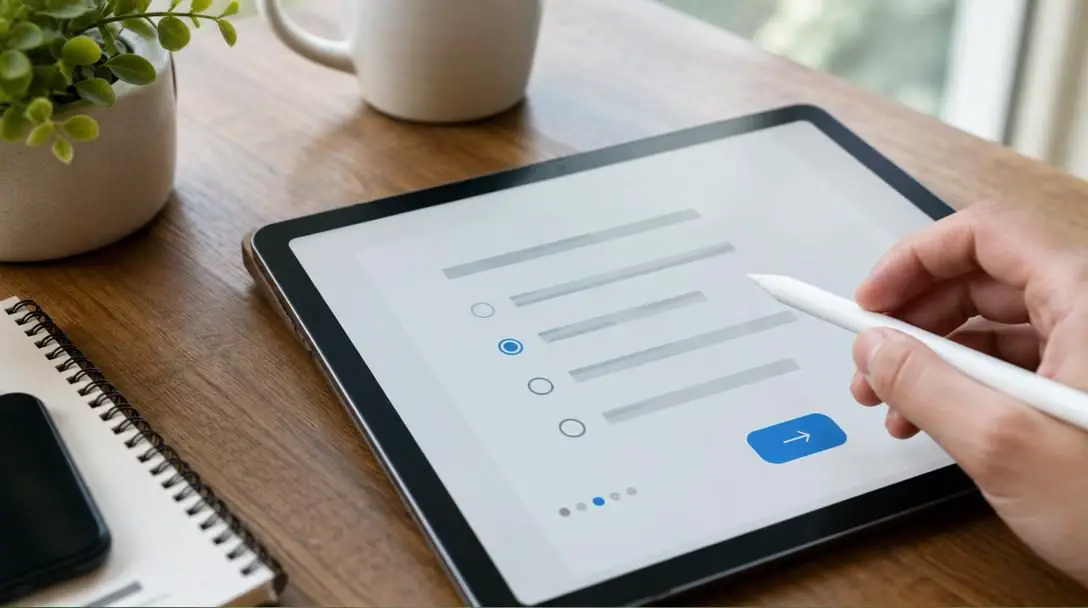
While earning a high score is satisfying, the true professional benefit of an assessment often lies in the questions you get wrong or find challenging. Incorrect answers pinpoint the exact blind spots in your skill set. Pinpointing these blind spots prevents minor misunderstandings from turning into costly workplace mistakes. Once you isolate these knowledge gaps, you can prioritize targeted review, ask better questions on the job, and systematically resolve deficiencies. Over time, closing these specific loopholes builds a comprehensive grasp of your field, substantially raising your effectiveness and value to your team and employer.
Learn While You Quiz
Modern online quizzes are engineered not merely as grading systems, but as active educational environments. Advanced assessment platforms integrate thorough answer rationales and provide direct links to supplementary documentation, reference articles, or tutorials alongside each question. This format allows you to absorb fresh, practical concepts in direct context while answering questions, rather than treating study and evaluation as separate events. By reviewing the logic behind both correct and incorrect options, you internalize nuanced professional principles and reinforce your retention through immediate corrective feedback.
Stay Up-to-Date with Industry Trends
In competitive and technology-driven industries, best practices, regulatory standards, and operating methodologies shift constantly. Relying strictly on past experience risks leaving your knowledge outdated. Fortunately, modern quiz creators frequently update their question banks to reflect current industry news, regulatory revisions, and technological innovations. Engaging with these evaluations on a steady cadence helps you monitor industry developments in real time. Staying ahead of these shifts allows you to offer informed solutions during team meetings, identify emerging threats, and implement innovative practices within your organization.
Show Off Your Skills
Validating your capabilities internally is essential, but demonstrating them to external audiences is what unlocks career mobility. Many online assessment providers now award verified completion certificates or digital badges upon the successful completion of a module. Adding these verifiable credentials directly to your resume, portfolio, or LinkedIn profile gives recruiters, prospective employers, and prospective clients visible, third-party validation of your skills. These credentials serve as concrete evidence of competence, distinguishing your application in competitive hiring environments and confirming that your capabilities meet established industry standards.
Comparing the Professional Functions of Digital Quizzes
Depending on your current career goals, different quiz formats serve distinct purposes. The table below outlines how each developmental application operates in practice and the practical career benefit it delivers.
| Quiz Application | Primary Mechanism | Assessment Focus | Core Career Benefit |
|---|---|---|---|
| Baseline Evaluation | Comprehensive diagnostic assessments | Broad foundational principles and core workflows | Establishes a factual benchmark of current proficiency |
| Gap Analysis | Detailed error review and question breakdown | Missed items, edge cases, and complex scenarios | Pinpoints precise blind spots to guide targeted study |
| Contextual Learning | In-quiz rationales and reference resources | Explanations of methodology and logic behind answers | Facilitates real-time information retention during testing |
| Trend Tracking | Recurring modules on emerging practices | Recent industry news, regulations, and technologies | Ensures skills remain competitive and current over time |
| Skill Demonstration | Credentialed or proctored outcome exams | Demonstrated mastery of specialized topics | Provides shareable badges and certificates for portfolios |
A Step-by-Step Routine to Maximize Career Value
To turn casual testing into genuine professional growth, you must approach assessments with a structured plan. Implementing an organized routine ensures that every quiz you take leads directly to improved on-the-job execution.

- Establish a Starting Baseline: Select an assessment that aligns directly with your current job responsibilities or the position you hope to secure next. Take this initial evaluation without cramming or extensive preparation, ensuring that your results reflect your genuine, working knowledge base rather than short-term memorization.
- Document and Analyze Problem Areas: After finishing the assessment, review the full question summary immediately. Record every question you answered incorrectly, guessed on, or found ambiguous in a dedicated study file, tagging the exact topics that represent your primary knowledge gaps.
- Study the Explanations and Supplemental Materials: Avoid the temptation to glance at your score and close the tab. Thoroughly read the rationale provided for every question and explore any referenced links, study guides, or white papers provided by the testing platform to contextualize the information.
- Schedule Regular Industry Trend Check-ins: Block out dedicated time every month or quarter to complete specialized evaluations focusing on emerging trends, regulatory shifts, or recent industry methodologies. Treat these review sessions as non-negotiable appointments on your professional calendar.
- Update Professional Portfolios and Profiles: Review any completion certificates or digital badges earned through reputable testing platforms. Select the credentials that directly align with your long-term career aspirations and publish them on your resume and LinkedIn profile to present concrete proof of your competencies.
- Retest Periodically to Track Growth: After dedicating time to targeted study and on-the-job practice, return to the relevant assessments. Retaking these evaluations confirms information retention, offers measurable proof of development, and establishes your new baseline for future growth.
Common Mistakes to Avoid in Online Assessments
While digital assessments are widely accessible and straightforward, professionals frequently run into avoidable pitfalls that diminish their educational impact. Keeping these common mistakes in mind will protect your time and maintain an effective development process:
- Focusing Exclusively on the Final Score: Viewing your percentage score as the only metric of success leads you to disregard the reasoning behind individual answers, forfeiting the opportunity to learn from the platform's detailed explanations.
- Neglecting Identified Gaps: Acknowledging that you missed several questions but failing to execute a follow-up study plan nullifies the diagnostic value of the quiz and leaves operational weaknesses unaddressed.
- Using Quizzes as a Passive Entertainment Tool: Approaching professional assessments casually between errands or during breaks often causes careless guessing and prevents meaningful retention of complex principles.
- Relying on Outdated Assessments: Fields governed by changing technologies and market standards require current materials; using evaluations that contain outdated methodologies will misalign your skills with current industry demands.
- Overlooking Credential Verification: Publishing badges from unverified or low-quality sources clutters your portfolio without adding genuine credibility to your resume.
- Inconsistent Participation: Completing several assessments during a single weekend and then neglecting self-evaluation for half a year generates fragmented, short-lived gains rather than continuous improvement.
Aligning Quiz Outcomes with Long-Term Career Goals
To extract the highest possible return from online testing, align your assessment activities with your broader career path. Digital assessments are most powerful when they serve as actionable evidence within your wider performance strategy.
First, evaluate how your assessment results correspond to the specific expectations of your current employer. If an evaluation confirms that you excel in areas critical to your department's upcoming initiatives, leverage that demonstrated competency to seek out higher-level responsibilities or lead new projects. Conversely, if an evaluation exposes deficiencies in core operational skills, speak candidly with a trusted manager or mentor about the deliberate, structured steps you are taking to bridge those gaps. Proactive self-awareness demonstrates leadership maturity and dedication to excellence.
Second, ensure that every credential you showcase supports a coherent professional narrative. When incorporating badges and certificates into your professional profiles, curate your achievements so they point toward the specific roles or client engagements you want to attract. Demonstrating deliberate mastery in targeted subject areas shows prospective employers that your professional development is focused, disciplined, and directly applicable to their business needs.
Frequently asked questions
How can taking an online quiz help me find gaps in my workplace knowledge?
Online quizzes provide structured diagnostic feedback by tracking every incorrect answer and flagged question. By highlighting the exact scenarios or technical details you struggled with, assessments expose specific blind spots that you can subsequently target with focused review and on-the-job practice.
Do employers and recruiters actually value digital badges and quiz certificates?
Yes, employers value verifiable credentials when they come from reputable, recognized platforms and demonstrate mastery of relevant skills. Displaying verifiable badges on your resume or LinkedIn profile offers visible, third-party confirmation of your capabilities and signals a commitment to self-directed learning.
How often should I take online quizzes for professional development?
Consistency is more valuable than volume. Establishing a regular routine—such as a monthly assessment on emerging industry trends or a quarterly review to benchmark technical capabilities—maintains steady growth without disrupting your daily work responsibilities.
Why is reading quiz explanations important if I already answered correctly?
Explanations often provide broader context, outline alternate problem-solving methods, and clarify edge cases that you might not have considered. Reviewing explanations for correct answers reinforces your understanding and ensures your success was rooted in knowledge rather than lucky guessing.
What should I do if an online quiz reveals a major gap in my core skills?
Treat the outcome as a constructive diagnostic baseline rather than a failure. Document the specific concepts you missed, consult the platform's supplemental reading materials, and integrate targeted study into your routine before retesting to verify your progress.
The bottom line
Online quizzes have broken free of the classroom to become powerful, adaptable instruments for lifelong career growth. By using them to establish an objective knowledge baseline, diagnose learning gaps, absorb contextual information, monitor industry trends, and demonstrate verified skills, you transform self-directed study into tangible career advancement. Approached with consistency and structure, these digital assessments provide the insights and credentials you need to maintain your professional edge in an evolving marketplace.