A Galaxy Far, Far Away: Exploring the Best Star Wars Comics
When the original Star Wars debuted in theaters in 1977, audiences instantly clamored for more stories set within its sprawling space-fantasy universe. Satisfying that insatiable hunger through theatrical releases alone was an impossible task, as producing a feature film every few months was logistically out of reach. Sequential comic art immediately stepped forward as the franchise's essential storytelling partner. Intriguingly, comic books paved the way before the first film even arrived: the very first comic adaptation landed on newsstands three months prior to the May 1977 premiere, introducing readers to a galaxy far, far away before ticket buyers ever took their seats in a cinema.
Following the film's record-setting box-office run, comic storytelling expanded well beyond straightforward adaptations into an ambitious creative tapestry. Marvel Comics steered the license across its initial decade, followed by an innovative, decades-long chapter under Dark Horse Comics, younger-audience ventures with IDW Publishing, and eventual returns to both Marvel and Dark Horse. Over more than four decades, this vibrant collaborative history has produced several hundred individual issues and dozens of graphic novels that map ancient galactic wars, bridge the gaps between cinematic releases, and envision what lies far into the galactic future.
Key takeaways
- Star Wars comic storytelling debuted three months before the first film premiered in 1977, growing into hundreds of issues across Marvel, Dark Horse, and IDW Publishing.
- Sequential art liberates galactic storytellers from the practical constraints of film budgets, physical soundstages, and real-world filming schedules.
- Monumental series like Star Wars: Legacy and Knights of the Old Republic ran for 50 issues each, mapping uncharted eras set a century after and millennia before the movies.
- Modern canon series such as the 2020 Darth Vader run and the Vader: Dark Visions miniseries illuminate intimate emotional fallout and divergent galactic perspectives.
- New readers can avoid burnout by picking a distinct timeline, choosing between vintage expanded universe lore and modern canon, and noting issue counts before diving in.
How the Comic Book Medium Expands the Lore
Sequential art serves as an exceptionally versatile format for space fantasy, giving creators an unlimited canvas where the only boundary is human imagination. While live-action cinema is bound by the realities of actor schedules, physical soundstages, specialized visual effects pipelines, and ballooning budgets, comic books possess boundless visual scale. A writer and an artist can conjure an armada of several thousand starships clashing above an uncharted alien metropolis with the exact same budget and timeline required to illustrate two characters sitting together in quiet conversation inside a starship cockpit.
Comic books overcome cinematic limitations, giving creators the freedom to showcase massive fleet battles, alien worlds, and introspective character moments with boundless visual scale.
Through serialized monthly issues, compact standalone miniseries, and sprawling multi-title crossovers, comics systematically flesh out the eras sitting between the theatrical films. They chronicle foundational events from millennia prior, imagine wild futures centuries down the line, and introduce complex protagonists whose lives never intersect with cinematic heroes. Just as crucially, the page affords legendary figures like Darth Vader or Luke Skywalker an unprecedented degree of interiority. In comic panels, readers can witness private meditations, quiet grief, internal ideological fractures, and lingering resentments that could never fit within the pacing demands of a two-hour theatrical runtime.
At a Glance: Five Standout Comic Runs
| Title | Publisher | Publication Years | Issue Count | Era / Focus |
|---|---|---|---|---|
| Star Wars: Legacy | Dark Horse Comics | 2006–2010 | 50 issues | Over a century after original trilogy; Cade Skywalker |
| Darth Vader | Marvel Comics | Started in 2020 | Multi-issue run | Post-Empire Strikes Back / Return of the Jedi era |
| Knights of the Old Republic | Dark Horse Comics | 2006–2010 | 50 issues | Ancient Old Republic era; Zayne Carrick |
| Star Wars: Tales of the Jedi | Dark Horse Comics | 1993–1998 | Multiple miniseries | Ancient conflicts: Great Hyperspace and Sith Wars |
| Vader: Dark Visions | Marvel Comics | 2019 (March–June) | 5 issues | Canon vignettes viewing Vader as hero and myth |
Five Standout Star Wars Comics Across All Eras
Wading through several hundred comic issues spanning more than four decades can intimidate even seasoned space fantasy enthusiasts. To make entering the medium manageable, five standout titles illustrate the depth, visual variety, and thematic reach achieved across different publishers and creative periods.
Star Wars: Legacy
- Publisher: Dark Horse Comics
- Publication run: 2006–2010 (50 issues)
- Key protagonist: Cade Skywalker
- Primary antagonist: Darth Krayt
Published during Dark Horse's celebrated stewardship of the license, Star Wars: Legacy pushed the iconic Skywalker bloodline deep into uncharted territory. Taking place more than a full century after the events of the original movie trilogy, the series unveils a galaxy that has once again collapsed under imperial dominion. The sinister Darth Krayt rules supreme as the master of a brutal, reborn Galactic Empire, having shattered the remnants of the Galactic Alliance and scattered the surviving Jedi.
Rather than placing an earnest, clean-cut hero at the heart of the saga, the comic centers on Cade Skywalker, a descendant of Luke Skywalker who works as a weary, cynical bounty hunter. Traumatized by the slaughter of his mentors, Cade abandoned his heritage, refused classical Jedi training, and actively numbed his powerful innate connection to the Force. Over the course of 50 issues, Cade is forced to confront his lineage, guided intermittently by the Force ghost of Luke Skywalker, who attempts to nudge him toward destiny. Cade's eventual rebellion against Darth Krayt offers an uncompromising, visually arresting space opera that redefines what it means to carry the Skywalker name.
Darth Vader
- Publisher: Marvel Comics
- Publication start: 2020
- Timeline setting: Following Luke's refusal to join Vader
- Continuity: Official canon
Darth Vader is universally acknowledged as one of the most imposing figures in cinematic history, yet his internal life during the original trilogy remained largely veiled on screen. Marvel's 2020 ongoing series, launched under writer Greg Pak, steps into the critical period immediately following the climatic duel in The Empire Strikes Back. Luke Skywalker has just rejected Vader's offer to overthrow the Emperor and rule the galaxy as father and son, leaving the Dark Lord reeling from an unexpected combination of rage, shame, and resurfacing fatherly instinct.
While the theatrical films fast-forward to Luke's preparations for the assault on the second Death Star, this comic tracks Vader's covert, obsessive campaign across the stars. The Sith Lord embarks on a dark pilgrimage into his forgotten past as Anakin Skywalker, revisiting locations and uncovering secrets tied to his lost wife, Padmé Amidala. By forcing Vader to confront the emotional devastation, buried guilt, and enduring attachments of his former life, the series constructs an unsettling, richly drawn psychological profile of imperial power coming undone from the inside.
Knights of the Old Republic
- Publisher: Dark Horse Comics
- Publication run: 2006–2010 (50 issues)
- Lead character: Zayne Carrick
- Setting: Ancient galactic history
While mainstream audiences often associate the phrase with the groundbreaking role-playing video game series, Dark Horse's companion comic run stands as an independent creative triumph. Running for an uninterrupted 50 issues between 2006 and 2010, the title shifts the action millennia into the galactic past, long before the rise of the Empire or the birth of the Skywalkers, into an era where both the Jedi Order and the Republic operated at the height of their influence.
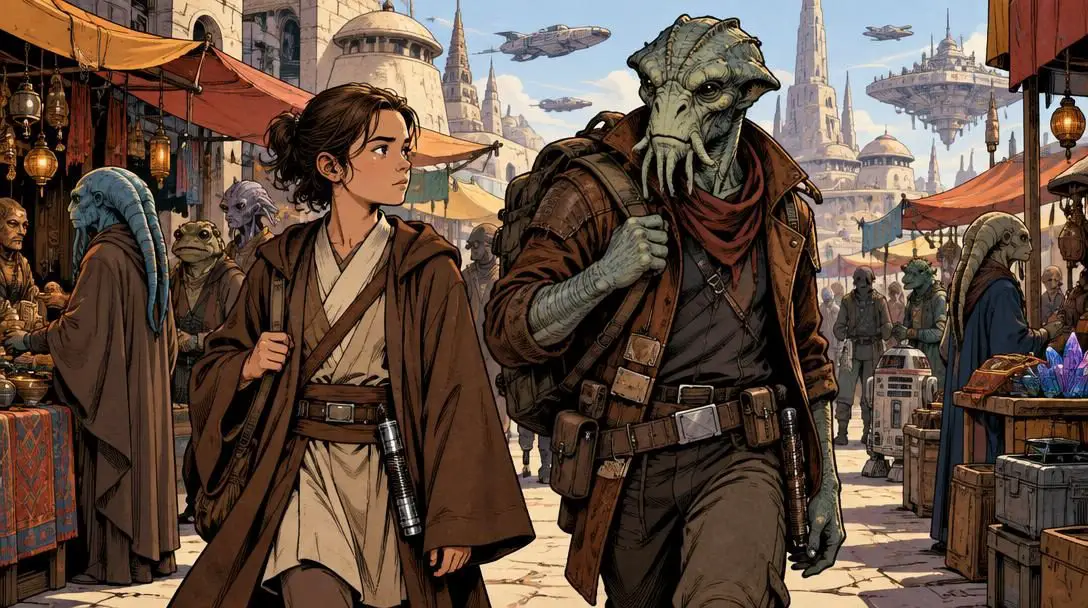
The story focuses on Zayne Carrick, an earnest, clumsy Padawan who perpetually lags behind his peers in Force aptitude and lightsaber discipline. Desperate to prove his worth on the day of his Jedi Knight graduation ceremony, Carrick is dispatched to apprehend a wily street smuggler. However, arriving late to his own ceremony unwittingly saves Carrick's life when he stumbles upon his own Jedi Masters committing an unthinkable betrayal. Framed for murder and pursued by both the authorities and his former teachers, Carrick forms an uneasy partnership with the very smuggler he arrested. Together, they navigate a vast ancient galaxy in an adventure that seamlessly blends lighthearted character chemistry with high-stakes galactic drama.
Star Wars: Tales of the Jedi
- Publisher: Dark Horse Comics
- Publication run: 1993–1998
- Major conflicts covered: Great Hyperspace War, Great Sith Wars
- Included storylines: The Freedon Nadd Uprising, Dark Lords of the Sith
During the early 1990s, the wider expanded universe was still finding its narrative footing. Dark Horse launched Tales of the Jedi to establish the foundational historical architecture of the franchise. Before this seminal title hit shelves, almost nothing had been documented about the ancient origins of the Jedi and Sith or how their millennia-long philosophical blood feud first ignited. The series provided the bedrock lore that modern creators still reference today.
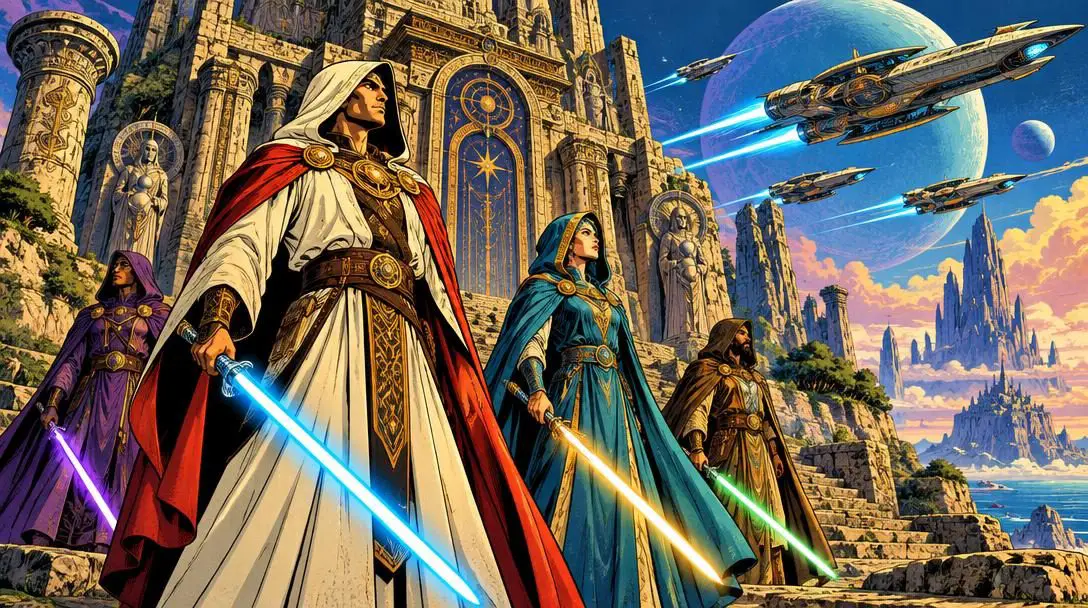
Told across interconnected miniseries rather than a single uninterrupted numbering system, the title chronicled monumental epochs such as the Great Hyperspace War and the devastating Great Sith Wars. It grouped together acclaimed story arcs, including the original five-issue Knights of the Old Republic storyline, alongside celebrated miniseries like The Freedon Nadd Uprising and Dark Lords of the Sith. Through archaic, ornate starship designs, sorcery-tinged Force rituals, and sweeping planetary conflicts, Tales of the Jedi introduced a generation of readers to the epic roots of galactic history thousands of years prior to the movie era.
Vader: Dark Visions
- Publisher: Marvel Comics
- Publication window: March–June 2019 (5 issues)
- Format: Anthological miniseries
- Continuity: Official canon
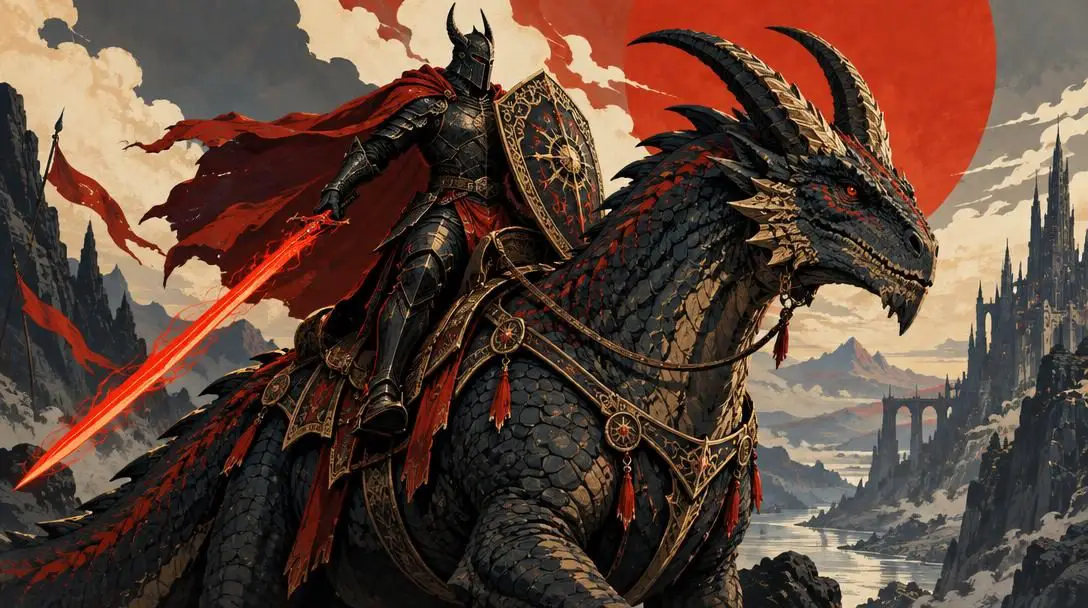
In contrast to the expansive commitments required by multi-year, 50-issue epics, Vader: Dark Visions delivers a focused, punchy reading experience across a compact five-issue miniseries published in the spring of 2019. The project turned heads early with its startling, unconventional cover art—most memorably an iconic illustration depicting Darth Vader clutching a medieval-style shield while astride a horned alien beast. The contents within proved just as daring as the exterior imagery.
Rather than framing Vader solely through the familiar lens of a fearsome military enforcer or a scheming Sith apprentice, each issue examines how the ordinary inhabitants of varied star systems perceive him. On one remote world, terrified villagers view the armored figure as a mythical black knight who dropped from the heavens to slay a horrific subterranean leviathan, hailing him as a heroic savior. By studying the Sith Lord through the distorted eyes of alien cultures, imperial officers, and everyday citizens, this official canon miniseries highlights the profound role that myth, fear, and state propaganda play in shaping galactic history.
How to Begin Reading Star Wars Comics
Because decades of creative history have generated several hundred individual issues and dozens of collected graphic novels, leaping into the hobby without a game plan can feel daunting. Following a deliberate step-by-step reading roadmap ensures you build a cohesive, enjoyable experience without feeling lost in the stars.
- Choose your continuity path: Decide whether you want to explore the vintage expanded universe continuity developed during Dark Horse's tenure (including series like Legacy or Tales of the Jedi) or modern official canon published by Marvel (such as the 2020 Darth Vader run or Vader: Dark Visions).
- Pick an era that matches your curiosity: If you are captivated by deep, ancient lore, plunge into the distant past with Tales of the Jedi or Knights of the Old Republic. If you love classic movie moments, pick runs bridging the original films. If you want to see what happens past the classic trilogy, pick the far-future timeline of Legacy.
- Select your reading format: Star Wars comics are widely accessible as monthly single issues, bound trade paperback graphic novels gathering complete story arcs, or digital comic subscriptions. Collected trade paperbacks and digital graphic novels are usually the simplest, most cost-effective path for continuous reading.
- Sample a self-contained miniseries first: Before plunging into deep, multi-year runs, test your appetite with a tight, five-issue anthological miniseries like Vader: Dark Visions to get comfortable with the pacing and visual style of comic storytelling.
- Follow series numbering sequentially: When tackling expansive 50-issue runs like Knights of the Old Republic or Legacy, stick closely to the original chronological issue order so character growth, plot twists, and shifting galactic political alliances unfold exactly as the authors intended.
Common Mistakes Readers Make
Navigating decades of comic publications can lead new readers into confusing pitfalls. Keeping these frequent errors in mind will save you time, money, and reading frustration.
- Assuming all comics share one continuous timeline: Because publishing rights moved from early Marvel to Dark Horse, branched into IDW Publishing, and eventually returned to Marvel and Dark Horse, the stories belong to distinct timelines. Mixing up Dark Horse expanded universe continuity with current Disney-era canon will quickly produce plot confusion.
- Judging older artwork through a modern lens: A 1990s comic like Tales of the Jedi relied on the hand-drawn line work, paper stocks, and printing techniques of its era. Expecting modern digital color grading and rapid cinematic pacing from vintage issues leads to unfair disappointment.
- Skipping numbered miniseries within overarching runs: Broad narrative lines like Tales of the Jedi were broken into separate, titled miniseries including The Freedon Nadd Uprising and Dark Lords of the Sith. Bypassing these intermediate chapters creates glaring plot holes.
- Expecting panel-for-panel mirrors of the feature films: Comic series are meant to complement, expand, and venture beyond cinema rather than replicate movie scripts. Expecting them to conform strictly to cinematic story beats overlooks their greatest storytelling strengths.
- Diving into 50-issue commitments without checking issue counts: Jumping into massive runs like Legacy or Knights of the Old Republic without realizing the scope can cause reader fatigue. Establish a comfortable reading pace before tackling a lengthy run.
What to Consider Next
Once you have finished the foundational titles highlighted above, plenty of fascinating narrative avenues remain to broaden your understanding of graphic storytelling in the franchise. One rewarding approach is to compare creative philosophies across publishing eras: contrast how Dark Horse built ancient civilizations from the ground up in Knights of the Old Republic against the way Marvel's ongoing Darth Vader unpacks the intricate psychological anatomy of a classic cinematic villain.
Additionally, you can branch outward into other character-driven miniseries and standalone graphic novels that focus on bounty hunters, rebel pilots, or rogue smugglers across various publishing periods. If historical curiosities appeal to you, seeking out the vintage Marvel comics from late 1977 offers a charming glimpse into how visual artists first navigated the galaxy before any sequels, prequels, or lore bibles had ever been drafted.
Frequently asked questions
When were the very first Star Wars comics published?
The earliest Star Wars comics were published by Marvel Comics three months before the first film arrived in theaters in May 1977, presenting an adaptation of the cinematic story to readers ahead of the movie's premiere.
Which comic book publishers have held the Star Wars license?
Marvel Comics initially held the license for its first decade, followed by a landmark multi-decade run under Dark Horse Comics, younger-reader contributions from IDW Publishing, and subsequent returns to both Marvel and Dark Horse.
Who is the protagonist of Star Wars: Legacy?
The central character is Cade Skywalker, a descendant of Luke Skywalker who resists his Jedi heritage, works as a cynical bounty hunter, and battles the new Galactic Empire led by Darth Krayt.
What makes Vader: Dark Visions different from traditional Star Wars comics?
Instead of depicting Darth Vader strictly as an imperial villain, the five-issue miniseries presents an anthological view of the Sith Lord through the eyes of ordinary galactic inhabitants, who sometimes see him as a heroic knight or mythical protector.
How long are the Knights of the Old Republic and Legacy comic runs?
Both Star Wars: Legacy and Knights of the Old Republic were published by Dark Horse Comics between 2006 and 2010, each running for an impressive 50 issues.
The bottom line
Star Wars comics represent far more than secondary merchandising—they are an indispensable creative engine that has sustained, expanded, and enriched the galaxy far, far away for nearly half a century. Free from the physical and financial confines of movie sets and production budgets, sequential art has introduced some of the franchise's most compelling figures, explored forgotten ancient eras, and examined the deepest psychological corners of iconic villains. Whether you choose to follow the cynical path of Cade Skywalker in Legacy, unravel ancient Jedi conspiracies in Knights of the Old Republic, or witness Darth Vader through the awe-struck eyes of remote alien worlds in Vader: Dark Visions, the medium provides an endless horizon of space fantasy adventure.