5 Most Controversial Moments in Showbiz History
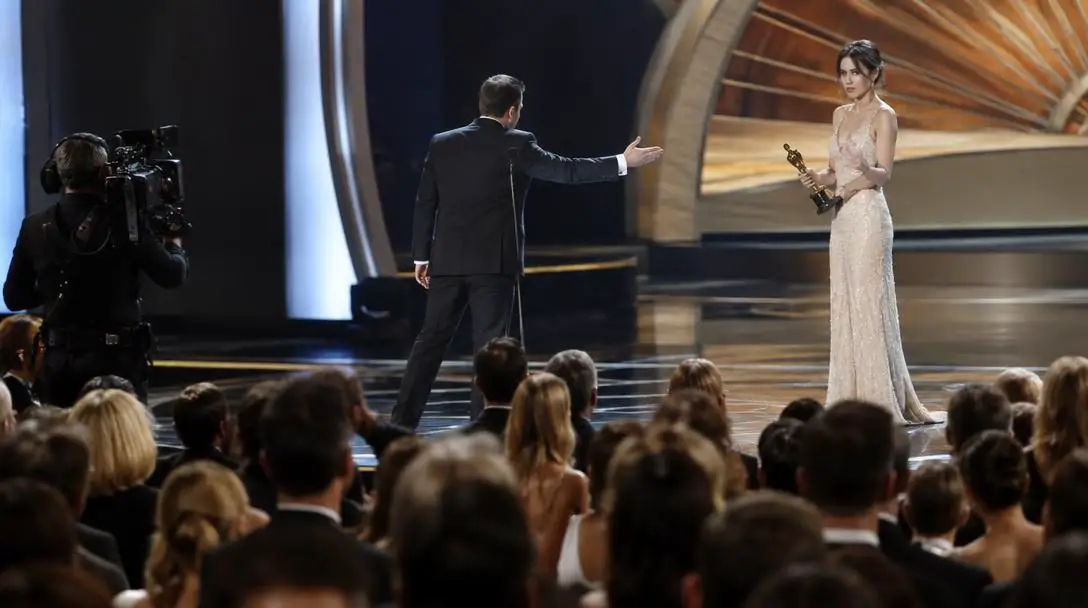
Show business and controversy have existed side by side for generations, driven by high-stakes live broadcasts, massive global audiences, and the unpredictable nature of human behavior under intense public scrutiny. When unscripted moments occur in front of cameras, the entertainment industry magnifies them into major cultural flashpoints that dominate international headlines for months or even decades.
From unprecedented live television mishaps at the Super Bowl and the Academy Awards to high-profile criminal trials and public outbursts that altered Hollywood careers, certain scandals permanently reshaped how media is produced, broadcast, and consumed. Examining these milestone events highlights not only the fragility of live entertainment production, but also the enduring power of sudden scandal in shaping modern celebrity culture.
Key takeaways
- Live broadcasts and high-profile public appearances carry immense operational risks because unscripted actions happen in real time without editing safeguards.
- Unplanned televised moments, such as the Super Bowl XXXVIII halftime show and the 2017 Oscars envelope mix-up, fundamentally altered broadcast standards and stage protocols.
- Public outbursts and criminal charges can halt major entertainment careers for years or trigger severe institutional bans.
- Audience technology has evolved from television broadcasts and early DVR replays to instantaneous global digital distribution.
At a glance: Five landmark showbiz controversies
| Controversial Event | Key Figures Involved | Type of Incident | Major Aftermath |
|---|---|---|---|
| Super Bowl XXXVIII Halftime Show | Janet Jackson, Justin Timberlake | Live broadcast wardrobe malfunction | Thousands of FCC complaints and historic DVR replay records |
| Mel Gibson's 2006 Arrest | Mel Gibson | DUI arrest and erratic outburst | Nearly decade-long career hiatus and public rehabilitation |
| O.J. Simpson Murder Acquittal | O.J. Simpson, Nicole Brown Simpson, Ronald Goldman | High-profile criminal verdict | Over 100 million live television viewers and widespread public debate |
| 89th Academy Awards Envelope Mix-Up | Warren Beatty, Faye Dunaway, Cast of "La La Land" and "Moonlight" | Live awards presentation error | Awkward on-stage correction and revised envelope handling protocols |
| 94th Academy Awards Altercation | Will Smith, Chris Rock, Jada Pinkett Smith | Unscripted physical stage assault | Immediate viral spread and a 10-year Academy ban for Will Smith |
Five defining controversial moments in entertainment history
Super Bowl XXXVIII Halftime Show
- Event: Super Bowl XXXVIII
- Key figures: Janet Jackson, Justin Timberlake, Adam Vinatieri, Tom Brady
- Primary impact: Most re-watched moment in DVR history and thousands of FCC complaints
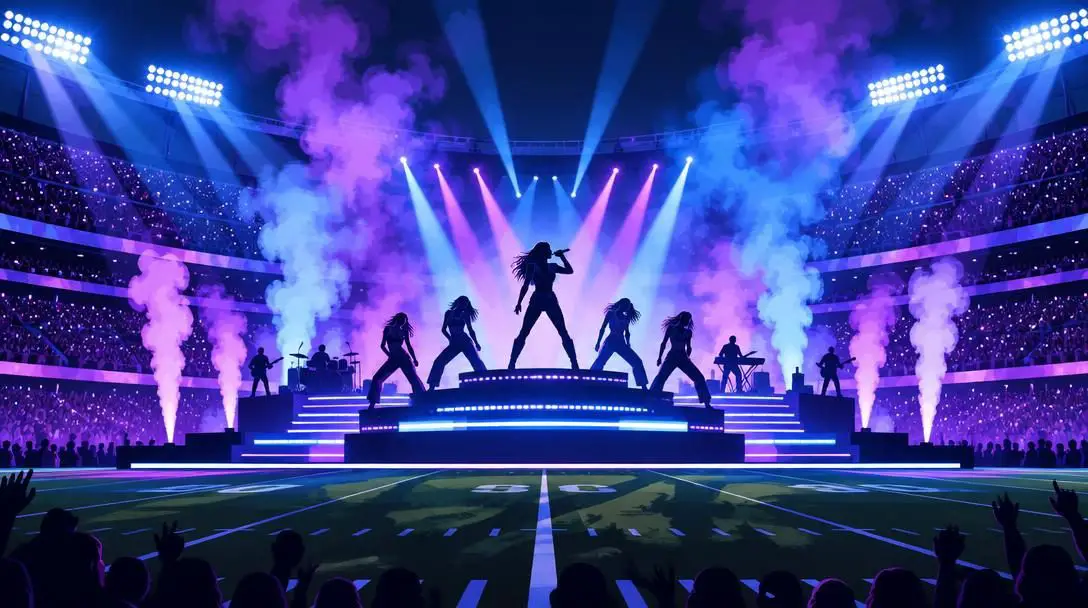
Super Bowl XXXVIII featured an exhilarating athletic contest between the New England Patriots and the Carolina Panthers. The Patriots held a narrow four-point lead entering the fourth quarter before a clutch, last-minute field goal by Adam Vinatieri clinched the championship for New England, delivering quarterback Tom Brady his second Super Bowl victory. Despite the thrilling fourth-quarter drama on the field, the sporting contest was ultimately overshadowed by the spectacle that took place at midfield during the halftime show.
Performers Janet Jackson and Justin Timberlake commanded the stage before a worldwide audience of millions. At the conclusion of their joint routine, Timberlake tore away a piece of Jackson's costume, exposing her breast on live television. The incident triggered an unprecedented wave of public backlash, with thousands of phone calls flooding into the Federal Communications Commission (FCC). As the Super Bowl represents the most-watched annual broadcast in the United States, the fallout resonated across the media landscape for months, transforming the wardrobe malfunction into the most re-watched moment in DVR recording history.
Mel Gibson's 2006 Arrest
- Key figure: Mel Gibson
- Notable film credits: "Lethal Weapon," "Braveheart," "Conspiracy Theory"
- Consequences: Alcohol rehabilitation and a nearly decade-long career halt
During the peak of his career, Mel Gibson stood as one of the most bankable leading men and directors in Hollywood. Blockbusters like Lethal Weapon, Braveheart, and Conspiracy Theory had established him as an undeniable box-office force. Although Gibson maintained steady work into the mid-2000s, his commercial and critical standing came to an abrupt halt following a 2006 arrest for driving under the influence.
While heavily intoxicated, Gibson launched into an offensive tirade against the arresting officers. He blamed Jewish people for all the wars in the world, questioned the female officer about her religious background, addressed her using derogatory language, and banged his head against the police cruiser's window. Gibson subsequently apologized and checked into a rehabilitation facility for alcoholism. Reflecting years later on the lasting damage to his standing, Gibson noted that he had never discriminated against anyone and felt it was unfair for a single episode involving eight double tequilas in the back of a police car to dictate his entire body of professional work.
The O.J. Simpson Murder Trial Acquittal
- Incident date: June 12, 1994
- Verdict date: October 3, 1995
- Key figures: O.J. Simpson, Nicole Brown Simpson, Ronald Goldman
- Television viewership: Over 100 million viewers
While erratic individual behavior frequently stirs tabloid coverage, the legal drama surrounding former NFL superstar turned actor O.J. Simpson involved serious criminal charges. On June 12, 1994, Nicole Brown Simpson and Ronald Goldman were found murdered at Brown's property in Brentwood, California. Simpson quickly emerged as the central person of interest, setting off a televised low-speed vehicle chase that captured worldwide media attention and led directly into an exhaustive, highly publicized courtroom trial.
The proceedings transfixed the public for over a year, culminating on October 3, 1995, when the jury delivered its decision. More than 100 million people tuned in live to watch the announcement. To the astonishment of many observers who had reviewed the prosecution's evidence, Simpson was acquitted of both murder charges. The verdict prompted jubilation among some viewers and profound bewilderment among others, solidifying the trial as one of the most polarizing and extensively watched events in the history of televised news.
The 89th Academy Awards Best Picture Mix-Up

- Ceremony: 89th Academy Awards (2017)
- Presenters: Warren Beatty, Faye Dunaway
- Films involved: "La La Land," "Moonlight"
- Other winners: Emma Stone (Best Actress), Viola Davis (Best Supporting Actress)
The 89th Academy Awards in 2017 began as a celebration of celebrated cinematic achievements, with Viola Davis earning Best Supporting Actress for Fences and Emma Stone securing Best Actress for La La Land. However, the final moments of the broadcast delivered one of the most awkward operational errors ever seen on a live awards telecast during the presentation of the coveted Best Picture category.
Legendary actors Warren Beatty and Faye Dunaway were mistakenly handed the duplicate envelope for Best Actress in a Leading Role rather than the envelope for Best Picture. Seeing Emma Stone's name alongside La La Land, Dunaway announced the musical as the victor. The cast and production team of La La Land ascended the stage and began delivering acceptance speeches before an Oscar crew member rushed into the spotlight with the correct envelope. Beatty stepped forward to explain the error, revealing that Moonlight was the legitimate Best Picture winner, turning an evening of prestigious accolades into an excruciating live correction.
Unscripted physical interruptions and backstage logistical mix-ups unfold in seconds, stripping away the safety nets of standard television production.
The 94th Academy Awards Altercation
- Ceremony: 94th Academy Awards (2022)
- Key figures: Will Smith, Chris Rock, Jada Pinkett Smith
- Awards outcome: Will Smith won Best Actor; banned from the Oscars for 10 years
Five years after the envelope confusion, the Academy Awards became the venue for an even more shocking live altercation. While presenting the award for Best Documentary Feature, comedian Chris Rock aimed several unscripted jokes toward attendees, including a remark directed at Jada Pinkett Smith regarding her shaved head. As the audience reacted, Will Smith rose from his seat and strode purposefully toward the stage.
Spectators initially assumed Smith was executing a staged, playful bit. Instead, Smith reared back his right hand and struck Rock across the face on live television. Returning to his front-row seat, Smith shouted repeatedly, demanding that Rock keep his wife's name out of his mouth. Although Smith went on to win the Academy Award for Best Actor later that evening, video of the physical confrontation circulated globally within minutes, ultimately resulting in the Academy issuing a formal 10-year ban against him.
How live broadcasts and celebrity scandals unfold
Show business controversies are rarely isolated events; rather, they represent a collision between live timing, massive global viewership, and rapid media transmission. In taped television production, professional editors routinely remove unscripted comments, awkward pauses, or wardrobe irregularities before an episode reaches the public. Live television strips away this editorial shield. Even with short broadcast delays in place, sudden physical reactions or unforeseen staging mistakes happen faster than production control rooms can manually intervene.
When an unexpected controversy airs on live television, it typically progresses through four distinct communication phases:
- Immediate viewer reaction: Audiences capture high-definition recordings using digital tools, DVR features, and instant screen grabs, circulating the exact seconds of footage across digital platforms.
- Institutional responses: Regulatory authorities like the FCC or professional governing bodies review incoming public complaints and determine whether legal or formal organizational sanctions are required.
- Public relations operations: Celebrity representatives, corporate crisis managers, and legal teams release carefully crafted statements, arrange public apologies, or facilitate enrollment in specialized treatment programs.
- Long-term narrative shift: News organizations, commentators, and historians repeatedly reference the event, permanently tying the artist or production team to the on-air incident.
Practical steps for navigating live events and high-profile situations
Organizations, production crews, and prominent personalities can take deliberate measures to mitigate risks, maintain professional decorum, and avoid costly public embarrassments during major live presentations.
- Establish strict verification protocols: Ensure backstage coordinators implement redundant checkpoints for envelopes, announcement cards, and teleprompter feeds before any presenter walks onto the live stage.
- Enforce firm stage safety perimeters: Event producers must clarify physical boundaries, ensuring that unauthorized individuals cannot approach the podium or presenters unannounced.
- Formulate clear crisis response plans: Develop predetermined organizational responses and technical contingencies so production teams know exactly when to cut feeds or display backup graphics.
- Maintain professional composure under pressure: Public figures and live speakers should train themselves to address unexpected remarks or disruptive audience comments without resorting to physical actions or vulgarity.
- Seek immediate professional counsel: In the wake of an unexpected incident or legal complication, individuals should pause unscripted commentary and coordinate all public messaging through qualified advisors.
Common mistakes to avoid in public relations and event production
Many celebrity scandals escalate into protracted career crises due to critical miscalculations made during or immediately following the event. Avoiding these common mistakes can prevent a localized error from snowballing into a full-scale public relations disaster:
- Assuming audience assent: Presenters often assume provocative jokes or unscripted physical actions will be received with humor, overlooking how hostile gestures appear to outside viewers.
- Failing to utilize broadcast delays: Relying purely on live audio and video without rigorous broadcast delay mechanisms exposes millions of viewers to profanity and inappropriate visuals.
- Adopting a defensive posture: Attempting to minimize serious outbursts or blaming external circumstances alienates the public and delays meaningful career rehabilitation.
- Allowing confusion to linger on stage: Delaying the correction of an erroneous announcement prolongs the mistake, magnifying the embarrassment once the truth is ultimately announced.
- Combining intoxication with public appearances: Driving or appearing at public events under the influence dramatically increases the likelihood of erratic behavior, legal peril, and professional ruin.
Long-term consequences and the evolution of modern media
The long-term impact of entertainment controversies illustrates how swiftly public standing and professional viability can shift. For Mel Gibson, his 2006 arrest brought a decade of career stagnation, illustrating that industry bankability cannot always protect an individual from intense public disfavor. Similarly, Will Smith's decade-long ban from the Academy Awards demonstrated that winning an industry's highest individual acting honor does not grant immunity from institutional discipline.
Furthermore, the evolution of consumer media has transformed how scandals are archived. During the mid-1990s, the public relied on real-time network coverage of the O.J. Simpson trial, gathering around television sets to hear news updates. By 2004, the Super Bowl halftime incident established new DVR replay habits, enabling viewers to dissect single frames of broadcast television in their living rooms. By the time of the 2017 envelope mistake and the 2022 stage slap, social media allowed short video clips to circle the planet within seconds, creating an enduring digital record that follows the participants indefinitely.
Frequently asked questions
What caused the Best Picture mix-up at the 89th Academy Awards?
Presenters Warren Beatty and Faye Dunaway were inadvertently handed the duplicate envelope for Best Actress in a Leading Role, which Emma Stone had won for La La Land. Seeing the film's title next to Stone's name, Dunaway mistakenly announced La La Land as Best Picture before stage crew members brought out the correct envelope declaring Moonlight the true winner.
Why did the Super Bowl XXXVIII halftime show cause so much controversy?
At the end of the musical performance, Justin Timberlake tore away a portion of Janet Jackson's top, briefly exposing her breast on live national television. The incident generated thousands of complaints to the FCC, broke DVR replay records, and sparked months of public debate regarding live broadcast standards.
What were the professional consequences for Will Smith after the 2022 Oscars?
Following his physical altercation with presenter Chris Rock, during which he struck Rock and shouted profanities from his seat, Smith received a 10-year ban from attending the Academy Awards, despite winning the Best Actor award later that same night.
How did Mel Gibson explain his 2006 arrest in later years?
Gibson apologized, entered rehabilitation for alcoholism, and later asserted that an isolated episode in the back of a police cruiser after drinking eight double tequilas should not unfairly define his extensive career and reputation.
How many people watched the verdict in the O.J. Simpson murder trial?
More than 100 million people watched the live television broadcast on October 3, 1995, when the jury announced that Simpson was found not guilty of the murders of Nicole Brown Simpson and Ronald Goldman.
The bottom line
The most famous controversies in show business history demonstrate that live entertainment operates on a razor's edge. Whether triggered by logistical oversights backstage, individual misconduct, or unscripted emotional reactions, moments that unfold in front of live cameras carry enduring power. As broadcasting technology continues to evolve from traditional network feeds to global digital channels, the lessons of past scandals remain clear: rigorous production safeguards, professional composure, and responsible crisis management are essential to surviving the relentless glare of the public eye.