Best NBA Basketball Coaches of the 1990s
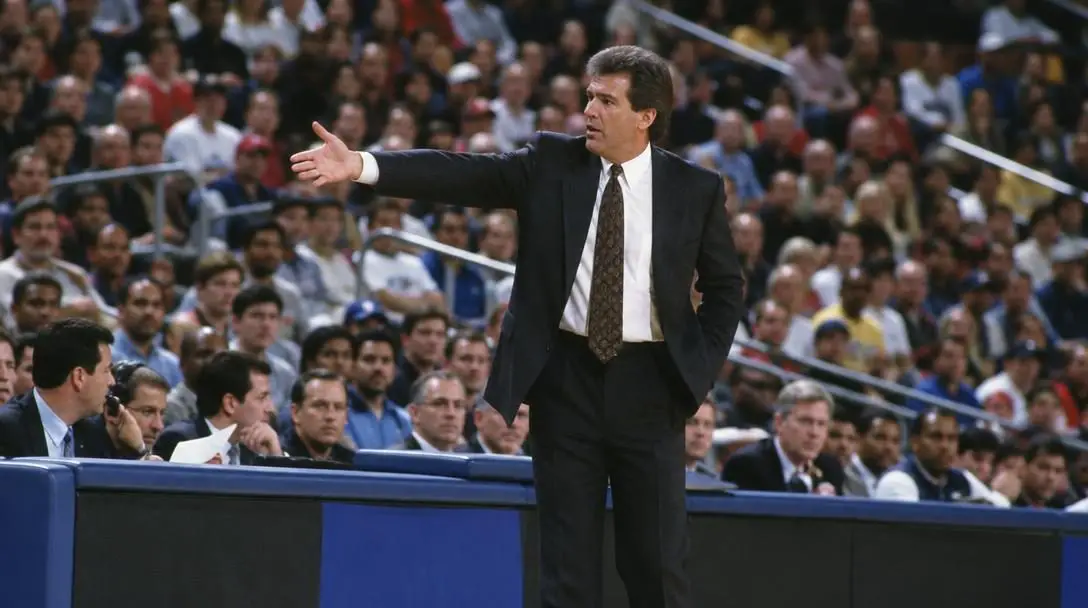
The 1990s marked a golden era for professional basketball, defined by explosive international growth, soaring cultural resonance, and legendary athletic icons. Global audiences gathered to watch transcendent superstars such as Michael Jordan, Charles Barkley, Patrick Ewing, and Shaquille O'Neal dominate the hardwood. Yet the raw talent and soaring athleticism of these marquee players formed only a portion of the championship equation. Translating individual brilliance into cohesive, disciplined, title-winning rosters required steady leadership from the sidelines.
During this physically punishing era, head coaches faced an intense strategic environment characterized by brutal half-court defensive schemes, deliberate pacing, and immense media scrutiny. The premier coaches of the decade were not merely tactical schemers; they were commanding culture builders who managed outsized personalities and weathered grueling postseason brackets. The very best bench bosses set an unshakeable standard of excellence that defined the sport throughout the decade.
Key takeaways
- Phil Jackson dominated the decade by securing six championships with the Chicago Bulls before continuing his title-winning success with the Los Angeles Lakers.
- Jerry Sloan and Rudy Tomjanovich established immense multi-year consistency, avoiding losing campaigns throughout the entirety of the 1990s.
- Pat Riley and Chuck Daly demonstrated exceptional adaptability by implementing high-performing, winning systems across multiple franchise shifts.
- Evaluating 1990s coaching performance requires examining both regular-season loss prevention and the tactical flexibility needed for high-stakes playoff series.
The Rigors and Tactical Identity of 1990s NBA Basketball
Coaching in the 1990s demanded an entirely different operational blueprint than modern, pace-and-space basketball. The decade was defined by rugged physical confrontations, stifling interior defense, and half-court executions where every single possession carried postseason gravity. Tacticians had to construct offenses capable of navigating aggressive contact while engineering defensive schemes designed to control the paint against dominant centers and driving wing scorers.
At the same time, coaches carried the burden of navigating the unprecedented global celebrity of their rosters. As the NBA expanded its commercial footprint across the globe, locker rooms filled with high-profile stars commanding intense public interest. Mastering personality management became just as critical as designing an inbound play. Coaches had to establish commanding authority, align personal ambitions with team priorities, and preserve locker-room focus across the grueling 82-game regular season and four rounds of playoff pressure.
The Five Definitive NBA Head Coaches of the Decade
While numerous coaches made their mark during this period, five tacticians stood distinctly above the rest. Through championship hardware, peerless consistency, and historic playoff runs, these leaders defined sideline excellence across the 1990s.
| Coach | Primary 1990s Franchises | Decade Titles | Notable 1990s Milestone |
|---|---|---|---|
| Phil Jackson | Chicago Bulls, Los Angeles Lakers | 6 | Captured six titles in Chicago and a seventh in the 1999–2000 campaign |
| Jerry Sloan | Utah Jazz | 0 | Logged only one single season with 30 or more losses across the decade |
| Pat Riley | New York Knicks, Miami Heat | 0 | Suffered more than 31 regular-season losses only once during the decade |
| Rudy Tomjanovich | Houston Rockets | 2 | Secured back-to-back NBA championships in 1994 and 1995 |
| Chuck Daly | Detroit Pistons, New Jersey Nets, Orlando Magic | 1 | Maintained a record without a single losing season across three franchises |
Chuck Daly
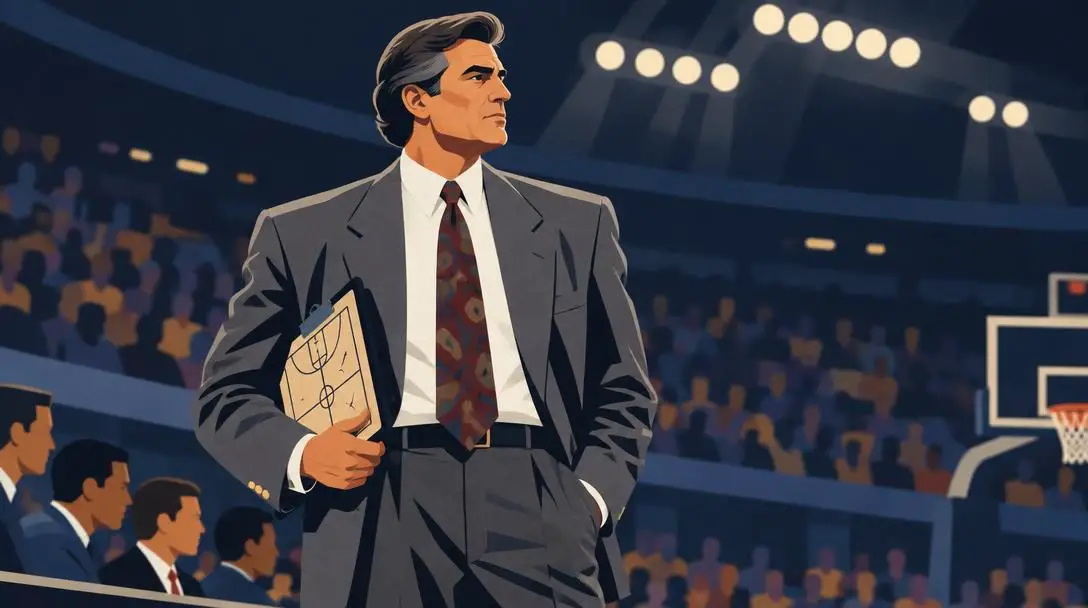
- 1990s Titles: 1 (1990)
- Teams Coached in the 1990s: Detroit Pistons, New Jersey Nets, Orlando Magic
- Career Coaching Record: 638 wins, 437 losses
- Retirement Year: 1998–99 season
Although Chuck Daly cemented his legendary reputation during the late 1980s by constructing the defensive powerhouse known as the "Bad Boys" in Detroit, he carried that championship-caliber standard straight into the next decade. Daly opened the decade by securing the second of his back-to-back NBA titles with the Detroit Pistons in 1990, demonstrating that his bruising, disciplined defensive system remained the standard of the league.
Beyond his NBA club duties, Daly was selected to lead the iconic 1992 United States Men's Olympic Basketball Team, widely celebrated as the Dream Team. Following his tenure in Detroit, Daly took his tactical expertise to the New Jersey Nets and later the Orlando Magic. Remarkably, Daly never suffered a losing season during the entire decade of the 1990s, proving that his foundational principles of accountability and defensive positioning could elevate diverse rosters. He concluded his illustrious head coaching career following the 1998–99 campaign with 638 total wins.
Rudy Tomjanovich
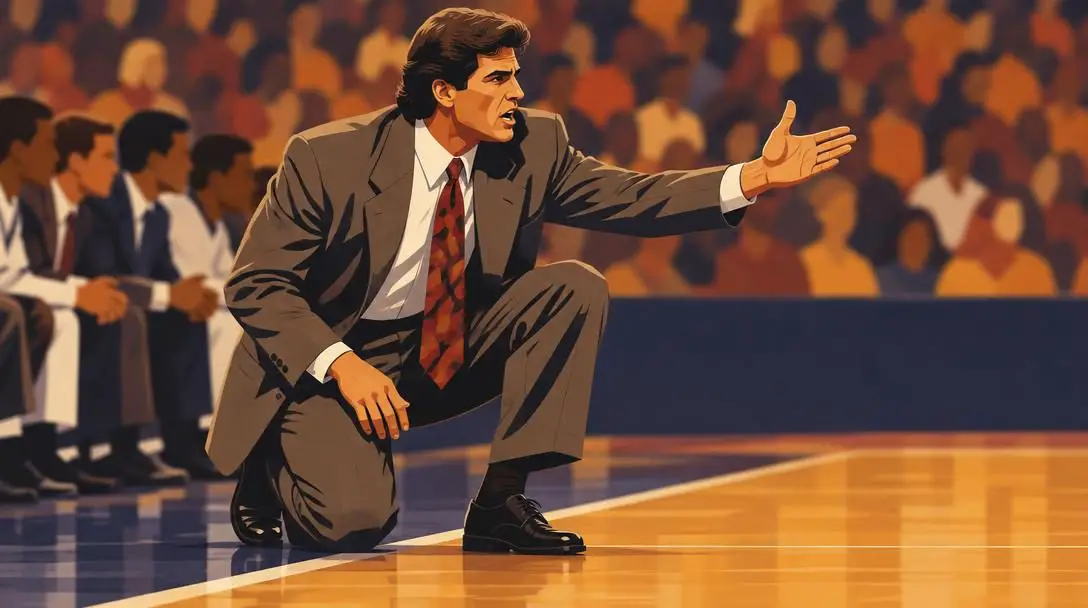
- 1990s Titles: 2 (1994, 1995)
- Teams Coached in the 1990s: Houston Rockets
- Career Coaching Record: 527 wins, 416 losses
- Retirement Year: 2004–05 season
A former NBA All-Star as a player, Rudy Tomjanovich assumed head coaching duties for the Houston Rockets mid-season during the 1991–92 campaign. He quickly transformed Houston into a resilient, tactically modern powerhouse. Under his direction, the Rockets captured back-to-back NBA championships in 1994 and 1995, overcoming elite Western Conference opponents and showcasing an indomitable competitive spirit in tight playoff series.
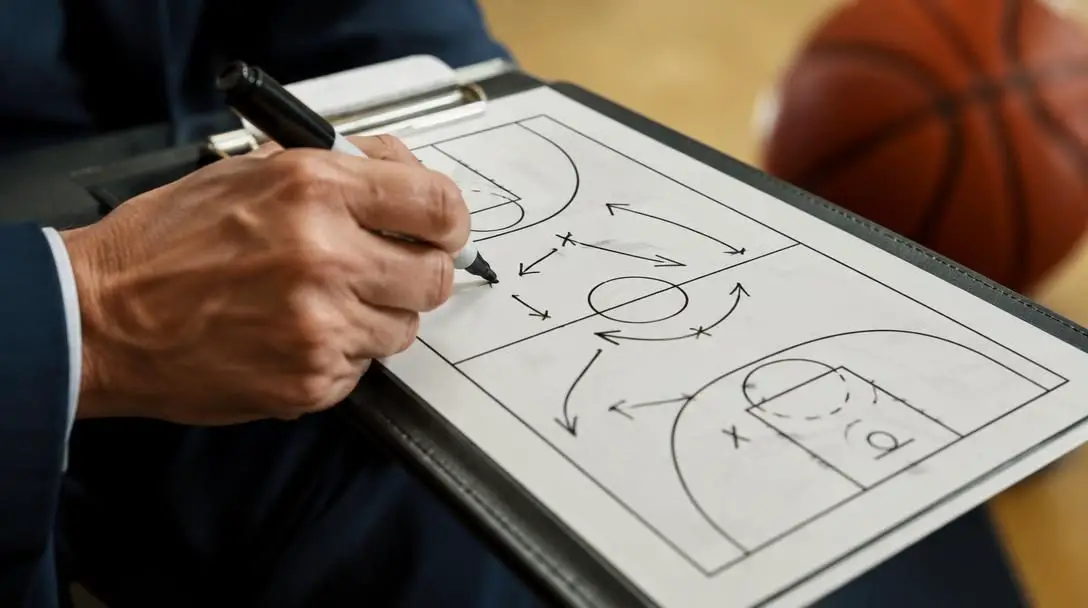
Tomjanovich maintained an exceptional standard of regular-season reliability, avoiding a single sub-.500 season throughout the entirety of the 1990s. His first losing campaign did not arrive until the 1999–2000 season. His ability to connect with his players while designing an offense that capitalized on superstar center play established him as one of the premier leaders of his generation. Tomjanovich eventually concluded his head coaching journey during the 2004–05 season after stepping down from the Los Angeles Lakers bench, completing his career with 527 regular-season victories.
Pat Riley

- 1990s Titles: 0 (Won four in the 1980s, fifth in 2006)
- Teams Coached in the 1990s: New York Knicks, Miami Heat
- 1990s Finals Appearances: 1 (1994)
- Retirement Year: 2007–08 season
Pat Riley entered the decade having already established himself as an all-time great by directing the "Showtime" Los Angeles Lakers to four titles in the 1980s. Following his departure from Los Angeles after the 1989–90 campaign, Riley completely reinvented his tactical identity. Taking the reins of the New York Knicks and subsequently the Miami Heat, Riley pioneered a physically punishing, defensive brand of basketball that matched the gritty identity of the Eastern Conference.
Although Riley did not capture a championship ring during this specific ten-year stretch, his teams were among the most feared competitors in professional sports. Over the entire decade, a Riley-led squad suffered more than 31 losses in a single season only once. He guided the Knicks to the NBA Finals in 1994, pushing Houston to seven hard-fought games. Riley eventually ended his head coaching career in Miami following the 2007–08 season, having added a fifth career championship to his resume in 2006.
Jerry Sloan
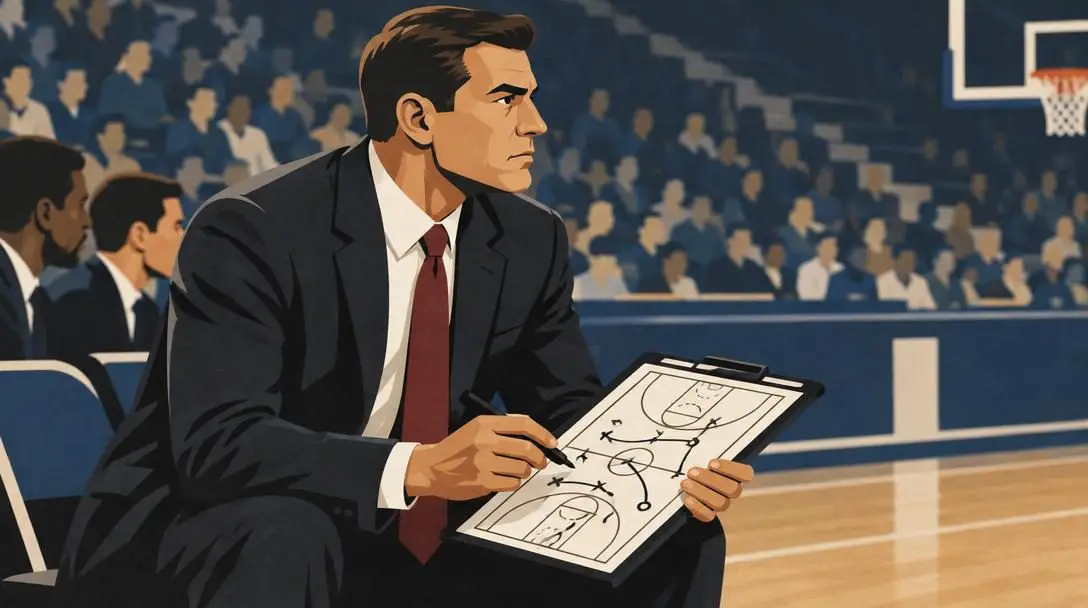
- 1990s Titles: 0 (Two Finals appearances)
- Teams Coached in the 1990s: Utah Jazz
- Tenure in Utah: Hired in 1988, remained through the end of his career
- 1990s Consistency: Only one season with 30 or more losses
Following a distinguished playing career and an initial coaching stint in the late 1970s and early 1980s that produced modest results, Jerry Sloan found his definitive coaching home when he took charge of the Utah Jazz in 1988. He remained in Utah for the rest of his head coaching career, establishing one of the most stable, enduring cultures in North American professional sports.
Throughout the 1990s, Sloan turned the Jazz into a perennial playoff contender through rigorous discipline and meticulous execution. Operating his system around the hall-of-fame duo of Karl Malone and John Stockton, Sloan's squads executed pick-and-roll sets with lethal precision. Sloan suffered 30 or more losses in just one single season during the entire decade. He guided Utah to consecutive NBA Finals appearances in 1997 and 1998, pushing the Chicago Bulls to six intense games in both series before falling short against Phil Jackson's dynasty.
Phil Jackson
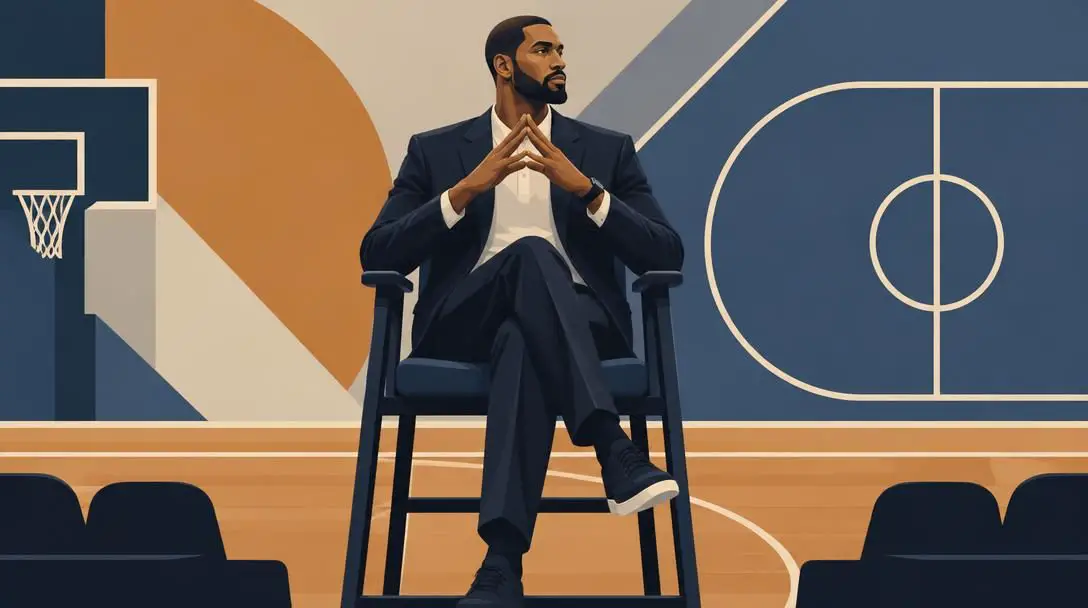
- 1990s Titles: 6 (Plus a 7th in 1999–2000)
- Teams Coached in the 1990s: Chicago Bulls, Los Angeles Lakers
- Finals Record in the Decade: 6 wins, 0 losses
- Signature Persona: The "Zen Master"
Phil Jackson stands undisputed as the definitive basketball coach of the 1990s. Stepping into the head coaching position for the Chicago Bulls ahead of the 1989–90 season, Jackson inherited a franchise laden with exceptional individual talent that had yet to overcome the conference's physical barriers. Jackson instituted an egalitarian offensive system and a mindful, composed team culture that unlocked the roster's collective championship potential.
Jackson oversaw a historic run in Chicago that produced six NBA championships, culminating with a second three-peat title in the 1997–98 campaign. After a brief hiatus, he took over the Los Angeles Lakers in the closing months of the decade, promptly capturing another NBA championship in the 1999–2000 season. Celebrated worldwide as the "Zen Master," Jackson set the pinnacle of professional coaching by balancing outsized personalities, maintaining tactical composure under immense playoff pressure, and crafting the most dominant dynasty of the modern basketball era.
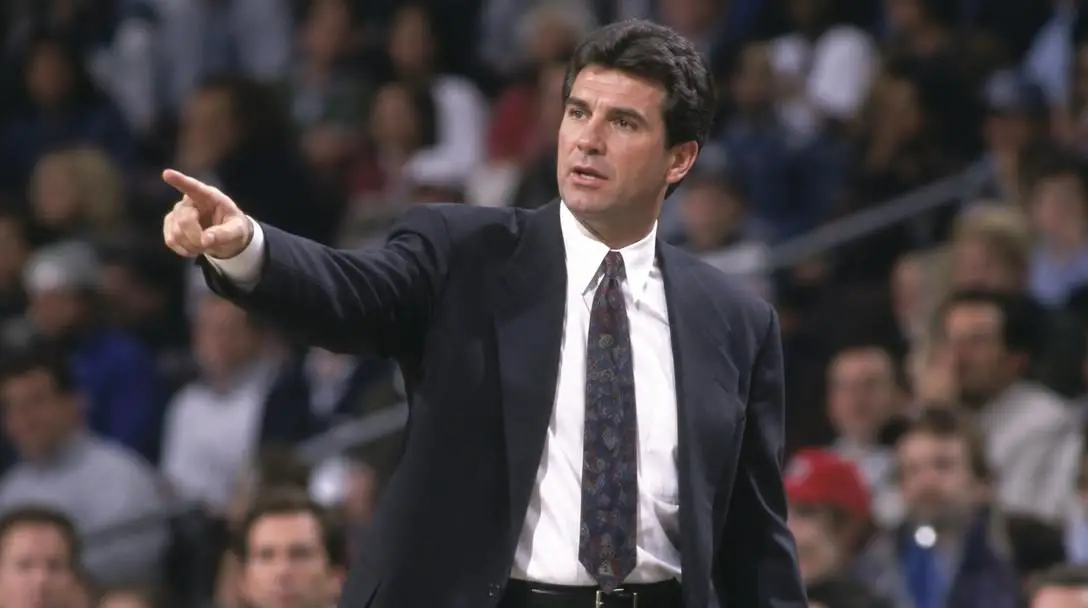
Phil Jackson set the benchmark for elite leadership through his composed demeanor and unmatched ability to unite bold, dominant personalities into a singular, championship-winning force.
Key Components of Coaching Greatness in the Era
Analyzing what made these tacticians successful reveals several core disciplines that were essential for thriving in 1990s basketball. The coaches who separated themselves did so by mastering specific leadership traits:
- Ego and Personality Alignment: Coaches had to command universal respect from transcendent icons such as Michael Jordan, Karl Malone, John Stockton, Patrick Ewing, and Charles Barkley, directing individual stardom toward team milestones.
- Multi-Year Regular Season Floors: The premier coaches avoided systemic drop-offs, keeping their teams away from losing records across entire decades despite roster fatigue and injuries.
- Tactical Portability: Tacticians like Chuck Daly and Pat Riley proved their philosophies were not tethered to one city or roster, creating successful environments across multiple franchise transitions.
- Seven-Game Playoff Problem Solving: Postseason basketball placed immense demands on late-game management, game-to-game defensive adjustments, and half-court execution under high-leverage circumstances.
A Step-by-Step Framework for Evaluating Historic Coaches
When historians, sports analysts, and basketball enthusiasts study coaching careers from past eras, employing a disciplined, structured methodology ensures fair and balanced evaluations.
- Review Multi-Year Regular Season Baselines: Begin your analysis by tracking loss totals across several consecutive seasons to determine a coach's organizational stability, looking at achievements like Daly avoiding losing records across three separate teams.
- Assess Deep Playoff Advancements: Separate routine regular-season victories from peak postseason execution by counting conference titles, Finals appearances, and championships claimed under intense playoff scrutiny.
- Analyze Roster Continuity and Personnel: Examine how effectively the coach tailored their system to the specific talents at their disposal, such as Sloan maximizing the Stockton-to-Malone connection in Utah.
- Track Performance Across Team Transitions: Evaluate whether a coach's cultural standards survived relocation, as illustrated by Pat Riley maintaining elite winning percentages in New York and Miami.
- Examine Direct Postseason Matchups: Study head-to-head playoff clashes where top coaches met directly, such as the back-to-back NBA Finals battles between Jerry Sloan's Jazz and Phil Jackson's Bulls.
Common Pitfalls When Assessing 1990s Coaching Legacies
Modern basketball discussions often fall victim to recency bias or analytical blind spots when revisiting the 1990s. When analyzing coaching resumes from this timeframe, avoid these frequent analytical mistakes:
- Discrediting Coaches Without Decade Championships: Looking solely at title counts discounts leaders like Pat Riley, whose Knicks and Heat teams routinely limited regular-season losses to 31 or fewer while making the 1994 Finals.
- Attributing Success Solely to Players: Presuming that hall-of-fame talent operated autonomously ignores the complex psychological and structural management coaches like Jackson and Sloan performed daily.
- Applying Modern Pace-and-Space Analytics: Judging 1990s tactical systems by modern three-point volume or high possession counts ignores the physical, half-court defensive environment in which these games were contested.
- Overlooking Long-Term Organizational Culture: Focusing exclusively on postseason elimination games obscures the immense value of coaches like Jerry Sloan, who provided sustained competitive stability for decades.
Looking Ahead: The Ongoing Influence of 1990s Tacticians
The lessons developed by the premier bench bosses of the 1990s continued to resonate well into the modern basketball landscape. Several of these coaches extended their dominance deep into the next century, proving the timeless nature of their operational philosophies.
Phil Jackson transitioned his Chicago principles directly to the Los Angeles Lakers, capturing five additional championships in Southern California. Similarly, Pat Riley captured his fifth career championship ring as head coach of the Miami Heat in 2006, proving that his demanding conditioning standards and defensive emphasis translated across different eras of athletic talent.
Furthermore, the successful transitions of former players like Rudy Tomjanovich and Jerry Sloan into legendary head coaching figures laid an enduring blueprint for modern organizations looking to install experienced former players as bench bosses. Studying the historic rivalries between the Bulls, Jazz, Knicks, and Rockets reveals how tactical chess matches defined an unforgettable golden era of professional basketball.
Frequently asked questions
Which head coach won the most NBA championships in the 1990s?
Phil Jackson won the most championships during the decade, capturing six NBA titles with the Chicago Bulls (ending with the 1997–98 season) and adding a seventh title in the 1999–2000 season with the Los Angeles Lakers.
Did Chuck Daly have any losing seasons during the 1990s?
No. Chuck Daly never recorded a losing season during the 1990s, maintaining a winning standard across tenures with the Detroit Pistons, New Jersey Nets, and Orlando Magic before concluding his career after the 1998–99 season.
How many NBA Finals did Jerry Sloan reach during the decade?
Jerry Sloan guided the Utah Jazz to consecutive NBA Finals appearances in 1997 and 1998, where they were defeated both times by Phil Jackson and the Chicago Bulls.
Did Pat Riley win an NBA championship during the 1990s?
No. Pat Riley won four championships in the 1980s with the Lakers and a fifth with the Miami Heat in 2006, but he did not capture a title during the 1990s, though he led the New York Knicks to the NBA Finals in 1994.
When did Rudy Tomjanovich record his first losing season with Houston?
Rudy Tomjanovich avoided a losing season throughout the entire 1990s after taking over in 1991–92, postponing his first sub-.500 season until the 1999–2000 campaign.
The bottom line
The 1990s stood as an extraordinary proving ground for NBA head coaches. Facing intense physical play, media scrutiny, and rosters packed with transcendent superstars, the decade's elite tacticians distinguished themselves through unwavering standards of operational excellence. Whether measured by Phil Jackson's unrivaled championship total, Jerry Sloan's relentless consistency in Utah, Rudy Tomjanovich's back-to-back crowns in Houston, or the multi-franchise mastery of Chuck Daly and Pat Riley, these five leaders engineered a historic blueprint for championship basketball that continues to inform modern sideline leadership.