Fangraphs Best 2000s Hitters Shows Barry Bonds On Another Level
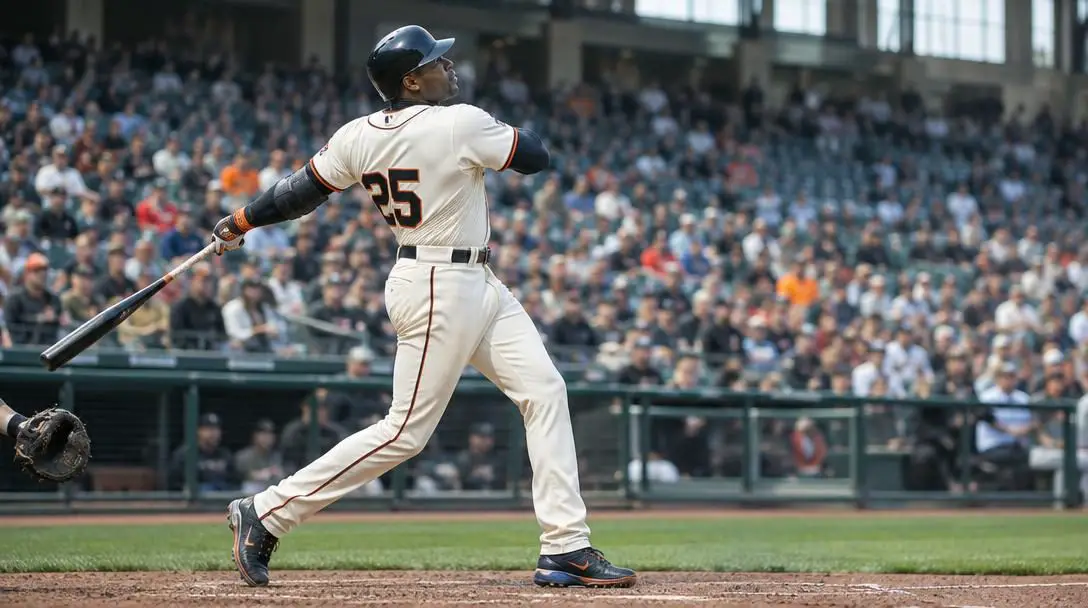
The transition from the late 1990s into the early 2000s represents one of the most statistically astonishing chapters in Major League Baseball history. Total run scoring surged across both leagues as power outputs reached unprecedented heights, driven by an offensive explosion that reshaped standard expectations of production. While modern fans and analysts recognize that the broader prevalence of performance-enhancing drugs served as the primary catalyst for this boom, the individual statistical achievements recorded during this window continue to stand as monuments of offensive execution.
During the first half of the decade, elite hitters routinely challenged foundational records and pushed conventional evaluation tools to their limits. Across the 2000s, position players logged an incredible 30 individual seasons with a Wins Above Replacement mark of 8.0 or better, a threshold widely viewed as the signature of an MVP-caliber campaign. By evaluating these campaigns through comprehensive metrics, sabermetric analysis demonstrates how historical run environments were conquered, revealing that Barry Bonds operated in a statistical stratosphere entirely his own.
Key takeaways
- Barry Bonds captured all four of the highest-rated individual position player seasons of the 2000s between 2001 and 2004.
- Advanced metrics rate Bonds's 2002 campaign above his record-setting 73-home-run season in 2001 due to superior on-base skills and strikeout avoidance.
- Alex Rodriguez dominated the remainder of the decade's leaderboard, generating five of the top nine seasons when excluding Bonds.
- Sammy Sosa, Adrian Beltre, and Albert Pujols secured spots in the decade's top ten through historic displays of run production, contract-year power, and hitting efficiency.
At a glance: The decade's landmark offensive seasons
Modern analytical frameworks account for park factors, defensive roles, and overall run environments to identify which seasons created the most cumulative value on the field. The following table highlights the signature campaigns from the five standout players who defined the top tier of the 2000s leaderboard.
| Hitter | Season | Team | Home Runs | RBIs | Key Rate or Metric |
|---|---|---|---|---|---|
| Barry Bonds | 2002 | San Francisco Giants | 46 | 110 | .582 On-Base Percentage |
| Barry Bonds | 2001 | San Francisco Giants | 73 | 137 | All-Time Single-Season HR Record |
| Barry Bonds | 2004 | San Francisco Giants | 45 | 101 | .609 On-Base Percentage |
| Barry Bonds | 2003 | San Francisco Giants | 45 | 90 | Top-4 Decade Finish |
| Alex Rodriguez | 2002 | Texas Rangers | 57 | 142 | 10.0 WAR |
| Sammy Sosa | 2001 | Chicago Cubs | 64 | 160 | Decade-High Single-Season RBIs |
| Adrian Beltre | 2004 | Los Angeles Dodgers | 48 | 121 | .334 Batting Average |
| Albert Pujols | 2003 | St. Louis Cardinals | 43 | 124 | .359 Batting Average |
The decade's top five hitters ranked by peak value
While numerous sluggers put together memorable campaigns during this offensive era, a small cohort of generational talents separated themselves from the rest of the league. These five hitters produced the standout seasons that dominate historical leaderboards.
Barry Bonds

- Top Seasons: 2001, 2002, 2003, 2004
- Peak On-Base Percentage: .609 (2004)
- Decade High Home Runs: 73 (2001)
Barry Bonds authored a four-year peak from 2001 through 2004 that stands apart from any other offensive stretch in baseball history. What makes his accomplishment remarkable is that Bonds locked down all four of the highest-ranked individual seasons of the entire decade. He achieved this unprecedented run of dominance despite missing almost an entire season during the 2000s and battling persistent injuries while playing into his forties.
His 2002 campaign earned the distinction as the single most valuable season of the decade. Despite sitting out 19 games, Bonds launched 46 home runs, drove in 110 runs, and posted an eye-popping .582 on-base percentage by reaching base safely in 58.2 percent of his plate appearances. His legendary 2001 campaign ranks as the second-best season of the decade; although he established the modern single-season record with 73 home runs and logged 137 RBIs, he struck out nearly twice as often as he did in 2002, and his on-base percentage sat nearly 70 points lower. Bonds completed his sweep with his 2004 campaign (third overall), when opposing pitchers walked him so frequently that he set an all-time record with a .609 on-base percentage while adding 45 home runs, alongside his 2003 campaign (fourth overall), where he hit another 45 round-trippers.

Alex Rodriguez

- Pinnacle Season: 2002 (10.0 WAR)
- Peak Counting Stats: 57 home runs, 142 RBIs (2002)
- Teams Represented: Seattle Mariners, Texas Rangers, New York Yankees
While Bonds was authoring an unprecedented late-career resurgence, Alex Rodriguez was entering the absolute prime of his athletic career. If metric calculations exclude Bonds entirely, Rodriguez becomes the defining figure of the 2000s, claiming five of the top nine individual seasons recorded across the decade. His ability to sustain MVP-level output across three distinct franchises—the Seattle Mariners, Texas Rangers, and New York Yankees—cemented his position as an elite talent and justified his record-breaking contract.
The peak of Rodriguez's decade arrived in 2002 while playing for Texas. In that campaign, Rodriguez delivered an even 10.0 WAR by hitting .300 with 57 home runs and 142 runs batted in, combining premier offensive output with everyday defensive contributions at shortstop. His other decade-defining seasons included an elite 2000 campaign in Seattle, an explosive 2003 follow-up in Texas, and two signature MVP-caliber displays in New York in 2005 and 2007.
Sammy Sosa

- Top Season: 2001
- Home Runs: 64
- Runs Batted In: 160
Sammy Sosa turned in the single highest-rated campaign of the 2000s by any player not named Barry Bonds or Alex Rodriguez. Playing for the Chicago Cubs during the summer of 2001, Sosa launched 64 home runs and drove in an astounding 160 runs batted in. That 160-RBI mark stood through the remainder of the decade as the highest single-season RBI tally recorded by any hitter, providing the offensive backbone for Chicago's lineup and securing Sosa a permanent spot in the decade's upper echelon.
Adrian Beltre

- Top Season: 2004
- Batting Average: .334
- Home Runs: 48
Occupying the seventh position overall on the decade's leaderboard, Adrian Beltre orchestrated an unforgettable walk year in 2004 during his final season with the Los Angeles Dodgers. Beltre compiled a .334 batting average, crushed 48 home runs, and collected 121 runs batted in. Despite delivering one of the most productive offensive and defensive third-base campaigns in modern history, Beltre was curiously left off the National League roster for the Midsummer Classic, missing the All-Star Game entirely before finishing second in MVP voting at season's end.
Albert Pujols

- Top Season: 2003
- Age During Season: 23
- Batting Average: .359
Albert Pujols, who eventually became the fourth member of Major League Baseball's exclusive 700 home run club, burst onto the scene in the early 2000s with unmatched hitting polish. His pinnacle year of the decade arrived in 2003 with the St. Louis Cardinals, landing him ninth on the decade's overall leaderboard. At just 23 years of age, Pujols turned in a career-best .359 batting average while pairing his contact skills with immense power, launching 43 home runs and knocking in 124 runs.
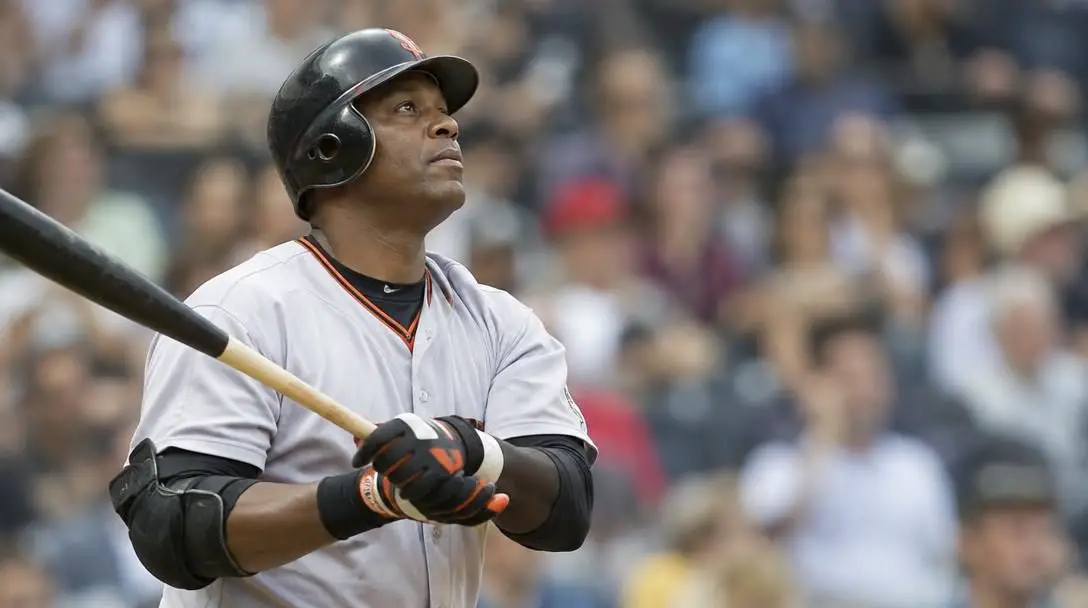
By controlling the strike zone to reach base over sixty percent of the time, Barry Bonds transformed standard offensive output into a display of complete plate control.
How advanced metrics evaluate offensive dominance
Understanding why composite leaderboards rank seasons like Bonds's 2002 ahead of his record-setting 73-home-run campaign in 2001 requires an appreciation of modern analytical methodology. Traditional box-score figures like raw home run totals and runs batted in provide an incomplete picture because they depend heavily on ballpark dimensions, lineup position, and whether teammates manage to reach base ahead of a hitter.
Advanced metrics evaluate each plate appearance in its entirety to calculate how much scoring value a player generated relative to an average replacement player. Wins Above Replacement integrates several distinct pillars into a unified evaluation:
- Batting runs: Rather than treating all hits equally or relying on arbitrary weights, modern metrics determine the precise expected run value generated by every walk, single, double, triple, and home run.
- Out avoidance and on-base skills: Avoiding an out is the single most important objective for an offensive player. By drawing unprecedented walk totals in 2002 and 2004, Bonds rarely surrendered outs to opposing defenses, generating historic run-creation totals that outstripped years featuring higher home run tallies.
- Positional adjustments: Defensively demanding spots carry higher baseline value. Alex Rodriguez's ability to hit 57 home runs while playing shortstop in 2002 provided significantly more defensive surplus value than equal offensive output from a corner outfield or designated hitter role.
- Park and era context: Modern metrics adjust for stadium dimensions and broader league run environments, ensuring that hitters are judged by how substantially they outproduced their contemporary peers rather than by raw environment-inflated counting numbers.
A step-by-step framework for assessing historic seasons
To accurately compare individual campaigns from high-scoring eras against standard historical baselines, analysts rely on a systematic evaluation procedure. Following this structured sequence helps avoid common statistical biases.
- Review core rate metrics: Check on-base percentage and batting average alongside home run and RBI totals to see how frequently the hitter avoided making an out.
- Compare teammate context: Evaluate total RBIs and runs scored within the framework of how often runners were on base for that hitter. High RBI totals, such as Sosa's 160 in 2001, highlight exceptional run production with men on base.
- Examine strikeout-to-walk ratios: Contrast raw power with plate discipline. A high strikeout total, as seen in Bonds's 2001 season, slightly diminishes total run creation compared to seasons where elite power is paired with historically low strikeout rates.
- Cross-reference advanced value: Consult composite tools like WAR to see how defense, baserunning, and defensive position weigh against pure designated hitting or outfield output.
Common pitfalls when analyzing 2000s hitting data
The sheer scale of offense throughout the late 1990s and early 2000s creates frequent misunderstandings for readers examining archived leaderboards. Keeping these analytical traps in mind prevents flawed era comparisons:
- Over-relying on home run totals alone: Fans often assume that Bonds's 73-home-run season in 2001 was automatically his best year on the field, overlooking the fact that his unprecedented on-base percentages in 2002 and 2004 created even more team offensive value.
- Ignoring team context for RBIs: Assuming a player with 140 or 160 RBIs was necessarily a better hitter than one with 110 overlooks how many opportunities were generated by the hitters batting ahead of them in the order.
- Disregarding defensive position: Comparing Alex Rodriguez's production directly to corner outfielders without acknowledging that he produced 57 home runs as a premium-position player understates the defensive value inherent to his position.
- Judging value solely by accolades: Relying on honors such as All-Star selections can be misleading; Adrian Beltre's historic 2004 season proves that elite campaigns were sometimes overlooked by contemporary mid-season voting.
Frequently asked questions
Why is Barry Bonds's 2002 season rated higher than his 73-home-run season in 2001?
Although Bonds set the single-season home run record with 73 in 2001, his 2002 season featured superior discipline and efficiency. In 2001, Bonds struck out nearly twice as often and his on-base percentage was almost 70 points lower than the .582 mark he posted in 2002, making his 2002 campaign more valuable on a per-plate-appearance basis.
How many individual 8.0 WAR seasons occurred during the 2000s?
Across the entire decade of the 2000s, position players combined to record 30 individual seasons with a Wins Above Replacement mark of 8.0 or higher, demonstrating the era's remarkable cluster of MVP-caliber offensive production.
Who recorded the highest single-season RBI total of the 2000s?
Sammy Sosa recorded the highest single-season RBI total of the decade during his 2001 campaign with the Chicago Cubs, driving in 160 runs while hitting 64 home runs.
Why did Adrian Beltre miss the All-Star Game in his historic 2004 season?
Despite batting .334 with 48 home runs and 121 RBIs for the Los Angeles Dodgers, Beltre was bypassed in mid-season fan and player voting, serving as a reminder that contemporary mid-season accolades often fail to capture all-time great performances.
How dominant was Alex Rodriguez when excluding Barry Bonds from the rankings?
When Barry Bonds is excluded from the calculations, Alex Rodriguez accounts for five of the top nine individual seasons of the 2000s, highlighted by his 10.0 WAR season for the Texas Rangers in 2002.
The bottom line
The early 2000s offensive era reshaped modern baseball discourse and served as the testing ground for the analytical tools fans and front offices rely on today. While the widespread presence of performance-enhancing drugs provided the backdrop for the decade's inflated run production, metric frameworks like WAR isolate individual superiority by measuring run value against contemporary peers. Through that lens, Barry Bonds's complete ownership of the four top seasons of the decade remains an unrivaled statistical peak, complemented by the historic primes of Alex Rodriguez, Sammy Sosa, Adrian Beltre, and Albert Pujols.