Best NCAA Basketball Coaches of the 1990s
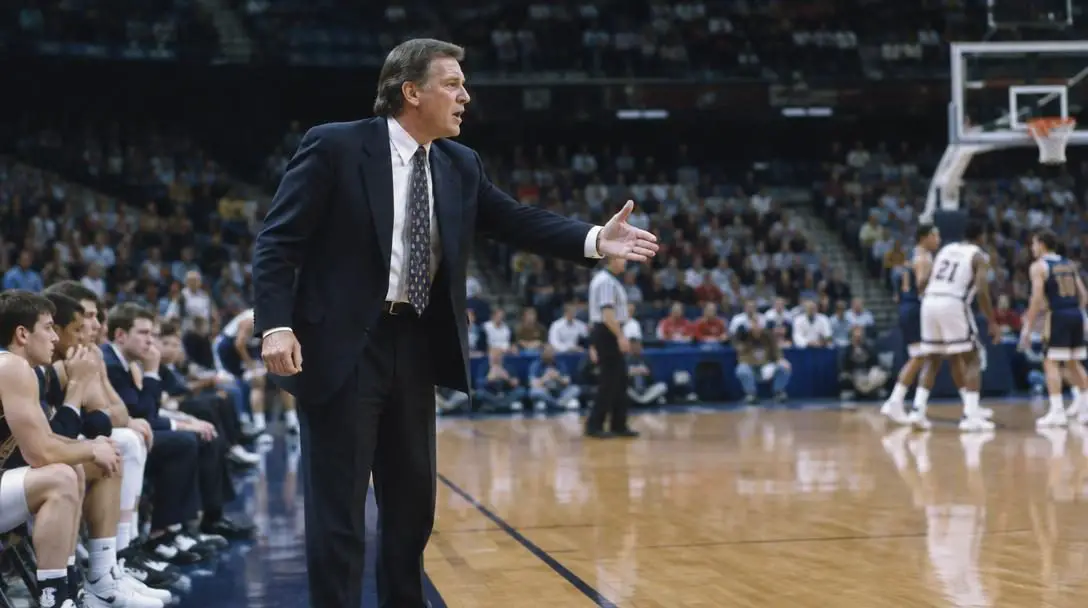
College basketball throughout the 1990s occupied a unique space in sports history, functioning as a vital bridge between traditional campus-rooted athletics and the high-profile modern era. Long before the arrival of immediate name, image, and likeness compensation, digital streaming platforms, or open transfer portals, the sport flourished on multi-year roster development and deep regional rivalries. Head coaches in this decade were architects who recruited high school players with four-year blueprints, building cohesive squads capable of navigating bruising conference schedules and the chaotic single-elimination pressure of March Madness.
The coaches who dominated the 1990s achieved greatness by maintaining remarkable consistency during a transitional era. From historic back-to-back championships and dominant conference runs to rebuilding sanctioned powerhouses, these tacticians established standards that still define excellence in collegiate athletics. Understanding who led the pack requires examining both postseason hardware and sustained regular-season command.
Key takeaways
- Mike Krzyzewski topped the decade with back-to-back national championships and near-constant tournament dominance despite missing time with a severe back injury.
- Dean Smith secured a national title and reached four Final Fours in the 1990s despite retiring prior to the final three seasons of the decade.
- Roster stability and multi-year player development served as the foundation of program building throughout the 1990s collegiate landscape.
- Coaches like Rick Pitino, Jim Calhoun, and Roy Williams established sustained excellence through conference dominance and recurring deep runs to the Elite Eight and Final Four.
The landscape of collegiate basketball in the 1990s
The collegiate basketball environment three decades ago required a completely different strategic approach than modern college sports. Without the modern transfer portal, student-athletes generally remained at their chosen institutions for multiple years, as transferring typically required sitting out an entire competitive season. This structural rule encouraged roster continuity and long-term planning, allowing coaches to steadily mold freshmen reserves into seasoned upperclassmen capable of anchoring championship-caliber rotations.
Recruiting networks during this era were heavily localized. Coaching staffs spent years cultivating authentic connections with regional high schools, grassroots leagues, and community coaches. Because one-and-done departures to the professional ranks were not the norm during the early and mid-1990s, head coaches could implement complex tactical philosophies, defensive schemes, and motion offenses that required years of collegiate chemistry to execute effectively at the highest levels of competition.
The 1990s served as a crucial transition period, marking a significant shift toward modern basketball while remaining grounded in roster stability and regional identity.
The top 5 coaches of the 1990s at a glance
The decade's most accomplished leaders established distinct footprints in March while consistently securing high seeds through their conference schedules. The table below outlines how the premier head coaches of the 1990s compared across key tournament achievements and leadership highlights.
| Coach | Primary 1990s program | NCAA Championships in the decade | Final Four appearances in the decade | Defining decade milestone |
|---|---|---|---|---|
| Mike Krzyzewski | Duke | 2 (1991, 1992) | 4 | Secured back-to-back national crowns |
| Dean Smith | North Carolina | 1 (1993) | 4 | Four Final Fours despite retiring in 1997 |
| Jim Calhoun | UConn | 1 (1999) | 1 | Went 34-2 to claim program's first title |
| Roy Williams | Kansas | 0 | 2 | Won conference titles in 8 of 10 seasons |
| Rick Pitino | Kentucky | 1 (1996) | 3 | Five Elite Eights in six tournament bids |
Ranking the best NCAA basketball coaches of the 1990s
Balancing conference regular-season supremacy against deep NCAA Tournament success reveals the elite tier of coaches who shaped 1990s college basketball.
Mike Krzyzewski
- Program: Duke University
- National championships: 2 (1991, 1992)
- Tournament footprint: Missed tournament only once in the decade
After navigating a challenging start during his initial three seasons at Duke in the early 1980s, Mike Krzyzewski found steady ground and launched one of the most imposing runs in modern sports history. Krzyzewski opened the 1990s with absolute authority, guiding Duke to back-to-back national championships in 1991 and 1992. His squads set a gold standard for tactical execution, defensive pressure, and mental toughness that resonated across the college basketball landscape.
Krzyzewski maintained that standard throughout the decade, adding two more Elite Eight appearances and pushing his team to the brink of another national championship in 1994. The Blue Devils were an omnipresent force in March, missing the NCAA Tournament only a single time throughout the ten-year span. That lone absence occurred during a season in which Krzyzewski was sidelined for most of the schedule following a severe back injury that required medical intervention.
Dean Smith
- Program: University of North Carolina
- National championships: 1 (1993)
- Final Four appearances: 4 (1991, 1993, 1995, 1997)
Dean Smith entered the 1990s having already cemented his standing as an all-time coaching titan, yet the final chapter of his sideline career proved just as formidable as his earlier decades. What makes Smith's second-place ranking remarkable is that he spent only the first seven seasons of the decade leading the Tar Heels before announcing his retirement from coaching in 1997.
During those seven seasons, North Carolina remained an elite powerhouse. Smith guided the Tar Heels to four Final Four berths in 1991, 1993, 1995, and 1997. His 1993 squad captured the NCAA Championship, reaffirming his masterful team-first approach. Even in his farewell 1996-97 campaign, Smith steered North Carolina to a 28-7 record and a trip to the national semifinals, concluding one of the game's greatest careers at the absolute pinnacle of the sport.
Jim Calhoun
- Program: University of Connecticut
- National championships: 1 (1999)
- Tournament consistency: Reached field in 8 of 10 seasons
When Jim Calhoun arrived at Connecticut in 1986, the program required an extensive structural rebuild. By the turn of the decade, Calhoun transformed the Huskies from a regional team into a dominant national force. Over the course of the 1990s, Connecticut reached the NCAA Tournament field in all but two seasons and marched into the Sweet 16 on six separate occasions.
For much of the decade, Calhoun built formidable rosters that repeatedly knocked on the door of the national semifinals. His crowning moment arrived during the 1998-99 season. Led by a relentless defense and balanced perimeter attack, Calhoun's historic 34-2 Huskies stormed through the bracket to reach the Final Four, ultimately defeating Duke in the title game to secure Calhoun's first national championship.
Roy Williams
- Program: University of Kansas
- Conference titles: Outright or shared in 8 of 10 seasons
- Tournament record: Earned an NCAA bid in all 10 seasons
Taking over a traditional power can prove daunting, but Roy Williams stepped into the Kansas head coaching role late in the 1980s following the departure of Larry Brown and immediately made the program his own. Within just one season, Williams returned the Jayhawks to the national conversation, establishing an unprecedented level of regular-season and tournament consistency throughout the entire decade.
Under Williams, Kansas captured at least a share of the conference championship in the Big Eight and subsequent Big 12 in all but two seasons of the 1990s. The Jayhawks qualified for the NCAA Tournament in every single year of the decade, reaching the Sweet 16 or beyond five times and securing two Final Four appearances. While a national title eluded Williams during this specific ten-year window, his relentless regular-season dominance made Kansas one of the most feared programs in the country.
Rick Pitino
- Program: University of Kentucky
- National championships: 1 (1996)
- Elite Eight trips: 5 appearances in 6 eligible seasons
After taking Providence on an improbable Final Four journey earlier in his career, Rick Pitino accepted the challenge of revitalizing the University of Kentucky in 1987. The Wildcats were burdened by severe sanctions that barred them from postseason play through the 1990-91 campaign. The moment Kentucky regained eligibility, Pitino unleashed a revolutionary high-pressure, three-point-heavy system that overwhelmed opponents.
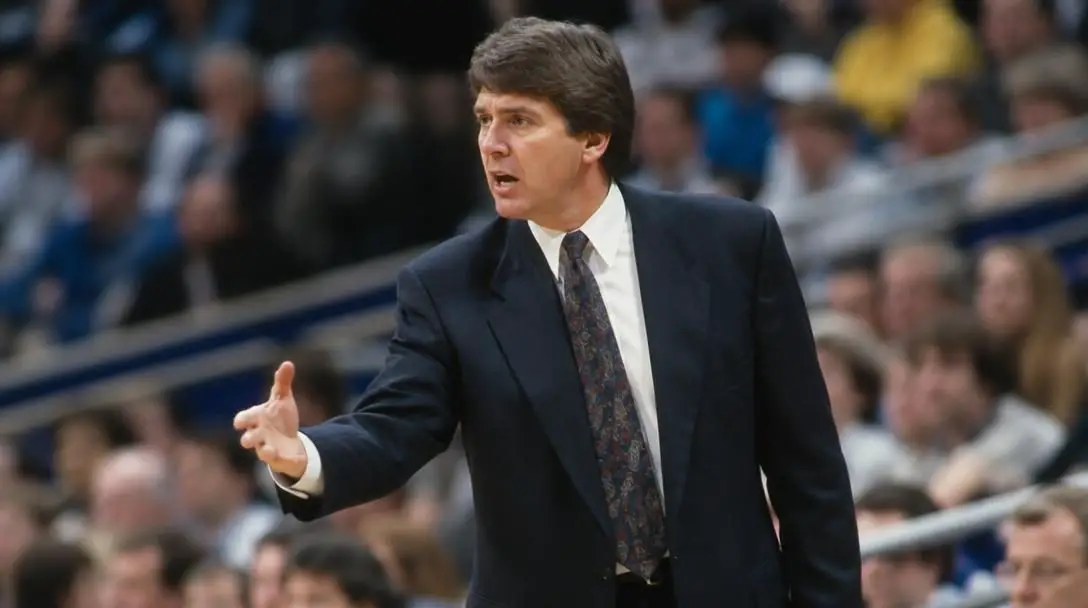
From the 1991-92 campaign through his departure following the 1996-97 season, Pitino guided Kentucky into every tournament the program was permitted to play. In their very first year back, the Wildcats marched to the Elite Eight. Over a six-year span, Pitino directed Kentucky to the Elite Eight five times, highlighted by three trips to the Final Four and the 1996 NCAA Championship, cementing one of the quickest and most dominant turnarounds in college basketball lore.
Honorable mentions from a stacked decade
The 1990s was overflowing with brilliant tactical minds who made recurring runs deep into March. Several legendary leaders narrowly missed the top five but built programs that defined the competitive spirit of the era:
- Lute Olson: Engineered perennial title contenders out West with exceptional perimeter play and elite guard development.
- Jim Boeheim: Kept Syracuse consistently near the top of the Big East with his trademark zone defense and deep tournament runs.
- Bob Huggins: Built an unapologetically physical, defensively stifling brand of basketball at Cincinnati.
- Bob Knight: Continued to lead Indiana with his classic motion offense and tactical discipline.
- Jerry Tarkanian: Guided historic, high-octane squads that set blistering tempos early in the decade.
- Tom Izzo: Laid the groundwork for decades of Big Ten supremacy, culminating in deep March runs late in the decade.
- John Thompson: Maintained Georgetown's imposing physical presence and defensive standard.
- Tubby Smith: Proved his tactical acumen across multiple stops, continuing championship traditions.
- John Calipari: Rose to national prominence by turning an underdog program into an aggressive, fast-paced Final Four contender.
How college basketball program building worked in the 1990s
Analyzing the performance of 1990s head coaches requires recognizing the operational principles of that era. Roster construction was fundamentally distinct from modern collegiate athletics in three major ways:
- Four-year development timelines: Coaches did not build rotations around one-and-done freshmen. Recruits committed knowing they would likely spend their first year or two adapting to system demands, building strength, and playing behind veteran starters.
- Geographic recruiting networks: Programs relied on regional pipelines. A coach's ability to maintain personal relationships with local high school coaches often determined whether a program could sustain steady talent pipelines from year to year.
- Tactical continuity: Because key players remained on campus for three or four years, coaches could implement sophisticated offensive and defensive schemes that required shared instincts and non-verbal communication on the court.
How to evaluate coaching dominance across historic eras
To assess how a head coach performed during a past decade, sports analysts must use structured criteria rather than applying today's standards retroactively. Follow this systematic approach to evaluate coaching eras accurately:
- Examine the era's institutional rules: Review the transfer policies, eligibility restrictions, and draft departure habits of the decade to understand how rosters were formed and preserved.
- Track deep postseason frequency: Look beyond single-elimination tournament upsets. Calculate how often a coach guided their team into the Sweet 16, Elite Eight, and Final Four across the multi-year sample.
- Measure conference dominance: Assess how often the coach captured outright or shared regular-season conference championships, which demonstrates sustained excellence across months of round-robin play.
- Account for structural penalties and turnarounds: Note whether a coach inherited scholarship reductions or postseason bans, evaluating how rapidly they returned the team to national prominence once eligible.
- Benchmark against contemporaneous peers: Compare the coach's accomplishments strictly against other leaders who operated under the exact same athletic landscape and postseason formats.
Common mistakes when comparing college basketball eras
Historical athletic analysis often suffers when modern assumptions distort the reality of past decades. Avoid these frequent analytical traps when studying 1990s basketball:
- Projecting modern roster mobility: Assuming 1990s coaches had to rebuild rosters from scratch every spring overlooks the stability provided by traditional transfer sitting-out requirements.
- Overlooking institutional bans: Failing to note postseason ineligibility—such as Kentucky's sanctions prior to 1991—leads to an unfair appraisal of a coach's tournament qualification rate.
- Ignoring medical leaves: Omitting health interruptions creates false dips in performance data, as seen during Duke's 1994-95 season when Mike Krzyzewski missed the majority of games due to back surgery.
- Fixating entirely on national titles: Dismissing coaches who fell short of a national title in a specific window obscures teams like Roy Williams' Kansas squads, which won league titles in eight of ten seasons.
- Discounting shortened tenures: Overlooking coaches who retired early in a decade penalizes legends like Dean Smith, whose final seven seasons yielded four Final Four trips and a national championship.
What to consider next in late-20th-century basketball history
To deepen your understanding of this pivotal era and its long-term effects on the collegiate game, examine these related historical developments:
- The growth of early professional entry: Research how the late 1990s marked the beginning of top collegiate stars testing early entry into the professional ranks, forcing coaches to alter multi-year recruiting projections.
- Conference realignment: Study how transitions, such as the evolution from the Big Eight to the Big 12, rearranged power dynamics, television markets, and tournament seeding advantages.
- Coaching trees and legacy schemes: Explore how the assistants and players mentored by Krzyzewski, Smith, Calhoun, Williams, and Pitino spread their tactical philosophies into the 2000s and beyond.
- Tournament expansion and selection metrics: Trace how the NCAA Tournament selection committee refined its seeding methodologies and evaluation tools as March Madness evolved into a premier national sports spectacle.
Frequently asked questions
Why is Mike Krzyzewski ranked as the top coach of the 1990s?
Mike Krzyzewski earned the top spot by winning back-to-back national championships in 1991 and 1992, reaching four Final Fours, and qualifying for the NCAA Tournament in every year of the decade except the season he missed due to back surgery.
How did Dean Smith rank so high despite retiring in 1997?
Dean Smith made four Final Four trips and won the 1993 national championship in just seven seasons of coaching during the 1990s, finishing his career with a 28-7 record and a Final Four berth in 1997.
Did Roy Williams win an NCAA title at Kansas in the 1990s?
No, Roy Williams did not win a national title during the 1990s, but he guided Kansas to two Final Fours, qualified for the NCAA Tournament in all ten seasons, and won at least a share of the conference title in eight of ten years.
What made Rick Pitino's run at Kentucky so impressive?
Pitino inherited a program serving postseason sanctions, but once eligible in 1991-92, he led Kentucky to five Elite Eights, three Final Fours, and the 1996 national championship over a six-year span.
When did Jim Calhoun win his first national championship at UConn?
Calhoun won his first national title in 1999, when his 34-2 Huskies made their first Final Four appearance of the decade and defeated Duke in the championship game.
The bottom line
The 1990s represented a golden era of collegiate basketball coaching, defined by tacticians who combined old-school roster stability with progressive offensive and defensive systems. Mike Krzyzewski, Dean Smith, Jim Calhoun, Roy Williams, and Rick Pitino set the benchmark for program excellence through sustained tournament runs and fierce conference dominance. Their tactical blueprints and leadership standards established the modern expectations that still shape college basketball today.