How To Use Video Games For Stress-Relief
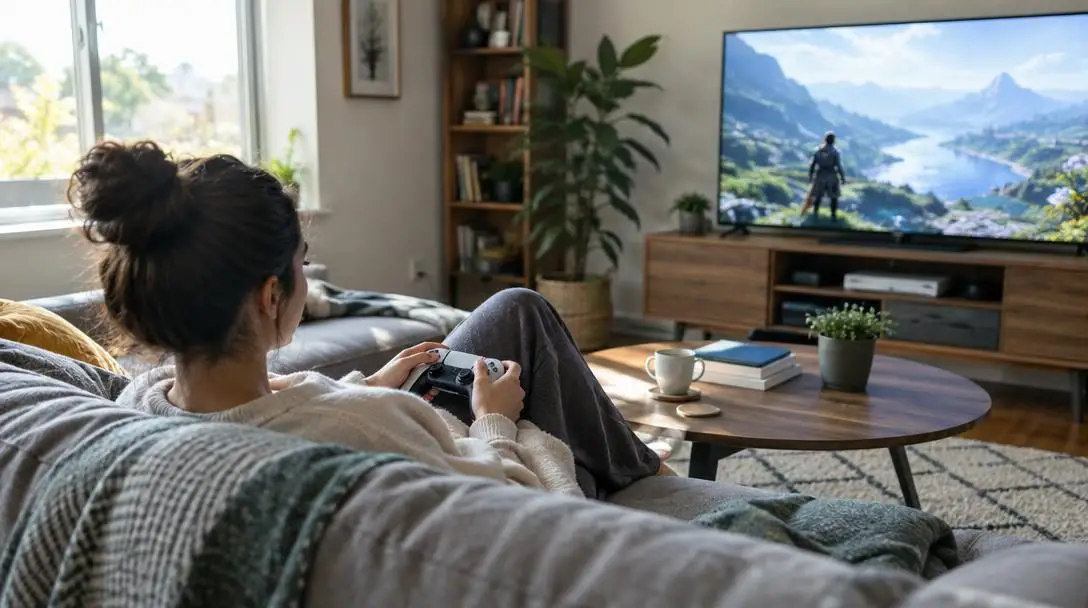
Modern living exposes nearly everyone to an ongoing barrage of pressures, originating from demanding professional schedules, strained personal relationships, and the friction of day-to-day routines. When left unchecked, prolonged tension triggers physical and emotional exhaustion, irritability, mental fog, and a pervasive feeling of helplessness. While generations past leaned primarily on passive media like television, literature, or music to unplug, today's audiences are turning toward interactive entertainment to actively reset their minds.
Unlike passive viewing or listening, video games demand motor coordination, tactical problem-solving, and continuous agency. This distinct combination offers immediate feedback loops and measurable milestones that give players a grounded sense of control. As reputable research bodies delve into the neurological and psychological impacts of interactive media, intentional gaming is establishing itself as a credible, constructive tool for psychological decompression and mental health maintenance.
Key takeaways
- Interactive entertainment relieves mental fatigue by replacing real-world rumination with immediate, structured in-game tasks and tangible progression.
- Collaborative game modes counteract the stress of social isolation by fostering mutual assistance, shared victories, and community support.
- Engaging with puzzles and skill-focused titles cultivates resilience by allowing players to practice decision-making in a low-stakes, consequence-free environment.
- Mindful play requires setting strict session boundaries, managing physical ergonomics, and steering clear of hyper-competitive environments when emotionally depleted.
- A healthy decompression routine pairs gaming with broader wellness habits like physical exercise, proper rest, and direct personal relationships.
The Science of Play: How Interactive Media Alleviates Tension
For decades, entertainment was treated as an escape hatch through which people temporarily tuned out of reality. However, scientific institutions have shifted their gaze toward how active media directly modulates emotional states. As highlighted in reporting by Wired, investigators from organizations such as the National Institute of Health and the Royal Society Open Science have analyzed how digital play interacts with human psychology. Their studies suggest that specific game categories can reduce depressive symptoms, foster vital social bonds, and serve as functional coping mechanisms after acute stressful events.
The foundational difference between games and traditional media is active agency. When watching a screen passively, an individual's internal monologue can easily wander back to unresolved deadlines, unpaid bills, or relationship conflicts. Video games demand mental focus and direct motor participation. Because the brain possesses finite cognitive bandwidth, dedicating attention to spatial navigation, timing, and resource management leaves little room for anxious rumination. This dynamic allows the central nervous system to downregulate its stress response while the mind engages in constructive play.
Engaging actively with an interactive system gives players control, direct feedback, and a defined sense of progression that passive media cannot match.
Despite these benefits, interactive play remains intensely subjective. The very mechanics that bring calm to one person—such as intricate inventory management or meticulous map exploration—might induce irritation or boredom in another. Achieving reliable relief requires recognizing how different styles of gaming interact with your specific psychological needs at any given moment.
Three Core Mechanisms of In-Game Stress Relief
Games modulate psychological tension through distinct pathways. Depending on the nature of the pressure you face—whether cognitive overload, social detachment, or problem-solving paralysis—different game frameworks offer tailored remedies.
Cognitive Redirection Through Casual Play
When stress is rooted in mental looping, where the brain replays worrying scenarios without arriving at a resolution, casual games act as a circuit breaker. These experiences generally rely on brief rounds, intuitive controls, and straightforward win states. By presenting clear, bitesize objectives, casual titles provide an immediate dopamine response upon completion. This rapid loop breaks the cycle of negative thoughts, giving overworked mental faculties a genuine break before real-world tasks are resumed.
Social Connection Through Cooperative Play
The American Psychological Association has repeatedly pointed out that social isolation exacerbates the physiological and emotional toll of stress. When loneliness compounds everyday pressure, cooperative gaming bridges the gap. Working together toward a common in-game objective builds instant camaraderie. Whether coordinating tactics to defend a base or collaborating to construct a virtual settlement, shared victories generate genuine feelings of mutual support, belonging, and emotional empowerment that soften the sting of isolation.
Low-Stakes Problem Solving in Skill and Puzzle Titles
Feelings of overwhelm often arise when life problems seem insurmountable or choices feel paralyzing. Puzzle and skill-building games present complex dilemmas within structured, predictable boundaries. When you confront a difficult riddle or timing obstacle in a virtual world, failure carries no lasting consequences. Players can test hypotheses, fail safely, adapt their approach, and eventually triumph. This feedback loop rebuilds problem-solving confidence, fostering an adaptive mindset that transfers into tackling real-world obstacles.
Matching Game Formats to Emotional Needs
Selecting the wrong game genre during a stressful period can backfire, transforming what should be a restorative break into an agonizing ordeal. The table below outlines how common interactive formats align with specific mental health needs.
| Play Category | Primary Psychological Benefit | Best Used For | Recommended Session Length | Potential Pitfall |
|---|---|---|---|---|
| Casual & Short-Session | Cognitive redirection and quick task completion | Mental fatigue, obsessive rumination, and short breaks | 15 to 30 minutes | Mindless repetition without genuine satisfaction |
| Cooperative Multiplayer | Interpersonal support, community, and mutual validation | Loneliness, social isolation, and feeling disconnected | 45 to 60 minutes | Dependence on toxic lobbies or inconsistent teammates |
| Puzzles & Skill Builders | Pattern recognition, low-stakes agency, and problem solving | Executive dysfunction, indecision, and helplessness | 30 to 45 minutes | Frustration if difficulty spikes unexpectedly |
A Step-by-Step Guide to Mindful Gaming
Turning video games into a dependable mental health tool requires deliberate intention. Merely booting up a console or launching an application without clear self-awareness can lead to lingering fatigue. Follow these sequential steps to ensure your playtime remains restorative.
- Diagnose your specific stress trigger: Take two minutes before launching a game to identify whether your tension comes from cognitive burnout, feelings of loneliness, or emotional indecision.
- Select a matching game genre: Match your diagnosis to the appropriate style of play. Choose casual games for rapid resets, cooperative games for companionship, or puzzle games to rebuild strategic confidence.
- Curate an ergonomic physical space: Sit in a supportive chair, soften harsh overhead room lights, adjust screen brightness to avoid eye fatigue, and take three deliberate, deep breaths before beginning.
- Establish a hard stopping point: Decide on a specific time limit or in-game milestone before you start, such as two completed rounds or thirty minutes, setting an external timer to keep yourself accountable.
- Play with focused intention: Immerse yourself fully in the mechanics, art direction, and soundscapes, actively resisting the urge to multitask on social media or check professional notifications.
- Conduct a post-session mood check: When your timer expires, close the game immediately and evaluate your physical and mental state. Note whether your breathing is calmer and your mind clearer, or if tension has crept into your shoulders.
Mistakes That Turn Decompression into Distress
Interactive entertainment can easily transition from a healthy coping tool into an additional source of anxiety if players disregard personal boundaries. Recognizing counterproductive habits is vital for protecting your emotional well-being.
- Venturing into hyper-competitive lobbies while emotionally fragile: Entering multiplayer matches with harsh defeat penalties or volatile voice chat while already agitated rarely ends well. Toxic behavior and punishing loss streaks compound existing life distress.
- Confusing intentional decompression with total escapist avoidance: Games are best utilized as a brief pause button that allows your nervous system to stabilize. Using them to hide from overdue tasks or difficult life conversations will only magnify your anxiety when you finally power down.
- Overlooking early signs of compulsive play: When the impulse to play overrides your sleep routine, domestic responsibilities, or work commitments, gaming ceases to be a wellness tool and becomes an active stressor.
- Defaulting to solo play when suffering from acute isolation: Retreating solely into solitary game worlds while feeling lonely can deepen feelings of alienation. Prioritize shared, cooperative spaces when human interaction is what you truly need.
- Lingering past the positive emotional peak: Often, a player achieves a satisfying victory twenty minutes into a session. Pushing past that peak out of habit leads to physical fatigue and mental depletion, undoing the rejuvenation gained from the win.
Auditing Your Game Library for Long-Term Wellness
To ensure that digital play continues to serve your personal health goals, periodic library maintenance is necessary. Most players accumulate dozens of titles across digital storefronts, many of which are designed with predatory engagement loops, relentless daily chore systems, or high-friction mechanics that leave players more irritable than when they sat down.
Begin by conducting a wellness audit of your installed games. Ask yourself straightforward questions: Does this title respect my time? Do I finish a play session feeling refreshed or depleted? If a game consistently leaves you hollow, tense, or agitated, unreservedly uninstall it. Replace those titles with experiences featuring serene sound design, welcoming artistic styles, or collaborative mechanics that provide genuine restoration.
Finally, pay attention to the emotional skills you nurture in your favorite games. Cultivating patience while unraveling a complex virtual problem, maintaining poise during an unexpected in-game setback, or supporting a struggling teammate are all abilities that translate directly to everyday life. By viewing your interactive leisure through this mindful lens, video games become more than mere pastimes—they become reliable instruments for lasting emotional resilience.
Frequently asked questions
How can I tell if a video game is actually reducing my stress?
A restorative gaming session leaves you with relaxed muscles, a slower heart rate, and improved mental clarity. If you power down the screen feeling physically tense, mentally exhausted, or irritated by your performance, the game is aggravating your stress rather than relieving it.
How long should a stress-relief gaming session last?
Most research and psychological principles suggest that focused sessions ranging from fifteen to forty-five minutes offer optimal mental reset benefits without inducing physical eye strain or cognitive fatigue. Playing beyond an hour without breaks often leads to diminishing returns.
Can competitive multiplayer games ever help with stress?
While some people find satisfaction in high-intensity competition, competitive multiplayer titles frequently induce in-game stress due to ranking anxiety, punitive loss mechanics, and toxic communication. For reliable decompression, cooperative or casual titles are far safer options.
What makes casual games so effective at relieving mental burnout?
Casual games feature concise matches, intuitive mechanics, and immediate goals. They demand just enough active attention to disrupt stressful thought loops without requiring deep analytical strain, allowing your nervous system to decompress while still feeling productive.
Is playing video games better for relaxation than reading or watching TV?
Games are neither universally better nor worse than traditional media, but they function differently. While books and television provide passive diversion, interactive media offers active control, direct feedback, and problem-solving agency, which can be far more effective at stopping persistent rumination.
The bottom line
Video games represent a powerful, accessible medium for unwinding from the chaotic pressures of modern life. When selected with care and approached with conscious intent, interactive play breaks persistent cycles of rumination, rekindles social warmth, and rebuilds problem-solving confidence. By steering clear of toxic gaming environments, setting disciplined time boundaries, and tailoring your game choices to your specific emotional state, you can transform your screen time into a genuine catalyst for mental rejuvenation.