KFC Behind The Scenes: 5 Surprising Facts
Kentucky Fried Chicken stands as one of the most recognizable fast-food empires on the planet, feeding millions of patrons across multiple continents every day. Its unmistakable red-and-white buckets, signature blend of seasonings, and the grinning likeness of Harland Sanders have anchored suburban strips and urban street corners for generations. Yet behind this familiar commercial exterior lies a history marked by deadly rivalries, tightly guarded corporate secrets, unexpected international customs, and dramatic ownership shifts.
While millions of diners recognize the roadside icon, few know how close the entire enterprise came to unraveling before it ever became a global franchise. From gunfights along rural Kentucky roadways to divided laboratory production lines and high-end holiday banquets in East Asia, the story of how a modest roadside service station expanded into an international juggernaut reveals an organization far more complex than its drive-thru windows suggest.
Key takeaways
- Harland Sanders was never a high-ranking military officer, having served only three months as an enlisted Army private before receiving an honorary title from the Governor of Kentucky.
- The Original Recipe of 11 herbs and spices is split between McCormick & Company and Griffith Laboratories to prevent any single contractor from learning the full formula.
- Sanders sold the enterprise in 1964 and spent years publicly rebuking the corporation for cheapening his original chicken and gravy recipes.
- The popular all-you-can-eat buffets that defined the brand in the 1980s and 1990s were largely phased out long before the pandemic accelerated their near-total extinction.
- KFC Japan operates as a luxury dining brand majority-owned by Mitsubishi, where cooks undergo a three-month certification and Christmas Eve orders generate 5 percent of annual sales.
Five Surprising Chapters in KFC History
The global footprint of modern fast food often masks the eccentric, high-stakes events that shaped early restaurant empires. Understanding the modern identity of the brand requires examining the critical turning points that defined its founder, its recipe security, its corporate stewardship, and its international positioning.
Harland Sanders and the North Corbin Shootout
- Military rank: Army private (three months of service)
- Honorary title: Kentucky Colonel, commissioned by the Governor of Kentucky
- Location of armed dispute: North Corbin, Kentucky
- Primary antagonist: Matt Stewart
The popular image of Harland Sanders paints him as a grandfatherly Southern patriarch with a distinguished military background. In reality, Sanders' formal military career was exceptionally brief and began under false pretenses. At the age of 16, Sanders forged his identification documents to enlist in the United States Army. He served as an enlisted private for just three months before receiving an early discharge. The title of "Colonel" carried no connection to military achievements; it was an honorary commission granted later in life by the Kentucky Governor, an established regional custom used to recognize distinguished citizens.
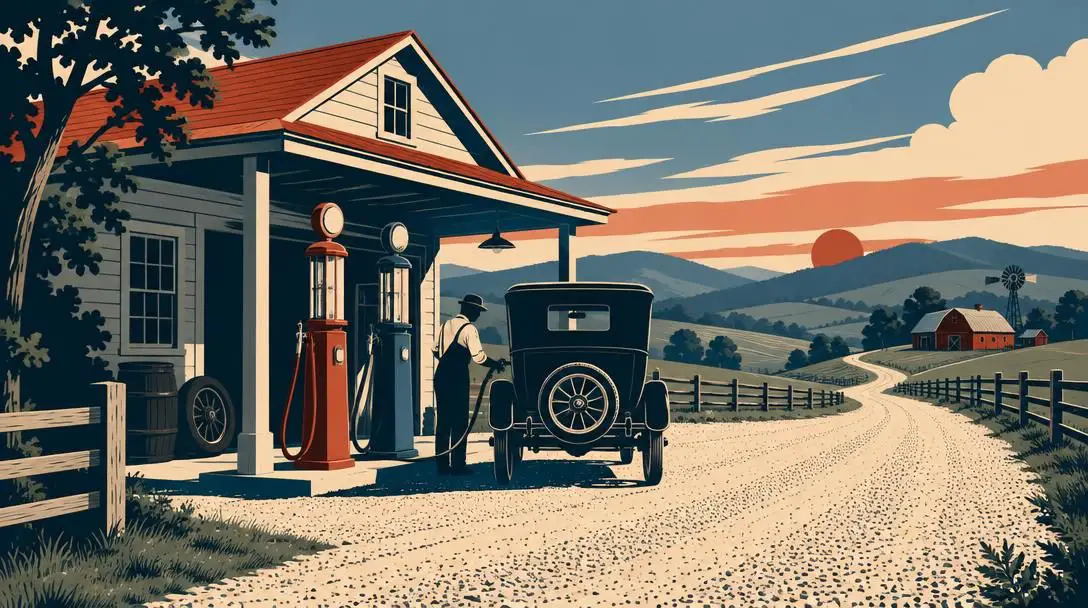
The combat experience Sanders did endure occurred not on foreign battlefields, but along the dusty roads of North Corbin, Kentucky. During the Great Depression, Sanders operated a Shell service station where he served meals to weary motorists. His roadside success generated bitter resentment from a local business rival named Matt Stewart. To siphon customers away from Sanders' establishment, Stewart began painting over local road signs, redirecting oncoming traffic toward his own competing business.
Sanders repeatedly warned Stewart to stop defacing the highway signage. When Sanders discovered Stewart painting over the directional markers once again, he confronted him alongside a Shell corporate employee. The argument quickly escalated into an armed shootout. During the exchange of gunfire, the Shell employee was fatally wounded. Sanders returned fire, and Stewart was ultimately apprehended, tried, and convicted of murder. With his primary competitor imprisoned, Sanders secured his roadside diner's position, clearing the way for his chicken business to grow.
The Double-Blind Original Recipe Formulation
- Year finalized: 1940
- Secret ingredients: 11 herbs and spices
- Formula location: Secure vault at corporate headquarters
- Blending partners: McCormick & Company and Griffith Laboratories
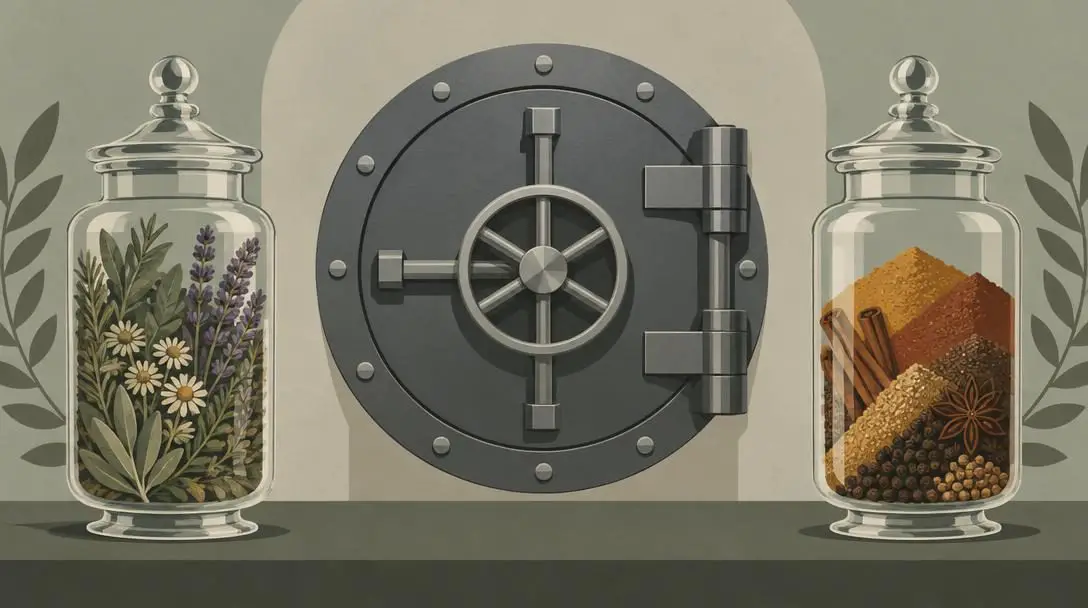
The foundation of the entire franchise rests upon the precise combination of 11 herbs and spices that Sanders perfected in 1940 after years of experimentation in commercial kitchens. Guarding this intellectual property has required extraordinary logistical measures. The physical handwritten document containing the exact formulation is preserved inside a high-security vault located at corporate headquarters, shielded against corporate espionage and unauthorized disclosure.
To produce industrial quantities of seasoning for thousands of restaurants without leaking the ingredient ratios, the company relies on a segmented manufacturing process. Rather than trusting a single commercial spice blender with the complete blend, the business splits the production duties in half. One proprietary portion of the blend is compounded and packaged by McCormick & Company, while the remaining ingredients are processed independently by Griffith Laboratories.
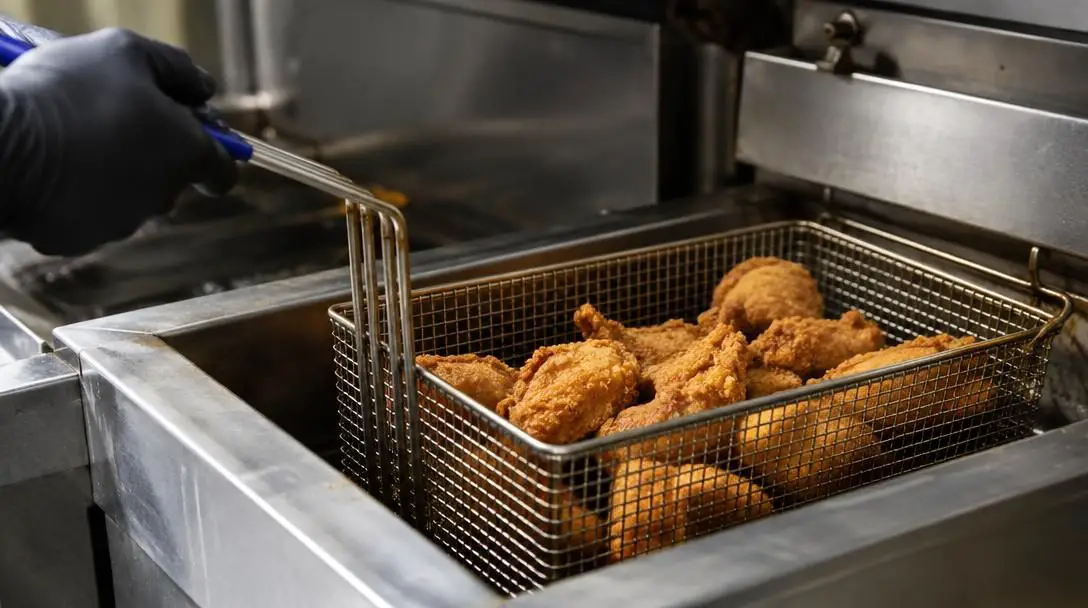
These two distinct mixtures are shipped separately and combined only after they leave the individual blending facilities. Because neither supplier ever handles both portions of the recipe, neither McCormick & Company nor Griffith Laboratories possesses the complete formula. Despite decades of analysis by rival food scientists and enthusiastic home cooks, recreating the precise profile of Sanders' 1940 recipe remains notoriously difficult.
Corporate Custody Battles and Founder Backlash

- Ownership sale year: 1964
- Purchaser: John Y. Brown Jr.
- Later corporate parents: PepsiCo, followed by Yum! Brands
- Founder death: 1980
A widespread assumption among consumers is that Harland Sanders steered the restaurant chain up until his death in 1980. However, the operational reality diverged sharply from that narrative decades earlier. Overwhelmed by the explosive growth of the franchise model and the immense capital required to sustain national distribution, Sanders sold the business in 1964 to a consortium led by investor John Y. Brown Jr. While Sanders remained the public ambassador and marketing face of the enterprise, he no longer retained executive authority over its menu or operational standards.
This dynamic created intense friction. Sanders was an uncompromising culinary perfectionist who took deep personal pride in his scratch-cooking methods. As the new corporate stewards modified store operations to reduce overhead and accelerate preparation times, Sanders became an outspoken public critic of the very restaurants bearing his likeness. He frequently gave candid media interviews lambasting the altered food quality, declaring that the franchised chicken had lost the integrity of his 1940 blend and famously complaining that the revised gravy tasted downright bad.
Corporate ownership shifted again in the mid-1980s when beverage titan PepsiCo acquired the business. PepsiCo grouped the chicken chain alongside Taco Bell and Pizza Hut to form a centralized fast-food division. By the late 1990s, PepsiCo opted to spin off its restaurant holdings into an independent, publicly traded entity that eventually became Yum! Brands. Today, this lineage remains immortalized in Louisville, Kentucky, where the regional sports and entertainment arena bears the name KFC Yum! Center.
Harland Sanders openly chastised corporate leadership for cheapening his original recipe, declaring that the updated gravy had deteriorated into an unrecognizable substitute.
The Vanishing American All-You-Can-Eat Buffet
- Peak popularity: 1980s and 1990s
- Typical family cost: $20 to $25 for a family of four
- Sister brand format: Pizza Hut lunch buffet
- Current status: Nearly extinct worldwide
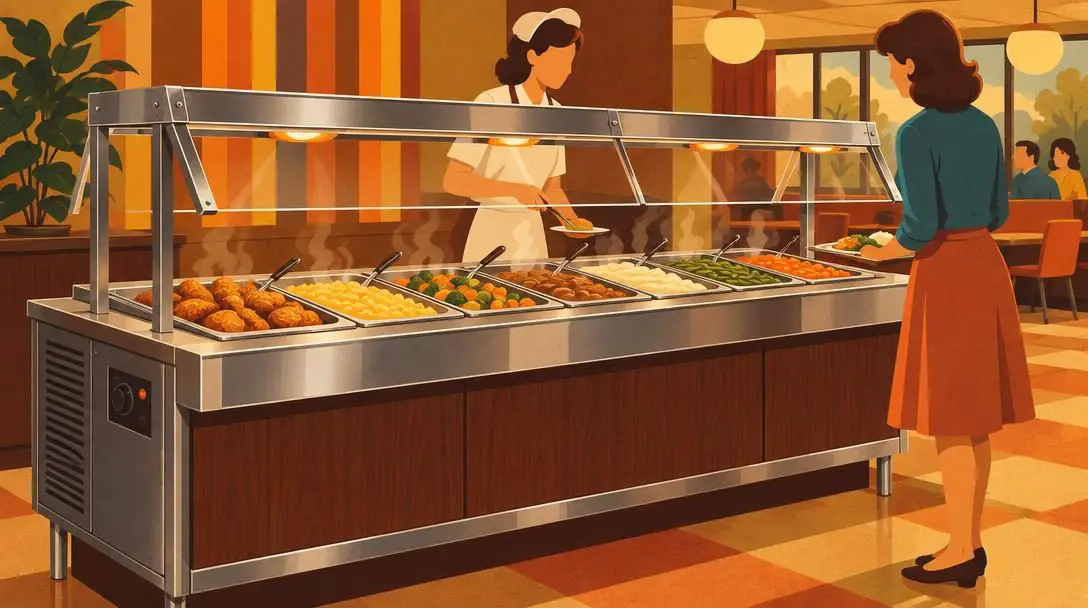
Throughout the late 20th century, the domestic dining experience at many locations centered around an all-you-can-eat buffet bar. During the 1980s and 1990s, these heated serving lines were staple fixtures across American communities, designed to attract cost-conscious working-class families. For approximately $20 to $25, a family of four could enjoy unlimited helpings of fried chicken, warm biscuits, mashed potatoes, coleslaw, and brown gravy. This self-serve format mirrored the layout utilized by sister company Pizza Hut during the same era.
While many assume that the sudden disruption of the COVID-19 pandemic killed the buffet model, its decline had been underway for years. Shifts in consumer dining habits toward drive-thru convenience, mounting commercial food waste, and the escalating operational labor required to maintain self-serve temperature controls squeezed unit profitability. Franchise operators gradually phased out steam tables in favor of streamlined kitchen lines optimized for delivery apps and quick-service speed.
By the time global restaurant closures were mandated in 2020, only a tiny fraction of buffet locations remained operational. Today, locating an active, fully functional buffet is an extreme rarity, with only a handful surviving across the globe as retro relics of a bygone fast-food era.
KFC Japan and the Christmas Phenomenon
- Market launch: 1970
- Corporate ownership: Majority-owned by Mitsubishi
- Staff culinary prerequisite: Three-month certification test
- Holiday performance: Christmas Eve accounts for 5 percent of annual sales
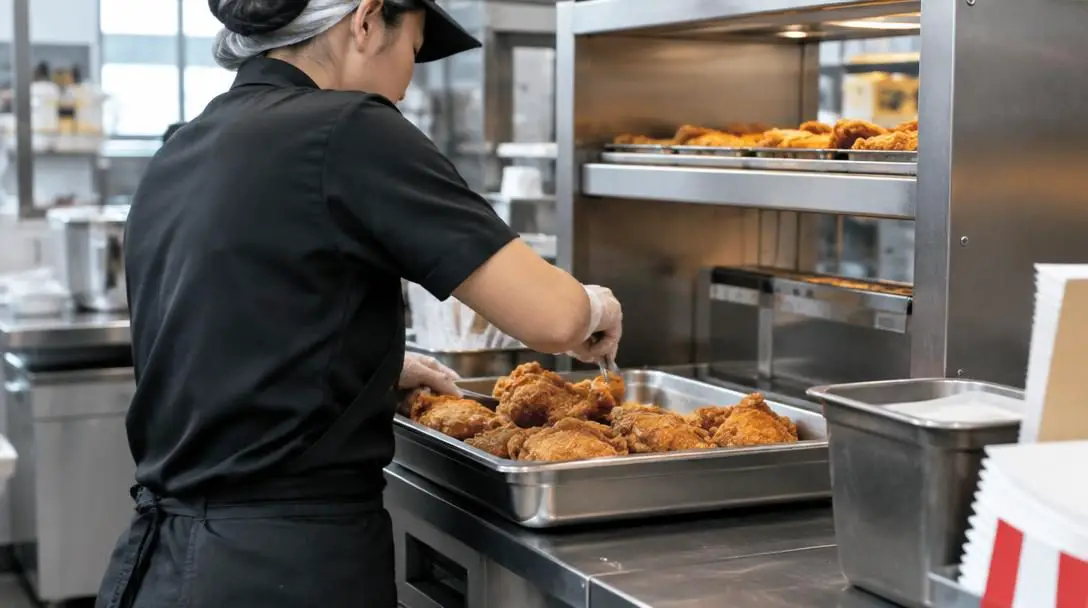
While the brand occupies a casual, budget-friendly tier in Western markets, its cultural standing in East Asia developed along a completely different trajectory. When the chain entered the Japanese market in 1970, it positioned itself as an upscale, premium dining experience. Today, the operation is majority-owned by Mitsubishi, and its corporate culture emphasizes rigorous production consistency and meticulous presentation that contrasts sharply with standard fast-food execution.
Kitchen employees in Japan do not simply rotate through food stations; they must complete an intensive three-month training curriculum and pass a demanding operational certification exam before they are permitted to cook chicken for customers. This uncompromising commitment to execution helped cultivate an exceptional level of brand prestige across the country.
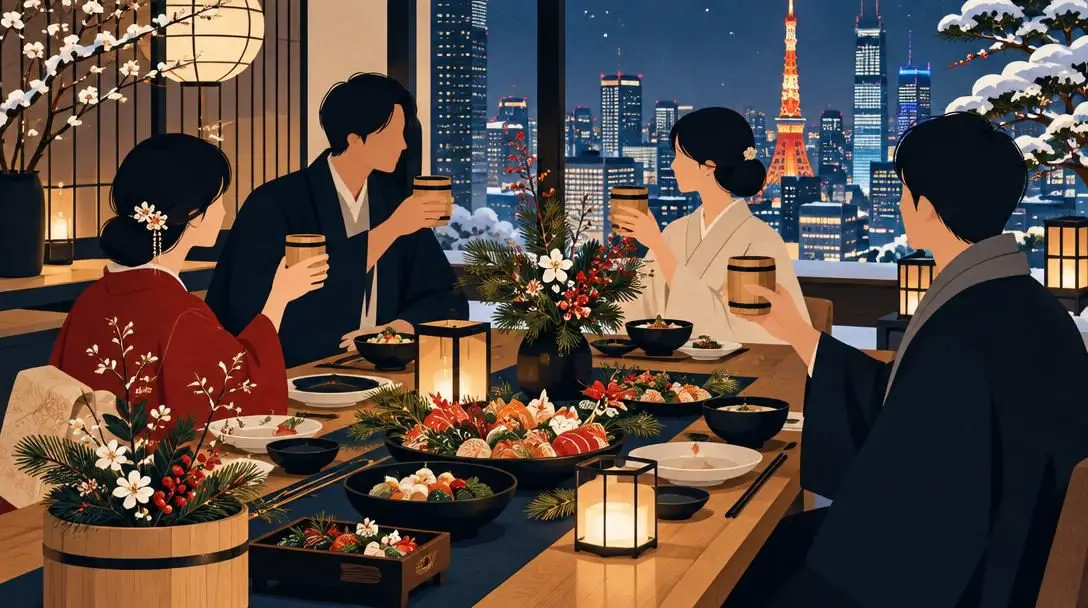
This prestige culminated in one of the most successful seasonal marketing achievements in modern commercial history: establishing fried chicken as the quintessential holiday meal. In a nation where traditional whole turkeys were virtually impossible to source, the franchise successfully framed its festive party barrels as the centerpiece of Christmas celebrations. Eating fried chicken on Christmas in Japan has evolved into a deeply rooted cultural tradition comparable to American Thanksgiving. The demand during the holiday season is so immense that customers reserve their meal packages weeks in advance, and Christmas Eve alone accounts for 5 percent of KFC Japan's entire annual revenue.
Corporate Evolution and Operational Shifts
The transformation from an individual roadhouse in North Corbin to a multi-billion-dollar subsidiary under Yum! Brands spans several distinct managerial eras. Each transition altered how the company procured ingredients, handled quality assurance, and engaged international markets.
| Operational Era | Managing Entity | Core Operational Focus | Key Structural Shift |
|---|---|---|---|
| Founder Era (1930s–1964) | Harland Sanders | Scratch roadside cooking and regional licensing | Finalized the 11 herbs and spices formula in 1940 |
| Franchise Expansion Era (1964–mid-1980s) | John Y. Brown Jr. & Investors | Rapid multi-unit franchising and cost control | Industrialized preparation, prompting Sanders' public menu critiques |
| Corporate Conglomerate Era (mid-1980s–1990s) | PepsiCo | Synergy across large-scale quick-service portfolios | Grouped chain alongside Taco Bell and Pizza Hut; buffet proliferation |
| Global Modern Era (Late 1990s–Present) | Yum! Brands | International localization and trade secret isolation | Split-source spice blending; luxury growth in Japan via Mitsubishi |
Navigating the Modern KFC Landscape
For culinary enthusiasts, food history buffs, and curious travelers, the historical shifts of this fast-food giant offer practical ways to experience its legacy today.
- Locate legacy buffet layouts: Before traveling to seek out an operational all-you-can-eat station, check independent franchise tracking communities online. Always call the physical storefront ahead of time to verify that the self-serve buffet bars are active, as corporate directories rarely differentiate between standard drive-thrus and retro buffet layouts.
- Reserve holiday meals in Japan early: If you plan to spend the winter holidays in Japan, do not expect to walk in on December 24. Place your holiday chicken order through official Japanese pre-order channels weeks in advance to avoid multi-hour queues or sold-out locations.
- Analyze spice profiles in home kitchens: When attempting to reverse-engineer the 1940 recipe, avoid single pre-mixed seasoning bottles. Modern commercial operations deliberately divide herbal blends between McCormick & Company and Griffith Laboratories, highlighting that a successful recipe depends on layering distinct, unadulterated components.
- Research roadside business history: Review regional municipal archives from North Corbin, Kentucky, to study early roadside commercial records. The legal proceedings from the confrontation with Matt Stewart provide a rare window into the fierce economic battles that preceded modern interstate dining.
Common Misconceptions About the Brand
Decades of memorable advertisements, white-suited cartoon caricatures, and urban legends have left consumers with several persistent misunderstandings about the restaurant's background and operations.
- Sanders held a decorated military career: Despite the title of "Colonel," Harland Sanders was never a senior military officer. His official army record comprised a three-month enlistment as an underage private, and his title was an honorary Kentucky state distinction awarded decades later.
- The founder ran the business until his death: Sanders sold his controlling interest in the corporation in 1964 to John Y. Brown Jr. His subsequent role was restricted to brand promotion, during which he often publicly condemned corporate alterations to his gravy and chicken.
- Fast-food operations are uniform everywhere: International divisions frequently adapt to regional business practices. In Japan, majority owner Mitsubishi enforces a three-month staff certification test, elevating the restaurant into an upscale dining choice.
- The pandemic single-handedly eradicated the buffet: The all-you-can-eat model was already phasing out throughout the 2000s and 2010s due to labor costs and changing consumer habits, long before emergency closures dismantled the final locations.
Frequently asked questions
Was Colonel Sanders an actual military officer?
No. Harland Sanders enlisted in the United States Army at age 16 after forging his birth documents, serving only three months as a private before receiving a discharge. The title of "Colonel" was an honorary civilian title presented to him by the Governor of Kentucky.
How does the company keep the Original Recipe secret?
The Original Recipe of 11 herbs and spices is protected by a dual-supplier manufacturing strategy. McCormick & Company blends one proprietary portion of the ingredients, while Griffith Laboratories blends the remainder. The two separate mixtures are combined only after delivery, ensuring neither contractor has access to the full formula.
Why did Harland Sanders criticize the restaurant's food after selling it?
After selling the company to John Y. Brown Jr. in 1964, Sanders was dismayed by changes corporate management made to simplify preparation and cut costs. Sanders believed the chicken had drifted from his 1940 standards and publicly derided the corporate gravy as poor quality.
Why are KFC buffets so difficult to find today?
The all-you-can-eat buffets popular in the 1980s and 1990s steadily declined due to shifting consumer preferences, high food waste, and steep labor overhead. While the COVID-19 pandemic accelerated closures, the format was already largely phased down across domestic stores.
Why is KFC traditionally eaten for Christmas in Japan?
After launching in 1970 under an upscale brand image, KFC Japan successfully marketed its chicken barrels as the definitive holiday meal in a country where whole turkeys were difficult to find. The tradition took root, and Christmas Eve now accounts for 5 percent of KFC Japan's annual sales.
The bottom line
The evolution of Kentucky Fried Chicken from a North Corbin roadside station into an international franchise giant underscores the intricate realities behind global food service. Far from a simple tale of Southern hospitality and commercial success, the brand's path was forged through life-or-death competitor shootouts, intense corporate custody disputes between founder and buyers, and elaborate supply chain security measures designed to guard 11 herbs and spices. Whether looking at the vanished family buffets of the 1990s or the three-month staff training standards enforced under Mitsubishi in Japan, the history behind the bucket proves that operational strategy and cultural adaptation matter just as much as the recipe itself.