McDonald’s Behind the Scenes: 5 Surprising Facts
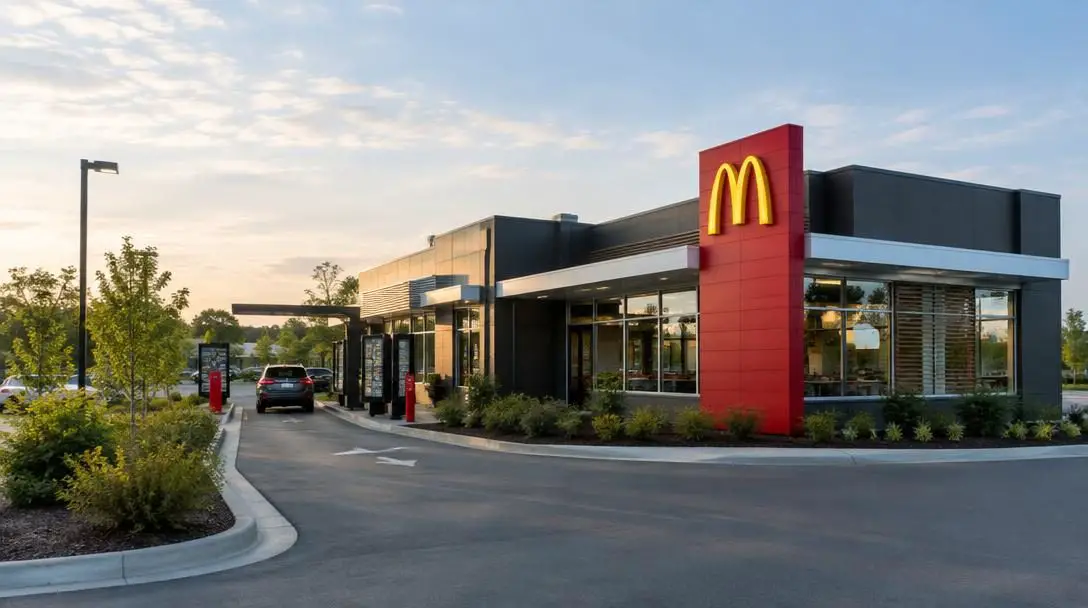
Nearly everyone has visited a McDonald’s at least once, but few customers understand the intricate operational machine operating behind the service counters and drive-thru lanes. Headquartered in Chicago, Illinois, the fast-food empire has spent decades serving billions of burgers while engineering one of the most sophisticated supply chain, kitchen assembly, and real estate networks in modern corporate history.
Beneath the familiar golden arches lies an ongoing balancing act between customer expectations, franchise unit economics, and rapid kitchen throughput. From short-lived dining experiments to the complex math behind value sandwiches and soda fountains, looking behind the scenes reveals how the company constantly adapts its restaurants, formats, and menus to stay ahead of global competitors.
Key takeaways
- McDonald’s surged past Kentucky Fried Chicken in store count in 1975, lost the top spot to Subway in the late 2000s, and later reclaimed the global lead.
- A short-lived Chicago trial named Hearth Express tested homestyle comfort food like meatloaf and baked ham before being phased out after a single year.
- Developing a permanent nationwide menu offering can take up to a year of testing, though All-Day Breakfast was executed in an ambitious nine months.
- Play Places have largely vanished from dining rooms following COVID-19 closures due to cleaning demands, liability concerns, and operational overhead.
- Core items like the McDouble, McChicken, and fresh-beef Quarter Pounder deliver low profit margins, offset by high-margin soft drinks and French fries.
Five Surprising Facts Behind the Golden Arches
The history of McDonald’s is marked by intense corporate rivalries, trial-and-error culinary concepts, and calculated decisions about kitchen real estate. While consumers recognize foundational staples like the Big Mac, Filet-O-Fish, and McNuggets, the decisions that shaped store operations reflect a rigorous and analytical corporate strategy.
The Global Expansion Battle
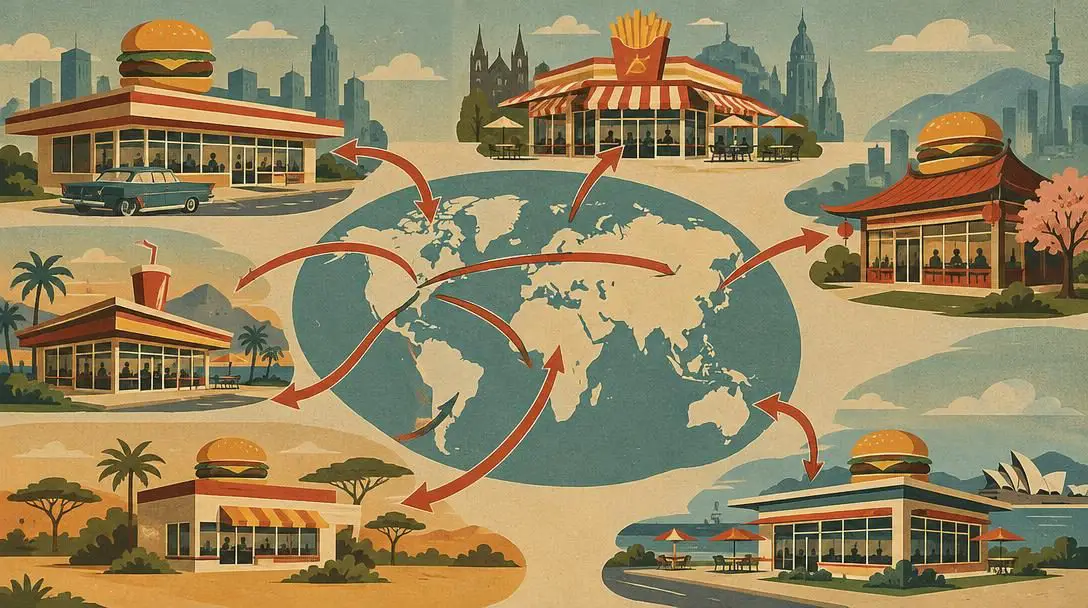
- First Tracked Benchmark: 1971 (KFC had over 3,000 stores; McDonald’s had just over 1,000)
- Year Surpassing KFC: 1975
- Late 2000s Competitor: Subway
When international restaurant data began being systematically tracked in 1971, Kentucky Fried Chicken held a dominating lead with more than 3,000 locations worldwide, compared to McDonald’s modest footprint of just over 1,000 storefronts. Driven by a furious growth campaign, McDonald’s quadrupled its presence and bypassed KFC by 1975 to become the largest chain on the planet, maintaining that title uninterrupted for decades. That dominance faced a fresh challenge in the late 2000s when Subway initiated a rapid development wave that placed it thousands of units ahead. However, rapid growth without sustainable unit volume created vulnerabilities; Subway suffered popularity losses in subsequent years, allowing McDonald’s to steadily expand its restaurant base and reclaim the global crown.
Hearth Express Homestyle Dining
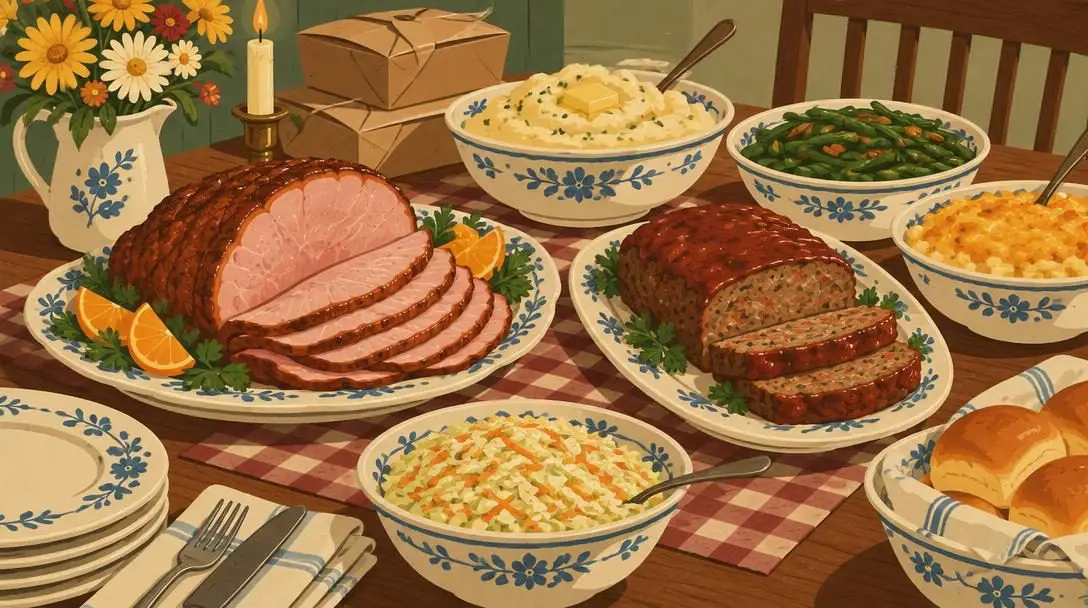
- Headquarters Market: Chicago, Illinois
- Menu Focus: Meatloaf, baked ham, family dinners
- Operational Lifespan: One year
Because McDonald’s corporate headquarters resides in Chicago, Illinois, the surrounding Chicagoland area functions as the primary proving ground for unconventional service formats and menu trials. In an effort to enter the homestyle dinner segment, the company launched an experimental concept called Hearth Express. Designed essentially as a fast-food alternative to a traditional family-style sit-down restaurant, Hearth Express encouraged patrons to pick up complete dinners—featuring entrees like meatloaf and baked ham—and bring them back to the family dinner table. The format struggled to gain traction with customers who associated the brand strictly with quick handheld fare, leading to its closure after just one year. Because the core burger enterprise was undergoing rapid growth during that period, the financial loss was easily absorbed and largely forgotten by the public.
The Strict Timeline of Nationwide Menu Development
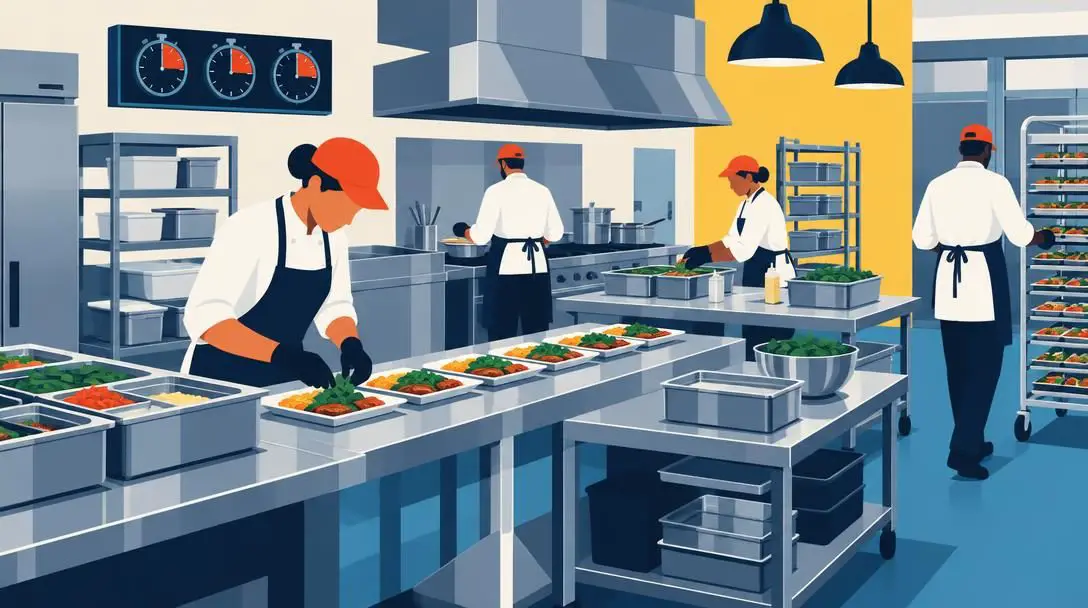
Adding a permanent dish to the American menu requires clearing extensive operational obstacles. When the brand evaluates a new product for nationwide release, the testing, research, and supply chain verification cycle typically takes up to a full year. Kitchen engineers must verify that an item will not slow down service by even a few seconds or crowd out existing equipment. A notable exception to this extended timeline occurred with the rollout of All-Day Breakfast, which required re-engineering grill space to balance morning proteins alongside lunchtime burgers. Despite requiring massive adjustments to kitchen logistics across thousands of restaurants, the company completed the nationwide rollout in an accelerated nine-month window.
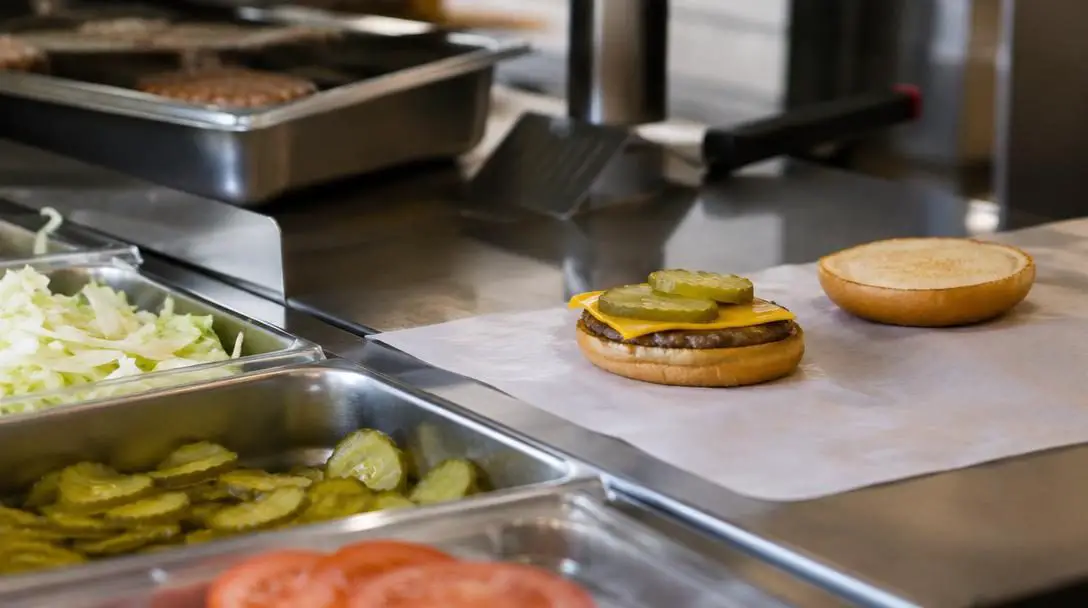
A nationwide launch requires an extensive, rigorous process that can take up to a year, ensuring suppliers can deliver millions of pounds of food without breaking kitchen workflows.
The Vanishing Storefront Play Place
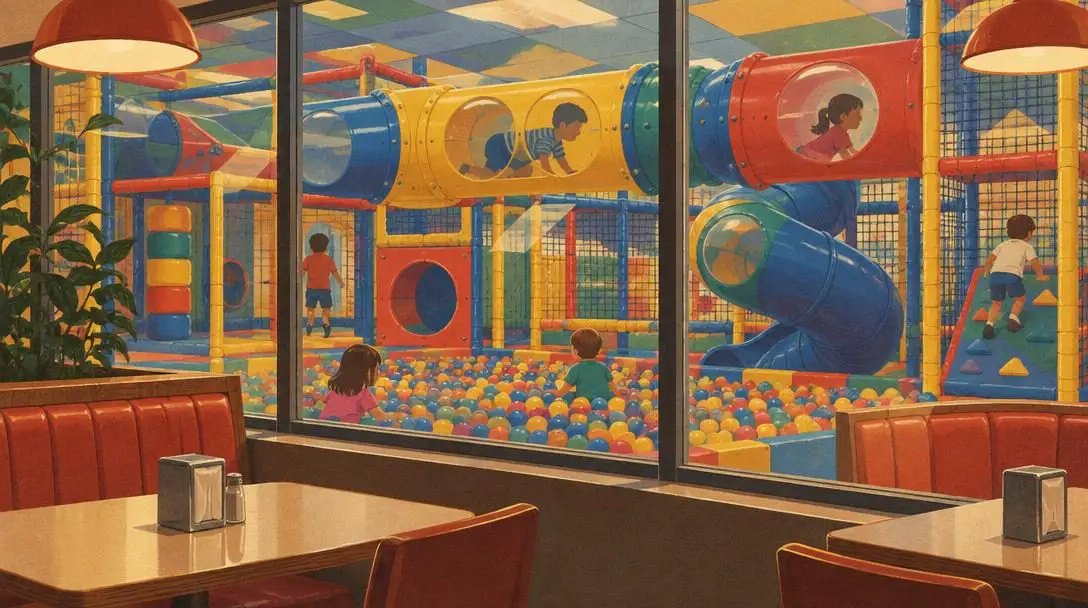
For several decades, indoor playgrounds known as Play Places served as an architectural centerpiece for new McDonald’s restaurants. Built to establish the locations as friendly hubs for suburban families and neighborhood communities, these enclosed structures gave children a space to play while parents ate inexpensive meals. That physical presence ended abruptly during the COVID-19 pandemic, when public health mandates forced all Play Places to shut down. When dining rooms reopened, the playgrounds remained dark. While a handful of independent franchise operators eventually reopened their structures, the vast majority were permanently eliminated. Franchisees and corporate managers chose not to bring them back due to substantial liability risks, time-consuming sanitization protocols, and the realization that square footage could be repurposed for more profitable drive-thru and delivery operations.
The Unforgiving Margins of Core Sandwiches
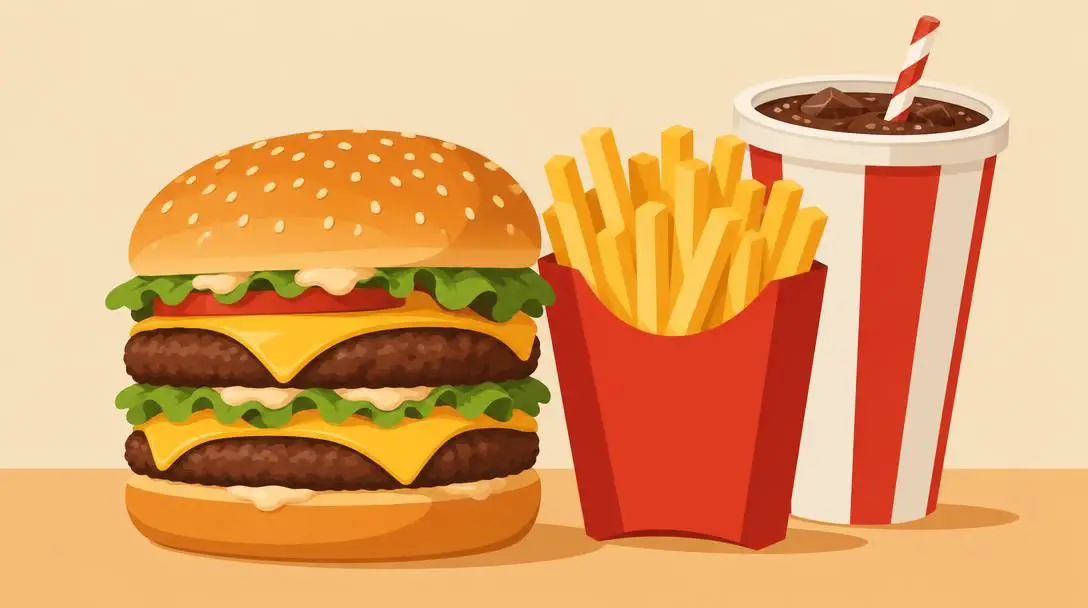
McDonald’s pricing architecture relies on an asymmetric margin model where inexpensive beverage syrup and bulk potatoes balance out expensive animal proteins. French fries and soft drinks boast exceptionally high profit margins, enabling the chain to keep entry prices low while driving enormous cumulative revenue through sales volume. Conversely, several popular items generate remarkably thin returns or can cause the restaurant to operate at a loss when bought in isolation without sides:
- The McDouble: A foundational value-tier sandwich featuring two beef patties whose low retail price leaves very narrow margins after ingredient and labor costs.
- The McChicken: A budget-friendly chicken sandwich that offers minimal financial upside to the kitchen when purchased as a standalone item.
- The Quarter Pounder: A heavier entree utilizing fresh beef that incurs higher procurement and operational expenses.
- Packaged Apple Slices: Pre-portioned side items that deliver minimal financial return compared to cooked potato sides.
- Salads: Historically the most expensive menu items to source, store, and assemble, leading to their eventual removal from nationwide menus.
Menu Economics Across Core Offerings
Every item on the McDonald's board serves a defined financial function. While center-of-the-plate proteins attract diners into the drive-thru lane or dining room, beverage and side stations protect overall franchise profitability. The table below illustrates how different product categories contribute to unit economics based on operational expenses and raw ingredients.
| Menu Offering | Primary Ingredient Base | Profit Margin Level | Operational Role |
|---|---|---|---|
| Soft Drinks | Carbonated syrup and water | High | Primary profit driver on combo purchases |
| French Fries | Processed potatoes and frying oil | High | High-margin core side supporting budget meals |
| McDouble | Twin beef patties and cheese | Low | Value sandwich designed to drive store foot traffic |
| Quarter Pounder | Fresh beef patty | Low | Premium beef offering with elevated raw material cost |
| McChicken | Breaded poultry patty | Low | Entry-level value option with minimal standalone margin |
| Salads (Discontinued) | Fresh leafy produce and toppings | Very Low | Complex, high-cost item ultimately cut to protect margins |
Behind the Assembly Line: How the McDonald's System Operates
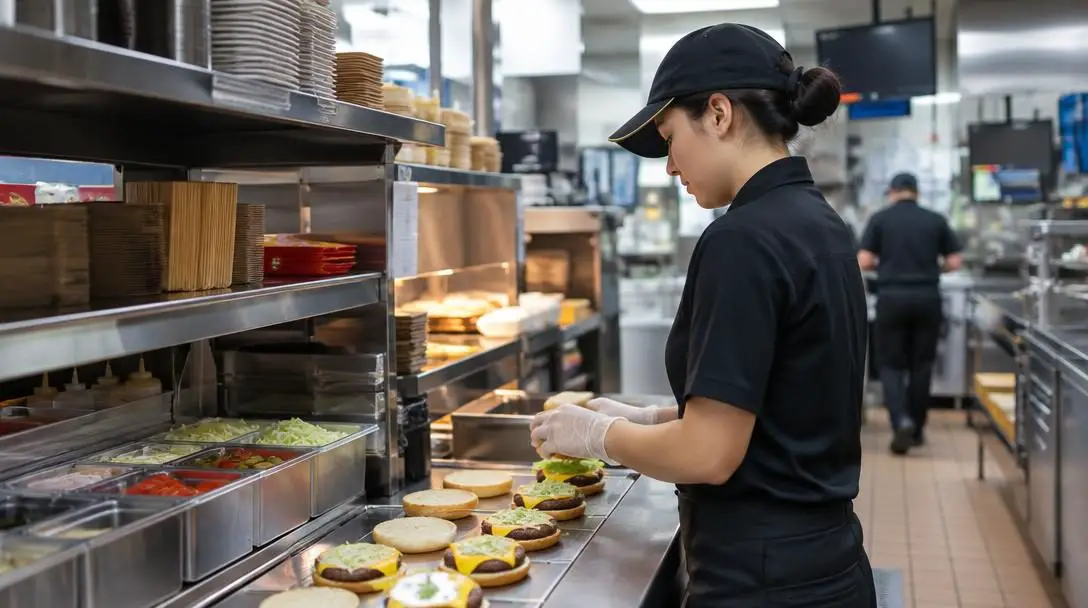
The ability to coordinate thousands of restaurants depends on treating food preparation as a synchronized assembly line rather than a craft kitchen. The Chicago-based leadership manages corporate branding, menu research and development, and master supplier contracts, while independent franchise operators manage day-to-day storefront staffing, local equipment maintenance, and store cleanliness.
When kitchen throughput slows down, drive-thru lines back up into street traffic, reducing total transaction counts during critical lunch and dinner windows. For this reason, corporate chefs and food scientists operate under strict parameters. If an experimental topping, packaging shape, or bun variety creates friction at the prep table, it is discarded regardless of taste test popularity.
The removal of complex, low-margin products like salads demonstrates this philosophy. Salads demanded delicate temperature control, occupied refrigerated shelving, carried a high raw ingredient cost, and required customized manual assembly that broke the rhythm of burger production. By cutting them, the company freed up employee labor to focus on rapid assembly of high-volume items paired with high-margin French fries and sodas.
How to Navigate the Modern McDonald's Experience
Understanding how the chain designs its menus and restaurants helps consumers save money, select fresher items, and set realistic expectations during their visits. Follow these practical steps to navigate current store formats efficiently.
- Check play area availability before visiting: Because corporate permitted individual franchisees to decide the fate of their Play Places post-pandemic, never assume an indoor playground is active based on exterior building architecture. Call the store to verify status if entertaining children is your goal.
- Assess your order's value equation: If your objective is obtaining the highest volume of animal protein for the lowest cash outlay, purchase standalone value sandwiches such as a McDouble or McChicken. Adding a soft drink or medium fry shifts the financial advantage back to the restaurant's high-margin products.
- Look out for Chicago-area test concepts: When traveling through or residing in the Chicagoland region, keep an eye out for experimental storefront layouts and pilot food concepts, as corporate continues to use its home market for regional consumer tests before launching broad national campaigns.
- Anticipate streamlined core menus: Do not expect the return of labor-heavy, fresh-produce items like pre-plated salads or short-lived experimental dinner entrees. Contemporary kitchen layouts are engineered specifically around standard beef patties, chicken cuts, and fried sides.
Common Misconceptions About Fast-Food Operations
Because McDonald’s is a constant presence in daily life, consumers frequently hold false assumptions regarding how the brand expands, prices its food, and manages its product catalog. Reviewing these common pitfalls clarifies how the quick-service restaurant industry works.
- Equating total store count with business health: When Subway surpassed McDonald’s in total locations during the late 2000s, many assumed the burger giant was losing its market power. In reality, aggressive expansion can dilute store profitability; Subway subsequently experienced closures and waning popularity, enabling McDonald’s to reclaim the global top spot.
- Assuming menu updates can happen immediately: When an experimental item gains social media attention or regional buzz, diners often expect it to appear at local counters within weeks. In practice, a nationwide rollout requires up to a full year of rigorous logistical vetting, supplier scaling, and kitchen timing checks.
- Believing all menu items yield identical margins: Casual diners often assume a restaurant profits equally across its menu board. In fast food, high-cost animal proteins like the fresh-beef Quarter Pounder and value-tier McDouble operate on tight margins, while beverages and French fries generate the bulk of operational profits.
- Viewing discontinued trials as catastrophic failures: When an experiment like Hearth Express vanishes after 12 months, onlookers often categorize it as a major corporate disaster. However, McDonald’s launched that homestyle meatloaf and ham test during an era of tremendous core burger growth, absorbing the project cost seamlessly without harming brand equity.
The Future of Store Design and Value Menus
As consumer habits shift increasingly toward mobile ordering, automated ordering kiosks, third-party delivery services, and multi-lane drive-thrus, the architectural footprint of McDonald’s continues to transform. The era of building sprawling dining rooms with community play spaces has given way to smaller dining footprints engineered to support rapid pickup and delivery driver turnover.
At the same time, maintaining customer interest in value offerings will remain an ongoing test for corporate planners. As ingredient procurement expenses, kitchen wages, and transportation costs fluctuate, protecting the balance between inexpensive foot-traffic drivers like the McChicken or McDouble and profit-stabilizing sides will require constant adjustment. By studying its historical lessons—from beating KFC and Subway in store counts to abandoning homestyle meatloaf at Hearth Express—McDonald’s continues to use standardized execution to reinforce its position at the top of the fast-food industry.
Frequently asked questions
Why did McDonald's decide to permanently close most Play Places?
Following mandatory shutdowns during the COVID-19 pandemic, most Play Places remained closed because of elevated liability risks, rigorous cleaning and sanitization expenses, and a broader strategic pivot toward high-efficiency drive-thru and delivery channels.
What was Hearth Express and why did it close?
Hearth Express was an experimental homestyle restaurant concept launched by McDonald’s in the Chicagoland area. It served take-home family dinners including meatloaf and baked ham, but it failed to connect with consumers and was discontinued after a single year.
Which fast-food chain had more locations than McDonald's in the late 2000s?
Subway expanded aggressively throughout the 2000s and held thousands more locations than McDonald’s by the end of that decade, before declining popularity allowed McDonald’s to reclaim the lead in total restaurant count.
Why did McDonald's remove salads from its nationwide menu?
Salads were the most expensive items for the restaurant to produce, requiring delicate raw ingredients, specialized refrigeration, and complex kitchen assembly that slowed down service while providing low profit margins.
How long does McDonald's take to introduce a new item nationwide?
A standard nationwide rollout typically takes up to a year of testing, operational adjustments, and supply chain scaling, though major initiatives like All-Day Breakfast were accomplished in an accelerated nine months.
The Bottom Line
Behind the familiar menu and ubiquitous golden arches sits a carefully calculated business model built on assembly-line efficiency and precise financial margins. McDonald’s sustained dominance stems not from avoiding missteps, but from using calculated regional tests, absorbing short-lived experiments like Hearth Express, and continuously optimizing kitchen logistics to balance low-margin proteins with high-margin beverages and fries. As dining habits gravitate further toward speed, delivery, and streamlined store formats, the brand's capacity to adjust its global system ensures it remains a benchmark for the modern food service industry.