Portal: 5 Reasons We Still Love The Classic Computer Game
When Valve launched The Orange Box in 2007, it was widely hailed as one of the most generous packages in digital entertainment. Players initially rushed to the compilation to experience the long-awaited console arrival of Half-Life 2 on the Xbox 360, explore its brand-new narrative continuation in Episode 2, or dive into the frantic class-based multiplayer arenas of Team Fortress 2. Hidden quietly amid these blockbuster attractions was an unassuming, experimental project called Portal.
Originally treated by many players as a curious palate cleanser or a glorified tech demo, Portal astonished the gaming world by eclipsing traditional action titles. Its brief runtime contained a masterclass in puzzle design, sharp dark comedy, and mind-bending physics that redefined player expectations. More than a decade and a half later, the game retains an iron grip on popular culture, standing as an enduring milestone of interactive design.
Key takeaways
- Portal originated from an indie student concept called Narbacular Drop before Valve hired the developers to build a full commercial title.
- The game solved complex three-dimensional momentum challenges by first prototyping all spatial interactions within a 2-D engine.
- A distinct visual design, an unforgettable credits song, and GLaDOS's iconic voice work helped elevate a short campaign into an international cultural phenomenon.
- The title established a masterclass in economy of design, providing high replay value and broad cross-generational appeal without unnecessary filler.
The Orange Box and the rise of an accidental phenomenon
The landscape of 2007 computer and console gaming was dominated by expansive, high-budget epics that promised dozens of hours of combat. Valve took a radically different gamble with The Orange Box, bundling diverse gaming experiences across PC and home consoles. While the marketing push focused heavily on Gordon Freeman's continuing saga and the stylized multiplayer warfare of Team Fortress 2, the inclusion of Portal provided an unexpected spark that ignited the entire package.
Gamers who booted up the title after completing Half-Life 2 found an environment that looked unlike anything else on the market. Instead of ruined city streets or battlefields, players woke up in a sterile, glass-enclosed relaxation vault armed with nothing but spatial curiosity. What could have been a brief distraction rapidly became the most critically lauded component of the entire compilation, paving the way for endless cultural memes and a major standalone sequel in 2011.
What began as an experimental pack-in bonus inside a multi-game compilation quickly transformed into one of the most celebrated achievements in video game history.
Five reasons Portal remains an enduring classic
Analyzing why Portal has managed to remain fresh and beloved across multiple generations reveals a rare alignment of engineering, artistic design, comedic writing, and pacing. Each distinct pillar of the game works in unison to deliver an experience free of modern gaming bloat.
Innovative physics and experimental game design
- Origins: DigiPen Institute of Technology student project
- Predecessor: Narbacular Drop
- Testing method: 2-D prototype engine
Prior to Portal, spatial navigation in three-dimensional computer games adhered strictly to linear geometry. The game's core breakthrough emerged when Valve scouted the DigiPen Institute of Technology and discovered Narbacular Drop, an indie project created by students that featured seamless transitions between disconnected environmental surfaces. Recognizing the brilliance of the mechanic, Valve hired the entire student team to translate their academic concept into a polished commercial release.
Translating instant spatial relocation into a fluid first-person environment presented staggering technical obstacles. Moving objects, players, and camera angles across separate planes without causing visual stutter or severe disorientation required rigorous development. To ensure the spatial rules were logically sound before committing to full three-dimensional production, the team mapped and tested the puzzles within an experimental 2-D prototype engine. This careful technical foundation allowed the game to function as the most elegant tech demo in gaming history.
The iconic Portal Gun and visual identity
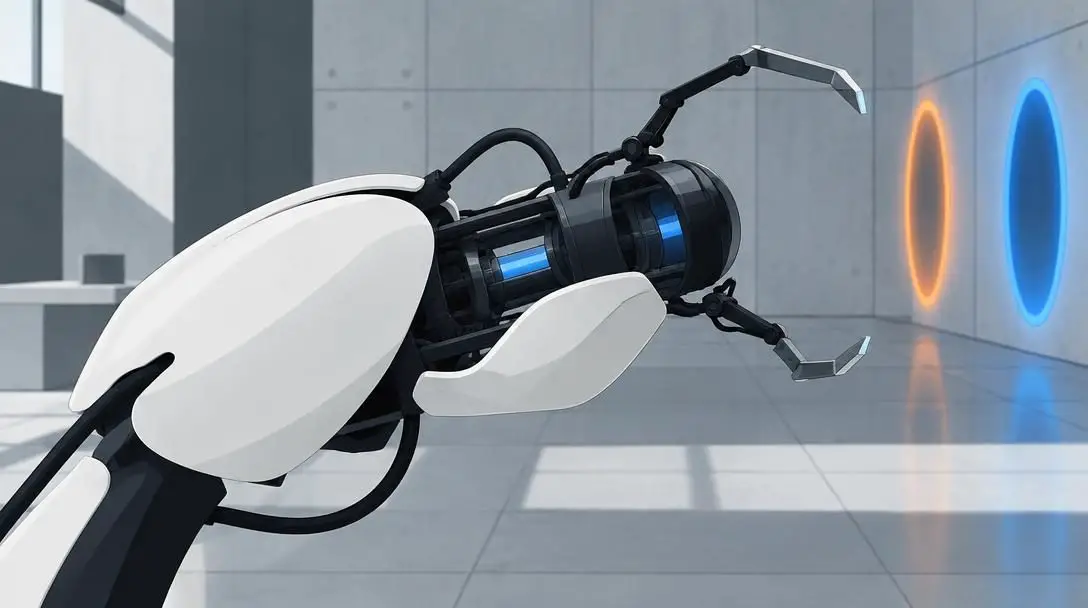
- Formal name: Handheld portal device
- Protagonist user: Chell
- Community tributes: 3-D prints and paper-mache replicas
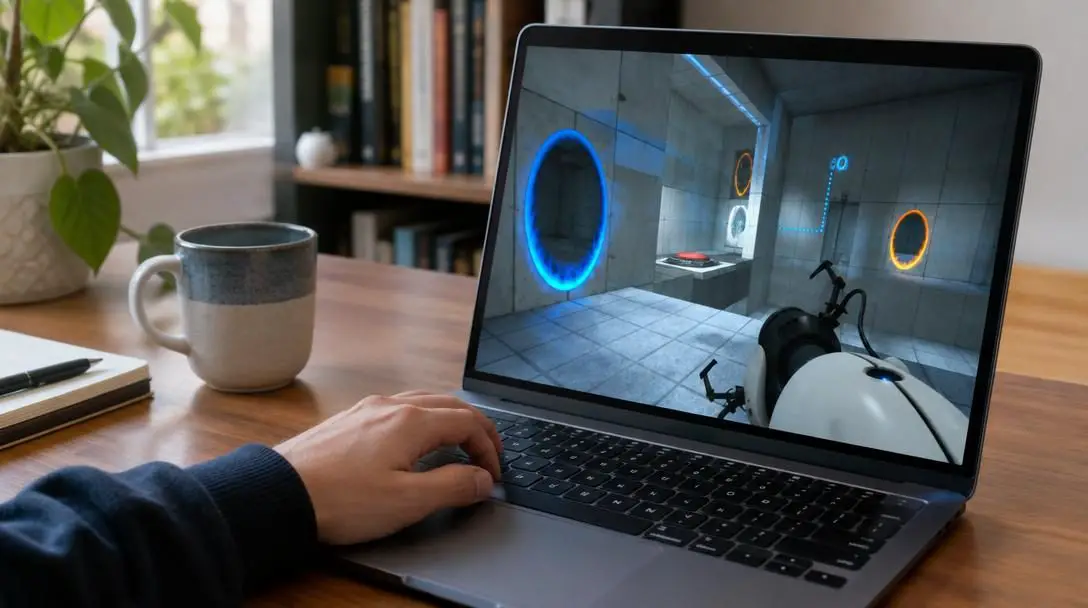
In the vast history of interactive entertainment, very few tools possess an immediate visual signature comparable to the handheld portal device. Rather than mimicking industrial weaponry or typical science-fiction firearms, the device was crafted with a sleek, minimalist white exterior accented by dark internal mechanical components and delicate claw prongs framing the barrel. Its clean, clinical appearance fit seamlessly into the testing facility's aesthetic.
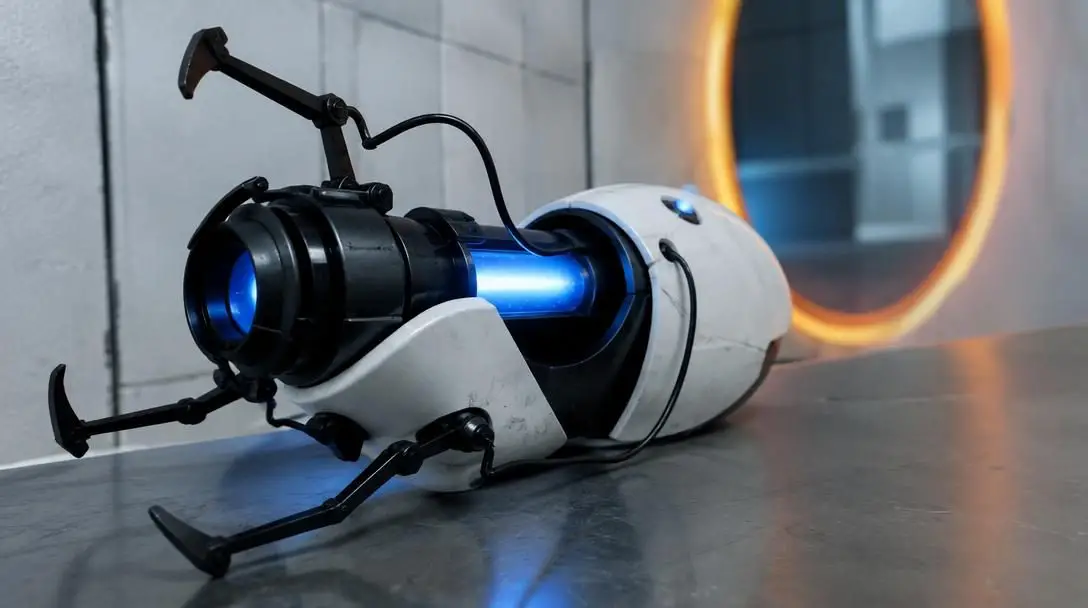
The weapon also acts as the primary vehicle of characterization for the silent protagonist, Chell. Because Chell utters no spoken lines throughout the entire campaign, her physical relationship with the device defines her agency. Players express her determination purely through movement and precision shots. The device's striking look resonated so powerfully with the player base that it ignited an entire subculture of physical fabrication, inspiring fans worldwide to produce museum-grade replicas using everything from 3-D printing techniques to hand-sculpted paper-mache.
The unforgettable end credits and "Still Alive"
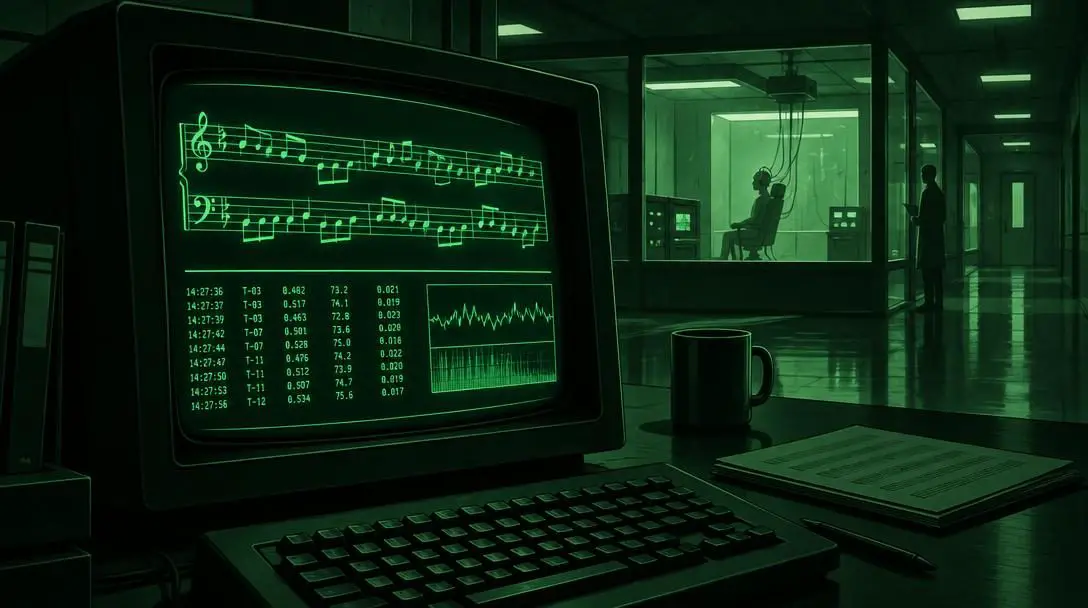
- Composer: Jonathan Coulton
- Vocal performer: Ellen McLain
- Rhythm game feature: Rock Band
Many players approaching the conclusion of the campaign feel a sudden jolt at how quickly the adventure reaches its climax. After navigating the fiery depths behind the maintenance walls and facing the facility's master computer, the game transitions abruptly through a brief escape cutscene directly into the credits. Yet this sudden ending resolves into one of the most brilliant narrative payoffs ever created: the original closing track, "Still Alive."
Composed from the analytical perspective of the defeated machine, the song combined dry humor, corporate optimism, and lingering resentment into a massive viral sensation. Lines proclaiming that there was no sense crying over every mistake because one should keep trying until running out of cake entered the permanent lexicon of internet culture. The song became so widely recognized that it eventually made its way into the rhythm game Rock Band, validating video game songwriting as a standalone cultural art form.
Universal charm and broad appeal
One of the most persistent hurdles in game design is crafting a system that invites newcomers without boring seasoned veterans. Portal crossed traditional demographics effortlessly. Its intuitive controls, absence of graphic violence, and reliance on logic over lightning-fast twitch reflexes allowed it to be played and enjoyed by small children, adult casual players, and elderly puzzle enthusiasts alike.
A crucial factor in this universal embrace was the game's strict economy of design. Instead of artificially padding the experience to justify a standalone retail price, Valve kept the narrative focused, allowing a player to comfortably finish the campaign in a single three-to-four-hour sitting. This compact structure ensured that the creative momentum never stalled. As a direct result, players frequently revisit the facility every few years, discovering that the comedic timing and environmental puzzles hold up flawlessly on repeat playthroughs.
GLaDOS as the ultimate antagonist
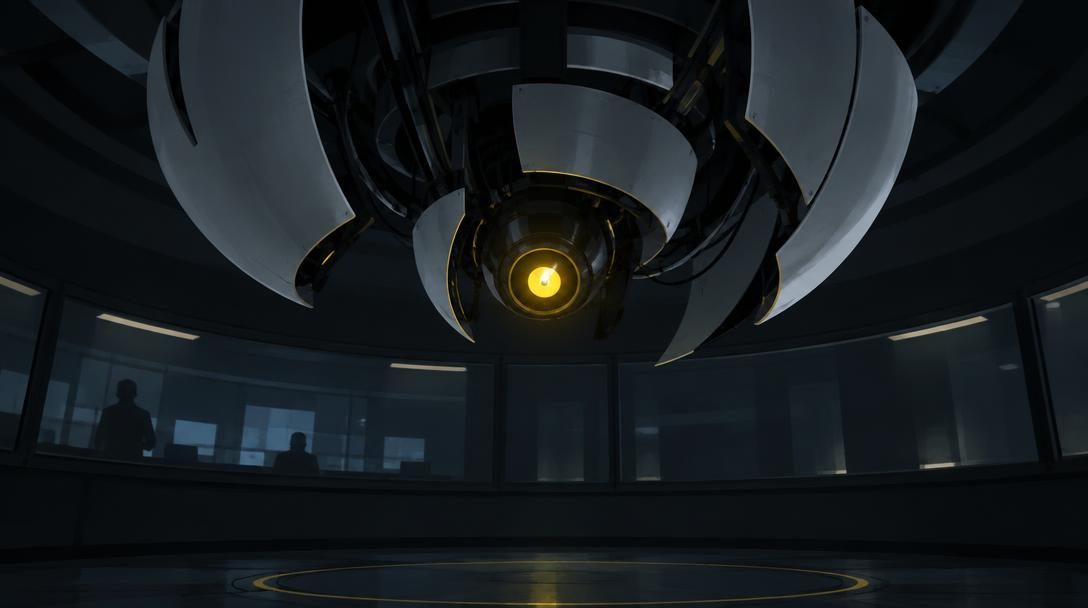
- Voice actor: Ellen McLain
- Character type: Artificial intelligence supervisor
- Personality shift: Cheerful instructional guide to overt hostility
The sterile test chambers would have felt hollow and lifeless without the voice that haunts every loudspeaker. Brought to life by voice actor Ellen McLain, the artificial intelligence known as GLaDOS (Genetic Lifeform and Disk Operating System) transformed an otherwise solitary spatial puzzle into an intense, psychological battle of wits. She serves as an exceptional verbal counterweight to Chell's persistent silence.
GLaDOS's character arc remains a clinic in subtle narrative development. In early chambers, she maintains a soothing, prerecorded administrative cadence, offering synthetic congratulations and bizarre promises of confectionery rewards. Gradually, passive-aggressive remarks and bureaucratic errors creep into her transmissions, subtly signaling to the player that the testing environment is dangerously unhinged. By the time her true homicidal intentions are revealed, players are eager to confront her, yet her humorous dialogue makes her deactivation feel oddly bittersweet.
At a glance: The pillars of Portal's longevity
| Pillar | Primary Element | Key Innovation | Cultural Impact |
|---|---|---|---|
| Spatial Mechanics | Momentum Portals | Fluid 3-D physics born from a 2-D prototype | Established modern momentum-based puzzle design |
| Visual Hardware | Portal Device | Minimalist white-and-black claw design | Spawned widespread enthusiast fabrication and replicas |
| Musical Score | "Still Alive" | Narrative song sung by the machine antagonist | Produced enduring internet memes and Rock Band inclusion |
| Audience Reach | Brevity and Logic | A compact, single-sitting campaign structure | Achieved cross-generational appeal with zero gameplay bloat |
| Narrative Voice | GLaDOS | Dynamic personality arc voiced by Ellen McLain | Ranked among the most iconic computer game villains |
Core mechanics: Understanding momentum and spatial rules
The brilliance of Portal lies in its restraint. Rather than giving players an expanding inventory of weapons, upgrades, and abilities, the game revolves around a small set of absolute rules that interact to create intricate emergent solutions.
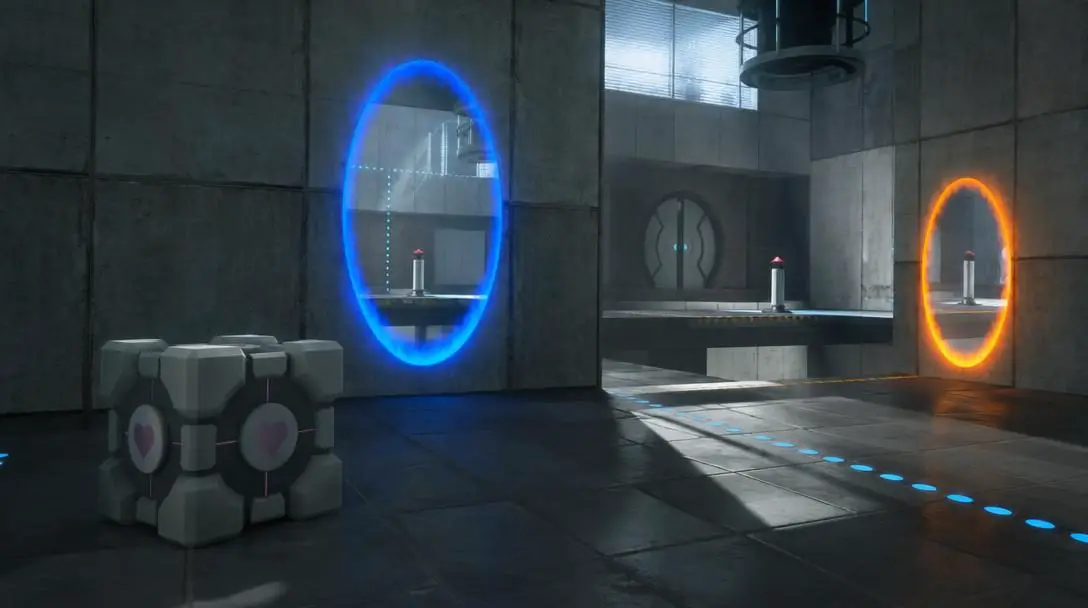
- Connected Gateways: The handheld device projects two separate portals, outlined in blue and orange. Passing through one aperture immediately carries the player, props, or energy projectiles out of the other without disrupting physical momentum or line of sight.
- Conservation of Momentum: The velocity an object possesses upon entering a portal is perfectly preserved upon exit. Dropping from a dizzying height into a floor portal causes the player to burst out of a horizontal wall portal with horizontal speed matching the downward acceleration.
- Surface Conductivity: Puzzles are dictated by room construction. Pristine, light-colored panels easily accept portal placement, whereas dark metallic panels, hazard pools, and observation glass reject portal beams entirely.
- Interactive Weighted Objects: Solving chambers requires manipulating physical props, such as weighted storage cubes, to depress floor buttons, redirect lethal energy pellets, or block automated sentry fire.
How to navigate the test chambers successfully
Whether embarking on a first journey through Aperture Laboratories or returning to polish speedrunning routes, adopting a structured approach prevents frustration when facing later, highly complex test rooms.
- Survey the chamber geometry: Stand at the entrance and visually map the room. Locate the exit door, trace the electrical lines connected to floor switches, and catalog which wall surfaces are receptive to portal placement.
- Identify physical components: Check the ceiling for item delivery tubes that dispense weighted cubes. Identify dynamic hazards, such as moving platforms, toxic sludge pits, or bouncing high-energy pellets.
- Plot your momentum trajectory: When an elevated ledge or wide chasm blocks progress, search for high ledges with portal-conductive floors underneath. Plan the placement of your entry portal at the bottom of the drop and align your exit portal to catapult Chell across the gap.
- Neutralize automated facility hazards: If automated turrets or lethal energy beams block the path, reposition your portals behind the threats. Drop physical cubes onto defense machinery or port yourself behind targets to tip them over.
- Complete the circuit and reach the lift: Carry required cubes to their destination pads, open the heavy security doors, and maintain an open portal route to step safely into the waiting transition elevator.
Common puzzle mistakes to avoid
Because humans spend their lives bound by gravity and continuous linear space, navigating non-Euclidean environments often triggers avoidable mental errors. Recognizing these traps makes tackling advanced test chambers far smoother.
- Overcomplicating the physics: Players often assume that an obstacle requires intricate acrobatics when the true path simply requires placing an exit portal directly above a floor button. Always test the simplest logical solution first.
- Jumping from a standstill: Attempting to create momentum by hopping into a portal from flat ground yields minimal forward push. Flings require significant vertical drops to build adequate speed.
- Spatial disorientation upon exit: Exiting a wall portal can suddenly flip your sense of up and down. Anticipate the exit trajectory before jumping into the entry aperture to keep your camera oriented toward your landing spot.
- Abandoning required props: Leaving a weighted cube behind in an earlier section of a multi-room chamber often forces a complete puzzle reset. Remember that props travel through portals just as easily as the player.
- Rushing through timer sequences: Panicking when a button starts ticking leads to misplaced portal shots. The campaign provides generous timing windows designed to accommodate deliberate, calculated movements.
Where to explore after beating the facility
Completing the final chamber and listening to GLaDOS's musical post-mortem often leaves players craving more of Valve's unique storytelling. Fortunately, several avenues exist to continue exploring this narrative universe.
The most immediate and essential step is to play Portal 2, released in 2011. The sequel dramatically expands the mythology of Aperture Science, introducing new mobility gels, tractor beams, complex laser routing, and an expansive cooperative multiplayer campaign requiring two players to solve synchronized puzzles. Ellen McLain returns to deliver an even deeper exploration of GLaDOS's backstory alongside new characters that flesh out the facility's origins.
Beyond the direct sequel, players can uncover shared lore by exploring Half-Life 2 and its episodic expansions within The Orange Box. The narrative threads between Aperture Science and Black Mesa provide fascinating background details that enrich both franchises. Finally, gaming historians can track down the original mechanics of Narbacular Drop or dive into the thriving community of user-created test chambers to test their problem-solving skills against the world's most devious custom puzzles.
Frequently asked questions
Is Portal part of the Half-Life universe?
Yes. Portal and Half-Life share the same narrative universe, with Aperture Science serving as a bitter corporate rival to Half-Life's Black Mesa research facility. The connection is referenced throughout the narrative of both series.
How long does it take to beat the original Portal?
Most first-time players finish the campaign in approximately three to four hours. The compact design ensures that puzzles introduce new ideas at a rapid pace without repetitive filler.
Who wrote the ending credits song "Still Alive"?
The iconic closing track was written by musician Jonathan Coulton and performed in character by Ellen McLain, the voice actor responsible for GLaDOS.
Can Portal be played without playing Half-Life first?
Absolutely. While there are subtle shared narrative connections, Portal tells a self-contained story that requires no prior knowledge of the Half-Life franchise to fully understand and enjoy.
The bottom line
In an industry often preoccupied with scale, graphical fidelity, and sheer hours of gameplay, Portal stands as a timeless reminder that brilliant game design thrives on clarity and focus. By taking a revolutionary physics concept originally drafted in an academic setting and pairing it with a peerless visual style and pitch-black comedic writing, Valve created an experience that has refused to age. Whether remembered for its mind-bending momentum puzzles, its unforgettable villain, or its indelible end-credits ballad, Portal remains one of the crowning triumphs of interactive storytelling.