South American Football: 5 Reasons Why The World Should Be Paying More Attention
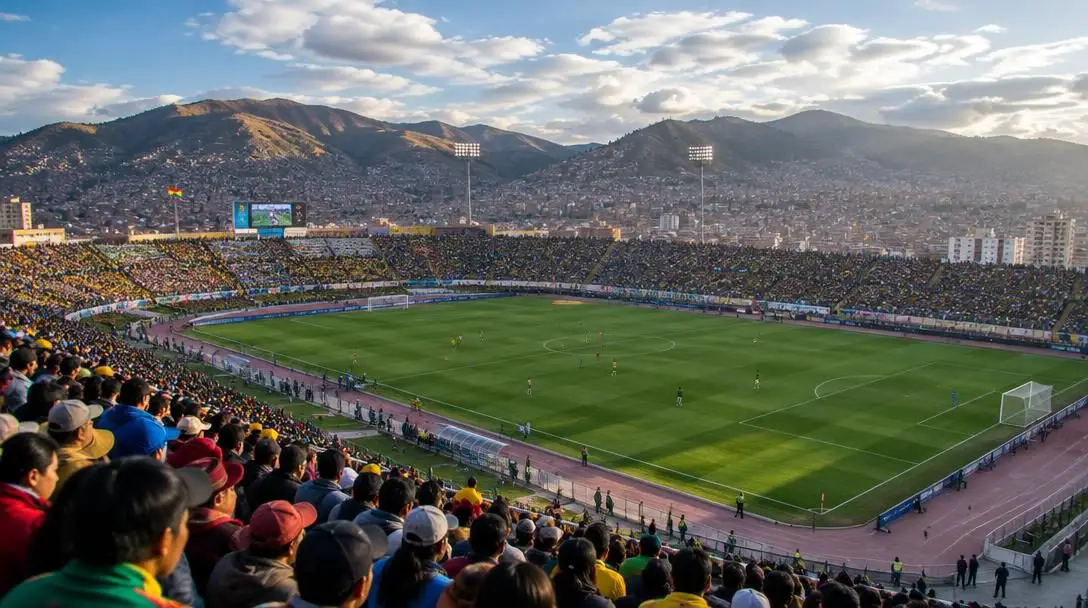
When sports enthusiasts around the globe discuss elite club football, the conversation almost universally gravitates toward the European continent. The English Premier League stands comfortably as the most commercially visible competition in the world, flanked by top-tier powerhouses like the German Bundesliga, Spanish La Liga, Italian Serie A, and French Ligue 1. Backed by multi-billion-dollar broadcasting packages, state-of-the-art training grounds, and unmatched financial muscle, these European leagues command the lion's share of international broadcasting hours and commercial sponsorship. Yet, assuming that world-class football exists exclusively inside this European bubble ignores the game's most fertile cradle: the vibrant leagues of South America.
Far too often, casual international viewers only direct their attention toward the Southern Hemisphere once every four years when the FIFA World Cup dominates the global news cycle. Looking past that quadrennial showcase unveils an electric, intense, and tactically inventive domestic landscape that has functioned as the global game's true lifeblood for well over a century. From packed historic cauldrons in Buenos Aires and Rio de Janeiro to high-tempo tactical battles across the Andes, South American club football offers an authentic purity and raw competitive thrill that sterile modern super-clubs can no longer replicate.
Key takeaways
- Brazil's Serie A is the highest-rated domestic football league in the world outside of Europe, currently sitting at number seven globally.
- South America represents the undisputed birthplace of the game's greatest historical icons, from Pele and Diego Maradona to Lionel Messi.
- Fan loyalty reaches staggering heights across the continent, with approximately 90 percent of Argentina's total population identifying as active football supporters.
- Legendary fixtures like the Superclasico and the Paulista Derby regularly bring entire metropolitan capitals to a complete standstill.
- The on-pitch tactical philosophy across the region prioritizes rapid transitions, close-quarters dribbling, and direct striking prowess over cautious possession.
Five defining reasons to follow South American football
To understand why South American domestic competitions warrant a permanent spot on every football fan's viewing schedule, it is essential to examine the core elements that define the continent's tournaments, youth development pipelines, club cultures, and playing styles. Five distinct pillars set the South American football experience apart from any other sporting environment in the world.
Underrated and highly competitive domestic leagues
While South American club competitions cannot match the astronomical financial reserves or billionaire ownership groups seen across top European leagues, they provide a degree of parity, drama, and unpredictability that modern European tournaments have largely lost. Instead of a predictable title race contested by only one or two state-backed clubs, South American league tables feature competitive balance that runs deep from the championship positions all the way down to the relegation line.
Across the continent, circuits such as Colombia's Primera A consistently deliver high-caliber technical matches and produce deep runs in international club play. However, the dual epicenters of continental club supremacy remain Argentina and Brazil. Argentina's Primera Division represents one of the oldest structured leagues on Earth, having been established in 1891. Featuring a massive 28-team top flight, it provides a grueling gauntlet where historic giants like Boca Juniors must regularly navigate hostile away fixtures against stubborn provincial opposition.
Across the northern border, Brazil's Serie A stands tall as the premier league across the Americas. Though its unified national structure was formalized more recently than Argentina's domestic championship, it boasts immense competitive depth with international titans such as Palmeiras contesting the trophy alongside a dozen other historically decorated clubs. The league is officially recognized as the seventh-best domestic football competition on the planet, making it the highest-ranked league outside Europe's traditional borders.
An unrivaled historical pipeline of legendary talent
European football operations rely heavily on immense commercial revenue to scout and sign the most talented South American prospects at younger and younger ages. Yet, despite this constant talent drain across the Atlantic Ocean, South America remains the planet's most prolific factory for generational sporting genius. The continent's grassroots systems, street football traditions, and academy infrastructure consistently reproduce what foreign money simply cannot manufacture from scratch.
Compelling arguments exist that the two greatest players to ever lace up a pair of boots both originated in South America. Brazil's iconic forward Pele dominated the global sporting consciousness for decades, scoring hundreds of goals and single-handedly expanding football's cultural footprint throughout the Western Hemisphere and beyond. Generations later, Argentina's maestro Lionel Messi assembled an unprecedented resume of individual accolades and major club trophies before guiding his home nation to the pinnacle of international sport.

South America remains the cultural, physical, and tactical engine that has driven football for more than a century.
This lineage is far from an isolated anomaly. The continent has maintained an unbroken chain of revolutionary athletes across every footballing era, including Argentine icon Diego Maradona, tactical genius Alfredo Di Stefano, Brazilian scoring phenom Ronaldo, and midfield playmaker Zico. Following domestic South American broadcasts gives sports fans the unique privilege of watching future global superstars navigate high-pressure professional matches long before they appear on European television screens or command record-breaking transfer fees.
Unmatched fan passion and deep-rooted cultural identity
Across the South American landmass, club football operates as an indispensable social anchor rather than an optional weekend distraction. With only two geographical exceptions—Venezuela, where baseball retains cultural dominance, and Guyana, where cricket is the national pastime—association football serves as the undisputed cultural heartbeat of the continent. Generations of families inherit club allegiances like heirlooms, weaving the fortunes of local clubs into the social fabric of daily life.
Global polling and sports sociology studies consistently place both Argentina and Brazil among the top five most passionate football nations anywhere in the world. In Argentina, roughly 90 percent of the populace openly identifies as club supporters, an extraordinary metric of cultural penetration that reached fever pitch following the national team's emotional 2022 World Cup triumph, which ended a painful 36-year drought. In Brazil, international correspondents and visiting coaches routinely marvel at stadium atmospheres, citing the deafening percussion, cascading banners, and collective euphoria as the most intense matchday experience in professional sports.
Fierce, historic, and city-stopping rivalries
The lifeblood of South American domestic sport flows through century-old club rivalries that can alter the emotional mood of entire metropolitan capitals. These matches are not mere athletic contests; they represent neighborhood identities, demographic divisions, and decades of shared folklore. When derby day arrives, public transit routes reroute, shops close early, and local civic life halts entirely until the final whistle blows.
In Argentina, more than 70 percent of football enthusiasts align themselves with either Boca Juniors or River Plate. Their monumental encounter, known globally as the Superclasico, regularly earns consideration as the most visually captivating derby in all of sports, frequently trailing only Scotland's Celtic-Rangers duel in international prestige rankings. Other clashes offer comparable ferocity:
- The Paulista Derby: Contested between Sao Paulo giants Corinthians and Palmeiras since 1917, an iconic showdown that paralyzes South America's largest metropolis.
- The Clasico de Avellaneda: The explosive Argentine cross-town feud between neighboring titans Independiente and Racing, whose home stadiums sit mere hundreds of meters apart.
- The Uruguayan Clasico: The fiery collision between Montevideo powerhouses Penarol and Nacional, representing one of the oldest non-British club derbies in the sport's history.
A fast-paced, attack-oriented style of play
Modern European league play has increasingly shifted toward rigid, risk-averse tactical models centered around territorial control, cautious passing circuits, and methodical defensive shapes. By contrast, South American domestic fixtures retain a fast-paced, direct, and combative attacking identity. Matches unfold with incredible transitional speed, encouraging offensive players to challenge their markers directly rather than safely cycling possession backward.
From an early age, South American players are exposed to tight, heavily populated training spaces and improvisational street matches. This upbringing instills exceptional close-quarters agility, sudden burst acceleration, tactical daring, and razor-sharp instinctive finishing. Rather than waiting for choreographed defensive rotations to break down, attackers look to penetrate backlines with audacious individual dribbles and rapid forward combinations. This dynamic tactical ecosystem explains why the region continues to supply Europe with the most decisive wingers and lethal penalty-box finishers on earth.

At a glance: Key South American football landscapes
To better understand how domestic power is distributed across the continent, consider the unique structural attributes and historical characteristics of its premier national competitions:
| Country | Premier domestic league | Founding era / details | Key clubs mentioned | Distinguishing cultural factor |
|---|---|---|---|---|
| Brazil | Serie A | Ranked #7 globally | Palmeiras, Corinthians | Voted among the most passionate fan cultures on Earth |
| Argentina | Primera Division | Founded in 1891 (28 teams) | Boca Juniors, River Plate, Racing, Independiente | 90% of the population identifies as football fans |
| Colombia | Primera A | Top-tier continental league | National circuit competitors | Consistently ranked among the strongest leagues in the region |
| Uruguay | Primera Division | Historic regional pioneer | Penarol, Nacional | Home to the classic Montevideo rivalry |
How to start following South American football
Because South American competitions do not receive the same default coverage in mainstream Western media as European tournaments, getting into these leagues requires a proactive viewing plan. Use the following structured roadmap to integrate South American club fixtures into your weekly viewing habits:
- Identify local broadcast platforms: Research which regional sports channels or streaming services hold broadcast licenses for Brazil's Serie A, Argentina's Primera Division, and Colombia's Primera A in your home territory.
- Circle major derby weekends on your calendar: Make high-stakes clashes like the Superclasico (Boca Juniors vs. River Plate) and the Paulista Derby (Corinthians vs. Palmeiras) viewing priorities to immediately experience the sport's emotional peaks.
- Learn the seasonal schedule structures: Familiarize yourself with the local tournament formats, which often operate on calendar-year schedules or feature split-season formats rather than the traditional European August-to-May timeline.
- Pick an anchor team to track: Select a club that matches your tactical preferences, whether that means backing established continental champions like Boca Juniors or Palmeiras, or following an aggressive mid-table competitor in Argentina's 28-club competition.
- Scout emerging attacking talent: Pay close attention to dynamic teenage wingers and creative playmakers operating under relentless defensive pressure before European scouting departments finalize their lucrative transfer bids.
Mistakes new fans make when evaluating the continent
Evaluating South American fixtures through a strictly European lens often causes new international viewers to misunderstand the quality and intensity of the matches. Be careful to avoid these frequent analytical traps:
- Expecting European financial parity: Expecting South American venues or transfer expenditures to match the English Premier League sets an unrealistic standard. The appeal of these competitions lies in grassroots atmosphere, tactical grit, and natural skill rather than corporate billionaire funding.
- Underestimating league depth outside Europe: Assuming European domestic leagues hold an absolute monopoly on elite football is incorrect. Brazil's Serie A currently ranks as the seventh-strongest league globally, and Colombia's Primera A provides remarkable weekly competition.
- Misreading the tactical tempo: Viewers accustomed to slow, safe passing sequences often mistake the high-speed, chaotic nature of South American play for a lack of organization. In reality, the direct vertical transitions reflect a deliberate emphasis on decisive attacking play.
- Focusing solely on the Superclasico: While the Boca-River clash is legendary, limiting your attention to a single Argentine fixture means missing out on the electric drama of the Paulista Derby, the Avellaneda derby, or the historic Uruguayan duel between Penarol and Nacional.
- Assuming football is universally dominant in every nation: Generalizing sports preferences across the entire South American continent ignores unique cultural boundaries, such as the overwhelming supremacy of baseball in Venezuela and cricket in Guyana.
Deepening your appreciation moving forward
Once you develop an understanding of the weekly rhythms of domestic South American fixtures, you can begin exploring the intricate connections between local club cultures and broader national identities. Tracing how legendary performers like Diego Maradona, Alfredo Di Stefano, Pele, Ronaldo, and Zico navigated their domestic leagues before achieving international immortality offers vital context into how modern Latin American attackers are shaped.
Moreover, cross-border continental tournaments bring clubs from Brazil, Argentina, Colombia, and Uruguay into direct competition, contrasting distinct tactical heritage against one another. Observing how Colombian attacking patience interacts with Brazilian technical expression or Argentine defensive resilience highlights the immense strategic diversity thriving within this footballing hotbed.
Frequently asked questions
Why is Brazil's Serie A considered so strong?
Brazil's Serie A holds the official number seven ranking among all domestic football leagues worldwide, making it the highest-rated league outside of Europe. The competition features incredible parity, perennial continental heavyweights like Palmeiras and Corinthians, world-class local derbies, and an unrivaled pipeline of developing young talent.
Which South American countries do not have football as their most popular sport?
While association football dominates cultural life across nearly the entire continent, baseball is the primary sport in Venezuela, while cricket holds the top spot in Guyana.
How old is Argentina's Primera Division, and how many teams compete in it?
Argentina's Primera Division was founded back in 1891, making it one of the longest-running national football leagues in history. Today, its top-flight format features 28 competing clubs, with Boca Juniors having secured the highest tally of domestic titles over its storied existence.
What makes the Superclasico such a famous match?
The Superclasico is contested between historic Buenos Aires rivals Boca Juniors and River Plate. More than 70 percent of all football followers in Argentina support one of these two clubs, creating an all-consuming derby atmosphere that brings normal city life to a halt and ranks among the most watched sporting events on Earth.
How does the South American style of play differ from modern European football?
Modern European club football leans heavily into risk-averse tactical models emphasizing structured positional play and safe possession retention. In contrast, South American football prioritizes rapid vertical attacking, individual dribbling in tight spaces, high physical intensity, and dynamic forward transitions.
The bottom line
European football will inevitably continue to command the highest broadcast rights and club payrolls in the modern sporting economy, but South America remains the spiritual home, technical heartbeat, and emotional engine that keeps the sport magical. By following the elite domestic competitions of Argentina, Brazil, and Colombia, sports fans can step outside corporate commercial boundaries and rediscover club football in its most authentic, electric, and breathtaking form.