The Secrets of Success: How Jerry Springer Got Famous

Jerry Springer became one of the most recognizable figures in modern television by turning daytime broadcasting into an electrifying, high-stakes spectacle. While critics and cultural commentators often debated the sensationalism of his work, his ascent from a middle-class upbringing into an enduring media heavyweight represents a masterclass in audience analysis, adaptability, and deliberate personal branding.
Rather than stumbling into television stardom by luck, Springer arrived in the entertainment industry equipped with years of political experience, a sharp command of rhetoric, and an acute understanding of public sentiment. By tracing his path through early civic life, his breakthrough appearances on The Phil Donahue Show, and the structural brilliance behind The Jerry Springer Show, modern creators and media professionals can extract durable strategies for building long-term relevance across evolving platforms.
Key takeaways
- Civic service and political debate provided Jerry Springer with the foundational public speaking skills and emotional control required for high-pressure television.
- Leveraging guest commentator appearances on established platforms like The Phil Donahue Show served as the primary launchpad for his own hosting career.
- Springer’s daytime dominance relied on contrasting intense, unscripted on-stage conflict with his own calm, impartial observational persona.
- Embracing controversy as a powerful promotional engine allowed his brand to cut through crowded broadcast markets and pivot into digital media.
- Long-term media longevity requires constant diversification beyond a single signature format into different hosting environments and public affairs.
Foundational Milestones in Jerry Springer's Rise
The journey that led to international recognition was characterized by clear developmental phases rather than rapid, unearned celebrity. Each chapter of Springer's professional trajectory sharpened specific communication capabilities, expanded his public profile, and laid the groundwork for his eventual reign over syndicated daytime television.
Early Political Career and Public Service
- Birthplace: London, England
- Upbringing: Middle-class household in the United States
- Core Skill Set: Public speaking, community engagement, and political rhetoric
Born in London, England, before immigrating to the United States with his family, Jerry Springer grew up in a middle-class household where he developed an early interest in politics, governance, and current affairs. After completing his formal education, he entered the political arena, winning elected office and participating directly in public governance. This phase of his life proved to be an invaluable training ground. In politics, Springer mastered the art of delivering high-stakes rhetoric, negotiating diverse community interests, and maintaining composure during hostile public debates. Working in public service taught him how everyday citizens express deeply felt grievances, how shifts in public opinion take shape, and how to speak directly to the concerns of regular people without coming across as distant or elitist. When he eventually moved into broadcasting, he carried these exact communication tools directly into the television studio.
The Phil Donahue Show
- Era: 1980s syndicated daytime television
- Role: Regular political commentator and analyst
- Impact: National audience exposure and network executive interest
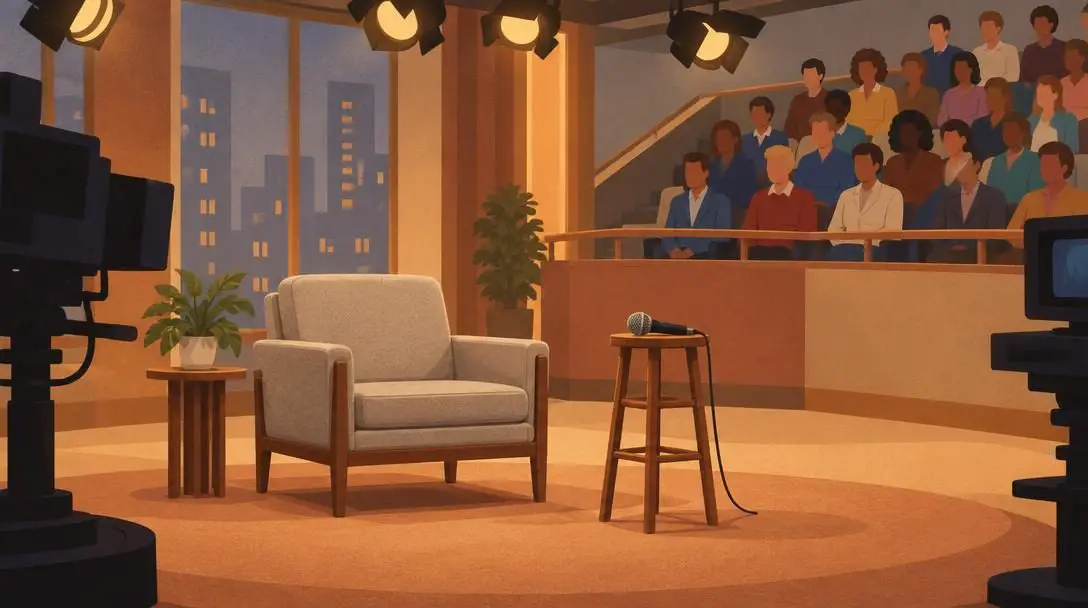
Before launching his own syndicated program, Springer secured national attention through recurring appearances on The Phil Donahue Show during the 1980s. At the time, Donahue’s program represented the gold standard of daytime television, pioneering open-floor audience questioning and analytical explorations of cultural and social issues. Springer appeared as a political commentator, quickly standing out among panelists due to his sharp wit, concise arguments, and ability to break down convoluted civic topics into engaging, accessible television. Rather than lecturing viewers, he engaged them with humor and clarity. This high-profile platform introduced his talents to network executives, producers, and millions of daily viewers, demonstrating that he possessed the charisma necessary to steer his own broadcast vehicle.
The Jerry Springer Show

- Format: Conflict-driven syndicated daytime talk show
- Key Themes: Unscripted personal drama, audience interaction, and sensational topics
- Legacy: Ratings powerhouse and early precursor to modern reality TV
The decisive turning point of his career arrived with the debut of The Jerry Springer Show. While the program initially premiered with a standard, issue-oriented focus, it swiftly adapted to an intensely competitive syndicated market by shifting toward dramatic personal confrontations and taboo social topics. Springer fully embraced the sensational, tapping into an unaddressed appetite for provocative entertainment. The format integrated raw human emotion, dynamic studio audience participation, and unpredictable confrontations, laying structural blueprints that anticipated the explosion of modern reality television. By transforming everyday personal disputes into an unmissable national conversation, the program broke viewership records and established Springer as a defining pop-culture icon of the late twentieth century.
Multi-Platform Diversification
- Expansion: Hosting across diverse television genres
- Civic Return: Re-engagement with public affairs and political commentary
- Longevity Factor: Brand adaptation across traditional and emerging digital platforms
Recognizing the inherent dangers of becoming permanently trapped within a single television persona, Springer actively worked to broaden his professional portfolio. He pursued opportunities across an array of genres, stepping into hosting roles on other programs, serving as an emcee for major events, and regularly returning to political commentary and civic discussions. This intentional diversification proved that his foundational skills were versatile, extending far beyond shock-talk confrontations. By demonstrating adaptability across multiple presentation formats, he preserved his professional viability, sustained his industry relevance, and reminded audiences of his extensive background in public affairs.

At a Glance: Springer's Strategic Career Evolution
| Career Phase | Primary Focus | Key Communication Lesson | Strategic Outcome |
|---|---|---|---|
| Political Career | Civic governance and public debate | Engaging everyday citizens through clear, empathetic rhetoric | Developed ironclad composure under hostile scrutiny |
| The Phil Donahue Show | National political commentary | Translating complex social debates into accessible television | Captured network executive attention for future solo hosting |
| The Jerry Springer Show | Sensational daytime talk and conflict | Facilitating raw human drama while remaining an impartial guide | Built an international entertainment brand and ratings giant |
| Diversified Media Ventures | Genre expansion and public affairs | Adapting core hosting charisma across differing broadcast formats | Preserved brand longevity and demonstrated multi-genre versatility |
The Five Structural Pillars of Springer's Daytime Format
The runaway success of Springer's signature program was not a byproduct of random chaos; it operated on a meticulously organized broadcast framework designed to maximize viewer engagement. Behind the volatile confrontations was an operational formula that reliably hooked audiences episode after episode.
Unvarnished Emotional Conflict
Traditional television programming during the late twentieth century frequently presented carefully rehearsed, polished interactions. Springer shifted the paradigm by focusing on raw, high-stakes personal relationships. The show highlighted extreme interpersonal disputes, romantic betrayals, and unconventional lifestyles, producing immediate emotional resonance. By presenting situations that felt completely spontaneous, the show generated tension that made it impossible for home viewers to look away.
Active Studio Audience Participation
Rather than relegating the studio crowd to polite background clapping, the production transformed the audience into an energetic character within the narrative. Armed with roving microphones, audience members stood up to interrogate guests, offer unsolicited advice, or challenge contradictory statements. This interactive dynamic broke down the traditional barrier between performer and observer, creating a rowdy, participatory arena that magnified the drama unfolding on stage.
The Composed, Impartial Host
Central to the format's longevity was Springer’s deliberate on-air demeanor. While guests screamed, threw objects, or unraveled emotionally, the host remained remarkably composed, curious, and understated. He did not lecture guests from an elevated moral pedestal or mock them with cruelty; instead, he maintained the posture of an amused, empathetic observer. This contrast was crucial: it prevented the program from feeling preachy and allowed viewers at home to process the chaos alongside a relatable, level-headed guide.
Rigid Narrative Architecture
Despite the wild unpredictability of the subject matter, every broadcast followed an exceptionally rigid structural arc. Episodes progressed through predictable beats: the introduction of a primary guest explaining a grievance, the dramatic entrance of the opposing party, the escalation into direct confrontation, and the eventual entry of third-party perspectives or audience questions. This clear structural formula provided a comforting rhythm that kept viewers anchored, even when the on-stage behavior was completely unhinged.
The Thoughtful Final Wrap-Up
Before closing credits rolled, the show consistently pivoted away from high-volume conflict toward quiet reflection. Springer delivered a short monologue, offering philosophical insights, ethical reflections, and calls for mutual understanding based on the day’s themes. This closing summary served as an emotional palate cleanser, bringing the energetic chaos back down to earth and reasserting his stature as a thoughtful, articulate observer.

Springer understood that strong reactions—whether positive or critical—fueled the show’s popularity.
Calculated Branding and Modern Publicity Strategies
Jerry Springer was a pioneer in treating public criticism not as a crisis to be managed, but as promotional momentum to be directed. At a time when traditional broadcasters feared boycotts or moral pushback from media watchdogs, his team recognized that intense outrage was simply another form of cultural relevance. Rather than issuing defensive apologies or attempting to soften the show’s edges to appease high-minded critics, the production leaned heavily into its controversial identity.
Furthermore, Springer possessed an early appreciation for the changing landscape of audience consumption. As digital technology advanced, he was among the first legacy daytime figures to welcome internet culture and emerging social platforms. The bite-sized, sensational confrontations featured on his show proved uniquely suited for digital distribution, helping him maintain brand recognition among younger generations who rarely sat down to watch linear television.
Practical Steps for Modern Communicators
Aspiring broadcasters, digital creators, and public speakers can extract several actionable principles from the evolution of Springer’s career to enhance their own long-term media strategies.
- Master foundational rhetorical discipline: Develop rigorous public speaking and debate skills before seeking entertainment stardom. Practice communicating complex viewpoints clearly under tight time constraints and high pressure.
- Maximize guest opportunities: Treat appearances on external platforms, podcasts, and panels as critical auditions. Prepare exhaustively to ensure your contributions are memorable, insightful, and distinct from other participants.
- Locate underserved audience demands: Monitor mainstream media landscapes to identify what established networks are ignoring. Create programming that targets neglected viewer interests rather than copying oversaturated formats.
- Cultivate a contrasting persona: Establish a calm, grounded personal hosting demeanor that balances high-intensity subject matter. Maintaining your composure during chaotic discussions makes you a trustworthy anchor for your audience.
- Execute strategic image pivots: Avoid letting initial professional roles dictate your future opportunities. Be prepared to shift between serious commentary, light entertainment, and creative ventures when industry opportunities arise.
- Embrace distribution shifts immediately: Adopt emerging media formats and platforms early. Packaging your content to meet the consumption habits of younger, digitally native audiences prevents your brand from becoming obsolete.
Pitfalls to Avoid in Long-Term Media Strategy
While Jerry Springer achieved remarkable ratings and enduring notoriety, his path also illustrates several strategic hazards that modern personalities must actively manage.
- Sacrificing long-term credibility for short-term virality: Relying exclusively on shock value can pigeonhole a creator, making it difficult to transition into serious discussions or corporate partnerships later in their career.
- Resisting public evolution: Clinging stubbornly to an outdated format when cultural tastes change leads to rapid audience attrition. Broadcasters must continually adjust their delivery to reflect current sensibilities.
- Panicking when confronted with controversy: Treating every wave of negative publicity as an emergency can cause creators to backtrack unnecessarily, alienating their core audience without winning over their critics.
- Over-relying on a single format: Failing to develop secondary platforms, writing projects, or alternate show concepts leaves a media figure vulnerable if their primary program is canceled or falls out of favor.
- Marginalizing your community: Treating an audience as an afterthought rather than a vital component of the broadcast limits engagement and results in flat, unidirectional content.
Frequently asked questions
What was Jerry Springer's background before entering television?
Jerry Springer was born in London, England, and grew up in a middle-class household after immigrating to the United States. Before his broadcast career, he worked extensively in politics and public service, developing the rhetorical discipline, debate skills, and public engagement techniques that later defined his hosting style.
How did The Phil Donahue Show help launch Springer's career?
During the 1980s, Springer made frequent appearances on The Phil Donahue Show as an articulate political commentator. His sharp wit, direct engagement with complex social issues, and natural rapport with studio audiences attracted the attention of television executives and daytime viewers, directly leading to his own hosting contract.
Why did The Jerry Springer Show shift toward sensational topics?
In a fiercely competitive daytime syndication market, the show pivoted toward sensational topics, extreme interpersonal conflict, and unscripted drama to stand out from traditional interview shows. This embrace of shocking entertainment unlocked immense ratings and established the format as an early forerunner to modern reality television.
How did Jerry Springer handle controversy and criticism?
Rather than retreating or issuing defensive apologies, Springer and his production team recognized that controversy and public outrage functioned as powerful promotional fuel. They leaned into the show's reputation, maintaining high visibility while Springer himself remained composed and grounded.
What role did Springer's final wrap-up play in each episode?
The closing segment allowed Springer to step out of the high-energy chaos and deliver a calm, reflective personal monologue on the episode's themes. This brought the chaotic atmosphere back down to earth and reinforced his role as a thoughtful, observant host.
The bottom line
Jerry Springer’s trajectory through the media landscape demonstrates that lasting cultural impact is rarely an accident. By pairing rigorous political training with an intuitive grasp of audience appetites, he recognized that viewers were eager for unvarnished human drama long before the reality television boom took hold. His composure in the middle of volatility, coupled with an aggressive embrace of publicity and early adoption of digital channels, enabled him to construct a broadcasting empire that outlasted dozens of rival productions.
For modern communicators and media entrepreneurs, his legacy offers an enduring lesson in agility: hone your foundational craft, lean confidently into your distinct market differentiation, and never hesitate to reinvent your platform as cultural tides shift.