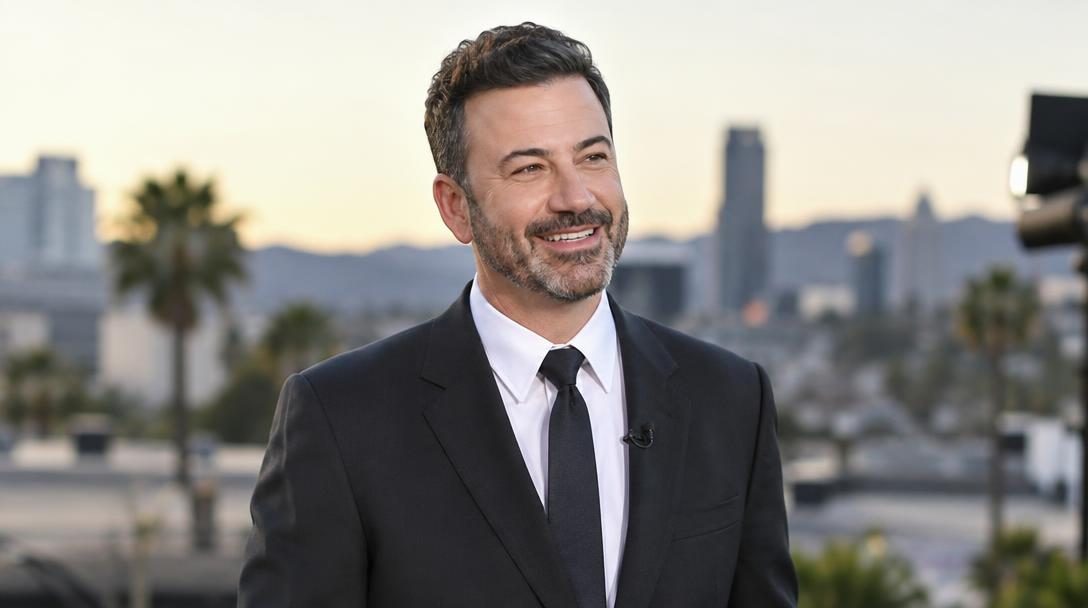
The Secrets of Success: How Jimmy Kimmel Got Famous

The entertainment industry is widely regarded as one of the most competitive and challenging arenas in the world. Thousands of aspiring creators attempt to break into television, radio, and comedy each year, yet only a tiny fraction ever manage to establish a sustainable career, let alone attain widespread recognition. It takes an exceptional combination of hard work, dedication, and perseverance to survive the early hurdles and make a lasting mark in modern show business. Today, Jimmy Kimmel stands as an undisputed household name across the United States and internationally, largely thanks to his flagship talk show, <em>Jimmy Kimmel Live!</em>, alongside his other successful broadcasting projects. While sudden viral fame often vanishes as quickly as it arrives, Kimmel built a multi-decade television presence through disciplined craftsmanship, calculated creative gambles, and genuine authenticity. <div class="takeaways"> <h2>Key takeaways</h2> <ul> <li>Jimmy Kimmel built his broadcasting foundation over years in 1980s radio before transitioning to television on <em>Win Ben Stein’s Money</em>.</li> <li>The launch of <em>Jimmy Kimmel Live!</em> in 2003 represented a major risk for both the host and ABC, which was not established in late-night programming.</li> <li>Kimmel’s longevity relies on three core pillars: tireless work ethic, a willingness to take bold comedic and topical risks, and an authentic on-air persona.</li> <li>Network talk shows run on a demanding daily cycle of news ingestion, monologue writing, guest research, technical blocking, and live recording.</li> <li>Long-term media success requires mastering the fundamentals and avoiding common traps like relying strictly on raw talent or adopting artificial stage personas.</li> </ul> </div> <h2>The foundational milestones of Jimmy Kimmel’s career</h2> <p>Jimmy Kimmel did not become an overnight sensation. Long before stepping onto the stage of late-night television, he spent years refining his voice and learning the nuances of broadcast communication from the ground up. His entertainment journey demonstrates that longevity is earned through progressive stepping stones rather than instant celebrity.</p> <h3>1980s radio broadcasting</h3> <ul class="facts"> <li><strong>Era:</strong> 1980s</li> <li><strong>Medium:</strong> Audio radio broadcasting</li> <li><strong>Core focus:</strong> Vocal timing, unscripted banter, and rapid wit</li> </ul> <p>Working in radio provided Kimmel with an essential training ground. In an audio-only environment, a broadcaster cannot rely on physical comedy, visual expressions, or elaborate sets to maintain listener attention. Kimmel had to learn how to connect with an audience purely through vocal cadence, timing, and spontaneous dialogue. This grueling format forced him to sharpen his unscripted banter and develop the improvisational instincts that later proved vital in live television.</p> <h3>Win Ben Stein’s Money</h3> <ul class="facts"> <li><strong>Role:</strong> Comedy co-host</li> <li><strong>Medium:</strong> Cable television game show</li> <li><strong>Core focus:</strong> Visual comedy and reactive crowd work</li> </ul> <p>Building on his radio background, Kimmel transitioned to visual media by taking on the role of co-host on the game show <em>Win Ben Stein’s Money</em>. The program paired him with intellectual host Ben Stein, providing a sharp contrast that showcased Kimmel’s irreverent comedic commentary. This role introduced him to a much broader national audience and proved that his humor translated effectively to the television screen, proving he could balance formal game dynamics with sharp, off-the-cuff humor.</p> <h3>Jimmy Kimmel Live!</h3> <ul class="facts"> <li><strong>Debut year:</strong> 2003</li> <li><strong>Network:</strong> ABC</li> <li><strong>Core focus:</strong> Late-night comedy, celebrity interviews, and cultural monologues</li> </ul> <p>In 2003, Kimmel took the leap to network late-night television with the launch of <em>Jimmy Kimmel Live!</em>. Over the subsequent decades, he transformed the broadcast from an underdog program into a foundational pillar of American late-night entertainment. The show became the platform that solidified his status as an industry leader, giving him the space to blend topical monologues, high-profile celebrity interviews, and innovative comedic sketches.</p> <aside class="callout note"><strong>Good to know:</strong> When Kimmel initially pitched his talk show concept, ABC was not known for late-night programming, making the venture an uncertain gamble for both the network and the entertainer.</aside> <h2>Jimmy Kimmel’s career progression at a glance</h2> <p>Understanding Kimmel’s rise requires looking at how each phase of his professional life expanded his skill set and broadened his audience reach across different broadcast mediums.</p> <table> <thead> <tr> <th>Platform</th> <th>Starting Era</th> <th>Primary Medium</th> <th>Key Skill Developed</th> </tr> </thead> <tbody> <tr> <td>Radio Hosting</td> <td>1980s</td> <td>Radio Broadcast</td> <td>Audio delivery, verbal timing, and unscripted banter</td> </tr> <tr> <td><em>Win Ben Stein’s Money</em></td> <td>Late 1990s</td> <td>Cable Television</td> <td>Visual presence, dynamic co-hosting, and reactive humor</td> </tr> <tr> <td><em>Jimmy Kimmel Live!</em></td> <td>2003</td> <td>Network Television</td> <td>Monologue delivery, long-form interviews, and executive production</td> </tr> </tbody> </table> <h2>The three core pillars behind Kimmel’s enduring success</h2> <p>Success on the scale of Jimmy Kimmel does not happen by accident. An analysis of his career reveals three major principles that have sustained his relevance and popularity across decades in an industry notorious for rapid turnover.</p> <blockquote class="pull">Staying power in the entertainment industry is far rarer than a sudden viral moment.</blockquote> <h3>Passion and tireless hard work</h3> <p>Kimmel possesses a <strong>genuine love for comedy</strong> and entertaining audiences. This passion provides the internal fuel necessary to endure the grueling nature of daily broadcasting. His routine involves putting in long hours, meticulously reviewing scripts, thoroughly preparing for guest interviews, and rehearsing segments repeatedly before taping. Dedication is not an occasional burst of enthusiasm for sweeps weeks; it is an everyday operational standard that shapes his arrival at the studio, his review of incoming news wire reports, and his willingness to polish monologue lines until the final minutes before taping begins.</p> <h3>Willingness to take bold risks</h3> <p>Kimmel has repeatedly taken calculated professional gambles. Stepping into late night on ABC required betting on his own vision in an untested timeslot. In his daily broadcasts, he frequently pushes boundaries by tackling controversial or sensitive topics, accepting occasional criticism in exchange for creative originality. Throughout his tenure, he has demonstrated a willingness to evolve his subject matter, confronting serious political developments and emotional personal milestones alongside celebrity parodies and street-interview segments. This bravery keeps the format vibrant and prevents the show from decaying into repetitive predictability.</p> <h3>Authenticity and comedic timing</h3> <p>Unlike performers who rely on an artificial stage persona, Kimmel is known for remaining true to himself on camera. His natural, relatable delivery creates an immediate bond with viewers. While technical comedic timing can be sharpened through practice, audiences possess an innate ability to detect insincerity. Kimmel's conversational cadence—honed through years of unscripted radio conversations where no visual cues could mask false emotion—allows him to interact with high-profile celebrities and everyday audience members with the same straightforward, approachable attitude.</p> <h2>The daily production cycle of network late night</h2> <p>To fully appreciate Kimmel’s accomplishments, it helps to understand the operational machinery of a daily late-night comedy talk show. <em>Jimmy Kimmel Live!</em> operates on a relentless production cycle that demands constant creativity, management, and technical precision under strict time limits.</p> <ol class="steps"> <li><strong>Morning news ingestion and pitching:</strong> Early in the day, the writing staff scans national headlines, pop culture developments, and odd news stories. The team pitches hundreds of potential punchlines, sketches, and monologue concepts based on events that unfolded just hours earlier.</li> <li><strong>Script selection and assembly:</strong> The host and lead writers sift through submissions to build the opening monologue. This requires evaluating which jokes fit the host's voice and how to address sensitive cultural news with appropriate balance.</li> <li><strong>Interview and guest preparation:</strong> While monologue jokes are being refined, the production staff conducts pre-interviews with celebrity guests, musical acts, or human-interest figures. Kimmel reviews research notes and pre-interview briefings so that the on-air conversation feels spontaneous while remaining focused.</li> <li><strong>Rehearsal and technical blocking:</strong> Sketches and visual gags are rehearsed in the studio. Camera operators, lighting technicians, sound engineers, and cue-card personnel synchronize their movements to ensure seamless execution.</li> <li><strong>Live or live-to-tape recording:</strong> The episode is recorded before a live studio audience. The host must manage live energy, handle unexpected pauses, adapt if a joke falls flat, and guide guest discussions smoothly.</li> <li><strong>Post-production and broadcast:</strong> Editors rapidly assemble the finalized footage, make minor timing trims, and deliver the completed episode to the network for broadcast that evening.</li> </ol> <h2>Strategic lessons for aspiring media professionals</h2> <p>While few people will host their own network late-night show, the principles behind Jimmy Kimmel’s career can be applied by anyone striving to build a platform in media, comedy, podcasting, or public speaking. Translating Kimmel’s trajectory into practical milestones offers a clear roadmap for personal development.</p> <h3>Establishing a foundational platform</h3> <p>Start in mediums that demand strong fundamentals. Just as Kimmel honed his spontaneous dialogue in radio before moving to television, aspiring communicators should practice through podcasting, local comedy, or community speaking to build essential verbal habits. Audio-first and live environments force speakers to rely on timing, substance, and tone rather than high-end production values.</p> <h3>Committing to meticulous preparation</h3> <p>Natural charisma is sustained by invisible labor. Spend significant time reviewing materials, researching discussion topics, and reading background context before any interview or presentation. <strong>Thorough preparation creates the freedom to be spontaneous</strong> on air or on stage, because deep familiarity with the subject matter prevents panic when unpredictable moments arise.</p> <h3>Developing an unfiltered voice</h3> <p>Resist the urge to put on a façade or mimic established figures. Audiences quickly sense artificial behavior and emotional detachment. Finding long-term resonance requires embracing your natural tone, admitting flaws, and speaking from genuine perspective. Kimmel's relatability stems from his refusal to act like an untouchable celebrity.</p> <h3>Pitching bold opportunities</h3> <p>Do not wait for perfect conditions before making a move. When an opportunity arises—even in an untested environment, similar to Kimmel pitching a late-night show to ABC when the network had no footprint in that slot—be willing to bet on your own capabilities. Pioneers often find success in spaces others avoid due to perceived instability.</p> <h3>Addressing complex topics with humor</h3> <p>Learn how to address challenging, topical subjects without losing your core identity. Pushing past safe, generic material separates memorable creators from forgettable ones. Using humor as a lens to examine real-world events makes commentary accessible without trivializing the underlying issues.</p> <aside class="callout tip"><strong>Tip:</strong> Treat low-stakes broadcasting or speaking gigs as testing grounds. Use untelevised appearances and independent audio shows to fail safely and refine your instincts.</aside> <h2>Pitfalls that derail emerging creators</h2> <p>Studying a high-profile career also highlights the common missteps that cause many promising media figures to stumble early on. Avoiding these traps is essential for anyone seeking lasting influence:</p> <ul> <li><strong>Relying on talent without discipline:</strong> Many talented individuals assume their natural humor or presence will carry them through without rigorous rehearsal, script review, or research. Without discipline, unpolished performances quickly lead to stagnant careers.</li> <li><strong>Adopting an artificial persona:</strong> Creating an exaggerated character or masking your genuine personality often creates an invisible barrier between you and your audience. When viewers detect insincerity, long-term loyalty diminishes.</li> <li><strong>Playing it too safe:</strong> Sticking entirely to safe, uncontroversial, or outdated jokes limits creative growth. While pushing boundaries carries the risk of public pushback, complete avoidance of risk prevents an entertainer from developing a distinctive voice.</li> <li><strong>Neglecting supporting collaborators:</strong> Late-night hosting is an intensely collaborative enterprise involving co-hosts, writers, researchers, and technical crews. Failing to respect and support your team leads to internal friction and poor on-screen chemistry.</li> <li><strong>Expecting immediate stardom:</strong> Kimmel began in 1980s radio, co-hosted a cable game show, and only launched his flagship talk show in 2003. Expecting instant celebrity without putting in years of lower-profile groundwork often leads to burnout and premature frustration.</li> </ul> <aside class="callout warn"><strong>Watch out:</strong> Chasing viral spikes at the expense of a consistent creative process produces fleeting relevance rather than a sustainable media platform.</aside> <section class="faq"> <h2>Frequently asked questions</h2> <details> <summary>How did Jimmy Kimmel first start his entertainment career?</summary> <p>Jimmy Kimmel began his broadcasting journey in the 1980s as a radio host. Working in radio allowed him to master vocal delivery, unscripted banter, and comedic timing without relying on visual cues, establishing the communication skills that later supported his television work.</p> </details> <details> <summary>What was Jimmy Kimmel’s first major television role?</summary> <p>Before launching his own late-night franchise, Kimmel gained widespread television recognition as the comedic co-host of the game show <em>Win Ben Stein’s Money</em>, where he honed his on-camera persona alongside Ben Stein.</p> </details> <details> <summary>When did Jimmy Kimmel Live! first premiere on network television?</summary> <p><em>Jimmy Kimmel Live!</em> first aired on ABC in 2003. The show marked a major strategic gamble for both Kimmel and the network, as ABC was not traditionally known for late-night comedy programming at the time.</p> </details> <details> <summary>What daily routine enables Kimmel to produce a continuous late-night show?</summary> <p>The daily production cycle requires rapid morning news monitoring, script pitching and joke selection, detailed guest pre-interviews, technical rehearsals, live or live-to-tape studio recording, and fast-turnaround post-production editing before airing each night.</p> </details> <details> <summary>Why is authenticity considered central to Kimmel’s success?</summary> <p>Unlike performers who rely on exaggerated stage characters, Kimmel maintains a conversational, relatable style. Audiences recognize genuine perspective, which allows him to address serious current events alongside broad comedy without alienating viewers.</p> </details> </section> <h2>The bottom line</h2> <p>The long arc of Jimmy Kimmel’s career provides a definitive blueprint for building a sustainable platform in competitive creative industries. His journey proves that staying power is not the result of sudden luck, but the compound interest of decades of preparation, relentless daily work, and a willingness to embrace creative vulnerability. From the cramped studios of 1980s radio to the heights of late-night television, Kimmel’s trajectory demonstrates that craft, discipline, and authenticity remain the ultimate foundations of lasting success.</p>