The Story of Flappy Bird And Its Elusive Creator

During the early to mid-2010s, the mobile software ecosystem experienced an unprecedented creative renaissance. As touchscreen smartphones became household necessities, app stores transformed into bustling digital storefronts where independent creators could distribute their work worldwide without relying on legacy publishers. In this dynamic landscape, a tiny project conceived by a solitary coder could quietly incubate before exploding into an inescapable international sensation.
Among the endless stream of mobile games competing for attention, none captured the global imagination quite like Flappy Bird. Developed by Vietnamese programmer Dong Nguyen, the minimalist arcade game combined deceptive mechanical simplicity with an unforgiving difficulty curve. What began as a modest side project quickly escalated into a viral storm that dominated download leaderboards, disrupted digital marketplaces, and ultimately triggered an unprecedented exit that stunned the technology industry.
Key takeaways
- Independent programmer Dong Nguyen designed Flappy Bird around an unused avian sprite named Faby, publishing it under his studio dotgears in May 2013.
- Driven by viral social media sharing and word-of-mouth playthroughs, the game accumulated 50 million downloads by the end of 2013.
- Nguyen abruptly removed the title from app stores on February 20, 2014, citing intense personal scrutiny and deep discomfort with its addictive hold on players.
- The sudden vacuum prompted thousands of clone apps, prompting platform owners to revise storefront guidelines while Nguyen focused on subsequent dotgears projects.
The Origins of Flappy Bird and Studio Dotgears
The story of Flappy Bird is rooted in the village of Van Phuc, Vietnam, where creator Dong Nguyen grew up. Developing an early fascination with video games, Nguyen drew profound inspiration from foundational titles of the eight-bit era, most notably the Super Mario Bros. franchise. That classic aesthetic—characterized by bold pixel art, strict collision physics, and immediate visual clarity—became the bedrock of his personal design sensibilities as an adult programmer.
Before achieving international fame, Nguyen spent years coding indie titles in his spare time. A recurring frustration was that his earlier gaming concepts were often too intricate, demanding far more patience and cognitive investment than casual mobile users were willing to give. Recognizing that modern smartphone users favored rapid, on-the-go interactions, he decided to strip his next project down to the bare essentials.
To realize this streamlined vision, Nguyen combed through his digital archives and repurposed an unused character sprite from an unreleased game: a plump, round yellow bird with oversized lips named Faby. Nguyen crafted an entire experience around keeping Faby airborne. The goal was simplicity itself: tap anywhere on the screen to flap the bird's wings, navigating safely through the narrow vertical openings between green pipes without brushing against obstacles or crashing into the dirt.
Nguyen published the finished product in May 2013 under his self-run label, dotgears. For the first several months, Flappy Bird drifted quietly in the lower reaches of app marketplaces. However, as 2013 drew to a close, a wave of word-of-mouth recommendations, gameplay clips, and social media reactions propelled the unassuming game into a cultural juggernaut. By late 2013, the game commanded top ranking across premier platforms, securing over 50 million downloads as friends and families engaged in fierce rivalries for the highest score.
The Mechanics and Physics of Frustration
Flappy Bird achieved widespread engagement not because it offered vast open worlds or elaborate narratives, but because its gameplay systems were mercilessly transparent. The game presented a clear, binary proposition: survive or start over. The core appeal resided in five interconnected design choices:
| Game Mechanic | System Rule | Player Impact |
|---|---|---|
| Single-Input Control | A tap anywhere elevates Faby slightly for a fraction of a second. | Eliminates learning barriers while demanding exact input timing. |
| Aggressive Gravity | Downward acceleration engages immediately after the apex of each flap. | Creates constant downward peril requiring rhythmic recovery taps. |
| Static Obstacle Spacing | Vertical green pipe pairs scroll steadily from right to left. | Forces precise spatial judgment through tightly restricted gaps. |
| Zero-Tolerance Collisions | Any contact with a pipe or the ground causes an immediate game over. | Removes health bars and shields, elevating tension on every pass. |
| Linear Scoring | One point is awarded for each pair of pipes successfully navigated. | Turns modest single-digit milestones into hard-won triumphs. |
Because the physics model was identical on every attempt, players never felt cheated by random numerical generation. When Faby clipped the lip of a green pipe, the failure belonged entirely to the player's poorly timed tap. This absolute mechanical fairness generated an addictive compulsion to press restart immediately after each crash.
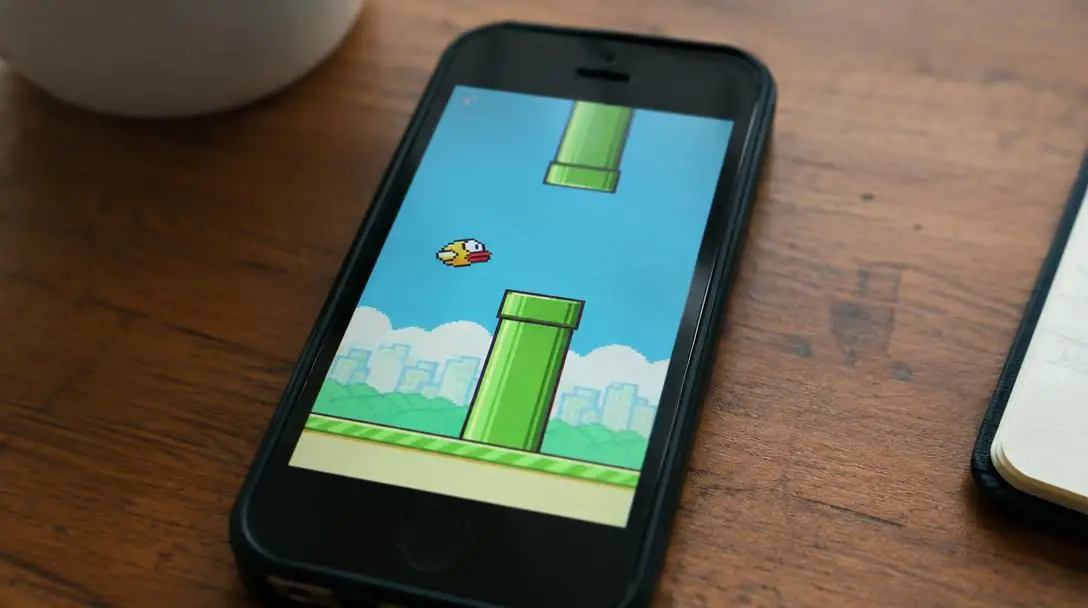
A brutally punishing game loop created by an independent programmer managed to captivate millions, only to be withdrawn at the absolute height of its success.
Step-by-Step Guide to Mastering the Tap Rhythm
Conquering the steep learning curve of Flappy Bird—or any subsequent game built upon single-button tap timing—demands disciplined habits rather than frantic reflexes. Players aiming to escape the frustration of low scores should adopt this structured routine:
- Establish a Consistent Resting Position: Cradle the device firmly with both hands to prevent unnecessary wobbling. Rest your dominant thumb or index finger a fraction of an inch above the glass surface to minimize mechanical input delay and avoid muscle strain over repeated attempts.
- Focus on Rhythm Rather Than Visual Panicking: Every single tap produces an identical amount of upward lift. Rather than reacting in terror whenever the bird plunges, develop an internal metronome. Treat each hop as a calculated pulse rather than a desperate emergency reaction.
- Aim for the Base of the Gap: Because downward gravity is swift and unforgiving, entering the gap slightly lower provides a safer trajectory. Tapping upward through the bottom half of the opening leaves room for correction, whereas entering near the upper pipe leaves no buffer if an extra tap overshoots.
- Keep Your Eyes Looking Ahead: Resist the urge to stare directly at Faby. Lock your eyes onto the next incoming pair of pipes on the right side of the screen. Pre-reading the elevation of the approaching gap gives your brain adequate lead time to calculate your tapping rhythm.
- Manage Short Practice Sessions: Precision reaction games induce rapid cognitive fatigue. Restrict your gameplay to five- or ten-minute blocks. Stepping away regularly resets your focus, relaxes your motor muscles, and keeps your reaction times crisp.
Common Tactical Mistakes to Avoid
Most players hit a frustrating scoring ceiling during their early runs. In almost every instance, these struggles are caused by recurring technical errors:
- Double-Tapping in Panic: When the bird drops lower than expected, the human instinct is to tap rapidly in succession. This nearly always propels Faby violently upward into the rim of the overhead pipe. Measured, single inputs are crucial.
- Fixating on the Score Counter: Glancing at the running score number diverts vital visual attention away from incoming obstacles. The highest runs happen when players ignore the numerical tally completely until the run concludes.
- Tilting or Shaking the Hardware: Players accustomed to motion controls often instinctively lean or rotate their smartphones while tapping. The game features no gyroscopic input, and extraneous hand motion only compromises tap precision.
- Playing While Agitated: The punishing nature of immediate failure can quickly spark irritation. Attempting to play through annoyance produces hasty, mistimed taps and rapidly deteriorating scores.
The Sudden Exit and the Flood of Clones
As Flappy Bird reached the zenith of its global ubiquity in early 2014, the environment surrounding Dong Nguyen grew volatile. Global media outlets descended upon his hometown, tracking his movements and demanding interviews. At the same time, rival developers questioned his design originality, alleging that he had appropriated elements from prior projects, though no evidence ever supported claims of intellectual theft.
More troubling to Nguyen was the psychological effect the software had on its audience. Originally intended as a lighthearted diversion for quick relaxation on the commute home, Flappy Bird had turned into an obsessive digital habit. Players were losing sleep, destroying devices in fits of rage, and displaying signs of genuine dependency. Unwilling to profit from what he viewed as an unhealthy addiction, Nguyen made an extraordinary decision.
On February 20, 2014, Nguyen officially removed Flappy Bird from both Apple's App Store and the Google Play Store. The decision sent shockwaves across the software world. Overnight, smartphones with the original software installed were listed for thousands of dollars on secondary auction sites.
The void left by Flappy Bird sparked a wild rush of imitations. Marketplaces were inundated with carbon copies hoping to intercept displaced users. Storefront moderators at Apple and Google were forced to stage aggressive purges, ultimately revising developer review policies to curb flagrant clone saturation across their ecosystems.
Notable Releases from Dong Nguyen and Dotgears
While the sudden media storm forced Nguyen into a temporary retreat, the financial and creative independence he achieved reinforced his dedication to game programming. Under his dotgears imprint, he continued to explore minimalist touch mechanics across several distinctive projects.
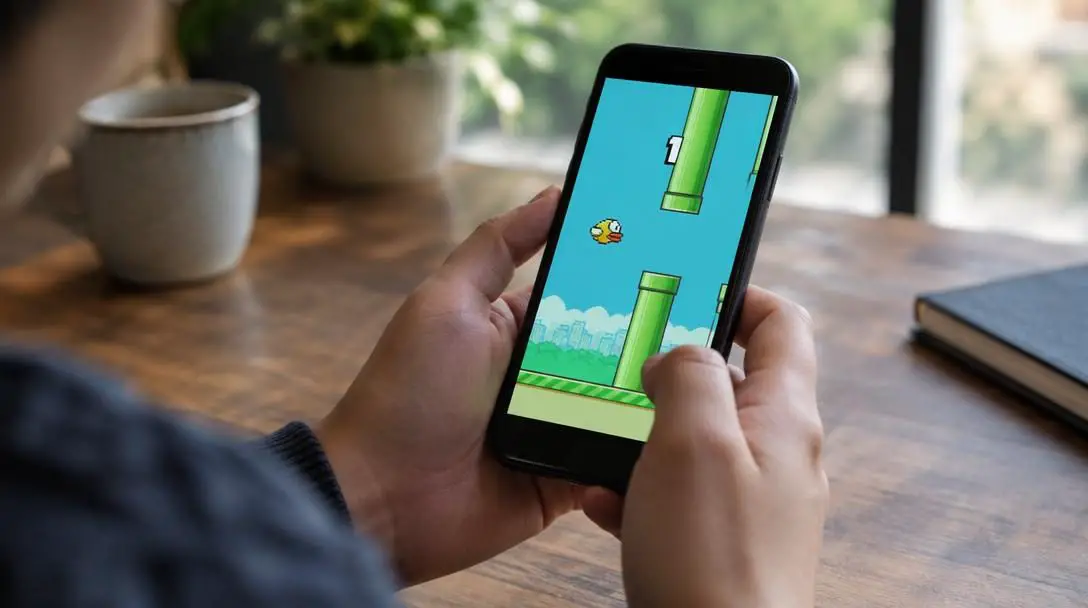
Flappy Bird
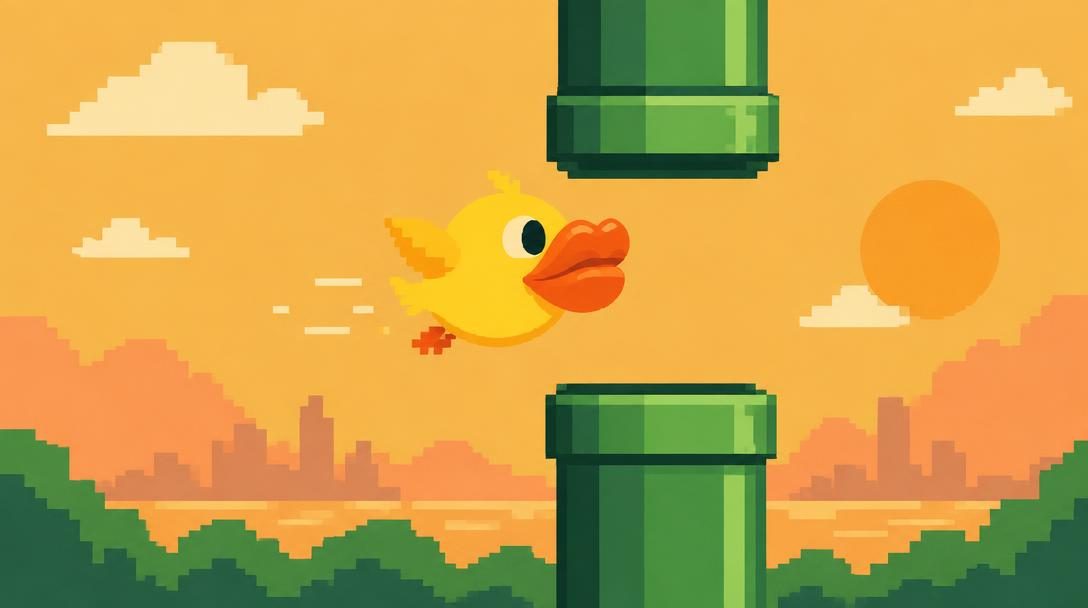
- Developer: Dong Nguyen (dotgears)
- Release Date: May 2013
- Takedown Date: February 20, 2014
- Milestone: 50 million downloads by late 2013
The legendary title that defined a genre. Built around the single-touch navigation of Faby through green pipe hazards, Flappy Bird proved that high mechanical difficulty and clean visual design could outperform high-budget studio titles in user engagement.
Swing Copters
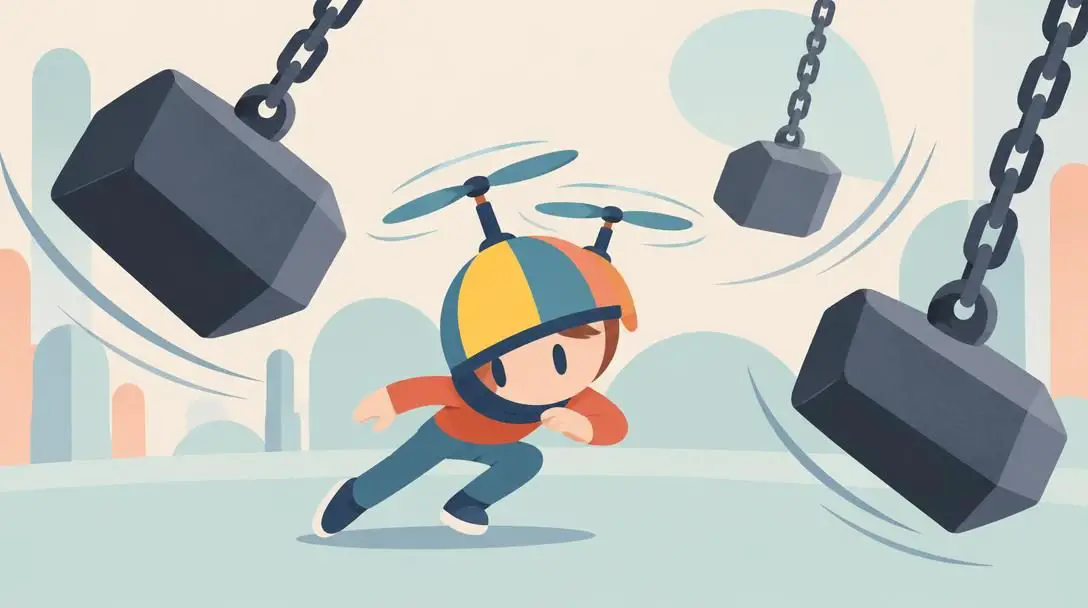
- Developer: Dong Nguyen (dotgears)
- Format: Bite-sized mobile title
- Gameplay: Precision tap mechanics
Following the retirement of his initial hit, Nguyen published this vertical reaction challenge. Players guide an avatar wearing a propeller cap through swinging mechanical hammers, with each tap reversing horizontal momentum in an exercise of razor-thin margins.
BOOP

- Developer: Dong Nguyen (dotgears)
- Format: Bite-sized mobile title
- Gameplay: Minimalist tap timing
Continuing his design mantra of software that is easy to understand within moments yet extraordinarily tough to master, BOOP explored bite-sized mobile interactions through streamlined visual elements and strict timing constraints.
Ninja Spinki Challengers
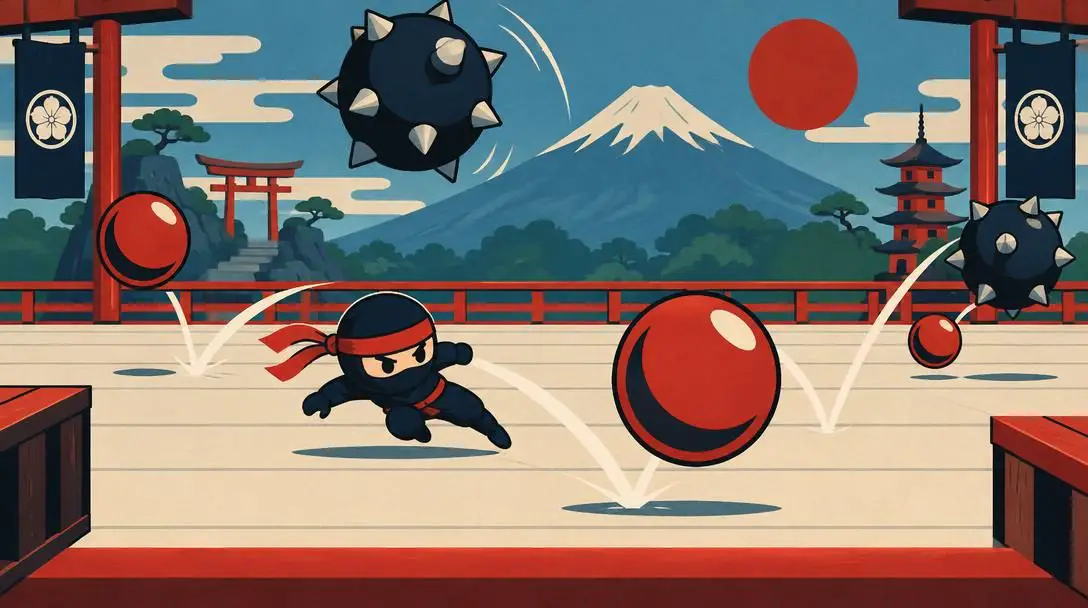
- Developer: Dong Nguyen (dotgears)
- Format: Bite-sized mobile title
- Gameplay: Quick-reaction tap challenges
Created under the dotgears banner, this title challenged players to complete a gauntlet of micro-tasks against the clock. By demanding split-second dodging and tapping, the game preserved Nguyen's trademark combination of adorable sprite art and brutal discipline.
Surviving Platforms: Where Flappy Bird Still Exists
When Nguyen pulled the title from digital marketplaces, standard mobile downloads ceased entirely. However, the game did not vanish from the physical universe. Two official formats survived to preserve the original software experience.
First, an authorized edition was ported to Amazon Fire TV, allowing living-room audiences to navigate Faby across large television screens using standard remote controls or gamepads. Second, commercial amusement manufacturers adapted the title into physical arcade cabinets. Featuring oversized video screens and large illuminated arcade push-buttons, these ticket-dispensing machines became popular fixtures in family entertainment centers worldwide, keeping Nguyen's punishing physics loop accessible to modern players.
Frequently asked questions
Why did Dong Nguyen decide to take Flappy Bird down?
Nguyen withdrew the game on February 20, 2014, because the intense global media attention disrupted his private life, and he felt deeply troubled that his software had become an unhealthy, addictive fixation rather than a relaxing pastime.
How many downloads did Flappy Bird reach before its removal?
The mobile title amassed more than 50 million downloads by the end of 2013, propelled by social media sharing, viral player videos, and fierce word-of-mouth competition.
What classic games inspired Flappy Bird's visual style?
Dong Nguyen drew heavy inspiration from classic eight-bit Nintendo games he enjoyed as a child in Van Phuc, most notably the Super Mario Bros. franchise, which influenced the game's retro aesthetic and green pipe obstacles.
Where can you legally play Flappy Bird today?
Aside from mobile devices that kept the game installed prior to February 2014, the official release remains playable via dedicated Amazon Fire TV builds and commercial arcade machines installed in family amusement centers.
Did rival developers successfully sue Dong Nguyen for copying?
Although some rival creators alleged that Nguyen borrowed his core concepts from outside developers during his viral peak, nothing ever came of the accusations, and no intellectual property claims were substantiated.
The bottom line
The saga of Flappy Bird remains one of the most remarkable case studies in digital entertainment. A lone programmer working out of Vietnam created a cultural juggernaut using a recycled sprite and a single-touch control scheme, outperforming multinational gaming corporations with multi-million-dollar marketing budgets. Dong Nguyen's subsequent decision to abandon millions of dollars in advertising revenue to preserve his peace of mind and protect his audience from compulsive screen time challenged standard tech-industry orthodoxy. In doing so, he left behind an enduring legacy of focused, uncompromised game design.