3 Things Remote Workers Need to Consider Before Going Full Digital Nomad

The global shift toward remote work fundamentally altered the modern professional landscape, giving millions of workers unprecedented flexibility over their daily schedules. Following broad workplace adaptations, upwards of 44 percent of office professionals found themselves in roles equipped with offsite capabilities. With the daily highway commute erased and the necessity of a dedicated corporate desk removed, many began asking an obvious question: Why stay rooted to a single location when your office can go anywhere you do?
Driven by this newfound autonomy, around 35 people worldwide and 11 million Americans decided to take the leap into life as full-time digital nomads. While some professionals eventually returned to conventional cubicles to restore boundaries between work and home life, others chose to trade traditional residential leases and mortgages for life on the move. Whether outfitting a camper van, purchasing a recreational vehicle (RV), or moving between short-term rentals and hotels, working from the road requires thorough operational planning to prevent everyday logistical challenges from derailing your career.
Key takeaways
- Relying solely on portable, compact solar setups is often insufficient for powering heavy, multi-device work equipment during cloudy or rainy weather.
- Public lands managed by state agencies and the Bureau of Land Management offer affordable boondocking, provided travelers respect stay limits between 3 and 14 days.
- Secluded natural settings and rural vacation rentals frequently lack adequate cellular data, making municipal libraries and local colleges essential backup workspaces.
- Hauling excess fresh water adds substantial weight that burns fuel and reduces rig capacity better reserved for electrical batteries and auxiliary power gear.
The Mechanics of Modern Mobile Living
Embracing a nomadic career transforms your living quarters into a fully functioning mobile enterprise. Operating on the move looks very different depending on whether you live in a converted camper van, tow a travel trailer, drive a motorized RV, or migrate between extended-stay hotels and vacation rentals. Regardless of your vehicle or lodging preference, productivity hinges on actively managing physical utilities that stationary apartment and suburban dwellers take for granted.
When remote professionals opt for boondocking—camping off-grid without utility hookups—they must continuously generate, store, and conserve their own electricity. These self-contained setups depend on an integrated network of rooftop generation, high-capacity internal battery banks, portable power stations, and combustion-based generators. Meanwhile, nomads who rotate through traditional hospitality lodgings face operational hurdles centered on route timing, fluctuating lodging costs, and vetting internet speeds before arrival. In all environments, maintaining career stability requires an acute awareness of technical infrastructure and geographic limitations.
Three Core Considerations Before Launching a Nomadic Life
Before packing your belongings and surrendering a stationary lease, you must address three technical and logistical pillars that dictate whether remote mobile work is sustainable.
How to Maintain Power
Keeping essential business electronics charged is the most urgent technical challenge for anyone working away from standard electrical outlets. While portable solar generators from popular brands like Jackery have surged in visibility, depending exclusively on compact solar kits to power laptops, external displays, and networking gear rarely succeeds over the long haul. Mobile living quickly reveals how common prolonged rain, heavy cloud cover, and seasonal storms truly are. When sunlight is blocked, undersized solar systems rapidly deplete.
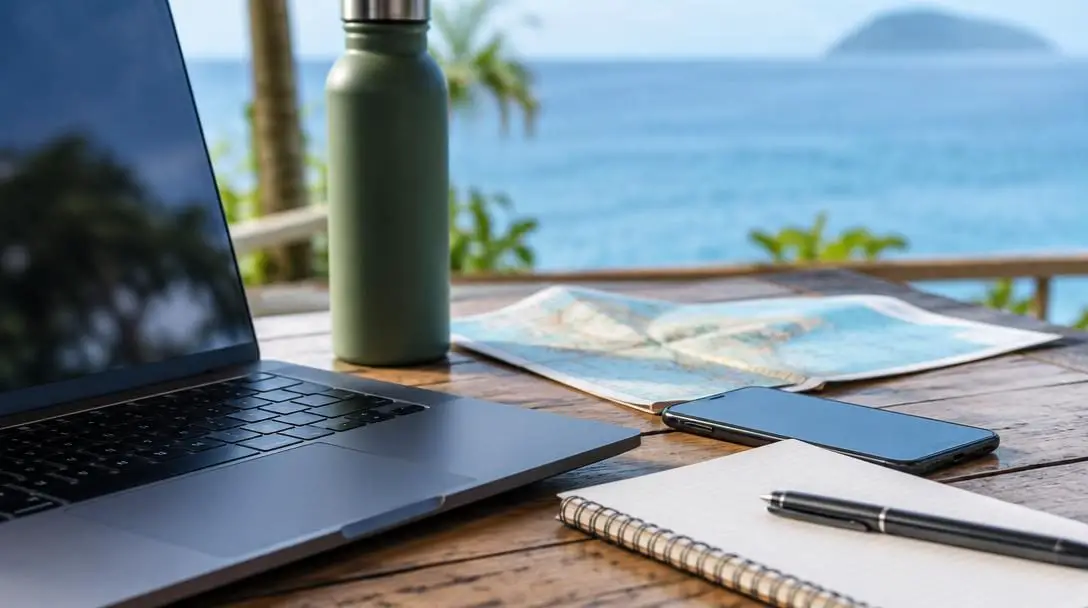
To establish an electrical setup capable of sustaining full-time remote employment through adverse weather, focus on four key hardware adjustments:
- Rooftop solar arrays: Permanently mount several commercial-grade solar panels directly across the roof of your vehicle or camper to maximize daylight collection while driving and parked.
- Dedicated battery banks: Install a robust internal cache of auxiliary batteries that store several days of surplus electrical reserve for cloudy workdays.
- Combustion-based generation: Pack a gas- or propane-powered generator to produce dependable, on-demand electricity whenever solar capture proves inadequate.
- Weight distribution audits: Prioritize heavy energy components over excessive liquid cargo; unless traveling directly into arid deserts, ignore generic tips recommending 20 gallons of fresh water onboard.
Relying solely on portable solar panels during a week of overcast skies is the fastest way to drop out of critical work meetings.
How to Nomad at a Low Cost
Full-time travel can rapidly drain savings accounts if accommodations are not tracked and managed aggressively. The majority of digital nomads base their journeys around hotels or short-term rentals such as Airbnb. While established accommodations remove the headaches of off-grid utility management, their compounding nightly rates create significant overhead. Remote workers can rein in these recurring costs through tactical booking practices:
- Apply promotional codes and available platform coupons before finalizing reservation checkouts.
- Message property hosts directly to negotiate discounted rates for extended reservations or mid-week, off-peak visits.
- Book traditional hotel rooms several months in advance to lock in cheaper rates compared to last-minute bookings.
- Travel during regional shoulder seasons—the weeks directly before or after peak tourist travel—to capitalize on discounted rental rates.
For those pursuing mobile living with wheels on the asphalt, echoing Frances McDormand's lifestyle in the film Nomadland, commercial RV parks can present an unexpected financial drain. Private campgrounds equipped with swimming pools, game rooms, and leisure amenities regularly charge high nightly hookup fees. To avoid these costs, workers can take advantage of free and low-cost dispersed camping across public lands.
Digital mapping resources such as FreeCampsites, Campendium, theDyrt, and iOverlander catalog verified boondocking spots across varied regions. In addition, travelers can cross-reference designated areas on official websites run by the Bureau of Land Management (BLM), state parks, and state forest agencies. However, public parcels enforce strict stay limitations—typically capping visits between 3 and 14 days before mandating relocation. Reviewing crowd-sourced camper feedback on these platforms is critical for confirming that a remote parcel has adequate cellular reception before you commit to parking for a workweek.
Know Your Traditional Infrastructure
Escaping urban sprawl often results in an immediate drop in digital connectivity. Pristine forests, windswept coastlines, and dramatic mountain peaks offer breathtaking backdrops, but they do not guarantee functional cell service. This hazard applies equally to vehicle dwellers and guests renting secluded cabins or coastal homes; rural rentals frequently lack the broadband infrastructure required for enterprise-grade remote work.
Because unexpected disconnection puts professional commitments at risk, mobile workers must develop fallback plans centered around traditional community institutions. Installing a Wi-Fi booster helps capture distant signals, but physical public facilities remain the ultimate safety net when local networks fail:

- Public libraries: Municipal libraries provide quiet, temperature-controlled workspaces with dependable public Wi-Fi networks and private study rooms ideal for focused tasks or client calls. The historical stereotype of librarians enforcing strict silence is largely obsolete, making them practical daytime offices.
- Higher education campuses: Regional community colleges and public university libraries frequently offer guest network access or day passes to visiting professionals who need enterprise-level internet speeds.
Accommodation and Workspace Environments at a Glance
Evaluating where you will sleep and work involves balancing operational overhead, utility availability, and technical reliability. The following comparison highlights the core trade-offs among common nomad setups.
| Workspace & Lodging Type | Relative Cost | Primary Power Source | Internet Reliability | Best Suited For |
|---|---|---|---|---|
| Dispersed Public Lands (BLM / State Forests) | Free to very low | Onboard solar, auxiliary batteries, gas generator | Variable; depends entirely on cellular tower proximity | Self-contained rigs prioritizing low expenses and scenic solitude |
| Commercial RV Campgrounds | Moderate to high | Direct electrical shore power hookups | Moderate; campground Wi-Fi often slows under heavy use | Campers seeking predictable hookups and recreational amenities |
| Short-Term Vacation Rentals & Hotels | High | Standard municipal power grid | High in cities; highly variable in rural or coastal locations | Professionals seeking turn-key utilities without vehicle maintenance |
| Civic Facilities (Libraries & Colleges) | Free | Grid power with accessible wall outlets | Very high; enterprise-grade public or academic broadband | Emergency backup during cellular outages or rigorous video workdays |
A Step-by-Step Blueprint for Transitioning to Mobile Work
Leaving a stationary residence requires systematically testing your equipment and routines before severing ties with conventional housing. Follow these practical steps to prepare for full-time mobility:
- Audit your daily power demands: Calculate the baseline watt-hours required to run your laptop, auxiliary monitor, phone, and hotspot devices throughout a full workday to determine your electrical capacity needs.
- Establish redundant connectivity options: Combine hardware solutions like Wi-Fi boosters with secondary cellular SIM cards, and map municipal workspace options in advance of every geographic move.
- Plot routes around stay limits and network coverage: Cross-reference BLM and state forest stay limits (ranging from 3 to 14 days) against verified coverage reviews on Campendium, iOverlander, or theDyrt.
- Complete a low-stakes regional trial: Spend one to two consecutive weeks living and working from your vehicle or a short-term rental close to your home region to uncover equipment oversights before traveling long distances.
Critical Pitfalls That Derail First-Time Nomads
Many new digital nomads encounter preventable issues during their initial months on the road. Being aware of these common traps will help protect your professional standing and savings account:
- Overestimating compact solar units: Relying on small portable solar kits without dedicated rooftop panels and auxiliary batteries leaves you vulnerable to sudden power loss during extended rain.
- Underestimating private campground fees: Booking nightly stays at commercial RV resorts with full amenities can easily match or surpass the monthly rent of a standard city apartment.
- Violating public land regulations: Failing to track 3- to 14-day dispersed camping limits can result in forced relocations in the middle of a busy workweek.
- Assuming rural rentals feature high-speed internet: Booking picturesque mountain cabins or coastal homes without asking the host for a verified connection speed test can result in dropped client calls.
- Carrying unnecessary onboard weight: Hauling large volumes of fresh water (such as 20 gallons) across temperate areas with easy tap access reduces vehicle fuel economy and wastes payload capacity needed for battery gear.
Frequently asked questions
Can you work remotely using only portable solar stations?
Portable stations like Jackery units are helpful secondary power sources, but they struggle to maintain laptops, monitors, and networking gear during consecutive overcast or rainy days. Reliable full-time travel requires rooftop solar panels, internal battery banks, and a combustion-based generator.
How do remote workers find reliable, free camping spots?
Nomads use digital mapping tools like FreeCampsites, Campendium, theDyrt, and iOverlander to locate dispersed camping areas. They also check official rules on Bureau of Land Management (BLM) and state forest websites to verify local stay limits and access permissions.
What should you do if your campsite or rental has no cell signal?
If hardware like a Wi-Fi booster fails to capture a usable data signal, relocate your workday to nearby civic infrastructure. Public libraries, community colleges, and regional universities offer stable workspaces and high-speed internet connections for visiting professionals.
How long can you legally camp on public lands?
Most public land agencies, including the Bureau of Land Management and various state forest authorities, enforce maximum stay limits ranging between 3 and 14 days. After reaching the limit, campers must move their rig a designated distance away before setting up camp again.
How can you reduce lodging expenses if you stay in hotels or Airbnbs?
Travelers can reduce accommodation costs by applying promotional coupon codes, booking traditional hotel stays far in advance, traveling during off-peak shoulder seasons, and messaging property hosts directly to negotiate discounted rates for extended stays.
The Bottom Line
Transitioning into a digital nomad lifestyle offers unmatched freedom, letting you replace a static living room with changing natural landscapes and historic towns. However, sustained professional success on the move requires approaching your travels with operational discipline rather than vacation habits. Everyday domestic tasks—such as maintaining room temperature, replenishing fresh water, finding trash disposal, and securing groceries—require intentional foresight when living without permanent municipal hookups.
Avoid becoming overwhelmed by the daily logistics of travel by simplifying your core operational checklist: keep yourself warm, stay well-nourished, and maintain a fast, reliable digital pipeline back to your employer or clients. Once you master the foundational challenges of off-grid power generation, budget-conscious lodging, and backup civic infrastructure, mobile remote work becomes a sustainable and deeply rewarding way of life.