5 Best Managers In Everton History
Everton Football Club stands as one of the most enduring and storied institutions in English football history. Founded in the late nineteenth century, the Merseyside club played a fundamental role in establishing organized league football in England. While modern football conversation frequently centers on clubs with recent surges of financial dominance, Everton holds an unmatched historical record that no other English club can claim: the Blues have spent more seasons competing in the top division of English football than any other team in the history of the sport.
Preserving elite top-flight status across three distinct centuries requires continuous tactical adaptation, squad rebuilding, and strong touchline leadership. Dozens of tacticians have sat in the Goodison Park dugout, navigating everything from the formation of the Football League to the globalized era of the Premier League. Selecting the greatest managers to ever direct the club involves evaluating silverware, win percentages, game volume, and the ability to steer the club through challenging periods of transition.
Key takeaways
- Howard Kendall remains the most successful manager in Everton history, winning two league titles, an FA Cup, and a European trophy during the 1980s.
- Harry Catterick and Will Cuff each oversaw more than 500 matches, delivering sustained domestic glory across long tenures.
- Dick Molyneux laid the club's early foundation in the Victorian era, holding an exact .500 win rate across 386 matches.
- David Moyes modernized the club across eleven years, providing essential stability and rescuing Everton from a dark competitive chapter without the benefit of major silverware.
At a glance: Everton's greatest managers
Evaluating managerial tenures across entirely different football eras requires looking at games managed, victory percentages, and trophy returns side by side. The table below illustrates how Everton's five preeminent leaders compare across their tenures at Goodison Park.
tbody| Manager | Era at Everton | Matches Managed | Win Rate | Major Silverware |
|---|---|---|---|---|
| Howard Kendall | 1981–1987, 1990–1993, 1997–1998 | Multi-spell tenure | 54.14% | 2 Division One Titles, 1 FA Cup, 1 European Cup Winners' Cup, 3 Charity Shields |
| Dick Molyneux | 1889–1901 | 386 | 50.00% | 1 Division One Title |
| Harry Catterick | 1961–1973 | 594 | 46.00%+ | 2 Division One Titles, 1 FA Cup, 2 Charity Shields |
| Will Cuff | 1901–1918 | 577 | 47.66% | 1 Division One Title, 1 FA Cup |
| David Moyes | 2002–2013 | 500+ | 42.05% | None (rescued club from competitive decline) |
The 5 best managers in Everton history
Across more than a century of professional competition, the following five leaders delivered the strategic mastery, silverware, and structural stability that came to define Everton's legacy in world football.
Howard Kendall
- Birthplace: Ryton
- Tenures: 1981–1987, 1990–1993, 1997–1998
- Win Rate: 54.14%
- Major Honors: 2 Division One titles, 1 FA Cup, 1 European Cup Winners' Cup, 3 Charity Shields
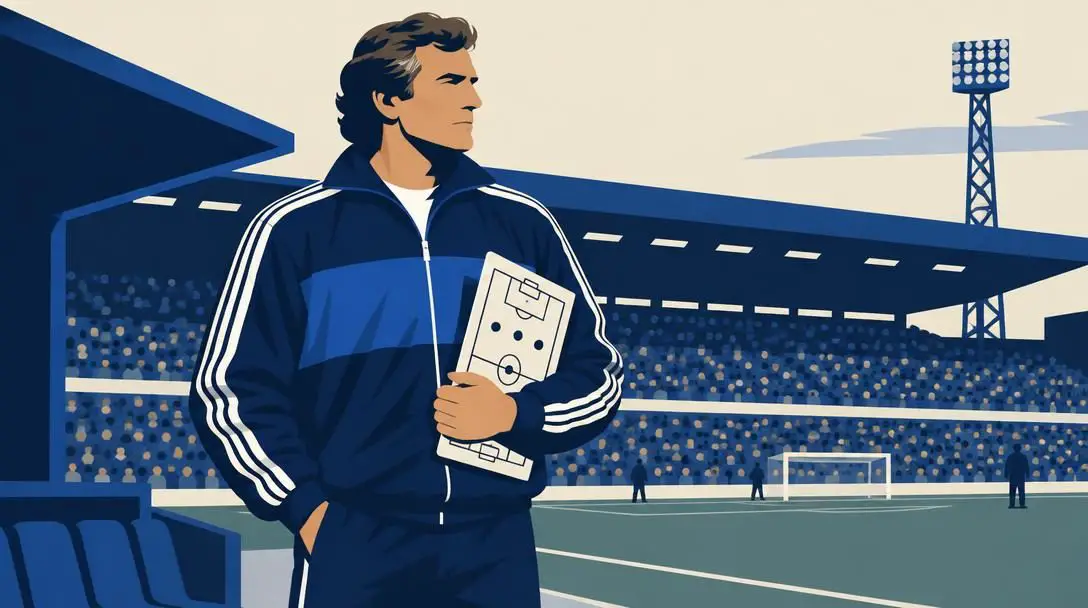
Howard Kendall is universally recognized as the greatest manager to ever lead Everton Football Club. Kendall first formed an indelible bond with the Goodison faithful on the pitch, spending seven years as an Everton midfielder during the 1960s and 1970s alongside playing stints with Birmingham City, Preston North End, and Stoke City. After transitioning into management as a player-manager at Blackburn Rovers, he officially retired from playing in 1981 to take the reins at Everton.
Kendall’s managerial career at Everton was spread across three distinct terms: 1981 to 1987, 1990 to 1993, and 1997 to 1998. It was his initial six-year term that defined the club's greatest modern era. Under his guidance, Everton claimed two Division One championships (1984–85 and 1986–87), lifted the FA Cup in 1984, won three Charity Shields, and captured continental glory by winning the 1985 UEFA Cup Winners' Cup. Kendall maintained an impressive 54.14 percent win rate across all his matches in charge. While his subsequent spells in the 1990s were less decorated, his first period produced an expansive, winning brand of football that remains the standard against which all Everton managers are judged.
Dick Molyneux
- Birthplace: Prescot
- Tenure: 1889–1901
- Matches Managed: 386
- Win Rate: 50.00% (194 victories)
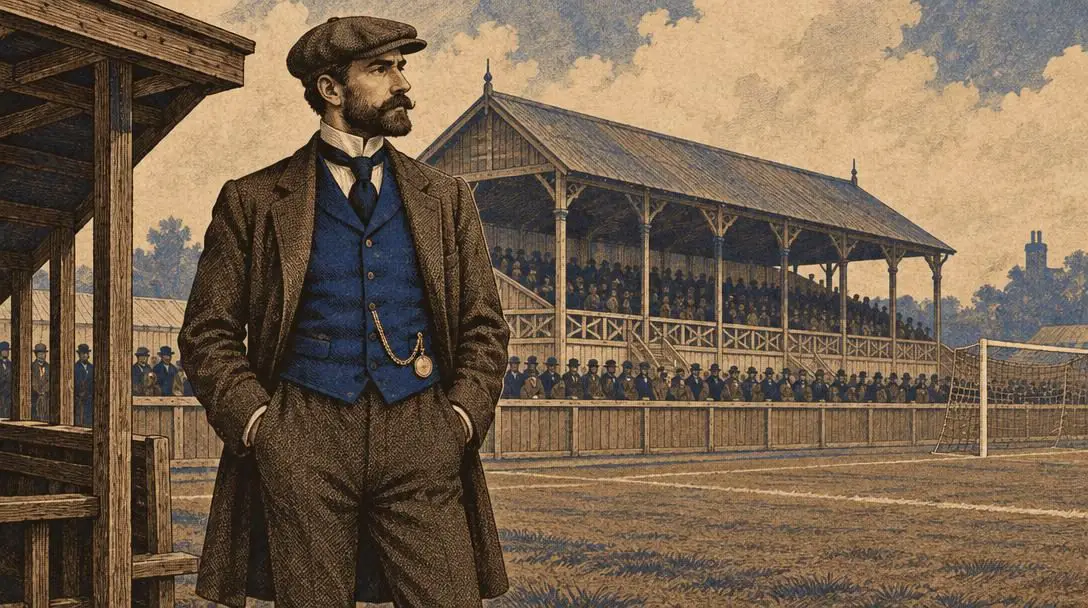
Dick Molyneux arrived at Everton in 1889, barely a decade after the club's establishment, at a time when the concepts of organized league football were still being defined. Managing a football club during the Victorian era required steady administrative capability alongside tactical instinct, and Molyneux provided the organizational foundation that transformed Everton from a regional outfit into a national powerhouse.
Molyneux holds a rare, mathematically tidy record in the Goodison archives: he won precisely 194 of his 386 games in charge, making him one of only two managers in club history with an extended tenure to maintain an exact .500 win rate. His finest achievement came in the 1890–91 season when he guided Everton to their first-ever Division One championship. Following twelve foundational years at the helm, Molyneux departed in 1901 and later managed Brentford before passing away in 1906 at the age of 48.
Harry Catterick
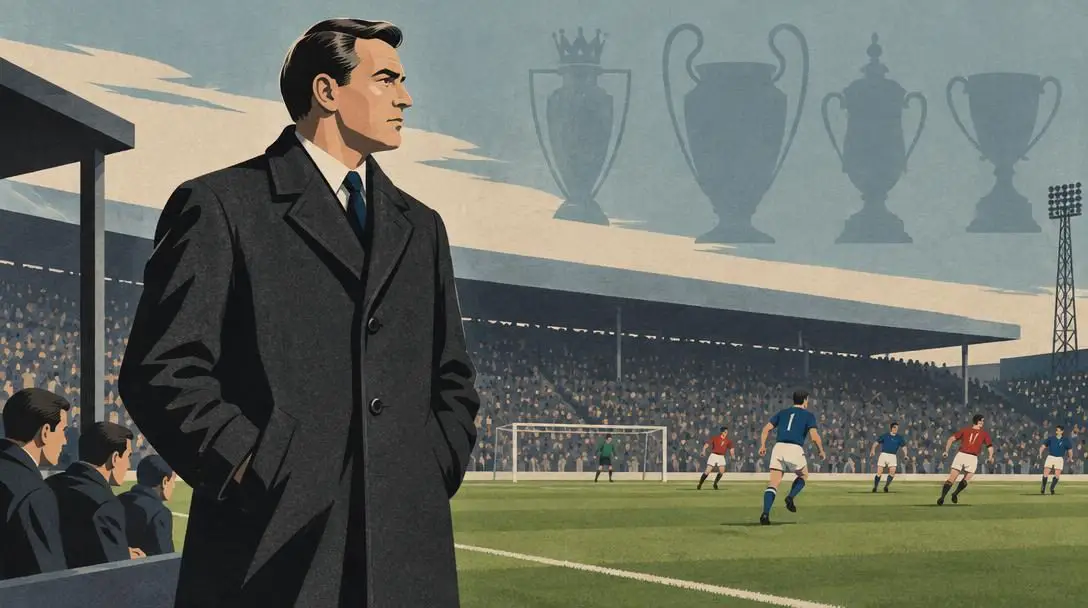
- Playing Career: Everton, Crewe Alexandra
- Tenure: 1961–1973
- Matches Managed: 594
- Major Honors: 2 Division One titles, 1 FA Cup, 2 Charity Shields
Harry Catterick orchestrated the golden age of Everton during the 1960s, constructing teams celebrated for balance, offensive ingenuity, and competitive bite. Catterick understood the club's traditions intimately, having played for Everton and Crewe Alexandra in the post-World War II period. Before returning to Goodison Park as manager in 1961, Catterick honed his craft on the touchline with Crewe Alexandra, Rochdale, and Sheffield Wednesday.
Over a remarkable twelve-year tenure spanning 594 fixtures—the second-highest tally in Everton history—Catterick built two distinct championship-winning squads. He delivered the league championship in 1962–63 and again in 1969–70, complemented by an FA Cup triumph in 1966 and two Charity Shields. With an overall win percentage holding firmly above 46 percent, Catterick ensured that Everton remained one of the premier forces in European and English football throughout the swinging sixties.
A sustained tenure across hundreds of fixtures often tells a far more compelling story of resilience than a brief, lightning-in-a-bottle run of cup victories.
Will Cuff
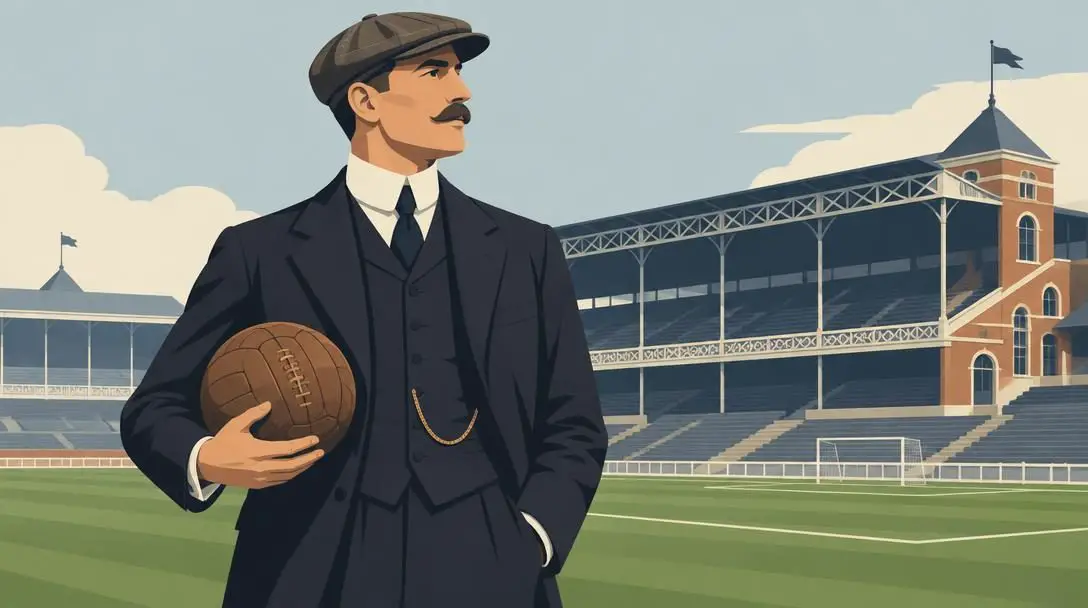
- Moniker: "Old Cuff"
- Tenure: 1901–1918
- Matches Managed: 577
- Win Rate: 47.66% (275 victories)
Affectionately remembered as "Old Cuff," Will Cuff was one of the most prominent administrative and touchline figures in early English sporting history. Cuff took control of team affairs in 1901 following the departure of Dick Molyneux, maintaining command through 1918. His 577 games in charge place him third all-time among Everton managers for total matches overseen.
During his seventeen-year managerial reign, Cuff compiled 275 wins, representing a solid 47.66 percent victory rate. He guided Everton to an FA Cup victory in 1906 and clinched the Division One championship in the 1914–15 campaign. The near decade-long interval between his two major trophies highlights his patience and skill in rebuilding competitive squads over time. Cuff's influence on Everton extended far past his dugout career; he transitioned upstairs to serve as the club's chairman through much of the 1920s and 1930s, steering the club through multiple eras of sporting and economic change.
David Moyes

- Nationality: Scottish
- Tenure: 2002–2013
- Matches Managed: 500+
- Win Rate: 42.05%
David Moyes is the modern standard-bearer for longevity at Goodison Park, standing as the only manager on this list to direct the club in the twenty-first century. Moyes enjoyed an extensive playing career as a defender in the 1980s and 1990s with clubs such as Dunfermline Athletic and Preston North End. Following his playing retirement in 1998, he cut his teeth as manager at Preston before taking the Everton job in March 2002.
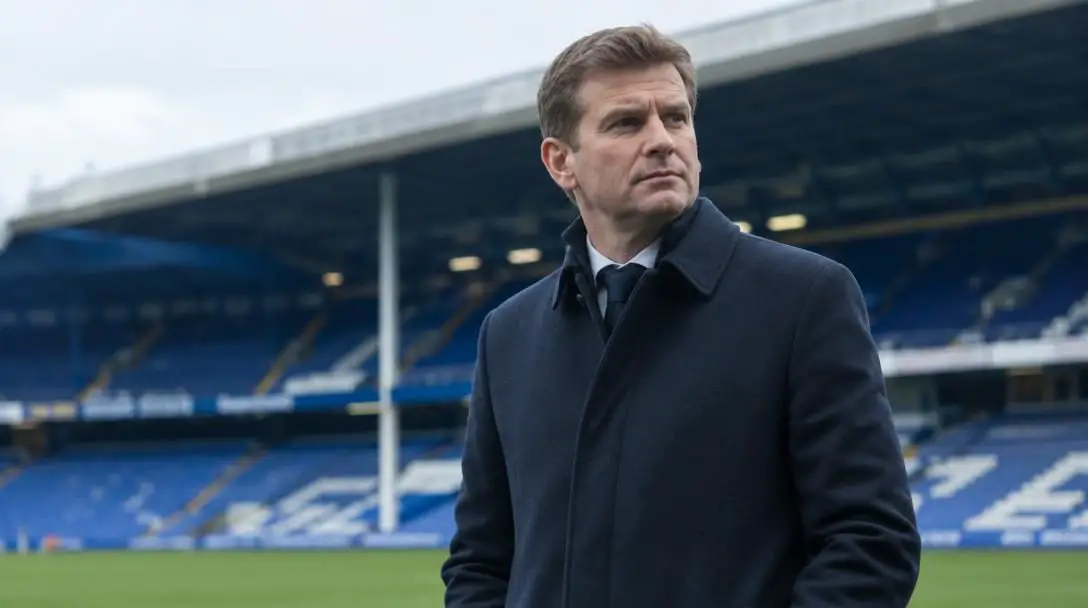
When Moyes arrived on Merseyside, Everton was mired in serious relegation battles and enduring one of the darkest competitive periods in club history. Over the next eleven years, Moyes revitalized the club, leading the team through more than 500 fixtures with a 42.05 percent win rate. While he did not lift a major trophy before his 2013 departure for Manchester United, his structured, competitive teams regularly finished in European places and reestablished Everton as an unyielding, respected force in the Premier League.
Prominent managers who missed the top five
Everton’s expansive timeline includes multiple high-profile managers who produced memorable seasons or won silverware but ultimately fell short of the top tier due to brevity of tenure or lower overall win rates. Assessing these leaders illustrates how narrow the margins are at the summit of club history:
- Thomas H. Macintosh: Led the club during the interwar era, winning silverware but falling just behind the sustained longevity of Cuff and Molyneux.
- Roberto Martinez: Orchestrated an electrifying debut season in 2013–14 with record Premier League points for the club, but his subsequent campaigns saw domestic defensive declines.
- Carlo Ancelotti: Brought genuine world-class pedigree and tactical glamour to Goodison Park, though his tenure was cut short after just eighteen months when Real Madrid came calling.
- Colin Harvey: A legendary player and Kendall’s trusted right-hand tactician who stepped into the manager's role in the late 1980s, maintaining competitive dignity during a challenging post-European-ban transition.
- Johnny Carey: Guided Everton through the late 1950s and early 1960s, assembling crucial components of the squad that Harry Catterick would eventually guide to league titles.
Core pillars of managerial excellence at Everton
To evaluate why Kendall, Catterick, Cuff, Molyneux, and Moyes stand clear of the rest, analysts examine four foundational pillars of long-term managerial performance:
- Longevity and Match Volume: Managing 300, 400, or 500 fixtures requires enduring continuous tactical cycles, injury waves, and board politics without losing the dressing room.
- Silverware Conversion: Transforming positive league form into major trophies—specifically the top division title and the FA Cup—is the ultimate currency for ranking managerial legacies.
- Sustainable Win Percentages: Maintaining an overall win rate near or above 45 to 50 percent over multiple seasons is exceptionally rare, particularly in the competitive English league system.
- Crisis Recovery and Modernization: Rebuilding squads from the brink of relegation or severe financial constraints safeguards a club's identity when silverware is not immediately attainable.
How to evaluate historic football managers step by step
Comparing managers across different centuries can easily lead to skewed conclusions if modern standards are applied retroactively. Follow this systematic approach to analyze historic managers objectively:
- Examine the context of the era: Account for differences in match rules, pitch conditions, substitution allowances, and schedule volume between Victorian-era competition and the modern Premier League.
- Assess club condition at arrival and departure: Measure the state of the roster, league position, and morale when the manager was hired against the infrastructure and competitive health they left behind.
- Weigh win rates against sample size: Avoid prioritizing short-term managers with inflated win percentages across 30 games over leaders who sustained a 45 percent win rate across 500 matches.
- Account for trophy frequency and quality: Balance domestic cup triumphs against long-form league championships, noting how frequently the manager turned deep cup runs into actual silverware.
- Consider off-pitch and cultural contributions: Factor in wider roles, such as scouting system development, academy integration, or executive leadership across multiple decades.
Common mistakes when comparing football eras
When discussing Everton's historical dugout leaders, football debates frequently run into recurring pitfalls. Keep an eye out for these analytical traps:
- Succumbing to recency bias: Overlooking early masters like Dick Molyneux or Will Cuff simply because their fixtures were played long before color television or digital archives existed.
- Judging purely on trophy cabinets: Assuming a manager without a title had an unsuccessful tenure, which ignores the immense rescue work achieved by leaders like David Moyes.
- Blurring multiple tenures into one: Evaluating managers who served multiple stints—such as Howard Kendall—without analyzing each spell individually, since returning managers rarely replicate their initial success.
- Disregarding game volume: Comparing a coach with 60 matches to one who survived 500 fixtures overlooks the physical and mental stamina required for decade-long managerial survival.
Frequently asked questions
Who is the most successful manager in Everton history?
Howard Kendall is widely recognized as the most successful manager in Everton history. During his first spell between 1981 and 1987, he won two Division One championships, an FA Cup, the UEFA Cup Winners' Cup, and three Charity Shields, while compiling a 54.14 percent win rate.
Which manager oversaw the most games at Everton?
Harry Catterick managed 594 games between 1961 and 1973, which ranks second in total games behind early club secretary eras, and stands as the highest match total for any post-war Everton manager.
Why is David Moyes ranked among the best if he won no trophies?
David Moyes took charge of Everton in 2002 when the club was fighting relegation and in deep financial distress. Over his eleven-year tenure of more than 500 matches, he stabilized the club, secured regular European qualification, and restored Everton's status as a formidable Premier League competitor.
What was unique about Dick Molyneux's managerial record?
Dick Molyneux is one of only two managers in Everton history to complete an extended tenure while sustaining a precise .500 winning record, winning exactly 194 of his 386 fixtures between 1889 and 1901.
Did Will Cuff serve Everton in roles other than manager?
Yes. After managing the team across 577 matches from 1901 to 1918 and winning both an FA Cup and a league title, Will Cuff served as Everton's club chairman throughout much of the 1920s and 1930s.
The bottom line
Everton Football Club's proud record of unmatched top-flight longevity was built on the tactical acumen and organizational dedication of historic managers. From Dick Molyneux and Will Cuff laying the foundations in the Victorian and Edwardian eras, to Harry Catterick and Howard Kendall guiding the Blues to domestic and European dominance, these tacticians shaped English football history. Even in trophy-barren modern periods, the steady discipline of figures like David Moyes ensured the club maintained its hard-earned place among England's footballing elite.