5 Best Managers In Newcastle United History
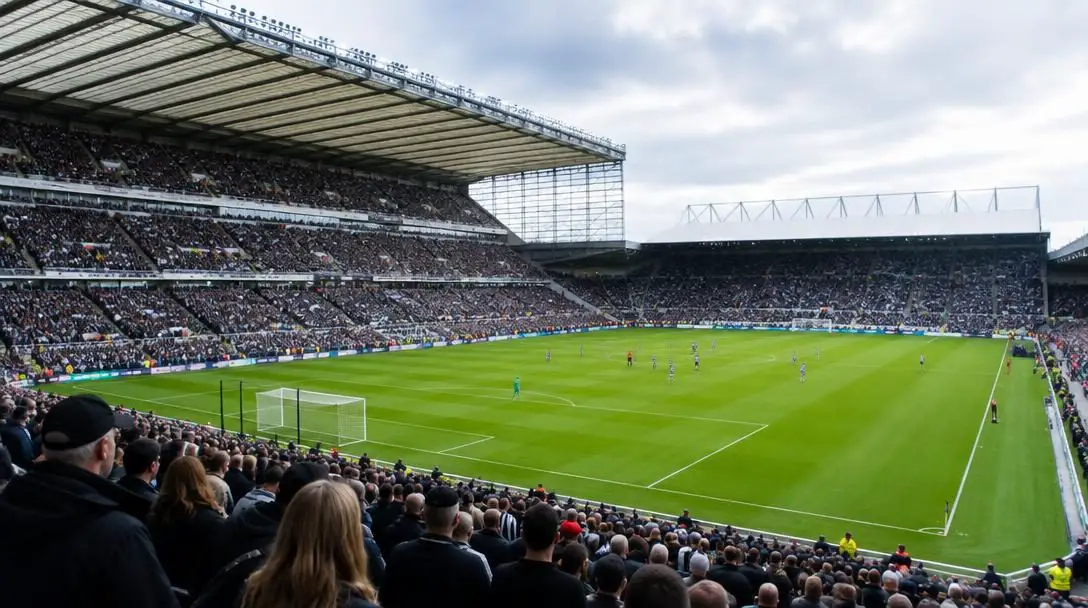
Newcastle United remains one of the most venerable and storied institutions in English football. Established in 1892, the Tyneside club has spent the vast majority of its long existence competing in the top division of the English league pyramid. Throughout this journey, the squad has transitioned from the pioneering days of late-Victorian football to the modern global era of the Premier League, experiencing towering triumphs alongside profound structural transformations.
Measuring the greatest managers across this multi-era chronicle requires understanding how the sport itself changed over more than a century. In earlier periods, managers often operated as club secretaries who organized administrative affairs and assembled squads from scratch, whereas modern managers operate under intense weekly scrutiny and high-stakes tactical demands. While Newcastle United's historical trophy cabinet does not mirror every traditional superpower, its finest leaders forged identity, delivered silverware, and established standards that echo across generations.
Key takeaways
- Frank Watt built the club into a national powerhouse, leading Newcastle United to four First Division titles across a record-setting 1,264 matches.
- Kevin Keegan stands as the only manager in club history to oversee more than 100 competitive fixtures while recording a win rate above 50 percent.
- Joe Harvey provided 13 years of crucial stability, winning the Second Division, the Anglo-Italian Cup, and the Inter-Cities Fairs Cup.
- Stan Seymour captured two FA Cups as a manager across three distinct stints after winning the league title as a player in 1927.
- Sir Bobby Robson revived Newcastle's modern identity, delivering deep European runs and maintaining a 46.67 percent win rate over 255 matches.
At a glance: Newcastle United's finest managers
| Manager | Matches Managed | Win Rate | Major Honors & Achievements | Notable Era |
|---|---|---|---|---|
| Frank Watt | 1,264 | 45.49% | 4 First Division titles, 1 Second Division title | 1895–mid-1930s |
| Joe Harvey | 591 | 37.9% | Inter-Cities Fairs Cup, Anglo-Italian Cup, Second Division | 1962–1975 |
| Stan Seymour | 338 | Nearly 40% | 2 FA Cups (also won First Division as player in 1927) | 1939–1947, 1950–1954, 1956–1958 |
| Bobby Robson | 255 | 46.67% | UEFA Cup latter stages (2004), Intertoto Cup finalist | 1999–2004 |
| Kevin Keegan | Over 100 (251) | Nearly 55% | First Division title (1993), Premier League runners-up (1995–96) | 1992–1997 |
Profiling the five greatest Newcastle United managers
The individuals below represent the pinnacle of dugout leadership at Newcastle United. Each secured their standing through longevity, consistent tactical execution, silverware, or by fundamentally changing the trajectory of the club during critical moments in its sporting history.
Frank Watt
- Role: Club Secretary / Team Director
- Matches Managed: 1,264
- Career Wins: 575 (45.49% win rate)
- Major Trophies: 4 First Division titles, 1 Second Division title
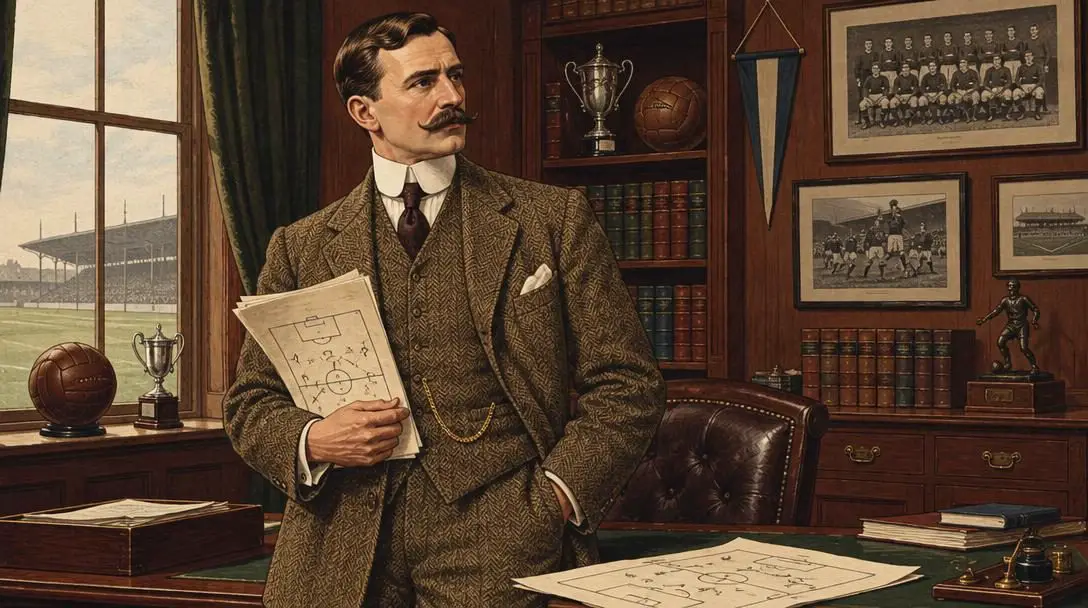
Widely commemorated as the man who made Newcastle United, Frank Watt shaped the club into an elite force in English football. Appointed as club secretary in 1895, Watt remained in control of team management and administrative duties for more than 30 years, serving through the mid-1930s. His managerial total of 1,264 fixtures is an all-time club record that exceeds his closest peer by more than 650 matches.
Under Watt's direction, Newcastle United achieved their golden age in top-flight football, securing 575 total victories alongside four First Division championships and a Second Division title. His administrative vision established the framework for Newcastle's institutional stature, making him the definitive founding architect of the club's early domestic dominance.
Joe Harvey
- Matches Managed: 591
- Career Win Rate: 37.9%
- Playing Tenure: 1945–1953 (Over 220 appearances)
- Major Trophies: Inter-Cities Fairs Cup, Anglo-Italian Cup, Second Division
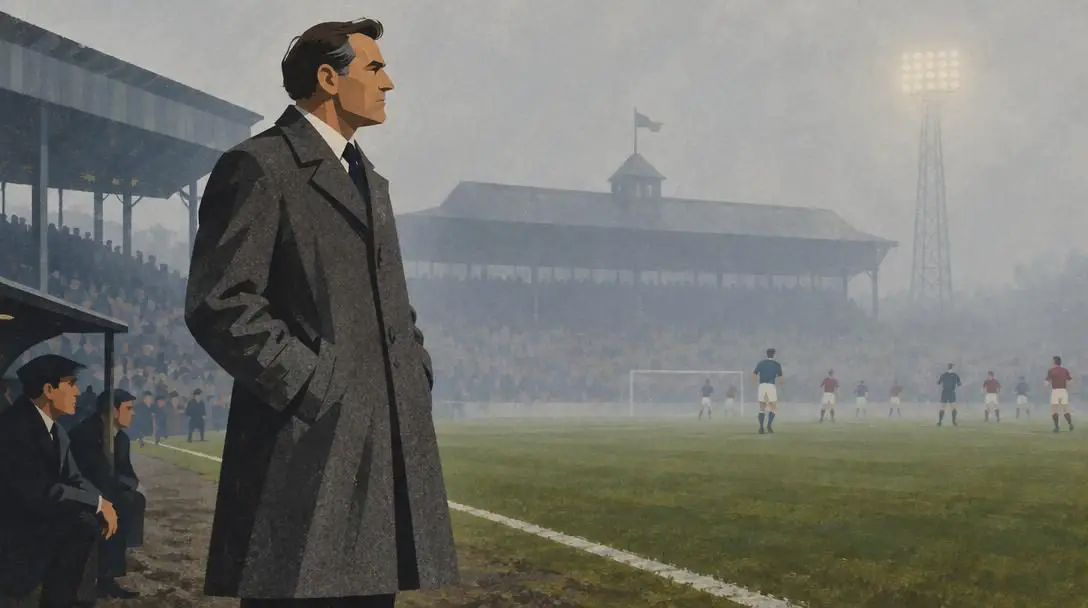
Joe Harvey first left his imprint on Tyneside as a dependable player, joining Newcastle in 1945 following earlier stints with Wolverhampton Wanderers, Bournemouth, and Bradford City. He concluded his playing career on Tyneside in 1953 after amassing more than 220 appearances. Harvey then spent nearly a decade honing his management craft at Crook Town, Barrow, and Workington before answering the call to manage Newcastle United for the final 13 years of his managerial life.
Harvey's 591 matches stand as the second-highest tally in Newcastle history. While his win rate stood at 37.9%, his value was defined by steady, unwavering leadership during a turbulent phase of club rebuilding. Harvey brought silverware back to St James' Park, securing a Second Division title, the Anglo-Italian Cup, and the club's defining continental honor: the Inter-Cities Fairs Cup.
Stan Seymour
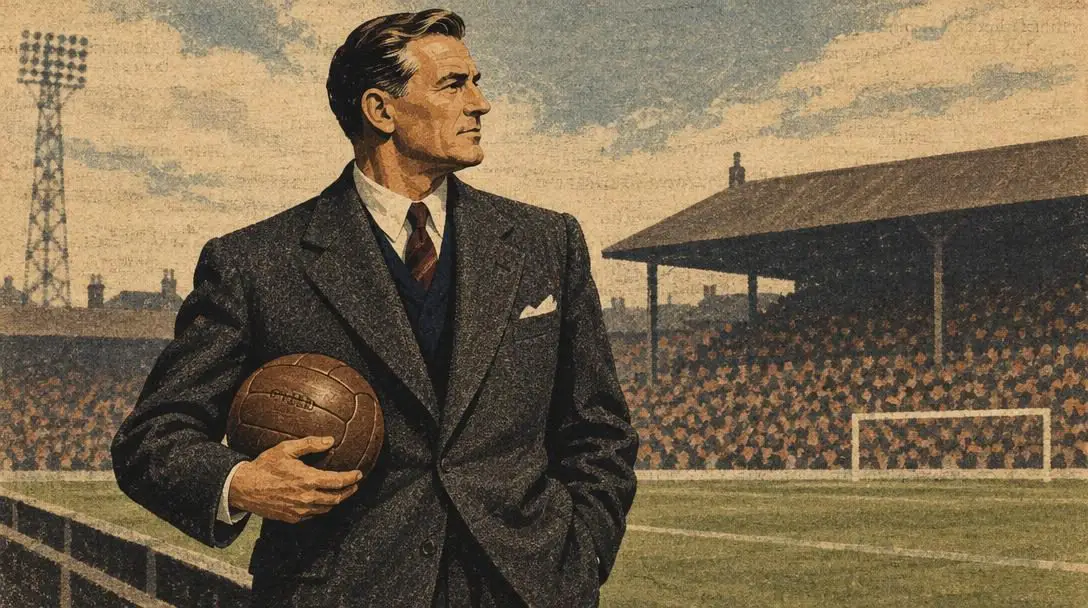
- Matches Managed: 338
- Managerial Stints: 1939–1947, 1950–1954, and 1956–1958
- Playing Record: 73 goals in 242 league matches (1920–1929)
- Major Trophies: 2 FA Cups (as manager)
Stan Seymour devoted his adult life almost exclusively to Newcastle United. During a playing career spanning nearly two decades—divided mainly between Greenock Morton and Newcastle—Seymour established himself as a lethal attacker, scoring 73 goals across 242 league matches before hanging up his boots in 1929. His playing tenure was headlined by winning the First Division title in 1927.
A decade after retiring as a player, Seymour answered the club's call to take over as manager. Over three separate stints (1939–1947, 1950–1954, and 1956–1958), Seymour managed 338 games with a win rate near 40 percent, never managing any other football club. His managerial reign produced two FA Cup victories, cementing Newcastle United as one of the premier cup-fighting teams of the 1950s. Seymour lived another two decades after retiring, passing away on Christmas Eve in 1978.
Assessing the greatest managers across centuries requires looking past simple silverware counts to evaluate the specific structural environment each leader inherited.
Bobby Robson

- Matches Managed: 255
- Career Win Rate: 46.67%
- Managerial Tenure: 1999–2004
- Continental Highlights: UEFA Cup latter stages (2004), Intertoto Cup final
Born in Sacriston, Bobby Robson enjoyed a celebrated playing career that featured long stays at Fulham and West Bromwich Albion, finishing in 1968 as a player-manager in Canada before a short managerial spell at Fulham. After managing across several high-profile stops, Robson concluded his illustrious career by spending five seasons in charge of his boyhood club between 1999 and 2004.
Robson managed 255 competitive matches, ranking fourth on the club's all-time list. His 46.67 percent win rate remains superior to every manager placed above him on the all-time matches managed chart. Robson re-established Newcastle United as a major domestic contender and steered the club to memorable European campaigns, coming agonisingly close to securing the Intertoto Cup and leading an impressive run to the latter stages of the UEFA Cup in 2004.
Kevin Keegan
- Total Wins: 138
- Career Win Rate: Nearly 55%
- Playing Tenure: 1982–1984
- Key Achievements: First Division title (1993), Premier League runner-up (1995–96)
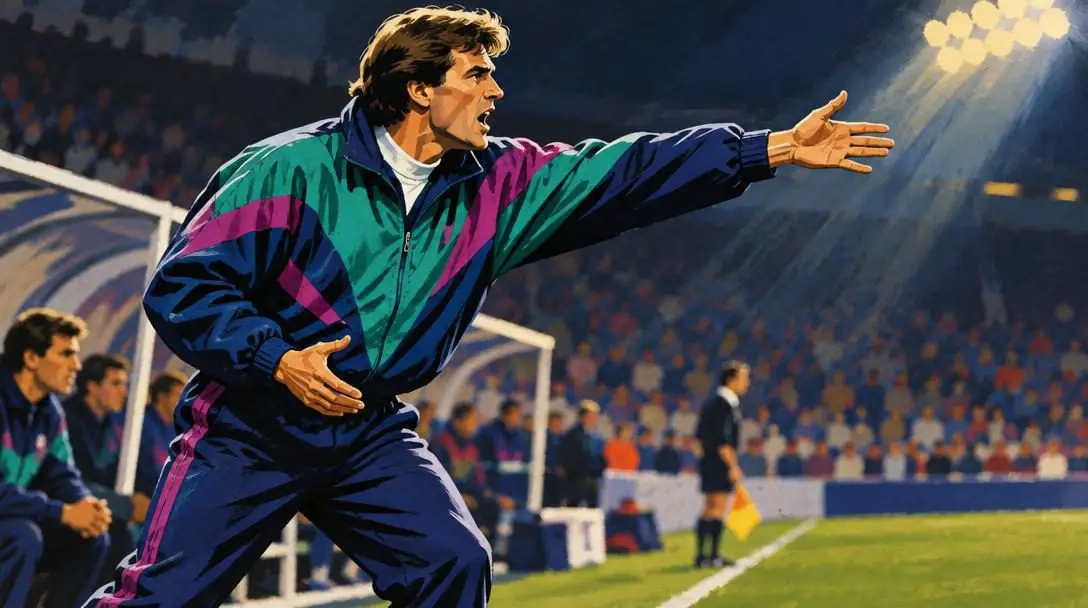
Kevin Keegan began his professional playing journey at Scunthorpe United in the late 1960s and early 1970s before spending six productive seasons at Liverpool, where he made over 230 appearances. Stints with Hamburger SV and Southampton followed before he arrived at Newcastle United, representing the club on the pitch from 1982 to 1984. Eight years after hanging up his boots, Keegan returned to Tyneside to take charge as manager for five memorable seasons.
Keegan remains the only manager in Newcastle United history to oversee more than 100 matches while sustaining a win rate higher than 50 percent. His squad won nearly 55 percent of their fixtures, culminating in 138 total victories. Keegan captured the First Division championship in 1993 to earn promotion, before constructing an exhilarating, attacking side that secured a celebrated second-place finish in the Premier League during the 1995–96 campaign.
Notable managers who earned honorable mentions
Narrowing Newcastle United's long history down to five standout names means leaving aside several leaders who played vital roles during critical turning points. These managers maintained competitive squads, oversaw promotions, and steered the team through high-pressure league seasons:
- Alan Pardew: Guided the club through several Premier League seasons in the 2010s, stabilizing top-flight status while navigating difficult domestic fixtures.
- Tom Mathew: An influential early figure who managed the squad during the formative years of organized league competition.
- Arthur Cox: Steered Newcastle through the early 1980s, laying the groundwork for the modern era by signing iconic players like Kevin Keegan and earning promotion back to the First Division.
- George Martin: Provided key leadership from the dugout during the immediate post-war era, helping rebuild the squad's competitive standard in the late 1940s.
How historical managerial rankings work
Comparing managers who worked in completely different centuries requires analyzing a blend of statistics, context, and structural duties. Evaluating someone who managed in the 1890s against someone operating in the modern Premier League involves balancing four distinct criteria:
- Match volume and longevity: Overseeing hundreds of matches proves a manager's ability to maintain the trust of directors and supporters through inevitable squad rebuilds. Figures like Frank Watt (1,264 matches) and Joe Harvey (591 matches) gave Newcastle reliable stewardship for decades.
- Win percentage against peer baselines: Raw win rates reveal how consistently a team secured points week to week. Keegan's feat of winning nearly 55 percent of his games over more than 100 fixtures demonstrates a rare standard of sustained modern execution.
- Silverware and deep tournament runs: Trophies represent the definitive objective in football. Frank Watt's four league titles, Stan Seymour's two FA Cups, and Joe Harvey's Fairs Cup carry enormous historical significance, as do the near-miss runner-up finishes achieved by Keegan and Robson.
- Institutional evolution: A manager's lasting impact is often seen in how they altered the trajectory of the club. Joe Harvey provided steady guidance when Newcastle faced uncertainty, while Frank Watt developed Newcastle from its Victorian roots into a dominant national force.
Step-by-step guide to evaluating historic managers
When assessing football managers across distant eras of a club's chronicle, applying a systematic framework helps eliminate recency bias and subjective nostalgia. Follow these structured steps to evaluate managerial tenures objectively:
- Gather baseline statistics: Record total matches managed, total wins, draws, losses, and overall win percentages. Establish a clear minimum threshold, such as 100 matches, to filter out short-term or interim appointments.
- Catalog major honors and achievements: Document league championships across all divisions (First Division, Second Division, and Premier League), domestic knockout competitions like the FA Cup, and international trophies such as the Inter-Cities Fairs Cup, Anglo-Italian Cup, or Intertoto Cup.
- Assess prior club affiliations: Note whether the manager had deep institutional ties as a former player. Legends like Kevin Keegan, Stan Seymour, and Joe Harvey spent major parts of their playing careers at Newcastle before taking charge from the dugout.
- Contextualize operational responsibilities: Differentiate between Victorian-era club secretaries who handled operations, recruitment, and logistics, and modern tacticians who operate with specialized coaching staffs and transfer committees.
- Weigh stability against immediate success: Examine the conditions the manager inherited. A manager who rescues a squad from relegation and builds steady mid-table finishes over a decade often provides as much institutional value as one who inherits an elite squad and wins a single cup.
Analytical pitfalls and common evaluation mistakes
Debates surrounding historical managers often become distorted by flawed assumptions. Analysts and supporters frequently fall into several analytical traps when reviewing Newcastle United's past:
- Overemphasizing modern competitions: It is easy to prioritize Premier League or UEFA Champions League campaigns while disregarding pre-war triumphs. Overlooking Frank Watt's four First Division titles simply because they happened in the early 20th century ignores the most successful era in club history.
- Relying solely on win rates: Win percentages alone can be misleading. Joe Harvey won 37.9 percent of his matches, yet his 591 fixtures delivered an Inter-Cities Fairs Cup, an Anglo-Italian Cup, and a Second Division title alongside crucial long-term stability.
- Ignoring sample size limitations: Comparing a manager who led 30 matches with someone who sustained hundreds of fixtures creates a false equivalence. A high win percentage over a short stretch is far easier to achieve than maintaining consistency across multiple rebuilding cycles.
- Assuming managerial roles were static: The administrative responsibilities of late-Victorian secretaries bore little resemblance to the media-heavy, tactically segmented environment experienced by managers like Sir Bobby Robson.
Frequently asked questions
Who is Newcastle United's longest-serving manager?
Frank Watt served the longest managerial tenure in Newcastle United history. Appointed as club secretary in 1895, he directed the club for more than 30 years through the mid-1930s, managing 1,264 matches.
Which Newcastle United manager has the highest win percentage?
Among managers with more than 100 matches in charge, Kevin Keegan holds the highest win rate in Newcastle United history. He won nearly 55 percent of his fixtures, concluding his five-year managerial tenure with 138 total victories.
When was the last time Newcastle United won a major European trophy?
Newcastle United secured their major European trophy under manager Joe Harvey, who guided the club to victory in the Inter-Cities Fairs Cup during his 13-year tenure at the helm.
Did Stan Seymour win trophies as both a player and a manager for Newcastle?
Yes. As a player, Stan Seymour scored 73 league goals and won the First Division title with Newcastle in 1927. Later, across three separate managerial stints, he guided the squad to two FA Cup victories.
How many matches did Sir Bobby Robson manage for Newcastle United?
Sir Bobby Robson managed 255 competitive matches for Newcastle United between 1999 and 2004, earning a 46.67 percent win rate and taking the club to the latter stages of the UEFA Cup in 2004.
The bottom line
The history of Newcastle United has been defined by managers who balanced tactical acumen with an emotional connection to the club and its community. From Frank Watt's pioneering foundational era and Joe Harvey's steady silverware-laden reign, to Stan Seymour's cup mastery, Kevin Keegan's exhilarating attacking teams, and Sir Bobby Robson's European adventures, each era provided distinct triumphs. Evaluating these figures side by side reveals that true managerial greatness on Tyneside requires both competitive consistency and an enduring dedication to the club's identity.