5 Best Managers in Spurs History
Tottenham Hotspur stands as an enduring pillar of English club football, having represented North London on the domestic and international stage for well over a century. While the club has not collected the steady stream of modern league crowns enjoyed by a few domestic competitors, Tottenham has consistently ranked among the most valuable and financially lucrative football institutions in Europe. That lasting stature has been built across decades of competitive drama, structural reinvention, and influential tactical leadership from the dugout.
Guiding an elite club through the shifting dynamics of English football requires a rare blend of tactical foresight, player management, and resilience in knockout football. Across different eras, a select group of managers managed to leave an unforgettable imprint on White Hart Lane and beyond—breaking barriers to win top-flight league championships, securing prestigious domestic cups, delivering European glory, or establishing modern records for competitive consistency.
Key takeaways
- Bill Nicholson stands as the club's preeminent manager, lifting 11 major trophies over a celebrated 16-season reign.
- Arthur Rowe transformed English tactical history with his push-and-run passing system, leading Spurs from the Second Division to a top-flight First Division title.
- Mauricio Pochettino achieved the highest win percentage of any Tottenham manager overseeing at least 100 competitive fixtures.
- Keith Burkinshaw delivered high-stakes silverware during an eight-year tenure, capturing two FA Cups and a UEFA Cup despite a sub-50 percent win rate.
- John Cameron laid early club foundations as a player-manager, taking Spurs to the 1901 FA Cup and holding the second-highest total matches managed in club history.
Measuring managerial impact across Tottenham history
Evaluating managerial success across more than a century of football involves far more than simply counting trophies or checking win percentages. The modern game features expansive backroom teams, sophisticated sports science, and deep substitution benches, whereas early twentieth-century managers frequently balanced tactical planning with on-field playing duties. A comprehensive assessment must account for the competitive landscape of the era, the stability established across long tenures, the introduction of tactical systems, and how squads performed in high-stakes knockout environments.
Before diving into the top five tacticians in Tottenham history, several prominent figures who narrowly missed selection deserve recognition. Frank Brettell and Arthur Turner set early competitive foundations, while Terry Venables guided the club to memorable cup success. In the modern era, Jose Mourinho brought his global pedigree to North London. However, none combined the historical breakthroughs, trophy haul, long-term stability, and tactical innovation achieved by the five managers highlighted below.
| Manager | Tenure length | Key domestic honors | European honors | Historic milestone |
|---|---|---|---|---|
| Bill Nicholson | 16 seasons | 1 First Division, 3 FA Cups, 2 League Cups, 3 Charity Shields | 1 UEFA Cup, 1 UEFA Cup Winners' Cup | All-time leader with 11 major club honors |
| Arthur Rowe | Began 1949 | 1 First Division, 1 Second Division, 1 Charity Shield | None (pre-European era) | Pioneered the famous push-and-run tactical philosophy |
| Keith Burkinshaw | 8 years | 2 FA Cups, 1 Charity Shield | 1 UEFA Cup | Elite tournament efficiency in major finals |
| John Cameron | 1899–1907 | 1 FA Cup | None (early era) | Second-most matches managed in club history (570) |
| Mauricio Pochettino | 5 seasons | 2015 League Cup runner-up | 2019 Champions League runner-up | Highest win percentage (54.27%) for 100+ match managers |
The 5 best managers in Tottenham Hotspur history
From tactical innovators who pioneered quick-passing football to tournament specialists who thrived under knockout pressure, these five managers shaped Tottenham Hotspur into an enduring global institution.
Bill Nicholson
- Tenure: 1958–1974 (16 seasons)
- Total trophies: 11 major honors
- Playing career: Over 300 appearances for Tottenham Hotspur
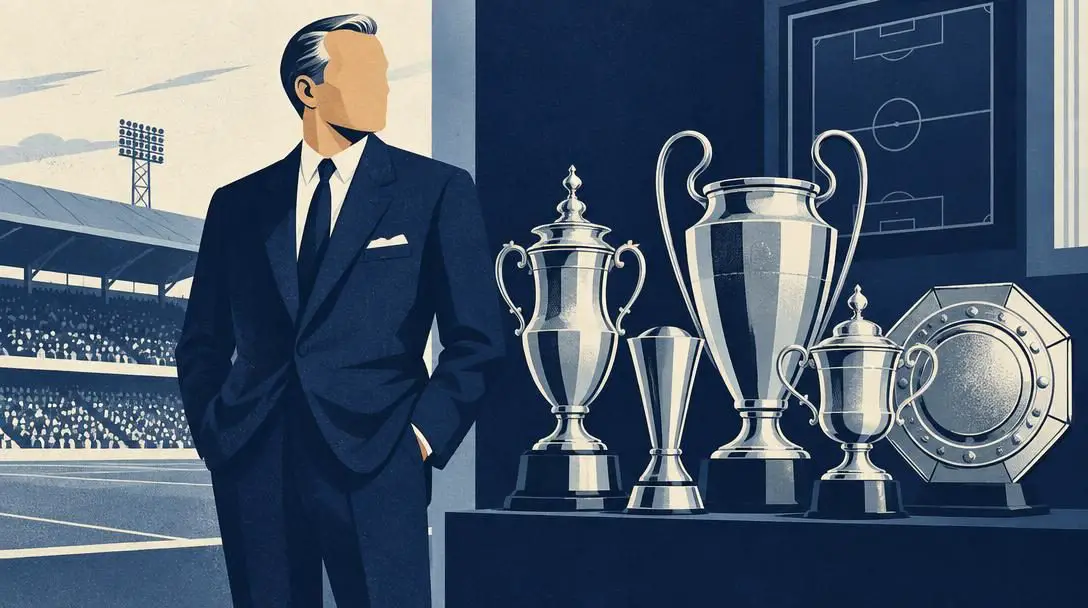
- Silverware: 1 First Division, 3 FA Cups, 2 League Cups, 3 Charity Shields, 1 UEFA Cup, 1 UEFA Cup Winners' Cup
Bill Nicholson is universally celebrated as the most influential figure in the history of Tottenham Hotspur. A tireless midfielder during his playing days, Nicholson spent essentially his entire playing career representing Spurs, amassing over 300 senior appearances on the pitch. After retiring as an active player in 1955, he completed a formal coaching course to prepare for a tactical career, soon returning to White Hart Lane as an assistant coach. In 1958, he assumed the manager's post, embarking on a remarkable 16-season tenure at the helm of what would become the only club he ever managed.
Nicholson built teams that combined tactical discipline with attacking panache. Under his stewardship, Tottenham assembled a staggering total of 11 major trophies. His squads captured the English First Division championship, lifted three FA Cups, won two Football League Cups, and secured three FA Charity Shields. Nicholson also established Tottenham as a formidable continental powerhouse, guiding the club to triumphs in both the UEFA Cup and the UEFA Cup Winners' Cup, the prominent European competition of that era. His dedication to attractive football set the permanent cultural standard for Tottenham Hotspur.

Arthur Rowe
- Tenure: Began 1949
- Key silverware: 1950–51 First Division, Second Division title, 1951 Charity Shield
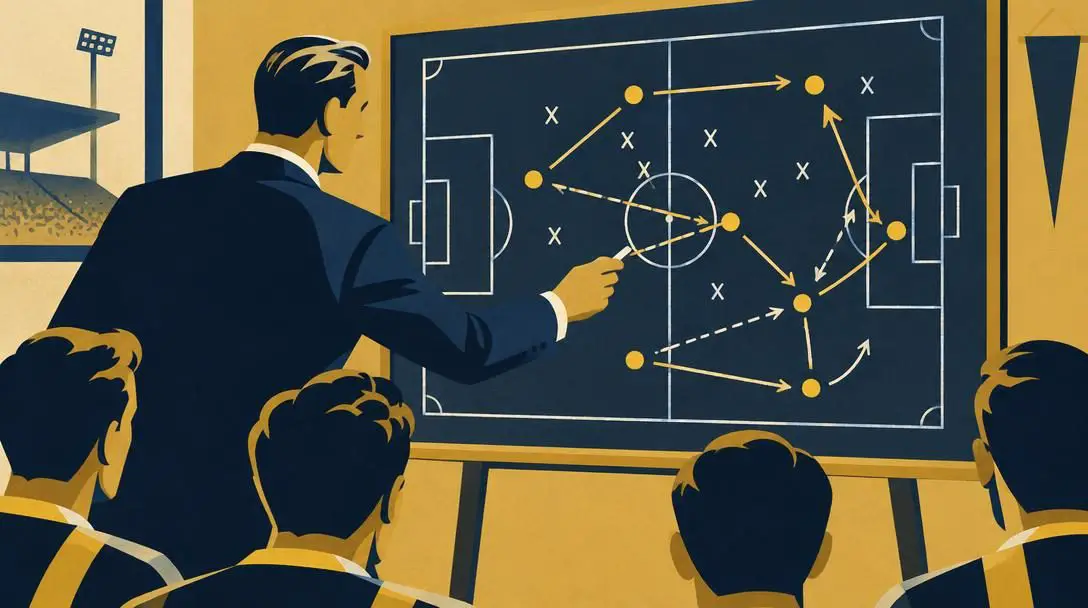
- Tactical legacy: Developed the push-and-run passing system
- Win percentage: Finished tenure under 50 percent
Arthur Rowe remains one of the most innovative tacticians in English football history. Like Nicholson, Rowe was steeped in Tottenham tradition, having spent his entire professional playing career wearing the club's colors. A dependable defender, Rowe retired from active play in 1939 after a decade on the field for Spurs. He subsequently gathered managerial experience leading Chelmsford City before making his celebrated return to White Hart Lane as manager in 1949.
Rowe's defining contribution was the development of the push-and-run style of play. This tactical framework prioritized rapid short passing, continuous off-the-ball movement, and giving and receiving the ball at pace—a revolutionary approach in an era dominated by direct, physical football. Despite ending his tenure with an overall win rate under 50 percent, Rowe's achievements were extraordinary. He guided Tottenham out of the Second Division and followed it up immediately by winning the 1950–51 First Division title, becoming the first manager in club history to secure England's top-flight league championship. He capped this historic era by winning the 1951 FA Charity Shield.
Arthur Rowe reshaped English football by proving that rapid movement and fluid passing could dismantle traditional physical defenses.
Keith Burkinshaw
- Tenure: 8 years
- Major silverware: 2 FA Cups, 1 FA Charity Shield, 1 UEFA Cup
- Playing background: Defender for Workington and Scunthorpe United
- Managerial breadth: Managed 7 additional teams after Tottenham
Before entering top-tier management, Keith Burkinshaw proved himself as a resolute English defender during the 1950s and 1960s with Workington and Scunthorpe United, concluding his playing days in a player-manager role. After stepping away from the pitch in 1968 and taking time away from the sport, Burkinshaw took charge of Tottenham Hotspur, initiating a distinguished eight-year tenure during a critical transitional era for the club.
Although Burkinshaw ended his Tottenham career with an overall win percentage below 50, his managerial legacy is defined by unmatched tournament resilience. When trophies were on the line, Burkinshaw's teams consistently rose to the occasion. He steered Tottenham to two FA Cup victories, an FA Charity Shield, and a memorable continental triumph in the UEFA Cup. His ability to navigate high-stakes knockout ties re-established Tottenham's reputation as one of England's premier cup sides. Following his departure from Spurs, Burkinshaw managed seven other clubs before retiring from full-time management in 1994.
John Cameron
- Tenure: 1899–1907
- Matches managed: 570 matches (296 victories)
- Historic honor: 1901 FA Cup
- Dual role: Player-manager
John Cameron represents the bedrock of Tottenham Hotspur's competitive identity. After an accomplished playing spell with Everton, Cameron joined Tottenham as an attacker in 1898, remaining on the pitch through 1907. Early in his Spurs playing tenure, he assumed full managerial responsibilities, successfully handling the demanding dual role of player-manager across eight critical foundational years.
Cameron's statistical footprint remains towering. He stands second in Tottenham history for total matches managed, overseeing 570 competitive fixtures and securing 296 victories. Among all managers in Tottenham history who have led the team for at least 100 matches, only one has surpassed Cameron's win rate. His crowning managerial achievement occurred in 1901, when he guided Tottenham to the FA Cup—a triumph that proved the club could outshine the country's most established teams. Cameron later continued his managerial career abroad with Dresdner SC and domestically with Ayr United.
Mauricio Pochettino

- Tenure: 2014–2019 (5 seasons)
- Win percentage: 54.27% (club record for 100+ match managers)
- Major finals reached: 2015 League Cup, 2019 UEFA Champions League
- Playing career: 15 years as a professional (Espanyol, Newell's Old Boys)
Mauricio Pochettino brought high-octane modern identity back to Tottenham Hotspur in the Premier League era. Following a 15-year playing career primarily spent anchoring backlines for Newell's Old Boys and Espanyol, the former Argentina international retired in 2006. After two years away from football, he began his tactical journey at Espanyol before demonstrating his high-pressing credentials in England during a sharp one-year spell with Southampton. Spurs appointed him manager in 2014, opening an unforgettable five-season chapter.
Pochettino implemented a relentless, aggressive pressing system that emphasized physical stamina, structured build-up play, and the development of emerging talent. While major silverware eluded his squad, Pochettino achieved the highest winning percentage of any Tottenham manager with at least 100 matches in charge, completing his spell at 54.27 percent. His teams were regular top-tier Premier League contenders and came agonisingly close to major titles, finishing as runners-up in the 2015 Football League Cup and advancing to the club's first-ever UEFA Champions League final in 2019.
The core components of football management success
Examining the tenures of these five managers reveals that sustained leadership at an elite football club relies on balancing four fundamental operational pillars:
- Tactical identity: A clear, repeatable playing philosophy dictates how a team builds attacks and recovers possession. Arthur Rowe's push-and-run passing and Mauricio Pochettino's high-pressing system gave their players distinct competitive blueprints.
- Tournament adaptation: Cup tournaments require specialized tactical planning where single-match results override long-term point accumulation. Keith Burkinshaw excelled in these sudden-death environments, securing domestic and European silverware.
- Sustained match output: Long league campaigns demand deep squad depth, physical endurance, and consistency against varied tactical styles. High baseline win percentages over extensive samples reflect weekly execution.
- Player transitions: Over prolonged eras, squads inevitably age out and require rebuilding. Managers like Bill Nicholson and John Cameron maintained high competitive standards across multiple squad generations.
How to evaluate historical football managers
When comparing managers who worked in vastly different tactical and financial eras, fans and analysts must use an objective framework to assess long-term legacy.
- Examine the trophy cabinet: Tally all major honors collected, distinguishing between domestic league titles, primary knockout cups, and continental tournaments, ensuring credit matches the prestige available in that era.
- Review the total match record: Analyze the manager's overall fixture count alongside wins, draws, and losses to measure whether their impact was a brief high point or enduring institutional stability.
- Contextualize winning percentages: Compare win rates relative to match sample sizes. A manager with a 54 percent win rate over hundreds of games exhibits weekly reliability, while a manager below 50 percent might have engineered peaked performances for cup finals.
- Identify tactical innovations: Determine whether the manager introduced strategic frameworks, training methods, or playing formations that influenced football beyond their own club.
- Consider club longevity: Factor in the total seasons served in the dugout. Prolonged tenures demonstrate sustained trust from leadership and an ability to refresh competitive squads repeatedly.
Common mistakes when comparing football eras
Evaluating managerial tenures spanning from the late 1890s to the 2010s presents several analytical pitfalls. Keeping these common mistakes in mind ensures a balanced perspective:
- Overlooking tournament availability: Early leaders like John Cameron could only compete in regional leagues and the FA Cup, meaning their raw trophy ceilings were fundamentally lower than those of modern coaches.
- Focusing exclusively on win rates: A high win rate without trophies does not automatically surpass a lower win rate accompanied by major silverware. Arthur Rowe and Keith Burkinshaw had sub-50 percent win records but captured top-flight championships and European honors.
- Ignoring the player-manager dynamic: Expecting early figures to match modern technical directors overlooks the fact that men like John Cameron organized tactical gameplans while simultaneously playing full matches on the pitch.
- Disregarding division restructuring: English league football transitioned from the historic First Division and Second Division system to the Premier League era, changing match economics, squad depth rules, and transfer landscapes.
Frequently asked questions
Who is the most successful manager in Tottenham Hotspur history?
Bill Nicholson is universally regarded as the most successful manager in Spurs history, having won 11 major honors during his 16-season tenure, including the First Division league title, three FA Cups, two League Cups, three Charity Shields, a UEFA Cup, and a UEFA Cup Winners' Cup.
Which Tottenham manager holds the highest winning percentage?
Mauricio Pochettino holds the highest win percentage of any Tottenham manager who has overseen at least 100 competitive fixtures, recording a 54.27 percent victory rate across his five seasons in charge.
What was Arthur Rowe's push-and-run style?
Arthur Rowe's push-and-run style was an innovative tactical approach focusing on rapid short passing and continuous off-the-ball running, allowing players to quickly give and receive the ball to bypass slower, physical defensive formations.
Did Tottenham win a European trophy under Keith Burkinshaw?
Yes, Keith Burkinshaw guided Tottenham Hotspur to continental glory by winning the UEFA Cup, in addition to capturing two FA Cups and an FA Charity Shield during his eight-year tenure.
How many matches did John Cameron manage for Spurs?
John Cameron managed 570 competitive fixtures for Tottenham Hotspur between 1899 and 1907, guiding the team to 296 victories and lifting the 1901 FA Cup as a player-manager.
The bottom line
The history of Tottenham Hotspur has been shaped by extraordinary managers who adapted to their times while expanding the club's stature. Bill Nicholson set the undisputed benchmark for silverware, Arthur Rowe altered the tactical lineage of English football, Keith Burkinshaw epitomized tournament mastery, John Cameron established foundational greatness, and Mauricio Pochettino set modern benchmarks for competitive consistency. Understanding their distinct contributions reveals how strategic innovation, long-term vision, and knockout resolve combine to build an enduring football legacy.