5 Best Moments For Juventus Fans
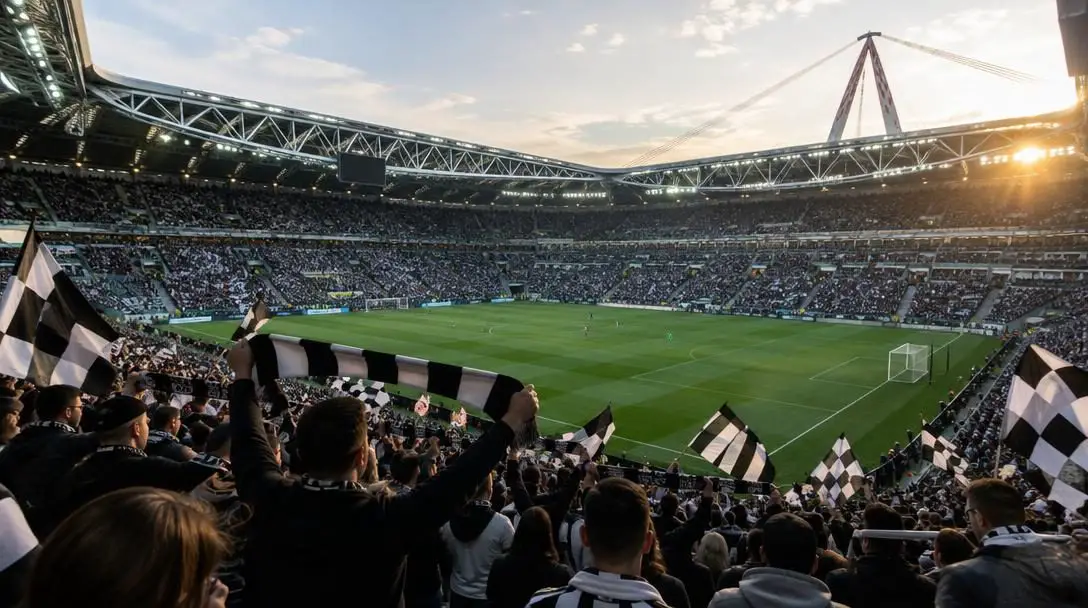
Juventus Football Club stands among the most decorated and recognized institutions in global sports, defined by generations of iconic players, master tacticians, and unforgettable triumphs. Throughout its long existence, the Italian powerhouse has navigated dramatic competitive shifts and administrative hurdles, yet its storied timeline is overwhelmingly defined by peak eras that established new standards of excellence across Italian and continental football.
Understanding the rise of this European giant requires examining the defining milestones that built its domestic dominance and international reputation. From post-war breakthroughs and historic attacking partnerships to European glory and modern title-winning resilience, five standout moments showcase exactly what it means to support the Bianconeri across eras.
Key takeaways
- Striker Giampiero Boniperti defined the club's post-war era across a fifteen-year one-club career, capturing five Serie A championships and two Coppa Italia titles.
- The formation of Il Trio Magico in 1957 united Boniperti, John Charles, and Omar Sivori to end a domestic drought and secure three league titles.
- Giovanni Trapattoni's thirteen-year technical leadership brought unprecedented dominance, delivering six Serie A trophies alongside major continental silverware.
- Juventus conquered continental football in 1985 by overcoming Liverpool in Brussels behind a decisive penalty kick from Michel Platini.
- Following the Calciopoli relegation, Juventus mounted a historic rebuild that culminated in an undefeated 84-point campaign to capture the 2011–12 Serie A title.
Five landmark moments that defined Juventus history
The identity of Juventus has been forged through distinct epochs, each anchored by transformative individuals and historic competitive achievements. Examining these five specific moments illustrates how the club repeatedly established and restored its supremacy at the pinnacle of the sport.
Giampiero Boniperti
- Hometown: Barengo, Italy
- Debut: March 1947
- Career record: 443 league matches and 178 goals
- Major honors: Five Serie A titles and two Coppa Italia titles
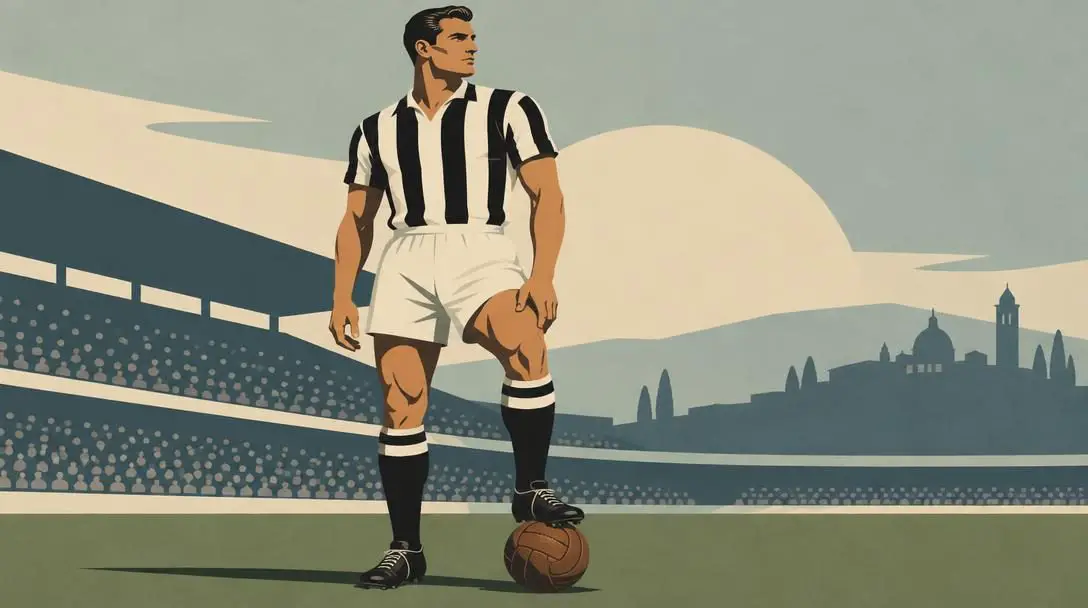
Many historians and supporters consider Barengo native Giampiero Boniperti to be the greatest player in club history. Spending his entire fifteen-year playing career in Turin, Boniperti emerged as the first superstar in Juventus history. His debut in March 1947 began an era of unmatched loyalty and offensive production. Over 443 league appearances, the prolific forward scored 178 goals, propelling the club to five Serie A titles and back-to-back Coppa Italia victories.
Boniperti's influence stretched far beyond his playing days. He put the club firmly on the modern football map, earning induction into the Italian Football Hall of Fame in 2012. After hanging up his boots, he transitioned into public service and politics, serving as a member of the European Parliament during the 1990s while remaining an enduring symbol of the club's institutional culture.
Il Trio Magico
- Assembled: August 1957
- Key personnel: Giampiero Boniperti, Omar Sivori, John Charles
- Combined era: Four seasons together
- Trophy haul: Three Serie A championships
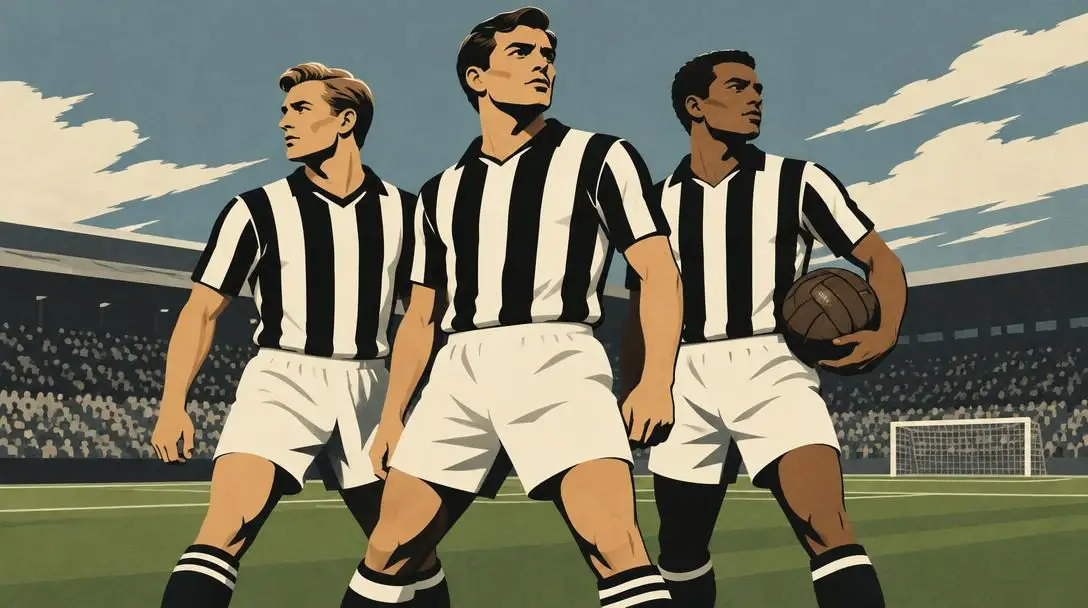
In August 1957, Juventus orchestrated a recruitment masterstroke by signing Welsh forward John Charles from Leeds United for 65,000 pounds and securing Argentine wizard Omar Sivori from River Plate for an undisclosed fee. Paired alongside domestic veteran Giampiero Boniperti, this transatlantic trio became celebrated across Italian football as Il Trio Magico, or The Magic Trio.
The three forwards originated from completely different sporting backgrounds yet meshed seamlessly on the pitch over four remarkable seasons. Charles provided physical dominance and aerial authority, Sivori contributed flair and unpredictable dribbling, and Boniperti operated with tactical discipline and sharp finishing. Together, they snapped a competitive dry spell, returned Juventus to the summit of the table, and won several major trophies, including three memorable Serie A titles.
Giovanni Trapattoni
- Playing career: 274 appearances for AC Milan (1959–1971), retired with Varese (1972)
- Managerial tenure: Thirteen years across two separate stints
- Domestic silverware: Six Serie A championships and two Coppa Italia titles
- International honors: UEFA Cup Winners' Cup, European Super Cup, and Intercontinental Cup
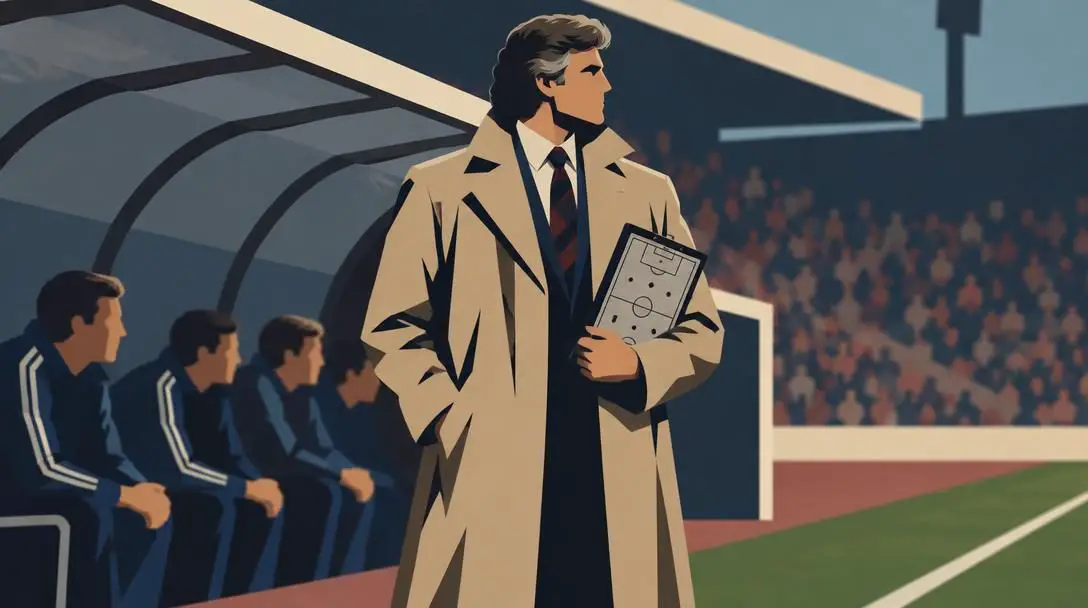
Before becoming one of the most successful managers in Italian history, Giovanni Trapattoni spent the bulk of his playing career with AC Milan, logging 274 appearances between 1959 and 1971 before retiring with Varese in 1972. After cutting his teeth as Milan's manager, Trapattoni moved to Juventus to begin the first of two stints that would eventually total thirteen years in the dugout. Known simply as "Trap," he was the tactical general the team required to establish sustained domestic and continental hegemony.

Under Trapattoni's disciplined technical direction, Juventus captured six Serie A titles within a single decade, alongside two Coppa Italia crowns. His tactical blueprint proved equally devastating in European competition, guiding the squad to victories in the UEFA Cup Winners' Cup, the European Super Cup, and the Intercontinental Cup. Like Boniperti, Trapattoni was recognized for his monumental impact on the sport with induction into the Italian Football Hall of Fame in 2012.
The 1985 European Cup in Brussels
Juventus spent years pursuing European football's ultimate prize, experiencing painful heartbreak along the way. The club reached its first European Cup final in 1973, falling short in a 1-0 defeat against Ajax. A decade later, in 1983, another opportunity slipped away when the Italian side suffered a 1-0 loss to Hamburger SV. Entering the 1985 final against Liverpool in Brussels, the pressure to secure continental immortality had reached its peak.
The decisive encounter featured fierce tactical discipline, with neither team able to break the deadlock during a scoreless first half. The breakthrough arrived in the second half when French maestro Michel Platini scored a penalty kick to put Juventus ahead. Holding firm against relentless English pressure, the Bianconeri defended their lead until the final whistle, sealing a 1-0 victory to claim their first Champions League title after two previous final defeats.
Targeted recruitment, tactical continuity, and structural resilience have repeatedly enabled Juventus to overcome severe adversity and reclaim its position at the pinnacle of Italian football.
The 2011–12 Return to Glory
The resilience of Juventus was tested severely in the wake of the Calciopoli scandal, an administrative crisis that rocked Italian football when club executives were discovered illegally communicating with match officials and fixing fixtures. Consequently, Juventus was stripped of its 2004–05 Serie A championship and relegated to Serie B. While the team earned immediate promotion by winning the second division, establishing a championship-caliber roster in the top tier took years of rebuilding.
The culmination of that recovery came during the thrilling 2011–12 Serie A campaign, when Juventus engaged in an intense title race with rivals AC Milan. Exhibiting tactical cohesion and relentless consistency, the Bianconeri pulled away in the final weeks, finishing with 84 points to claim the Scudetto. This triumph signaled a complete return to elite prominence following an ordeal that would have crippled most sporting organizations.
At a glance: Comparing the five milestone eras
Each milestone era contributed unique elements to the club's historical resume, balancing individual player brilliance, tactical leadership, and organizational perseverance across different competitive environments.
| Milestone Era | Key Personalities | Primary Competitions | Defining Achievements |
|---|---|---|---|
| Post-War Foundation (1947) | Giampiero Boniperti | Serie A, Coppa Italia | 443 league appearances, 178 goals, 5 Serie A titles |
| Il Trio Magico (1957) | Boniperti, John Charles, Omar Sivori | Serie A | 3 league championships, ended trophy drought |
| Trapattoni Dominance | Giovanni Trapattoni | Serie A, European Super Cup, Intercontinental Cup | 6 scudetti in a decade, 2 Coppa Italia titles, multiple continental cups |
| First European Cup (1985) | Michel Platini | European Cup (Champions League) | 1-0 final victory against Liverpool in Brussels |
| Post-Scandal Resurgence (2012) | Senior Squad and Staff | Serie A, Serie B | Overcame relegation, collected 84 points to edge AC Milan |
How elite club success works in modern football
The historic highs experienced by Juventus illustrate the core mechanisms that drive sustained footballing dominance across generations. Championship runs rarely happen by accident; they require precise execution across several operational pillars.
- Talent scouting and complementary recruitment: Sustained dominance relies on identifying talents from distinct football cultures and blending them into a cohesive tactical unit. Bringing in Welsh striker John Charles from Leeds United and Argentine attacker Omar Sivori from River Plate alongside local legend Giampiero Boniperti demonstrated how targeted investment can break a trophy drought.
- Long-term managerial stability: Elite performance requires consistent technical direction. Giovanni Trapattoni's thirteen seasons across two tenures proved that strategic continuity allows a squad to master both domestic league marathons and high-stakes international knockout tournaments.
- Resilience in continental knockout fixtures: Conquering Europe requires mental fortitude after repeated failure. After losing European Cup finals to Ajax in 1973 and Hamburger SV in 1983, Juventus maintained tactical focus against Liverpool in Brussels, converting the critical penalty kick to achieve victory.
- Rebuilding infrastructure following administrative crises: Surviving regulatory penalties requires organizational grit. Following the Calciopoli fallout, the club worked its way through Serie B, restructured operations, and methodically accumulated the 84 points required to outduel AC Milan for the 2011–12 title.
Practical steps to study historic football eras
For researchers, supporters, and football analysts seeking to evaluate historic clubs and their greatest teams, adopting a methodical research framework ensures accurate assessments grounded in historical data.
- Examine career statistics and appearances: Begin by researching individual player metrics. Analyzing Giampiero Boniperti's 443 league appearances and 178 goals over fifteen seasons provides objective proof of his sustained influence on the pitch.
- Track transfer windows and squad construction: Investigate historical transfer records to see how front offices resolved squad imbalances. Reviewing the August 1957 acquisition of John Charles for 65,000 pounds alongside Omar Sivori reveals how targeted acquisitions ended a competitive dry spell.
- Review managerial records across domestic and continental competitions: Break down the performance metrics of head coaches over multi-year tenures. Charting Giovanni Trapattoni's six Serie A championships alongside international honors like the UEFA Cup Winners' Cup demonstrates tactical adaptability across different tournament formats.
- Analyze match reports from decisive tournament finals: Study primary accounts and play-by-play timelines from championship matches. Reviewing the 1985 European Cup final in Brussels illustrates how a scoreless first half was decided by Michel Platini's penalty kick against Liverpool.
- Follow the trajectory of post-disciplinary rebuilds: Chart league tables before and after major sanctions. Evaluating the path from the stripped 2004–05 title and Serie B relegation to the 84-point campaign of 2011–12 highlights how elite clubs manage institutional turnaround.
Common mistakes when evaluating Juventus history
When assessing the storied history of Juventus, casual observers often fall into analytical traps that distort the reality of how these achievements unfolded.
- Assuming success was constant without periods of struggle: It is a mistake to believe the club dominated uninterrupted. Juventus endured significant trophy droughts before the formation of Il Trio Magico in 1957 and suffered agonizing European Cup final losses in both 1973 and 1983 before breaking through in 1985.
- Overlooking domestic relegation and rebuilding efforts: Many assume elite institutions effortlessly brush off administrative penalties. Downplaying the Calciopoli scandal ignores the severe fallout of match-fixing investigations and illicit referee communications, which stripped the 2004–05 title and forced an arduous climb back from Serie B.
- Ignoring individual longevity and loyalty: Modern evaluations often prioritize short-term peaks over decade-long service. Overlooking one-club icons like Giampiero Boniperti obscures the foundational loyalty that established the club's early domestic supremacy.
- Focusing solely on domestic league titles: Evaluating Italian football strictly through Serie A scudetti ignores how managers like Giovanni Trapattoni balanced domestic campaigns with victories in the Intercontinental Cup, European Super Cup, and European Cup Winners' Cup.
What to consider next in Italian football history
Exploring these landmark moments opens multiple avenues for deeper research into Italian football culture and the broader tactical evolution of European competition.
First, examine the Hall of Fame legacies connected to the club. Both Giampiero Boniperti and Giovanni Trapattoni were formally inducted into the Italian Football Hall of Fame in 2012. Investigating other inductees from their eras provides rich context regarding the tactical philosophies that shaped post-war and late-twentieth-century Italian football.
Second, investigate the long-standing rivalry between Juventus and AC Milan. This rivalry spans several eras, including Trapattoni's transition from Milan midfielder (with 274 appearances) to Juventus tactician, as well as the intense 2011–12 league battle where Juventus collected 84 points to claim the title. Analyzing direct encounters between these powerhouses highlights the strategic shifts that defined Serie A across decades.
Finally, trace the structural evolution of European club tournaments. Tracking the path of Juventus from final defeats against Ajax in 1973 and Hamburger SV in 1983 to victory against Liverpool in 1985 demonstrates how the European Cup transitioned from an unpredictable knockout tournament into modern football's ultimate standard of excellence.
Frequently asked questions
Who was the first superstar in Juventus history?
Barengo native Giampiero Boniperti is widely regarded as the club's first superstar. Making his debut in March 1947, he played his entire fifteen-year career with Juventus, appearing in 443 league matches, scoring 178 goals, and winning five Serie A titles and two Coppa Italia trophies before entering the Italian Football Hall of Fame in 2012.
Which players formed the famous attacking partnership known as Il Trio Magico?
Il Trio Magico was formed in August 1957 when Juventus paired Italian icon Giampiero Boniperti with Welsh striker John Charles, signed from Leeds United for 65,000 pounds, and Argentine forward Omar Sivori, acquired from River Plate. The trio played together for four seasons, ending a club drought and winning three Serie A championships.
What major trophies did Giovanni Trapattoni win as Juventus manager?
During his thirteen seasons in charge, Giovanni Trapattoni led Juventus to six Serie A titles in a single decade, two Coppa Italia wins, the UEFA Cup Winners' Cup, the European Super Cup, and the Intercontinental Cup. His exceptional managerial career earned him induction into the Italian Football Hall of Fame in 2012.
How did Juventus win its first European Cup title in 1985?
After falling short in the 1973 final against Ajax and the 1983 final against Hamburger SV, Juventus faced Liverpool in Brussels in 1985. Following a scoreless first half, French star Michel Platini scored from a penalty kick, securing a 1-0 victory and the club's first Champions League title.
How did Juventus recover from the Calciopoli scandal?
After being stripped of the 2004–05 Serie A title and relegated to Serie B for match-fixing and illicit communications with referees, Juventus won the second division to secure promotion. Following years of squad rebuilding, the club completed its return to domestic dominance by earning 84 points to edge out AC Milan for the 2011–12 Serie A title.
The bottom line
The history of Juventus Football Club is defined by decisive eras that transformed domestic setbacks into generational triumphs. From the post-war brilliance of Giampiero Boniperti and the attacking chemistry of Il Trio Magico to the tactical mastery of Giovanni Trapattoni and the continental breakthrough in Brussels, the club's greatest moments reflect an ability to innovate and dominate under pressure.
Even when confronted with the existential challenge of the Calciopoli scandal, the organization demonstrated institutional grit by climbing back from Serie B and delivering an 84-point championship season in 2011–12. These landmark moments explain why Juventus remains an enduring benchmark of competitive greatness in Italian and world football.