5 Best Places To Work for H1B Employees

Securing an H-1B specialty occupation visa is one of the most coveted career milestones for international professionals seeking employment in the United States. With fewer than 70,000 visas allocated through the regular statutory cap each year, competition among multinational employers and overseas specialists is remarkably intense. However, navigating this selective pathway provides foreign workers with competitive salaries, valuable professional development, and an established bridge toward legal permanent residency.
Because the H-1B visa is inherently tied to corporate sponsorship, an applicant's success depends heavily on the caliber, resources, and legal diligence of their employer. Major industry leaders within the technology, consulting, and financial sectors file thousands of petitions annually, offering high compensation packages and remarkably low petition withdrawal rates. Understanding which organizations consistently support foreign talent allows prospective applicants to target their job search effectively and position themselves for long-term career stability in the American economy.
Key takeaways
- Annual statutory caps limit general H-1B visas to fewer than 70,000 approvals each year, making corporate sponsorship highly competitive.
- The H-1B status operates under the dual intent doctrine, legally permitting foreign workers to seek permanent residency while working temporarily in the United States.
- Industry leaders such as Facebook, Apple, Ernst & Young, Google, and Amazon sponsor thousands of foreign professionals while maintaining exceptionally low petition withdrawal rates.
- Average salaries among top-tier sponsors consistently range from roughly $125,000 to well over $172,000 per year for specialized roles.
- Securing an H-1B visa requires an employer-driven application sequence, including Department of Labor wage clearance, lottery registration, and USCIS petition adjudication.
Understanding the H-1B Visa Pathway and the Dual Intent Advantage
The H-1B visa program is an employment-based immigration category designed by the United States government to help domestic enterprises bridge critical talent shortages in specialty occupations. A specialty occupation is legally defined as a role requiring the theoretical and practical application of highly specialized knowledge, paired with a minimum requirement of a bachelor's degree or its equivalent in a related discipline. These positions predominate in high-growth fields such as software engineering, data analytics, artificial intelligence, financial auditing, and advanced hardware architecture.
A crucial legal benefit of the H-1B category is that it recognizes dual intent. Under standard temporary visitor or student visas, foreign nationals must demonstrate nonimmigrant intent, proving that they maintain a foreign residence they have no intention of abandoning. In contrast, the H-1B visa allows foreign professionals to enter the country legally as temporary nonimmigrants while actively pursuing legal permanent residence, commonly known as a green card. Because obtaining an employment-based green card frequently takes multiple years, working for an employer with established immigration frameworks ensures that an employee's legal status remains continuous throughout the green card transition.
Securing an H-1B petition with a stable, well-resourced sponsor transforms a temporary work authorization into a predictable pathway toward permanent residency.
Top H-1B Employers at a Glance
While thousands of organizations petition for foreign talent each fiscal year, only a select group of enterprises sponsor thousands of workers annually while offering exceptional compensation and minimal petition withdrawal rates. The table below outlines key sponsorship metrics across the premier destinations for international talent.
| Company | Approximate H-1B Sponsoring Volume | Average Annual Salary | Primary Industry & Focus | Petition Stability |
|---|---|---|---|---|
| Around 5,000 visas | Over $172,000 | Social Media, Infrastructure & Metaverse | Very low withdrawal rate | |
| Apple | More than 3,700 visas | Over $162,000 | Consumer Hardware & Software Platforms | Incredibly low withdrawal rate |
| Ernst & Young | Around 9,000 visas | Around $125,000 | Auditing, Tax & Technology Consulting | Only a couple withdrawn annually |
| More than 10,000 visas | About $150,000 | Search, Artificial Intelligence & Cloud | High retention and sponsorship scale | |
| Amazon | Around 12,000 visas | Around $138,000 | Cloud Computing, Logistics & E-Commerce | Second-largest national sponsor volume |
The 5 Best Places To Work for H-1B Employees
Leading enterprises across the United States compete aggressively to secure elite international talent. These five organizations stand out not only for their massive filing volume, but also for their high baseline salaries, transparent immigration practices, and exceptional legal retention rates.

- Founded: 2004 by Mark Zuckerberg
- Sponsorship Volume: Around 5,000 H-1B recipients
- Average Salary: Over $172,000 per year
- Notable Holdings: Instagram, WhatsApp, Metaverse initiatives
Originally launched in 2004 by Mark Zuckerberg as a collegiate social network, Facebook has evolved into an international technology conglomerate that has expanded into virtual worlds through the Metaverse while incorporating major platforms like Instagram and WhatsApp. As one of the largest technology enterprises in the world, Facebook regularly relies on foreign engineers, researchers, and technical product leads to solve complex architectural challenges across massive digital infrastructures.
Facebook currently sponsors approximately 5,000 H-1B recipients for specialized, high-impact positions. The enterprise stands out in the marketplace for paying some of the highest base compensation in the industry, with average annual salaries for H-1B workers exceeding $172,000—a baseline that has steadily grown over time. Rather than utilizing the H-1B program for entry-level or lower-compensating assignments, Facebook concentrates its filings on highly specialized contributors. Crucially for foreign professionals, the company maintains a remarkably low petition withdrawal rate, providing foreign personnel with the peace of mind required to build long-term domestic careers.
Apple

- Founded: 1976 by Steve Jobs, Steve Wozniak, and Ronald Wayne
- Sponsorship Volume: More than 3,700 H-1B visas offered
- Average Salary: More than $162,000 per year
- Notable Holdings: Beats Electronics, Dark Sky
Founded in 1976 by Steve Jobs, Steve Wozniak, and Ronald Wayne, Apple Inc. transitioned from a boutique personal computing venture into an essential pillar of contemporary digital life. Famous globally for consumer hardware and software innovations including the iPhone, iPad, and macOS, Apple has continuously expanded its global footprint through internal research as well as acquisitions such as Beats Electronics and the weather service Dark Sky.
To power its sophisticated hardware engineering, operating systems, and distributed cloud services, Apple sponsors more than 3,700 H-1B professionals. H-1B staff members earn average annual salaries topping $162,000, underscoring Apple's philosophy of compensating top-tier engineering talent at the upper echelon of the market. Beyond financial remuneration, Apple provides extraordinary immigration stability; the firm's petition withdrawal rates are exceptionally low. This consistency reflects robust legal planning, ensuring international specialists face minimal bureaucratic disruption during their corporate tenure.
Ernst & Young
- Founded: 1849 origins; modern entity formed in 1989
- Sponsorship Volume: Around 9,000 H-1B visas granted annually
- Average Salary: Around $125,000 per year
- Headquarters & Scale: London, England; 7th-largest private US firm
Tracing its corporate origins back to 1849, Ernst & Young (EY) assumed its modern global form in 1989 following the strategic merger of Ernst & Whinney with Arthur Young & Co. Headquartered in London, England, the professional services firm represents a major force in the American corporate landscape, ranking as the seventh-largest private company in the United States. EY demonstrates that exceptional H-1B employment opportunities extend far beyond pure consumer software companies.
The firm serves as a premier destination for foreign professionals specializing in statutory auditing, tax compliance, corporate restructuring, risk management, and enterprise technology consulting. EY secures roughly 9,000 H-1B visas each year, underscoring its massive reliance on global financial and technical minds. More impressively, the firm withdraws almost no petitions, with only a couple pulled in an average year. Combined with a competitive average salary of approximately $125,000 per year, EY offers an extraordinarily stable operational environment for foreign professionals looking to anchor their corporate footing.

- Founded: 1998 as an internet search platform
- Sponsorship Volume: More than 10,000 H-1B visas annually
- Average Salary: About $150,000 per year
- Parent Company: Alphabet (including Verily, Wing, Calico, DeepMind)
Launched in 1998 as a mathematical internet search algorithm, Google has grown into one of the most influential global entities, operating under its parent holding company, Alphabet. In addition to core products spanning search, web advertising, Android, and enterprise cloud solutions, Alphabet manages visionary ventures such as Verily, Wing, Calico, and artificial intelligence pioneer DeepMind. This vast operational network affords foreign specialists a broad spectrum of career assignments across cutting-edge applied sciences.
Google represents one of the few elite corporate sponsors that grants more than 10,000 H-1B visas in any given year. Roles secured through this program carry significant earning power, yielding an average annual salary of about $150,000. Google's institutional commitment to retaining global experts across data science, distributed computing, and machine learning ensures that sponsored employees receive extensive immigration resources, reliable legal support, and steady internal transfer mobility across its subsidiaries.
Amazon

- Original Model: Online bookstore founded in 1994
- Sponsorship Volume: Around 12,000 H-1B visa holders employed
- Sponsorship Ranking: 2nd-largest H-1B sponsor in the United States
- Average Salary: Around $138,000 per year
While everyday consumers recognize Amazon as an e-commerce platform and rapid delivery logistics network, the enterprise operates as a dominant force in enterprise cloud architecture, digital streaming, and automated logistics systems. Evolving far beyond its initial identity as an online bookstore, Amazon is now the country's second-largest H-1B sponsor by overall volume, maintaining a foreign specialist workforce of approximately 12,000 professionals on active visas.
H-1B holders at Amazon are not positioned in fulfillment centers; they occupy high-level software engineering, algorithmic supply-chain modeling, cloud architecture, and corporate data roles. Reflecting this technical specialization, Amazon pays its H-1B workers an average salary of around $138,000 per year. Although the firm operates at an immense operational scale, only around 500 or so petitions are withdrawn each year, demonstrating that the vast majority of sponsored candidates maintain lasting, productive roles throughout their visa validity periods.

How the H-1B Application and Sponsorship Process Works
Because an H-1B visa is an employer-sponsored immigration status, foreign professionals cannot independently file a petition on their own behalf. Obtaining authorization requires navigating a synchronized sequence of statutory filings and government approvals.
- Securing a Qualifying Specialty Job Offer: The foreign candidate must interview for and accept a professional offer from a domestic employer willing to underwrite the legal, filing, and administrative expenses of visa sponsorship.
- Labor Condition Application (LCA) Certification: The sponsoring company submits an LCA (Form ETA-9035) to the United States Department of Labor, verifying that the foreign employee will receive a wage equal to or greater than the prevailing local wage for the occupation and that working conditions will not adversely affect domestic peers.
- Cap Registration Submission: During the designated filing window, the employer submits an electronic registration for the candidate into the annual selection pool, competing against other filings under the statutory cap of fewer than 70,000 general authorizations.
- Formal Petition Filing: Upon registration selection, the employer prepares and submits Form I-129 (Petition for a Nonimmigrant Worker) to USCIS, presenting documentation of the candidate's academic degrees, professional credentials, and specialty occupation duties.
- Immigration Adjudication: USCIS adjudicators evaluate the submitted evidence, issuing an approval notice, a denial, or a formal Request for Evidence (RFE) seeking additional clarification regarding wages or specialty qualifications.
- Consular Processing or Status Change: If the worker is already physically inside the United States on an active legal status, the approval triggers an automatic Change of Status; overseas applicants must schedule a formal consular interview to receive an entry stamp.
Practical Strategies for Landing an H-1B Role
Given the rigorous competition for sponsored roles, candidates must take an intentional, structured approach to their job search. Aligning your application approach with the expectations of large-scale sponsors substantially increases the probability of securing an offer.
- Target Verified High-Volume Sponsors: Focus career outreach on organizations with established legal departments and proven histories of filing hundreds or thousands of petitions annually, as they possess the infrastructure to handle complex filings seamlessly.
- Align Educational Credentials Directly to Job Profiles: Ensure your major field of study matches the listed requirements of your prospective role to prevent adjudicators from questioning whether your degree satisfies specialty occupation rules.
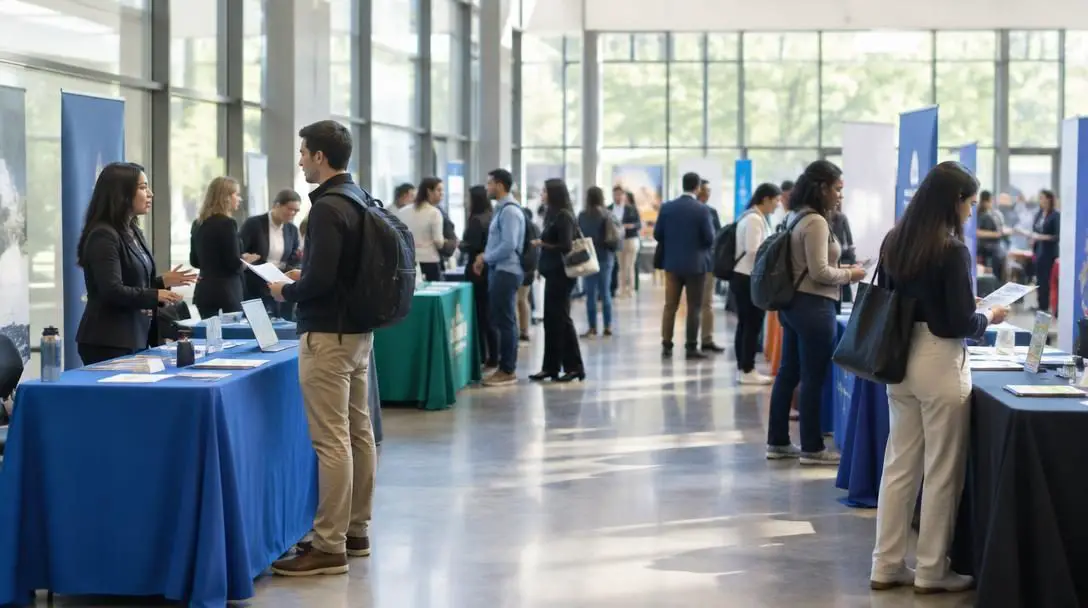
- Leverage Campus and Corporate Recruitment Networks: Major consulting and technology firms actively recruit foreign graduates at university job fairs and specialized engineering conferences; engage directly with recruiters who understand foreign hiring logistics.
- Inquire About Immigration Frameworks Early: Clarify organizational policies regarding registration timelines, secondary filing strategies, legal fee coverage, and formal green card initiation milestones before accepting an employment offer.
- Maintain Audited Documentation Files: Keep certified degree evaluations, complete official transcripts, previous immigration notices, and detailed experience letters organized to avoid filing delays once an offer is extended.
Common Mistakes to Avoid During the H-1B Process
The regulatory guidelines governing nonimmigrant employment status leave very little room for administrative error. Both candidates and employers must sidestep several common operational missteps to protect an applicant's legal standing.
- Missing Rigid Filing Deadlines: The registration window and the post-selection petition window operate on strict deadlines; missing an administrative cut-off by even a single day requires waiting an entire calendar year.
- Interviewing with Non-Sponsoring Employers: Spending extensive time pursuing employment at small firms that lack the legal resources, financial capability, or corporate willingness to sponsor work visas can derail a candidate's career timeline.
- Mismatches Between Degree and Job Duties: When an applicant holds a degree loosely related to their day-to-day corporate duties, immigration authorities frequently issue Requests for Evidence, significantly increasing denial risks.
- Prevailing Wage Non-Compliance: Employers must offer a base salary that matches or exceeds the Department of Labor prevailing wage threshold for the specific geographic area; offering inadequate wages triggers an automatic petition denial.
- Failing to Maintain Underlying Status: Foreign workers currently in the United States on student visas or transitional training programs must maintain continuous lawful status while their petition is under review to qualify for a seamless change of status.
Long-Term Career Planning: From Temporary Status to Citizenship
While obtaining an H-1B visa provides immediate security and professional opportunity, it remains a temporary work authorization that carries an initial validity period of up to three years, extendable to a statutory maximum of six years under normal circumstances. For professionals seeking permanent roots in the United States, managing this temporary period strategically is critical for transitioning toward legal permanent residency and eventual naturalization.
First, foreign professionals should examine their employer's track record concerning the Permanent Labor Certification (PERM) process. Initiating PERM certification during the initial years of H-1B status ensures that labor market clearances and immigrant petition filings (Form I-140) are completed well before reaching the six-year statutory limit. Leading sponsors such as Google, Facebook, Apple, and Ernst & Young have structured internal pipelines that regularly transition temporary visa holders into permanent residency tracks.
Second, employees must evaluate job mobility carefully. Although H-1B regulations allow for visa transfers between sponsoring employers, changing organizations requires the new company to file a complete transfer petition before the employee can safely begin work. Departing an organization with established immigration support for an unproven sponsor can jeopardize green card progress. By selecting reputable sponsors that offer high compensation, healthy petition retention, and clear pathways to permanent residency, foreign workers can systematically build durable, rewarding careers within the American economy.
Frequently asked questions
Can an H-1B worker change employers after their petition is approved?
Yes, H-1B employees can transfer to a new company, but the prospective employer must file a formal H-1B transfer petition with USCIS before the employee starts their new role. The employee cannot simply move to a new company without corporate sponsorship and formal government notification.
What is an H-1B withdrawal, and why does a low withdrawal rate matter?
An H-1B withdrawal occurs when an employer officially cancels an approved or pending petition, often due to project cancellations, workforce reductions, or administrative disputes. Low withdrawal rates indicate that an enterprise has reliable business needs, robust job security, and an enduring commitment to retaining international hires.
Does working for an H-1B sponsor guarantee a green card?
No, an H-1B visa does not automatically grant a green card. However, because the H-1B permits dual intent, an employer can sponsor a foreign worker for legal permanent residence through the PERM labor certification and immigrant petition processes while they are employed.
Are H-1B employees paid less than domestic American workers?
By law, employers must file a Labor Condition Application certifying that the foreign specialist will be paid at least the prevailing wage for the role and geographic market. Major employers like Facebook and Apple pay substantial average salaries exceeding $160,000 to $172,000 annually, ensuring compensation remains highly competitive with domestic standards.
What happens if an H-1B employee is terminated by their sponsor?
Under federal immigration guidelines, an H-1B worker whose employment ends typically receives a statutory grace period of up to 60 consecutive calendar days (or until their current authorized stay expires, whichever is shorter). During this period, the worker must secure a new sponsor to file a transfer petition, apply for a change of nonimmigrant status, or depart the United States.
The bottom line
Navigating the United States H-1B visa program demands rigorous planning, technical excellence, and careful company targeting. With annual statutory caps restricting general approvals to fewer than 70,000 recipients, aligning with experienced, well-resourced employers represents the most effective way to secure professional stability. Enterprises such as Facebook, Apple, Ernst & Young, Google, and Amazon remain the premier destinations for international talent, providing six-figure base salaries, minimal petition withdrawal rates, and established immigration frameworks that guide foreign specialists from temporary nonimmigrant employment toward permanent American citizenship.