5 Best Players In Liverpool History
Founded in 1892, Liverpool Football Club has grown from its Merseyside origins into one of the most decorated institutions in world football. Across more than a century of top-flight competition, the club has established an enduring tradition of excellence, collecting a record haul of League Cups and FA Community Shields alongside an array of domestic league titles and continental trophies. Sustaining that level of dominance across different generations has required extraordinary footballers who paired rare technical skill with competitive grit under the brightest lights.
Sifting through the hundreds of elite competitors who have pulled on the famous red kit means weighing sustained longevity, decisive moments in cup finals, individual accolades, and team silverware. While generational icons such as Mohamed Salah, Luis Suarez, Kevin Keegan, Roger Hunt, Ian Callaghan, and Jamie Carragher each built compelling cases, five singular footballers stand out above the rest as the definitive masters of Liverpool history.
Key takeaways
- Steven Gerrard leads Liverpool history through unmatched midfield influence, 710 appearances, and heroic cup-winning leadership.
- Ian Rush remains the club's all-time greatest goalscorer with 346 strikes and an unmatched record across two distinct tenures at Anfield.
- Kenny Dalglish defined a golden era for the club as both a talismanic forward and later a player-manager, scoring 172 goals across 515 matches.
- John Barnes revolutionized the Merseyside attack across a decorated decade, claiming two First Division crowns and two FA Cups.
- Virgil van Dijk provided the defensive cornerstone of Liverpool's modern revival, capturing the Premier League, UEFA Champions League, and FA Cup.
At a glance: Liverpool's five greatest players
Evaluating players across different footballing eras requires comparing individual longevity, match presence, domestic crowns, and European triumphs. The table below outlines how these five legendary figures compare across their careers with Liverpool.
| Player | Era at Liverpool | Total appearances | Club goals | Selected major honors |
|---|---|---|---|---|
| Steven Gerrard | Late 1990s–2015 | 710 | 186 | UEFA Champions League (2005), 2 FA Cups |
| Ian Rush | 1980–1987, 1988–1996 | 660 | 346 | 5 First Division titles, 5 FA Cups, 1984 European Golden Boot |
| Kenny Dalglish | 1977–1990 | 515 | 172 | 6 First Division titles, 1986 FA Cup, Ballon d'Or runner-up |
| John Barnes | 1987–1997 | Over 300 league & cup matches | 84 (league) | 2 First Division titles, 2 FA Cups |
| Virgil van Dijk | 2018–present | Modern era regular | Defensive anchor | Premier League, FA Cup, UEFA Champions League, Alan Hardaker Trophy |
The five best players in Liverpool club history
Every era in Liverpool's storied timeline has had its defining figurehead. From the ruthless strike partnerships of the First Division era to modern masterclasses on the European stage, these five footballers elevated the team around them and set an enduring benchmark for greatness.
Virgil van Dijk

- Position: Center-back
- Signed from: Southampton (2018)
- Key individual honor: Alan Hardaker Trophy
- Major club honors: Premier League, FA Cup, UEFA Champions League
Dutch central defender Virgil van Dijk arrived at Anfield in 2018 possessing a wealth of high-level European and international pedigree. His developmental journey took him through the youth and senior ranks at Dutch side Groningen during the early 2010s, where he accumulated more than 60 senior appearances before moving to Scottish giants Celtic in 2013. A subsequent, commanding spell at Southampton verified that his athletic profile, spatial awareness, and aerial prowess could handle the demands of English football, while his regular fixtures with the Dutch national team elevated his reputation on the international stage.
Upon his arrival on Merseyside, van Dijk proved to be the ultimate transformational catalyst. Before his signing, Liverpool often exhibited thrilling attacking verve undercut by defensive vulnerability. Van Dijk eradicated that imbalance almost overnight. Operating as a commanding presence in central defense, his ability to organize the backline, dominate aerial duels, and initiate counterattacks with pinpoint long-range passing turned the squad into European champions. His calm leadership helped deliver the UEFA Champions League, the FA Cup, and an elusive Premier League crown. Recognized multiple times as a member of the Premier League Team of the Year and recipient of individual accolades like the Alan Hardaker Trophy, van Dijk represents the gold standard of contemporary defensive excellence.
John Barnes
- Position: Winger / Attacking midfielder
- Anfield tenure: 1987–1997
- League goals: 84
- Major club honors: 2 First Division titles, 2 FA Cups
Born in Jamaica, John Barnes established himself as one of the most technically gifted and electrifying wingers in the history of British football. Prior to signing with Liverpool in 1987, Barnes became a household name at Watford, making more than 230 appearances during an exhilarating period in the 1980s. When manager Kenny Dalglish brought him to Anfield, Barnes unlocked a new dimension of fluidity, balance, and creative flair that overwhelmed opposing defenses.
Barnes spent an extraordinary decade on Merseyside, playing more matches for Liverpool than for any other team in his professional journey before finishing his career with Newcastle United and Charlton Athletic in the late 1990s. While not an out-and-out striker, his offensive output was remarkable: he scored 84 league goals for the club, routinely beating defenders off the dribble and creating high-quality chances for his teammates. His brilliance guided Liverpool to two First Division championships in his first three years and captured two FA Cup titles, earning him an untouchable place in English football folklore.
Kenny Dalglish
- Position: Forward / Player-manager
- Anfield tenure: 1977–1990
- Liverpool record: 172 goals in 515 appearances
- Hall of Fame: Inducted into the English Football Hall of Fame in 2002
Few figures in the history of global football have impacted a single sporting community as deeply as Scottish maestro Kenny Dalglish. Before arriving at Anfield in 1977, Dalglish was already an icon north of the border, having starred for Celtic from the late 1960s onward. In eight glorious years with the Glasgow powerhouse, Dalglish scored 111 goals in more than 200 appearances, developing the exceptional vision, hold-up play, and clinical finishing that defined his game.
Taking over the mantle of attacking talisman at Liverpool, Dalglish spent 13 years cementing an iconic legacy, famously serving as player-manager during the twilight of his playing days. Over 515 appearances, he found the back of the net 172 times, securing the eighth spot on Liverpool's all-time scoring list. Dalglish anchored a golden era, capturing six First Division league titles and the 1986 FA Cup. His peerless craft on the European stage earned him a runner-up finish for the Ballon d'Or, and his monumental legacy was permanently enshrined when he was inducted into the English Football Hall of Fame in 2002.
Dalglish bridged brilliance on the pitch and leadership from the dugout, scoring 172 goals while guiding Liverpool through an unmatched domestic reign.
Ian Rush
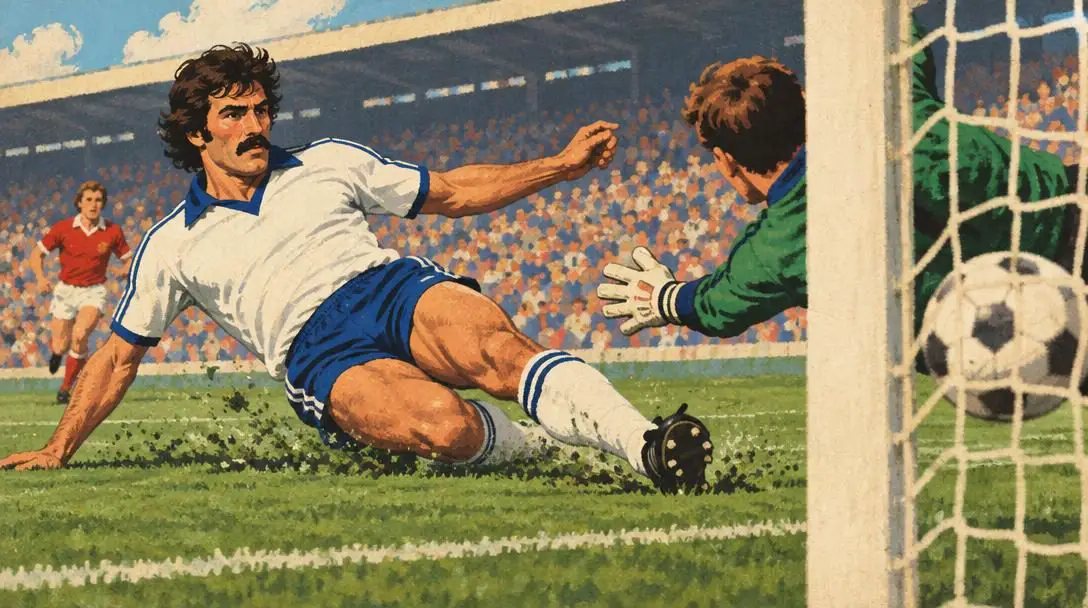
- Position: Striker
- Anfield tenures: 1980–1987 and 1988–1996
- All-time record: 346 goals in 660 matches
- Major honors: 5 First Division titles, 5 FA Cups, 1984 European Golden Boot
Welsh marksman Ian Rush stands alone as the undisputed goalscoring king of Anfield. Rush began his journey with a short stint at Chester City before signing with Liverpool at the dawn of the 1980s. Across six explosive years, he forged an unplayable attacking partnership with Kenny Dalglish. A high-profile transfer took him to Italian powerhouse Juventus for two seasons, but his connection to Merseyside remained unbroken: he returned for a 42-match loan spell before rejoining Liverpool full-time in 1988 for an additional eight trophy-laden campaigns.
Across his two stints, Rush accumulated 660 total appearances and netted a staggering 346 goals. That tally places him more than 60 goals clear of second-place Roger Hunt and more than a century ahead of third-place Gordon Hodgson. Beyond his lethal poaching instincts, Rush was celebrated for his tireless defensive pressing from the front, setting the tempo for the entire squad. His goals drove Liverpool to five First Division league crowns and five FA Cup titles, while his sensational 1983–84 campaign earned him the European Golden Boot as the continent's top domestic goalscorer.
Steven Gerrard

- Position: Central midfielder / Captain
- Anfield tenure: Late 1990s–2015
- Club records: 710 appearances (3rd all-time), 186 goals (top 5 all-time)
- Defining honor: 2005 UEFA Champions League winner
Born and raised in Whiston, Steven Gerrard holds the honor of being the only English player among Liverpool's five greatest legends. Entering the club's youth academy in 1989 as a schoolboy, Gerrard dedicated nearly a decade to development before making his senior professional debut in the late 1990s. That debut marked the dawn of an astonishing 17-year first-team career in which Liverpool was the only European club Gerrard ever represented, concluding his legendary playing journey in the United States in 2016.
Gerrard combined explosive tackling, surgical cross-field passing, unrelenting stamina, and a thunderous shooting ability from distance. Over his 710 competitive appearances—the third-highest total in club history—he scored 186 goals, placing him comfortably inside the all-time top five scorers despite playing in central midfield. As team captain, he became world football's premier big-match savior, willing his side through improbable comebacks. Gerrard lifted two FA Cups and inspired the iconic 2005 UEFA Champions League victory, earning recognition as one of the Premier League's elite competitors throughout his career.
Historical context: Evolution of Liverpool across eras
Understanding why these five individuals rise above all others requires examining the evolutionary phases of Liverpool Football Club. Since its founding in 1892, Liverpool has repeatedly reinvented its tactics while maintaining an unyielding demand for domestic and European trophies. The club's unmatched collection of domestic cup silverware, including record tallies in the League Cup and FA Community Shield, stems from this systemic continuity.
During the 1970s and 1980s, the club ruled English football through collective passing, relentless spatial awareness, and decisive penalty-box efficiency. Kenny Dalglish, Ian Rush, and John Barnes embodied this ruthless philosophy, controlling domestic play and overpowering European rivals. When the game evolved into the modern Premier League and UEFA Champions League eras, elite competition demanded higher athletic standards, broader tactical versatility, and individual fortitude under immense pressure. Steven Gerrard served as the ultimate bridge across those transitions, carrying teams through rebuilding periods, while Virgil van Dijk solidified the modern system that returned Liverpool to the very pinnacle of the sport.
How football historians evaluate all-time club legends
Constructing historical player rankings across different decades is an intricate exercise. Pitch conditions, physical training, competitive formats, and tactical responsibilities have shifted dramatically since 1892. Analysts weigh several foundational criteria to build balanced assessments:
- Review total service and appearance volume: Long-term consistency demonstrates that an athlete could maintain elite physical conditioning and tactical relevance through squad rebuilds and managerial changes.
- Assess positional context against scoring tallies: Raw goal numbers favor traditional forwards like Ian Rush and Kenny Dalglish. Midfielders like Steven Gerrard and defenders like Virgil van Dijk must be judged on their defensive interventions, chance creation, and structural control.
- Weigh performance in high-leverage finals: True legends are defined by their contributions in defining moments, such as European cup finals, FA Cup showdowns, and domestic title deciders.
- Examine milestone records within club history: Achieving enduring milestones, such as all-time scoring crowns or top-five appearance placements, establishes an objective historical footprint.
- Factor in individual accolades and external recognition: Peer-voted honors, such as the European Golden Boot, Ballon d'Or runner-up status, and Hall of Fame inductions, demonstrate how a player was regarded by their contemporary rivals.
Common mistakes when ranking historic footballers
Supporters and media commentators frequently fall into recurring traps when discussing historical club rankings. Avoiding these analytical pitfalls ensures that legendary figures receive fair credit regardless of when they played:
- Falling victim to recency bias: Modern broadcasts and high-definition highlights make recent accomplishments far more visible, frequently causing fans to overlook the sheer domestic dominance achieved by stars of the 1970s and 1980s.
- Undervaluing defensive contributions: Fans naturally gravitate toward flashy goalscorers, but defensive cornerstones like Virgil van Dijk are equally vital in building championship-winning foundations.
- Disregarding disjointed or multi-stage tenures: Overlooking players who departed and returned can skew evaluation; Ian Rush's brief spell at Juventus does not diminish his standing as the greatest finisher in club history.
- Dismissing pre-Premier League accomplishments: The First Division era featured world-class competition and brutal physical challenges; discounting titles won prior to 1992 misrepresents Liverpool's rich history.
- Overlooking intangible leadership qualities: Relying solely on statistical spreadsheets ignores the psychological impact of captains like Steven Gerrard, whose grit motivated entire squads during improbable comebacks.
Frequently asked questions
Who is the all-time leading goalscorer in Liverpool history?
Ian Rush is Liverpool's all-time top scorer with 346 goals in 660 matches across two stints. He sits more than 60 goals ahead of second-place Roger Hunt and over 100 goals clear of third-place Gordon Hodgson.
How many matches did Steven Gerrard play for Liverpool?
Steven Gerrard made 710 appearances across all competitions for Liverpool, representing the third-most total outings in club history, while scoring 186 goals.
What major trophies did Virgil van Dijk win with Liverpool?
Since arriving at Anfield in 2018, Virgil van Dijk has anchored the squad to victories in the Premier League, the FA Cup, and the UEFA Champions League, alongside collecting individual honors such as the Alan Hardaker Trophy.
Did Kenny Dalglish manage Liverpool while still playing?
Yes. Toward the conclusion of his 13-year playing career on Merseyside, Kenny Dalglish famously balanced his on-pitch duties with managerial responsibilities, guiding the club to major honors including the 1986 FA Cup.
Which notable Liverpool legends narrowly missed this top five list?
Several iconic players just missed the cut, including Mohamed Salah, Luis Suarez, Kevin Keegan, Roger Hunt, Ian Callaghan, and Jamie Carragher.
The bottom line
Selecting the five greatest players in Liverpool history means celebrating distinct eras of football excellence. From the lethal finishing of Ian Rush and the technical artistry of Kenny Dalglish and John Barnes, to the transcendent leadership of Steven Gerrard and the defensive mastery of Virgil van Dijk, these five legends represent the standard of greatness that has kept Liverpool at the forefront of European football since 1892.