5 Best Players in Manchester United History
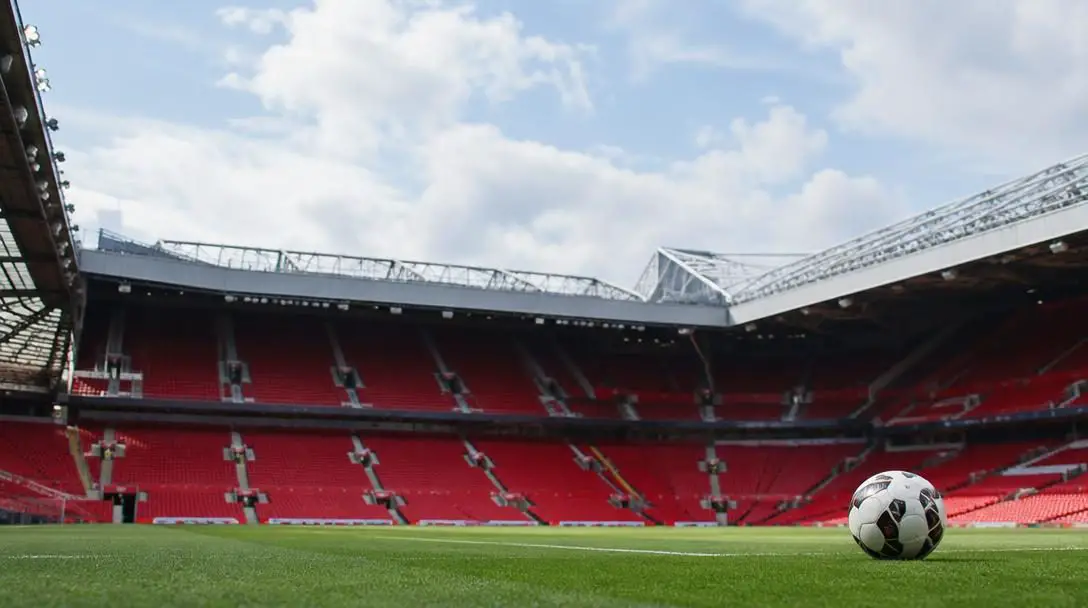
When discussing the most prestigious institutions in English football, Manchester United invariably commands the conversation. Across generations of elite domestic and international competition, the club has constructed a peerless reputation for excellence, sustained competitiveness, and the cultivation of world-class sporting talent. In the history of English football, no side has secured as many league championships, FA Cups, or Community Shields as Manchester United, with their supreme domestic dominance complemented by numerous prestigious continental honours won on European football's biggest stages.
Because of this enduring standard of success, Old Trafford has continually attracted, nurtured, and showcased some of the finest players to ever grace the sport. Over more than a century of play, thousands of athletes have pulled on the iconic red shirt, creating an exceptionally long list of players with senior appearances. Distilling this expansive, silverware-laden history into the five greatest figures requires evaluating longevity, goal-scoring efficiency, sheer trophy tallies, and transformative commitment to the club.
Key takeaways
- Ryan Giggs tops the club's pantheon with an unbroken record of 963 appearances and 13 Premier League championships.
- Wayne Rooney stands as Manchester United's all-time record goalscorer, finding the back of the net 253 times across 559 appearances.
- Midfield and attacking icons Sir Bobby Charlton and George Best carried the club to historic domestic and European heights, each capturing the coveted Ballon d'Or.
- Paul Scholes and Ryan Giggs represent an elite echelon of modern legends who dedicated their entire senior playing careers exclusively to Manchester United.
- The depth of talent at Old Trafford is so profound that generational icons such as Eric Cantona, Roy Keane, and David Beckham sit just outside the top five.
The legendary standard: Icons who narrowly missed the list
Before examining the definitive top five, recognizing the sheer caliber of players who just missed the selection underscores the depth of talent in Manchester United's history. Generations of supporters have witnessed world-class leaders and serial winners whose contributions defined entire eras of English football.
Extraordinary figures including David Beckham, midfield enforcer Roy Keane, legendary goalkeeper Peter Schmeichel, dependable full-back Gary Neville, midfield talisman Bryan Robson, and the catalytic forward Eric Cantona did not make the final five. Each left an indelible stamp on Old Trafford through major trophy hauls and memorable moments, yet the extraordinary longevity and individual honours of the top five set an even higher bar.
The five greatest Manchester United players at a glance
The players who stand at the pinnacle of Old Trafford history combine historic individual accolades with unmatched domestic and continental silverware. The table below outlines how these five legendary figures compare across their senior careers at the club.
| Player | Appearances | Goals | Key Club Silverware | Major Individual Honours |
|---|---|---|---|---|
| Ryan Giggs | 963 | 168 | 13 Premier Leagues, 4 FA Cups, 2 Champions Leagues | English Football Hall of Fame |
| Bobby Charlton | 758 | 249 | 3 First Divisions, 1 FA Cup, 1968 European Cup | 1966 Ballon d'Or, 1966 World Cup Winner |
| Paul Scholes | 718 | 155 | 11 Premier Leagues, 2 Champions Leagues, 1 Club World Cup | English & Premier League Halls of Fame |
| Wayne Rooney | 559 | 253 | 5 Premier Leagues, Multiple Domestic Cups | Club All-Time Top Goalscorer |
| George Best | 470 | 179 | 2 First Divisions, 1968 European Cup | 1968 Ballon d'Or, English Football Hall of Fame |
Ranking the 5 best players in Manchester United history
These five individuals reshaped English football through their technical mastery, scoring records, and decades of loyalty to the badge. Ranked by their sustained impact, silverware, and statistical supremacy, these are the finest footballers in Manchester United history.
Wayne Rooney
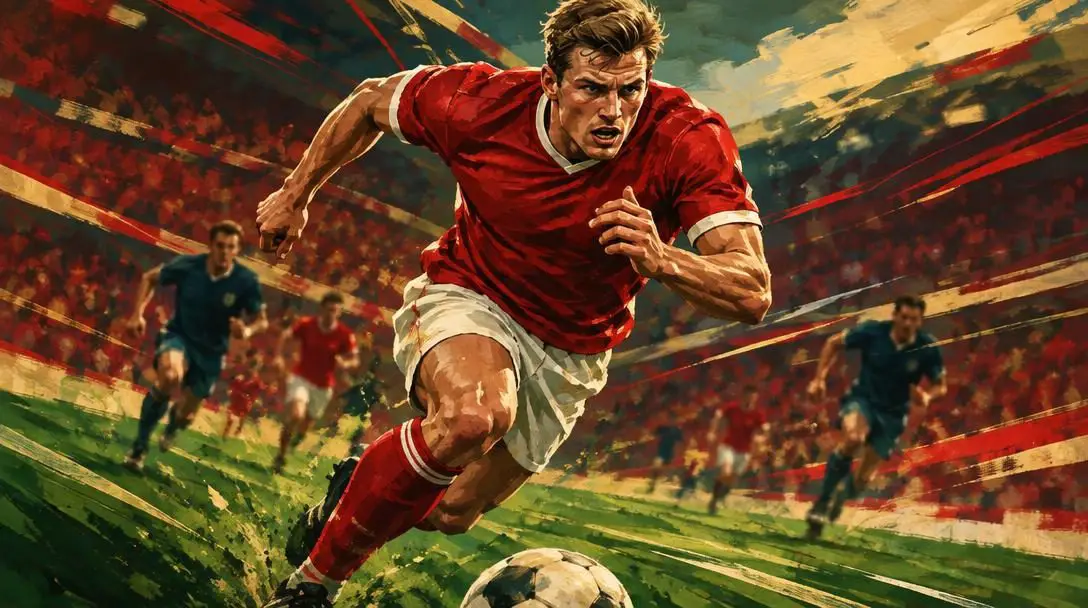
- Senior appearances: 559
- Club goals: 253 (All-Time Record)
- Major team titles: 5 Premier League titles
- Arrival year: 2004 (from Everton)
While many casual fans associate Wayne Rooney strictly with Manchester United, the fierce forward actually emerged through the youth ranks at Everton. After making his professional debut for Everton in 2002 and recording 67 appearances for the Merseyside club between 2002 and 2004, his explosive ability caught the attention of manager Sir Alex Ferguson. Recognizing the 18-year-old's generational ceiling, Ferguson persuaded Manchester United to invest heavily in his signature.
That bold acquisition transformed the modern trajectory of the club. Rooney developed into an indispensable offensive anchor, accumulating 559 appearances over his Old Trafford tenure, which ranks sixth all-time. His sharp finishing and selfless forward play yielded 253 goals, formally establishing him as the all-time leading scorer in Manchester United history. Across his era, the club collected five English Premier League titles alongside numerous cup competitions, before Rooney returned to Everton in 2017 and eventually concluded his playing days in the United States.

George Best
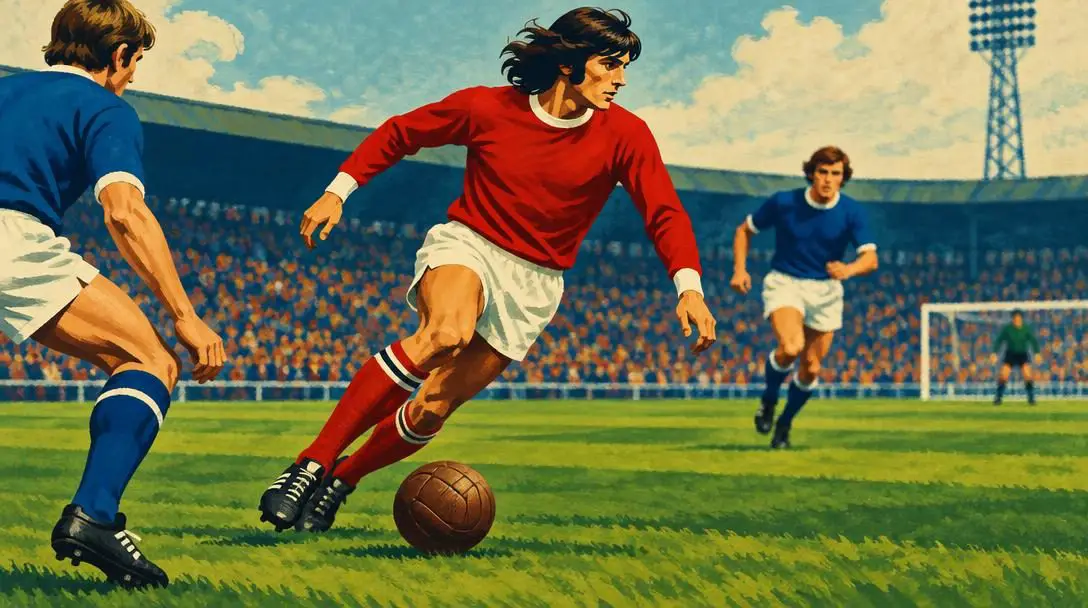
- Senior appearances: 470
- Club goals: 179 (Tied 5th All-Time)
- Major team titles: 2 First Division championships, 1968 European Cup
- Key individual honour: 1968 Ballon d'Or
Born in Belfast, George Best remains one of the most naturally gifted and mesmerizing dribblers the game has ever seen. The latter chapter of his athletic journey, spanning 1974 through 1983, saw him take on a nomadic career across 10 distinct professional clubs without ever surpassing 60 appearances for any single outfit. Prior to that itinerant stretch, however, Best spent 11 magnificent years serving as the premier attacking spark in Manchester United's golden era.
Best debuted for the senior team in 1963 and rapidly took world football by storm. His astonishing footwork, balance, and scoring ability culminated in receiving the prestigious Ballon d'Or as Europe's top footballer. In total, Best scored 179 goals in 470 senior outings, tying him for fifth on the club's all-time scoring leaderboard. Because he reached that total in fewer games than many fellow legends, his goals-per-game ratio remains among the highest in club lore. His brilliance powered United to two First Division championships and the crowning triumph of the 1968 European Cup, leading to his induction into the English Football Hall of Fame in 2002.
Bobby Charlton
- Senior appearances: 758 (2nd All-Time)
- Club goals: 249 (2nd All-Time)
- Major team titles: 3 First Division titles, 1 FA Cup, 1968 European Cup
- International honour: 1966 FIFA World Cup Champion
For the entirety of George Best's prime at Old Trafford, he shared the turf with Sir Bobby Charlton. Charlton arrived much earlier, entering the Manchester United youth setup in the mid-1950s and earning his senior team debut in 1956. Over the next 17 years, Charlton embodied the heart, resilience, and class of the institution, surviving the Munich air disaster to rebuild the club into European champions.
Charlton's durability produced an astonishing 758 appearances, a figure that stood as the all-time club benchmark for decades and still ranks second today. Operating across midfield and forward roles, he unleashed a thunderous shot that generated 249 goals, leaving him just four strikes shy of Rooney's eventual record. Beyond securing three First Division crowns, an FA Cup, and two Charity Shields, Charlton reached the pinnacle of international sport by steering England to the 1966 World Cup. He took home the Ballon d'Or that same year and finished as runner-up in both of the subsequent two years, including finishing second behind his teammate George Best.
Surviving tragedy to rebuild the club, Bobby Charlton set statistical and cultural benchmarks that defined Manchester United for over half a century.
Paul Scholes

- Senior appearances: 718 (3rd All-Time)
- Club goals: 155 (Top 10 All-Time)
- Major team titles: 11 Premier Leagues, 2 Champions Leagues, 1 Club World Cup
- Hall of fame honors: English Football (2008), Premier League (2022)
Unlike Rooney, Best, and Charlton—each of whom suited up for other professional clubs at points in their careers—Paul Scholes spent his entire professional life wearing exclusively red. Emerging through the youth academy as a prominent member of the renowned Class of '92, Scholes orchestrated the Manchester United midfield continuously from 1993 until his final retirement in 2013.
Over two decades of senior competition, Scholes registered 718 appearances, the third-highest total in Manchester United history. While his tactical genius lay in dictating tempo and distribution from the center of the park, his late runs into the penalty area produced 155 goals, securing a permanent spot inside the club's top 10 all-time scoring charts. Scholes won 11 Premier League titles, two UEFA Champions League trophies, and the FIFA Club World Cup, earning induction into both the English Football Hall of Fame in 2008 and the Premier League Hall of Fame in 2022.
Ryan Giggs

- Senior appearances: 963 (Club Record)
- Club goals: 168
- Major team titles: 13 Premier Leagues, 4 FA Cups, 2 Champions Leagues
- Total seasons active: 1990 to 2014
Holding the undisputed number one spot on the list is Welsh winger Ryan Giggs. Though Giggs started out in the youth ranks of crosstown rivals Manchester City, he made a historic shift across the city to United in 1987. Making his first-team debut in 1990, Giggs remained an active first-team contributor through 2014, demonstrating an unmatched standard of sustained physical conditioning and tactical evolution over nearly a quarter-century.
Giggs stands alone at the summit of Manchester United history with 963 senior appearances, establishing a record that sits more than 200 matches clear of any other player. Over that unmatched marathon, Giggs notched 168 goals and collected silverware at a rate unprecedented in English football. He hoisted 13 Premier League trophies, four FA Cups, and two UEFA Champions League titles. Underscoring his greatness, Giggs was inducted into the English Football Hall of Fame while still an active player, with nearly ten seasons of his career still left to play.
The evaluation framework: How football legends are measured
Ranking athletes across different competitive eras requires a balanced, multifaceted framework. Measuring players who competed in the heavy-pitch conditions of the 1960s alongside modern athletes competing in the fast-paced Premier League relies on five primary pillars:
- Longevity and durability: The capability to maintain world-class physical output and tactical adaptability over hundreds of senior games, as demonstrated by Ryan Giggs (963 matches), Bobby Charlton (758 matches), and Paul Scholes (718 matches).
- Scoring efficiency: Analyzing offensive value through both cumulative totals—such as Wayne Rooney's 253 goals and Charlton's 249 strikes—and high-rate efficiency, exemplified by George Best's scoring average across 470 appearances.
- Team silverware: The accumulation of premier domestic and continental trophies, including the First Division, Premier League, FA Cup, and European Cup/Champions League.
- Individual international accolades: Independent global recognition, headlined by the Ballon d'Or wins of Charlton (1966) and Best (1968), as well as formal hall of fame inductions.
- Positional difficulty: Assessing output relative to role expectations, such as Paul Scholes scoring 155 goals while controlling the midfield engine room.
A step-by-step guide to researching historic footballers
Supporters interested in studying football history and forming objective assessments of vintage and contemporary players can follow this structured approach:
- Audit verified club archives: Start by examining verified appearance registries, goal tallies, and trophy timelines to establish accurate factual baselines rather than relying on folklore.
- Contextualize historical eras: Account for structural transitions in English football, such as the shift from the Football League First Division to the Premier League in 1992, and the European Cup's evolution into the UEFA Champions League.
- Track career movements: Note how players entered and departed the club, tracing whether they rose via youth academies, arrived via major transfer fees, or departed to play for other domestic or overseas teams.
- Examine individual honors: Research major worldwide and domestic awards contemporary to their playing days, including Ballon d'Or voting finishes and hall of fame selections.
- Evaluate tactical development: Review how an athlete adjusted their on-pitch duties over time, observing how wingers or strikers frequently transitioned into deeper midfield roles to extend their longevity.
Common analytical mistakes when comparing historical eras
Historical football debates frequently stumble due to common analytical oversights. Avoiding these traps ensures a more nuanced appreciation of the sport's history:
- Falling victim to recency bias: Overweighting modern Premier League television stars while overlooking pioneering figures from previous generations who established the club's international stature.
- Focusing strictly on goalscorers: Concentrating exclusively on final finishing tallies while undervaluing tempo-controlling playmakers like Paul Scholes who made those attacking sequences possible.
- Equating short peaks with sustained greatness: Confusing a brilliant two-year burst with the decade-spanning consistency demonstrated by players who surpassed 700 appearances.
- Assuming one-club origins: Overlooking that legends such as Wayne Rooney and Ryan Giggs spent formative youth years at Everton and Manchester City respectively before arriving at Old Trafford.
- Ignoring international achievements: Failing to integrate major international tournaments, such as Bobby Charlton's 1966 World Cup title, into the total evaluation of an athlete's career peak.
Frequently asked questions
Who is Manchester United's all-time leading goalscorer?
Wayne Rooney holds the club record with 253 goals in 559 appearances, narrowly surpassing Sir Bobby Charlton's long-standing tally of 249 goals.
Which player has made the most appearances for Manchester United?
Ryan Giggs holds the all-time appearance record, playing 963 senior matches for Manchester United between 1990 and 2014, over 200 matches ahead of second-place Bobby Charlton.
Which Manchester United players have won the Ballon d'Or?
Both Sir Bobby Charlton (1966) and George Best (1968) won the prestigious Ballon d'Or while playing for Manchester United during the club's initial European golden era.
Did Wayne Rooney play his entire career at Manchester United?
No. Rooney began his senior career with Everton, making 67 appearances from 2002 to 2004 before moving to United. He returned to Everton in 2017 and later concluded his career in the United States.
Why did legendary players like Eric Cantona and Roy Keane miss the top five?
While icons like Cantona, Keane, and David Beckham won major trophies, the top five players combined longer tenures, record appearance totals, and all-time scoring marks that set an exceptionally high standard.
The bottom line
Manchester United's stature as a powerhouse of global football is built upon the extraordinary contributions of players who blended supreme talent with fierce dedication. The club's top five figures—Wayne Rooney, George Best, Sir Bobby Charlton, Paul Scholes, and Ryan Giggs—represent the definitive gold standard of Old Trafford excellence. Between Giggs's untouchable 963 appearances, Rooney's record 253 goals, Charlton's heroic resilience, Best's unmatched flair, and Scholes's technical midfield dominance, their combined legacies showcase why the club has captured more league titles, FA Cups, and Community Shields than any other English team.
Deepening your perspective on Manchester United's historic pedigree involves exploring the managerial eras that guided these players, particularly Sir Alex Ferguson's squad building, and studying how tactical evolutions from 1968 to the modern day continue to shape expectations for future generations wearing the famous red shirt.