5 Biggest Point Spreads in Super Bowl History
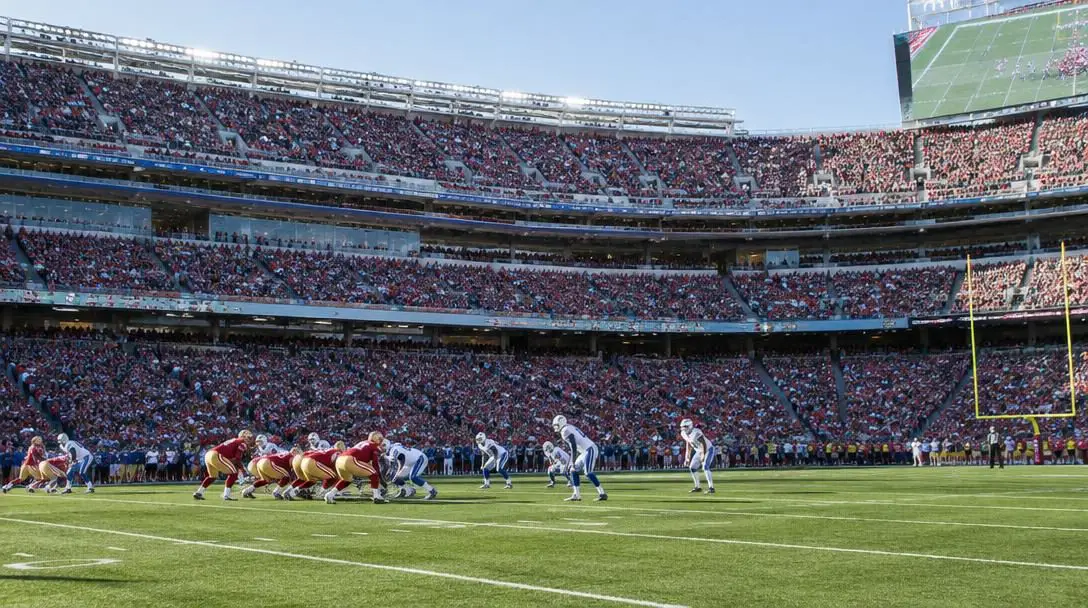
The Super Bowl is designed to bring together the two finest teams in professional American football at the conclusion of every National Football League season. Despite this championship premise, competitive balance has not always been even on Super Sunday. Roster disparities, varying playoff journeys, and differing conference strengths have frequently led oddsmakers to project massive, double-digit margins between finalists.
From the early championship clashes between the established NFL and the upstart American Football League to modern dynastic showdowns, extreme betting lines have shaped fan expectations. While some heavy favorites delivered historically lopsided routs, other high-spread matchups yielded monumental straight-up upsets that permanently altered the landscape of the sport.
Key takeaways
- The largest point spread in championship history occurred in Super Bowl XXIX, where the San Francisco 49ers were favored by 18.5 points over the San Diego Chargers.
- Massive double-digit spreads have generated two of the sport's most famous outright upsets: the New York Jets over the Baltimore Colts in Super Bowl III and the New England Patriots over the St. Louis Rams in Super Bowl XXXVI.
- A spread of at least 12 points has occurred ten times across Super Bowl history, resulting in a blend of blowout covers, backdoor covers by underdogs, and an exact push.
- High betting lines demand complete four-quarter dominance from favorites, meaning late scores or defensive touchdowns can easily flip the betting outcome.
How point spreads function on football's biggest stage
To grasp the significance of historic championship lines, it is helpful to review how sportsbooks balance betting action through the point spread. Unlike a standard moneyline wager—which merely requires choosing the outright winner—a point spread balances two teams by establishing an expected margin of victory. The designated favorite is assigned a negative number indicating how many points they must win by to satisfy the wager. Conversely, the underdog carries a positive number, allowing bettors to win if that team claims an outright victory or loses by fewer points than the posted number.
When the final margin of victory matches the point spread exactly, the wager is ruled a push, and sportsbooks refund all original stakes. In early Super Bowls, enormous spreads were common because bettors and analysts regarded the established NFL as inherently superior to the AFL. In modern football, sophisticated statistical modeling and parity measures have made double-digit spreads rarer, but extreme lines still materialize when an elite juggernaut faces an opponent perceived to have benefited from easier playoff scheduling or favorable fortune.
The largest Super Bowl point spreads at a glance
The table below summarizes the historic Super Bowl matchups that featured spreads of 12 points or greater, detailing the favorites, underdogs, closing margins, and eventual outcomes against the spread.
| Game | Favorite | Underdog | Point spread | Final score | Spread result |
|---|---|---|---|---|---|
| Super Bowl XXIX | San Francisco 49ers | San Diego Chargers | -18.5 | 49-26 | Favorite covered |
| Super Bowl III | Baltimore Colts | New York Jets | -18.0 | 7-16 | Underdog won outright |
| Super Bowl I | Green Bay Packers | Kansas City Chiefs | -14.0 | 35-10 | Favorite covered |
| Super Bowl XXXI | Green Bay Packers | New England Patriots | -14.0 | 35-21 | Push |
| Super Bowl XXXVI | St. Louis Rams | New England Patriots | -14.0 | 17-20 | Underdog won outright |
| Super Bowl II | Green Bay Packers | Oakland Raiders | -13.5 | 33-14 | Favorite covered |
| Super Bowl XXX | Dallas Cowboys | Pittsburgh Steelers | -13.5 | 27-17 | Underdog covered |
| Super Bowl IV | Minnesota Vikings | Kansas City Chiefs | -12.0 | 7-23 | Underdog won outright |
| Super Bowl XXIV | San Francisco 49ers | Denver Broncos | -12.0 | 55-10 | Favorite covered |
| Super Bowl XLII | New England Patriots | New York Giants | -12.0 | 14-17 | Underdog won outright |
The 5 biggest point spreads in Super Bowl history
5. Twelve-point spreads: Super Bowls IV, XXIV, and XLII
- Designated spread: 12 points (-12)
- Times occurred: Three games
- Straight-up underdog wins: Two out of three
Reaching a 12-point margin is an extraordinary mark of confidence on a neutral field, and the three games sharing this line produced wildly contrasting results. The first arrived in Super Bowl IV, where the Minnesota Vikings entered as 12-point favorites over the Kansas City Chiefs. Rather than validating oddsmakers' projections, the Chiefs dismantled Minnesota in a commanding 23-7 victory, claiming an outright upset that reinforced the legitimacy of the American Football League right before the formal merger took effect.
Twenty years later, Super Bowl XXIV featured another 12-point line when the San Francisco 49ers took on the Denver Broncos. San Francisco met and exceeded the loftiest expectations of the betting market, staging an offensive clinic to crush Denver 55-10. The 45-point victory remains one of the most lopsided margins in football history, easily clearing the double-digit threshold.

The final game at this threshold occurred in Super Bowl XLII. The New England Patriots arrived undefeated, aiming to become the first team in modern NFL history to finish an unblemished 19-0 season. They were favored by 12 points over the New York Giants. In a dramatic defensive duel, the underdog Giants pressured New England's record-setting offense, securing a 17-14 victory that ruined the Patriots' pursuit of perfection and cemented one of the most celebrated upsets in sports lore.
4. Thirteen-and-a-half-point spreads: Super Bowls II and XXX
- Designated spread: 13.5 points (-13.5)
- Times occurred: Two games
- Favorite record against spread: 1 win, 1 loss
A spread of 13.5 points sits just shy of two full touchdowns, giving bettors on the favorite a challenging margin to cover. In Super Bowl II, the defending champion Green Bay Packers were installed as 13.5-point favorites against the Oakland Raiders. Green Bay validated the line with veteran composure, pulling away to claim a 33-14 victory. The 19-point margin rewarded Packers backers and gave the franchise its second consecutive Super Bowl triumph.
The margin reappeared nearly three decades later at Super Bowl XXX, when the Dallas Cowboys faced the Pittsburgh Steelers. Dallas controlled the game and built early leads, but Pittsburgh remained competitive throughout the second half. While the Cowboys secured the championship with a 27-17 victory, their 10-point winning margin fell short of the 13.5 points required to cover. Consequently, Pittsburgh backers collected a win against the spread despite their team falling short on the scoreboard.
A double-digit spread in a championship game does not merely demand a victory; it demands complete dominance from the opening kickoff to the final whistle.
3. Fourteen-point spreads: Super Bowls I, XXXI, and XXXVI
- Designated spread: 14 points (-14)
- Times occurred: Three games
- Notable outcome: Exactly one push, one cover, and one outright upset
A full two-touchdown spread represents overwhelming market consensus. The 14-point margin has occurred three times, delivering three distinct betting outcomes: a blowout cover, an exact push, and a landscape-shifting underdog upset. In the inaugural game, Super Bowl I, Vince Lombardi's Green Bay Packers were favored by 14 points over the Kansas City Chiefs. After a tight first half, Green Bay pulled away for a 35-10 victory, covering the spread by double digits.
Thirty years later, the Packers were once again 14-point favorites in Super Bowl XXXI, this time squaring off against the New England Patriots. Green Bay secured a 35-21 win behind big plays in all three phases of the game. Because the Packers won by exactly 14 points, the contest resulted in a rare Super Bowl push, meaning all point spread wagers were refunded.
The final 14-point spread emerged in Super Bowl XXXVI, featuring the high-powered St. Louis Rams, led by Kurt Warner, against the New England Patriots, led by an unheralded young quarterback named Tom Brady. The Rams entered as heavy favorites, expected to overwhelm New England's defense. Instead, the Patriots implemented a physical defensive game plan, controlled the clock, and kicked a game-winning field goal as time expired to win 20-17 straight up, launching a dynastic era.
2. Super Bowl III: The eighteen-point margin

- Designated spread: 18 points (-18)
- Favorite: Baltimore Colts
- Underdog: New York Jets
Super Bowl III remains arguably the most culturally and historically significant championship game ever played. As the first title clash officially marketed under the Super Bowl moniker, it pitted the NFL champion Baltimore Colts against the AFL champion New York Jets. Oddsmakers installed the Colts as overwhelming 18-point favorites, reflecting the widespread belief that the established NFL operated on an entirely different competitive plane than the upstart league.

Unshaken by the lopsided betting line, Jets quarterback Joe Namath famously guaranteed victory in the days leading up to kickoff. New York's defense then delivered an exceptional performance, intercepting Baltimore repeatedly and limiting the Colts to a solitary late touchdown. The Jets walked away with a 16-7 victory, not only covering the colossal spread with 27 points of room to spare but winning outright by nine points. The triumph forced the football world to respect the AFL and accelerated the full merger of the two leagues.
1. Super Bowl XXIX: The record eighteen-and-a-half-point spread
- Designated spread: 18.5 points (-18.5)
- Favorite: San Francisco 49ers
- Underdog: San Diego Chargers
The distinction of the largest point spread in championship history belongs to Super Bowl XXIX, when the San Francisco 49ers were favored by 18.5 points over the San Diego Chargers. San Francisco entered the contest with an unstoppable offensive juggernaut orchestrated by quarterback Steve Young, who was pursuing his first championship as the team's starting leader. San Diego had survived grueling playoff battles in the AFC, but oddsmakers viewed the gap in talent as an insurmountable gulf.
Unlike Super Bowl III, this historic matchup followed the oddsmakers' script perfectly. San Francisco scored two touchdowns within the opening five minutes of the game, setting the tone for an offensive explosion. The 49ers coasted to a 49-26 victory, easily clearing the 18.5-point hurdle. In fact, San Francisco's offense scored 49 points by itself, nearly exceeding the game's over/under total of 53.5 points without needing any contribution from the Chargers.
How to evaluate heavy championship favorites
When analyzing a championship matchup with an inflated point spread, analysts and bettors can apply a structured process to separate real mismatches from market overreactions:
- Examine the underdog's regular-season journey: Determine whether the underdog advanced through an exceptionally weak division or benefited from opponent injuries during their playoff run.
- Compare turnover differentials: High-spread favorites rarely lose unless they commit multiple unforced turnovers, making turnover margin the single most predictive metric for an upset.
- Calculate required game script margins: Measure how many separate scoring drives and defensive stops the favorite mathematically needs to cover lines that exceed 10 or 12 points.
- Assess red-zone touchdown conversion rates: Favorites that settle for field goals instead of finishing drives with touchdowns struggle consistently to cover wide point spreads.
- Track late-week line movement: Monitor whether professional betting syndicates or public recreational bettors are driving the spread to its final closing number.
Common mistakes when sizing up high-spread games
Evaluating high-spread postseason matchups requires avoiding several frequent analytical traps:
- Assuming regular-season dominance guarantees a neutral-field blowout: Two full weeks of coaching preparation often allow underdogs to devise specialized game plans that neutralize a favorite's primary strengths.
- Disregarding the psychological burden on the favorite: When a team is universally expected to dominate, falling behind early can trigger internal panic and conservative play-calling.
- Ignoring fourth-quarter backdoor covers: Trailing teams frequently score late touchdowns against prevent defenses when the game's outright outcome is already decided, easily trimming an 18-point lead to 11.
- Confusing defensive stops with scoring capability: An underdog may possess a disciplined defense, but without an offense capable of generating explosive plays, covering large spreads remains difficult.
Frequently asked questions
What is the largest point spread ever recorded in a Super Bowl?
The largest point spread in Super Bowl history is 18.5 points, set in Super Bowl XXIX when the San Francisco 49ers faced the San Diego Chargers. San Francisco covered the line by defeating San Diego 49-26.
Has an underdog ever won a Super Bowl outright when facing a double-digit spread?
Yes, massive underdogs have won outright on multiple occasions. Most notably, the New York Jets upset the Baltimore Colts as 18-point underdogs in Super Bowl III, the New England Patriots defeated the St. Louis Rams as 14-point underdogs in Super Bowl XXXVI, and the New York Giants beat the 12-point favored New England Patriots in Super Bowl XLII.
What happens if a Super Bowl ends with the exact margin of the point spread?
If the favorite wins by the exact number of points designated by the spread, the outcome is ruled a push. All wagers on both sides are refunded. This occurred in Super Bowl XXXI, when the Green Bay Packers defeated the New England Patriots by exactly 14 points (35-21) on a 14-point spread.
Why were early Super Bowl point spreads so much larger than modern spreads?
Early spreads were inflated primarily due to the perceived gap in talent and prestige between the long-established National Football League and the newer American Football League. In the modern era, the salary cap, free agency, and comprehensive scouting have created greater league parity, making double-digit championship spreads rare.
The bottom line
Lopsided point spreads in championship football highlight the rare occasions when oddsmakers view the gap between conference champions as an insurmountable chasm. While historical favorites like the 1994 49ers and 1989 49ers converted those expectations into dominant blowouts, games like Super Bowl III and Super Bowl XXXVI serve as enduring reminders that vast point spreads can produce the most iconic upsets in American sports history.