5 Biggest Trades in NHL History
In the National Hockey League, player movement occurs continuously as franchises evaluate their championship aspirations against long-term operational realities. Trade activity reaches a fever pitch near the annual trade deadline, where front offices generally divide into two distinct camps: contenders looking to acquire missing pieces for an immediate run at the Stanley Cup, and struggling clubs positioning themselves to build for the future. While the vast majority of midseason transactions involve depth players and short-term rentals brought in to stabilize a roster for a few months, the sport is occasionally shaken by monumental transactions involving franchise icons.
When genuine superstars change hands, the competitive balance of entire divisions can shift overnight. A blockbuster trade has the power to elevate a rising contender into a champion, jump-start a stalled rebuilding process, or trigger years of organizational instability. Over the decades, five specific transactions stand out above all others for their unprecedented scale, the caliber of talent involved, and the lasting consequences they created across the league.
Key takeaways
- Major NHL blockbuster trades fundamentally rewrite franchise timelines by swapping established superstar talent for elite prospects, core players, draft capital, or financial resources.
- High-profile transactions can result in rare mutual benefits, as demonstrated when Calgary and Dallas exchanged future icons to capture championships and establish franchise scoring records.
- Internal organizational friction and irreconcilable locker-room relationships can force franchises to negotiate from a disadvantage, drastically altering team trajectories.
- Complex multi-asset transactions featuring numerous draft picks and young prospects often require decades of observation before a definitive winner can be declared.
At a Glance: The 5 Landmark Super-Trades
Blockbuster trades in professional hockey rarely follow a uniform structure. Some transactions center on direct superstar swaps, while others demand vast packages composed of active roster talent, premium draft selections, and major financial compensation. The table below outlines how these iconic trades compare across their core components.
| Transaction | Primary Franchises | Key Superstars Involved | Primary Assets Returned | Ultimate Franchise Outcome |
|---|---|---|---|---|
| Nieuwendyk for Iginla | Dallas Stars & Calgary Flames | Joe Nieuwendyk, Jarome Iginla | Jarome Iginla, Corey Millen | Dallas won the 1999 Stanley Cup; Iginla became Calgary's all-time scoring leader. |
| Erik Karlsson Trade | Ottawa Senators & San Jose Sharks | Erik Karlsson | Four roster players, four draft picks (including three first-rounders) | Ottawa reset its roster during a teardown; San Jose invested heavily in immediate contention. |
| Patrick Roy Blockbuster | Montreal Canadiens & Colorado Avalanche | Patrick Roy, Mike Keane | Andrei Kovalenko, Martin Rucinsky, Jocelyn Thibault | Colorado claimed the Stanley Cup in Roy's first season; Montreal entered a coaching transition. |
| Eric Lindros Megadeal | Quebec Nordiques & Philadelphia Flyers | Eric Lindros, Peter Forsberg | Five players, two first-round draft picks, $15 million cash | Quebec built an elite foundation of championship talent; Philadelphia acquired an iconic centerpiece. |
| Wayne Gretzky "King's Ransom" | Edmonton Oilers & Los Angeles Kings | Wayne Gretzky, Mark Messier (indirectly) | Jimmy Carson, Martin Gelinas, three first-round draft picks, cash | Edmonton secured essential operational funding while Messier led the roster; hockey expanded in Los Angeles. |
The 5 Biggest Trades in NHL History
Superstar trades differ sharply from routine roster management because they fundamentally alter team chemistry, payroll distribution, and competitive expectations. The following five landmark deals reshaped franchises and altered the broader history of the league.
Joe Nieuwendyk for Jarome Iginla
- Year of Draft Selection: 1995 (Jarome Iginla selected 11th overall)
- First Season Performance: 92 points across 75 games for Joe Nieuwendyk in Calgary
- Championship Result: Stanley Cup title for Calgary in 1989; Stanley Cup title for Dallas in 1999
Following the relocation of the Flames from Atlanta to Calgary, the franchise quickly rose into contention during the late 1980s. A vital contributor to that rise was Joe Nieuwendyk, an elite offensive player who developed through Calgary's system. In his first full campaign with the Flames, Nieuwendyk posted 92 points across 75 games and maintained his remarkable production into his sophomore season, helping lead Calgary to a Stanley Cup victory in 1989.
By the mid-1990s, the Dallas Stars had assembled a veteran roster and operated in win-now mode. Dallas had selected forward Jarome Iginla with the 11th overall pick in the 1995 NHL Draft, but the front office sought established scoring to push them over the top immediately. Dallas sent Iginla along with Corey Millen to Calgary in exchange for Nieuwendyk. The swap remains the gold standard of a win-win transaction: Nieuwendyk served as an indispensable leader during Dallas's run to the Stanley Cup championship in 1999, while Iginla spent his prime in Calgary, developing into the highest-scoring player in Flames history.
Erik Karlsson to the San Jose Sharks

- Trade Year: 2018
- Individual Accolades: Norris Trophy-winning defenseman
- Assets Surrendered by San Jose: Four roster players and four draft picks (including three first-round selections)
In 2017, the Ottawa Senators pushed within a game of the Stanley Cup Finals before suffering a heartbreaking postseason exit against the Pittsburgh Penguins. When the subsequent campaign unraveled into heavy on-ice struggles, Ottawa's front office concluded that their competitive window had closed. Recognizing the necessity of a total organizational rebuild, the club orchestrated a complete teardown by trading away foundational pieces, sending Mark Stone to Las Vegas and Matt Duchene to Columbus.

The centerpiece of the reconstruction came in 2018, when Ottawa dealt elite defenseman Erik Karlsson to the San Jose Sharks. Fresh off a Norris Trophy victory, Karlsson commanded a massive package in return. San Jose sent four roster players and four draft picks to Ottawa, a return that featured three first-round selections. Because the trade tree contains numerous draft choices that took years to develop, enter the league, or be packaged into secondary transactions, the ultimate legacy of the Karlsson deal will require extended evaluation.
Patrick Roy to the Colorado Avalanche

- Trade Year: 1995
- Key Players Traded to Colorado: Patrick Roy and Mike Keane
- Return Package to Montreal: Andrei Kovalenko, Martin Rucinsky, and Jocelyn Thibault
Transactions involving elite goaltenders rarely match the league-wide disruption seen when the Montreal Canadiens traded Patrick Roy in 1995. That same year, the Quebec Nordiques relocated to Denver to become the Colorado Avalanche. Management in Colorado assembled a strong roster built to win immediately, but front-office executives recognized that securing a championship required a proven, world-class goaltender.
Circumstances in Montreal created an unexpected opening. The Canadiens hired head coach Mario Tremblay, who quickly developed a contentious relationship with Roy. After a high-profile falling out during a game, Roy made it known that he would not play for Montreal again. Backed into a corner, Montreal traded Roy and Mike Keane to the Avalanche in exchange for Andrei Kovalenko, Martin Rucinsky, and Jocelyn Thibault. The transaction paid immediate dividends for Colorado, as Roy anchored the franchise to a Stanley Cup championship during his first season in Denver. In contrast, Tremblay lasted only two seasons behind the bench in Montreal, leaving the Canadiens to navigate a difficult transitional era.
Eric Lindros to the Philadelphia Flyers
- Trade Year: 1992
- Draft Selection: First overall pick by the Quebec Nordiques
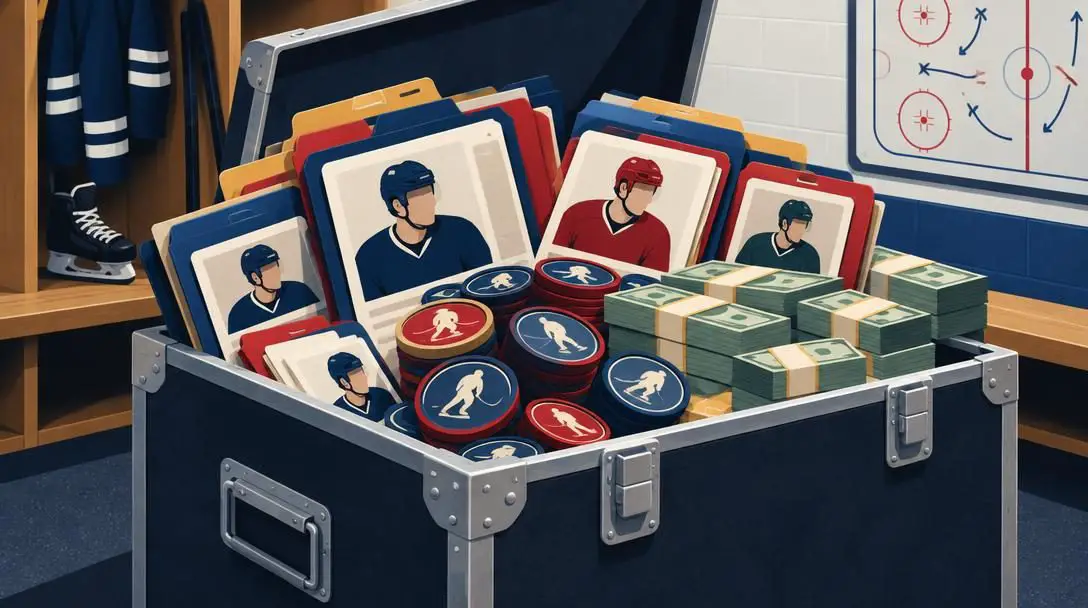
- Philadelphia's Trade Package: Five players, $15 million cash, and two first-round draft picks
Leading up to the 1992 NHL Draft, Eric Lindros arrived with expectations unlike any prospect since Wayne Gretzky. When the Quebec Nordiques selected Lindros first overall, an intense bidding war emerged across the league. While nearly every front office pursued the dominant young power forward, very few organizations possessed the immense pool of assets required to satisfy Quebec's asking price.
The Philadelphia Flyers ultimately secured Lindros by parting with an unprecedented package. Philadelphia sent Steve Duchesne, Peter Forsberg, Ron Hextall, Kerry Huffman, Mark Ricci, $15 million in cash, and two first-round draft selections to Quebec. Those two picks eventually turned into Nolan Baumgartner and Jocelyn Thibault. The inclusion of multiple future Hall of Fame talents, combined with a staggering sum of liquid capital, elevated the Lindros transaction into one of the most transformative, multi-layered trades in professional sports history.
Blockbuster trades permanently alter the trajectory of franchises by redistributing generational talent, high-value draft capital, and organizational leverage in a single transaction.
Wayne Gretzky to the Los Angeles Kings

- Transaction Moniker: "The King's Ransom"
- Players Sent to Los Angeles: Wayne Gretzky, Mike Krushelnyski, and Marty McSorley
- Return Package to Edmonton: Jimmy Carson, Martin Gelinas, three first-round draft picks, and substantial cash
Widely regarded as the most shocking trade in hockey history, the move known as "The King's Ransom" reshaped the sport's cultural footprint in North America. Wayne Gretzky entered the NHL alongside the Edmonton Oilers and served as the focal point of an iconic dynasty that dominated the era. However, the Oilers faced financial challenges common to small-market teams at the time, prompting an unthinkable decision to trade the greatest player in the game.

Edmonton sent Gretzky, Mike Krushelnyski, and Marty McSorley to the Los Angeles Kings, instantly providing the NHL with a transcendent star in the nation's second-largest media market. In exchange, the Oilers acquired young talents Jimmy Carson and Martin Gelinas, three first-round draft picks, and a substantial sum of hard cash that helped keep Edmonton's small-market hockey operations viable. While historians continue to debate which club captured the upper hand in the transaction, the departure of Gretzky allowed Mark Messier to step into the primary leadership role in Edmonton, cementing his own legacy as an elite captain and focal star.
How Blockbuster NHL Trades Work
Executing a trade involving high-end talent is significantly more complex than swapping role players. General managers must balance immediate on-ice performance against payroll considerations, draft capital, and future competitive timelines. The structure of any mega-deal typically depends on four core dynamics:
- Assessing Competitive Timelines: Front offices evaluate whether their current roster is built to contend immediately or requires a rebuild. A team entering win-now mode, such as the Dallas Stars in 1995, looks to acquire established stars like Joe Nieuwendyk. Conversely, a team recognizing that its window is closing, like the Senators in 2018, will trade veterans to collect prospects and draft selections.
- Balancing Established Talent with Future Assets: Blockbusters rarely consist of one-for-one swaps of equal players. Teams acquiring a superstar typically part with younger roster players, unproven prospects, and premium draft selections to balance the perceived value of the proven elite talent.
- Managing Contract Realities and Organizational Friction: A trade often becomes necessary when a franchise cannot retain a player due to expiring terms or when relationship breakdowns occur. Patrick Roy's clash with Montreal's coaching staff forced an immediate trade, showing how off-ice circumstances can drive massive transactions.
- Financial Capital Distribution: In historical transactions, direct cash payments were frequently included to bridge gaps in team resources. In contemporary hockey, teams navigate roster payrolls, contract commitments, and long-term asset allocation instead of relying on pure cash payments.
Practical Steps Front Offices Take to Complete Major Trades
Completing a superstar trade requires exhaustive internal preparation and high-stakes negotiation. Front offices follow a structured process to minimize organizational risk when executing a blockbuster deal.
- Identify Internal Needs and Strategy: Management reviews the depth chart to determine whether the team is a true Stanley Cup contender or an organization that needs to rebuild for future seasons.
- Target Trade Partners: Front offices identify opposing clubs whose organizational timelines complement their own. A club attempting to offload high-end veteran talent seeks partners that are willing to sacrifice young assets to win immediately.
- Structure Trade Proposals: General managers build packages balancing roster players, top-tier prospects, and high-value draft picks. The Ottawa-San Jose trade demonstrates how complex packages with multiple players and early-round picks are constructed.
- Review Medical and Character Factors: Teams conduct due diligence on the incoming player's injury history, locker-room fit, and off-ice relationships to avoid bringing in unresolved conflicts.
- Finalize League Approval: Once both franchises agree on terms, the trade is formally submitted to the league office for verification and official registration before players report to their new clubs.
Common Mistakes in Executing and Evaluating Trades
Both front offices and observers frequently miscalculate the true cost and outcome of major transactions. Recognizing common analytical pitfalls provides a clearer picture of how these deals unfold over time.
- Overvaluing the Immediate Winner: Media reactions often rush to crown an immediate winner right after a trade is announced. The trade that sent Erik Karlsson to San Jose proves that evaluating multi-pick trades requires patience, as the true outcome cannot be determined until the draft picks and secondary trades run their course.
- Failing to Account for Player Relationships: Front offices sometimes underestimate the impact of internal conflicts. Montreal's inability to resolve the tension between Patrick Roy and Mario Tremblay forced the team into a disadvantageous negotiating position, leading to an unfavorable return.
- Sacrificing Long-Term Stability for Short-Term Gains: Teams eager to compete right away can surrender an excessive amount of future draft picks and top prospects. If the acquired star fails to bring a championship, the franchise risks prolonged competitive struggles.
- Ignoring Roster Hierarchy and Team Dynamics: Adding a superstar can shift leadership roles, as shown in Edmonton after the Gretzky trade, where Mark Messier stepped forward to take over leadership of the locker room. Failing to prepare for changes in team hierarchy can disrupt on-ice chemistry.
Frequently asked questions
Why did the Edmonton Oilers trade Wayne Gretzky?
The Edmonton Oilers traded Wayne Gretzky to the Los Angeles Kings largely due to the financial challenges facing small-market Canadian franchises at the time. In addition to securing young players like Jimmy Carson and Martin Gelinas alongside three first-round draft picks, Edmonton received a substantial sum of cash that helped keep the club's hockey operations operational.
What made the Joe Nieuwendyk for Jarome Iginla trade a rare win-win?
The trade met the exact long-term and short-term needs of both franchises. Dallas acquired Joe Nieuwendyk to push their veteran core over the top, leading directly to a 1999 Stanley Cup championship. Meanwhile, Calgary received Jarome Iginla, who spent his prime developing into the highest-scoring player in Flames franchise history.
How did internal team conflict lead to Patrick Roy leaving Montreal?
Patrick Roy clashed with newly appointed Montreal Canadiens head coach Mario Tremblay. After a public fallout during a game, Roy stated he would no longer play for the team, forcing Montreal management to trade their superstar netminder to the Colorado Avalanche alongside Mike Keane.
What assets did Quebec receive in exchange for Eric Lindros?
In exchange for Eric Lindros, the Philadelphia Flyers traded Steve Duchesne, Peter Forsberg, Ron Hextall, Kerry Huffman, Mark Ricci, two first-round draft selections (which became Nolan Baumgartner and Jocelyn Thibault), and $15 million in cash.
Why does it take years to evaluate the Erik Karlsson trade to San Jose?
The Erik Karlsson transaction included four active roster players and four future draft selections, three of which were first-round picks. Because draft picks take years to be selected, enter the professional ranks, or get flipped into subsequent trades, tracing the full trade tree requires an extended period of observation.
The Bottom Line
Blockbuster trades are defining events in NHL history that reveal how front offices balance the relentless desire to win now against the long-term demands of organizational stability. Whether engineered to relieve financial pressure, satisfy an unhappy superstar, or capture a championship window, these franchise-altering deals demonstrate that high-stakes trades carry consequences that ripple through the league for decades.