5 Greatest Toronto Maple Leafs of All Time

With an illustrious history dating back more than a century, the Toronto Maple Leafs stand among the most storied organizations in professional sports. Over the generations, the blue and white sweater has been worn by some of the most gifted athletes in hockey, resulting in a franchise legacy where greatness is the baseline rather than the exception. In fact, no other franchise in the National Hockey League has sent more players into the Hockey Hall of Fame than Toronto, making any attempt to single out the finest contributors a challenging endeavor.
Before highlighting the players who defined distinct eras in Toronto, it is essential to recognize the legendary figures who narrowly missed this list. Franchise icons such as Wendel Clark, Dave Keon, Mats Sundin, Frank Mahovlich, Tim Horton, and Red Kelly all left indelible marks on team lore. While every hockey fan maintains a personal roster of favorites, five particular players illustrate the franchise's remarkable depth, generational transitions, and elite individual excellence across different eras of the sport.
Key takeaways
- Toronto has produced more Hockey Hall of Fame inductees than any other club in professional hockey history.
- Evaluating all-time greats across different eras requires balancing sustained longevity against historic individual peak performance.
- Goaltending excellence and blue-line leadership hold equal weight alongside prolific offensive point totals when assessing franchise legends.
- Modern superstars can cement legendary status early in their careers by consistently matching historical production benchmarks.
Iconic Toronto Maple Leafs of all time
Presented in no particular order, these five athletes represent the pinnacle of individual achievement, perseverance, and skill throughout Maple Leafs history. Spanning multiple decades, their careers highlight the different ways a player can leave an enduring legacy in Toronto.
| Player | Primary Position | Key Toronto Milestones | Hall of Fame Year |
|---|---|---|---|
| Borje Salming | Defenseman | 768 points, 6 consecutive All-Star selections | 1996 |
| Johnny Bower | Goaltender | 475 starts, 2 Vezina Trophies, .922 save percentage | 1976 |
| Darryl Sittler | Forward | 916 points in 844 games, Hart Trophy contender | 1989 |
| Auston Matthews | Forward | Calder Trophy, scoring titles, over a point per game | Active |
| Doug Gilmour | Forward | 452 points in 393 games, Selke Trophy winner | Eligible/Inducted |
Borje Salming

- Position: Defenseman
- Toronto Tenure: 16 seasons (1973–1989)
- Franchise Totals: 768 points, 1,292 penalty minutes
- Hall of Fame Induction: 1996
Sweden has long served as a vital pipeline of elite hockey talent, particularly along the blue line, and the late Borje Salming stands as one of the most influential figures in that international tradition. Arriving in North America in 1973, Salming challenged the prevailing physical norms of the era and made an immediate, emphatic statement. During his rookie campaign, he notched 39 points and an astonishing +38 rating, demonstrating an ability to manage defensive zone responsibilities while initiating high-tempo offensive rushes.
Over the course of his 17-season NHL career—16 of which were spent in Toronto—Salming earned six consecutive selections to the NHL All-Star Team. Beyond his sleek skating and pinpoint puck distribution, he exhibited extraordinary physical resilience, accumulating 1,292 penalty minutes in a Maple Leafs sweater. By the time his Toronto career concluded in 1989, Salming had registered 768 points, cementing his place as the standard-bearer for Maple Leafs defensemen before concluding his playing career with a single season for the Detroit Red Wings.
Johnny Bower
- Position: Goaltender
- Toronto Tenure: 12 seasons
- Key Metrics: 475 starts, 2.50 GAA, .922 SV%
- Hall of Fame Induction: 1976
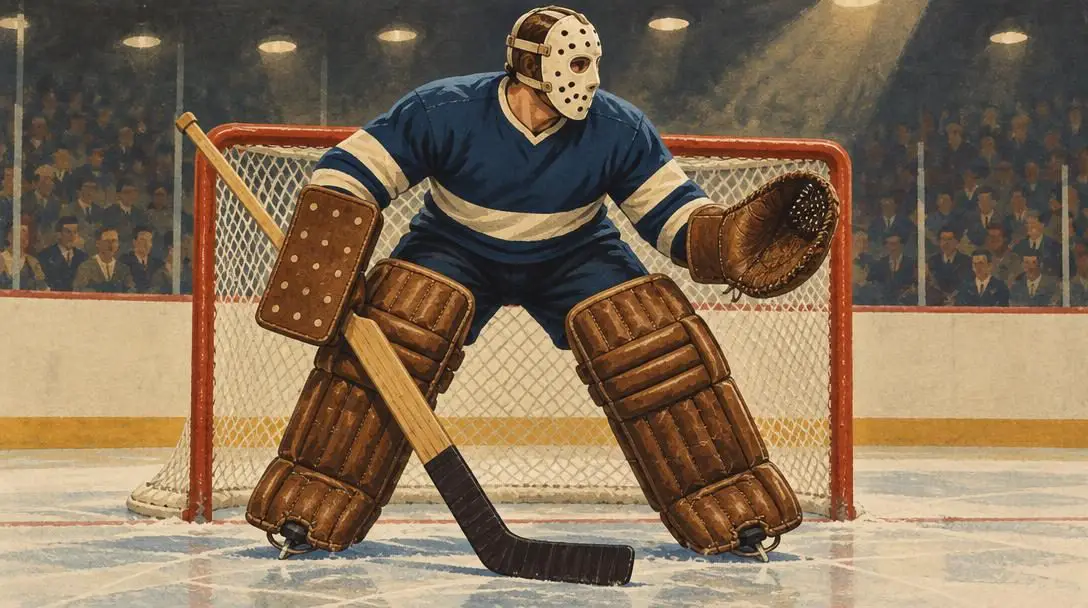
While the Maple Leafs have seen dozens of gifted skaters pass through their locker room, consistent excellence in the crease has often proven elusive since the era of Johnny Bower. Known affectionately for his relentless work ethic, Bower took an unconventional path to stardom. He made his NHL debut relatively late in his athletic life, entering the league at 29 years of age with the New York Rangers. After three seasons in New York, he found his true hockey home in Toronto, spending the final 12 seasons of his career anchoring the blue line for the Maple Leafs.

Bower started 475 games for Toronto, accumulating a record of 219-157-79. His underlying numbers—highlighted by a stellar 2.50 goals against average and a .922 save percentage—demonstrated an uncommon consistency throughout an era marked by shifting styles of play. Over his Toronto tenure, Bower secured two Vezina Trophies and earned a spot on the NHL All-Star Team. He continued competing at the highest professional level until his retirement at age 45 in 1970, receiving his call to the Hockey Hall of Fame six years later.
Darryl Sittler

- Position: Forward
- Toronto Tenure: 844 games (1970s–early 1980s)
- Franchise Totals: 389 goals, 527 assists, 916 points
- Hall of Fame Induction: 1989
Throughout the 1970s, forward Darryl Sittler served as the undisputed face of the franchise. Joining the organization at the start of that decade, Sittler steadily blossomed into one of the sport's premier offensive weapons. Throughout his 20s, he remained a perennial contender for the Hart Trophy, solidifying his reputation as a competitor who could tilt the ice against any opponent. His consistent production earned him his first All-Star appearance in 1978.
In total, Sittler suited up for 844 regular-season contests in a Maple Leafs uniform. He generated 389 goals and 527 assists, reaching 916 total points. When he eventually moved on from the franchise, he stood as the all-time scoring leader in Maple Leafs history, establishing a benchmark that remained unbroken until Mats Sundin surpassed it years later. Sittler went on to play for the Philadelphia Flyers and Detroit Red Wings before retiring at age 34 in 1985, ultimately entering the Hockey Hall of Fame in 1989.
True franchise greatness requires an athlete to shoulder the immense expectations of the Toronto market while delivering elite production year after year.
Auston Matthews

- Position: Center
- Draft: Selected 1st overall in 2016
- Debut Season: Calder Trophy winner, 69 points in 82 games
- Status: Active Maple Leafs superstar
It is exceptionally rare for an athlete to achieve consensus all-time status with a century-old franchise before leaving their mid-20s, yet Auston Matthews accomplished precisely that. Hailing from Arizona, the dynamic American center entered the 2016 NHL Draft with immense expectations. Toronto secured the top draft selection, bringing an explosive offensive presence to a team eager for a generational centerpiece.
Matthews validated the draft hype in his rookie campaign, capturing the Calder Trophy at age 19 after recording 69 points in an 82-game regular season. Since that breakout year, he has operated as one of the premier goal-scorers in the entire NHL, maintaining an average well above a point per game. Bolstered by multiple scoring titles and All-Star honors, Matthews has established himself among the greatest offensive forces to ever skate in Toronto, with his career still unfolding in real time.
Doug Gilmour

- Position: Center
- Toronto Tenure: 7 seasons (393 games)
- Peak Production: 238 points across 1992–93 and 1993–94
- Hardware: Frank J. Selke Trophy winner
Over a long and travels-filled NHL journey, forward Doug Gilmour represented seven distinct franchises. Yet no organization extracted more sheer impact, emotional connection, and sustained production from him than Toronto. Over seven separate seasons with the club, Gilmour appeared in 393 games, registering 452 points while establishing a tenacious two-way identity that captivated the fan base.

Gilmour's peak with the Maple Leafs ranks among the finest multi-year stretches in franchise history. Across the 1992-93 and 1993-94 campaigns, he tallied 238 points, including 59 goals, while capturing the Selke Trophy for his relentless defensive play. Following stints elsewhere in the league, Gilmour returned to Toronto for one final emotional appearance in 2003 before hanging up his skates for good.
Frameworks for evaluating historical hockey talent
Comparing hockey players who played decades apart demands a nuanced methodology. The sport has shifted continuously in equipment, tactical systems, season lengths, and roster depth. To evaluate players equitably, historians and fans must assess several interconnected criteria:
- Offensive production: Raw point totals, goal tallies, and assist counts must be contextualized alongside point-per-game rates to gauge how consistently a forward controlled the game.
- Two-way accountability: Offensive output cannot be analyzed in isolation. Elite defensive forwards, such as Selke winner Doug Gilmour, and disciplined blue-liners like Borje Salming provide immeasurable value through defensive coverage, physical play, and penalty-killing duties.
- Goaltending metrics: Evaluating netminders like Johnny Bower requires looking past raw wins to study save percentages, goals against averages, total starts, and durability over lengthy careers.
- League-wide individual honors: Major hardware—such as the Calder, Vezina, Hart, and Selke trophies—combined with repeated postseason All-Star selections, confirms that an athlete was recognized as elite by their peers and contemporary observers.
- Hall of Fame enshrinement: Formal induction into the Hockey Hall of Fame serves as the gold standard for career achievement and enduring legacy in the sport.
How to build an objective cross-era comparison
For fans and analysts looking to construct balanced historical lists, following a structured evaluation process helps prevent personal bias and era-specific distortions from skewing the results.
- Measure franchise longevity: Tally the exact number of games and seasons an individual spent with the specific team, distinguishing between lifelong club icons and short-term contributors.
- Assess era-specific scoring trends: Compare raw statistics to the league-wide scoring averages of the player's specific playing days to account for high-scoring or defensive eras.
- Catalogue official awards: Document major individual trophies and All-Star team honors earned exclusively while representing the franchise.
- Weigh non-scoring responsibilities: Factor in grit, leadership, defensive assignments, and penalty minutes that do not reflect on traditional scoresheets.
- Identify franchise milestones: Pinpoint record-setting achievements, such as Sittler becoming the club's all-time points leader or Matthews setting modern goal-scoring marks.
Common mistakes when ranking franchise legends
Compiling all-time rankings for an organization as decorated as the Toronto Maple Leafs can easily lead to analytical pitfalls if context is neglected:
- Applying identical standards to disparate positions: Measuring a netminder like Johnny Bower against a prolific scorer like Darryl Sittler using identical criteria is impossible. Every position demands its own statistical framework.
- Dismissing active players prematurely: Overlooking modern stars like Auston Matthews simply because their careers are active ignores the reality that historic scoring rates and major awards establish greatness in real time.
- Undervaluing peak performance: Prioritizing sheer longevity can result in overlooking extraordinary short-term peaks, such as Gilmour's combined 238 points across two memorable seasons.
- Ignoring two-way contributions: Obsessing over goals and assists discounts the indispensable contributions of steady defenders like Salming, who anchor defensive zones while still driving the play.
- Neglecting honorable mentions: Omitting iconic figures such as Wendel Clark, Dave Keon, Mats Sundin, Frank Mahovlich, Tim Horton, or Red Kelly without acknowledging their Hall of Fame credentials creates an incomplete narrative of franchise history.
Frequently asked questions
Which Maple Leafs player holds the franchise all-time points record?
Darryl Sittler held the franchise scoring record at the time of his retirement with 916 points in 844 games, a mark that was later surpassed by long-time captain Mats Sundin.
How many seasons did Borje Salming spend with the Maple Leafs?
Borje Salming played 16 of his 17 NHL seasons in Toronto, appearing from 1973 through the 1988-89 season before playing one final year with the Detroit Red Wings.
At what age did Johnny Bower enter the NHL?
Johnny Bower made his NHL debut at the age of 29 with the New York Rangers, eventually joining the Maple Leafs for the final 12 seasons of his career and playing until age 45.
What major individual award did Auston Matthews win in his first season?
Auston Matthews captured the Calder Trophy as the NHL's top rookie after recording 69 points in 82 games during the 2016-17 season at age 19.
What trophy did Doug Gilmour win during his time in Toronto?
Doug Gilmour won the Frank J. Selke Trophy as the league's top defensive forward during his prolific run with the Maple Leafs in the early 1990s.
The bottom line
The Toronto Maple Leafs have introduced more Hall of Fame talent to hockey than any other organization, ensuring that debates over the greatest players of all time will continue indefinitely. Whether celebrating the blue-line trailblazing of Borje Salming, the ageless poise of Johnny Bower, the offensive dominance of Darryl Sittler, the electric modern scoring of Auston Matthews, or the two-way grit of Doug Gilmour, each era provides an unmistakable standard of excellence. As new stars build on the milestones established by their predecessors, Toronto's rich hockey heritage remains as dynamic and compelling as ever.