5 Most Iconic Sports Franchises
The sports world frequently engages in passionate debates over athletic supremacy. While individual accomplishments are often summarized through titles such as the Greatest of All Time, or G.O.A.T.—a label widely accepted for football icon Tom Brady—settling on the single greatest sports organization proves far more challenging. Analysts and statisticians often attempt to resolve the issue strictly by looking at the numbers, leaning heavily on cold metrics such as all-time winning percentages or the sheer volume of league championships an organization has collected over decades of competition.
Evaluating which sports franchise is truly the most iconic, however, requires a distinct and far more subjective standard. True iconic status cannot be determined solely through a trophy count or a mathematical formula. Instead, it relies on optics: instantly recognizable imagery, unforgettable personalities, signature uniforms, and dramatic moments that remain permanently ingrained in the memories of enthusiasts. An iconic club is an organization that transcends the field or arena, capturing the cultural imagination across generations of fans.
Key takeaways
- Iconic sports status requires cultural resonance, distinctive imagery, and generational lore rather than a simple tally of championship trophies.
- The Raiders claim the top spot due to an anti-establishment identity, groundbreaking administrative hires, and a globally recognized visual brand.
- Championship dominance across eras defines teams like the New York Yankees, Boston Celtics, and Los Angeles Lakers, while small-market grit anchors the Green Bay Packers.
- Head-to-head records and relocation histories provide essential nuance when breaking ties between historic rivals.
The 5 most iconic sports franchises, ranked
When measured through the lens of enduring visual identity, singular drama, and unforgettable history, five historic American organizations stand above the rest. The ranking of these legendary clubs reflects a mix of undeniable athletic success, a defining cultural presence, and unforgettable moments that have permanently shaped professional athletics in the United States.
The Raiders
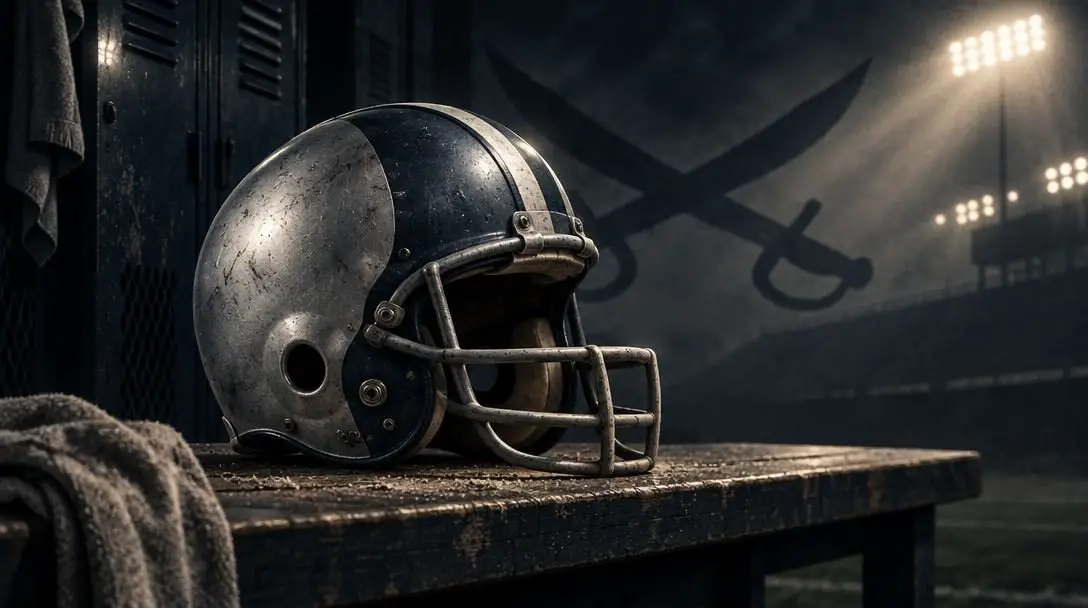
- Signature colors: Silver and Black
- Historic locations: Oakland, Los Angeles, Las Vegas
- Iconic motto: "Just win, baby!"
- Landmark administrative hires: First modern NFL Black head coach, female CEO, Latino head coach, Black female president
Referring to the Silver and Black simply as the Las Vegas Raiders misses the larger historical context of an organization that ranks among the most transient professional sports teams in history. Founded originally as the Oakland Raiders, the franchise developed an unapologetic anti-establishment identity under iconic owner Al Davis. Davis famously thumbed his nose at the league establishment by relocating the franchise to Los Angeles before eventually bringing it back to Oakland. In modern times, his son, Mark Davis, has set up shop in Sin City, continuing the club's wandering legacy across the American West.
The franchise's unmistakable visual identity—a pirate wearing an eye patch set against crossed sabers—perfectly mirrors its collective history of embracing rogues, misfits, and talented players that other teams had discarded or given up on. A vast array of larger-than-life historic figures wore the uniform, including Daryl “The Mad Bomber” Lamonica, Ken “The Snake” Stabler, Bo Jackson, Jack “The Assassin” Tatum, Howie Long, and Marcus Allen. Each player brought an edge that reinforced the team's renegade reputation on the gridiron.
The team has also been at the center of legendary, frozen-in-time football moments, including the Immaculate Reception, the Holy Roller, and the Sea of Hands. Beyond the drama on the gridiron, the organization pushed modern sports forward through groundbreaking administrative hires. The Raiders were the first NFL team in the modern era to hire a Black head coach, a female CEO, a Latino head coach, and more recently, the first Black female president. Anchored by the timeless motto “Just win, baby!”, the team boasts a worldwide visual brand where everyone knows the Raiders, regardless of whether they actively follow professional sports.
New York Yankees
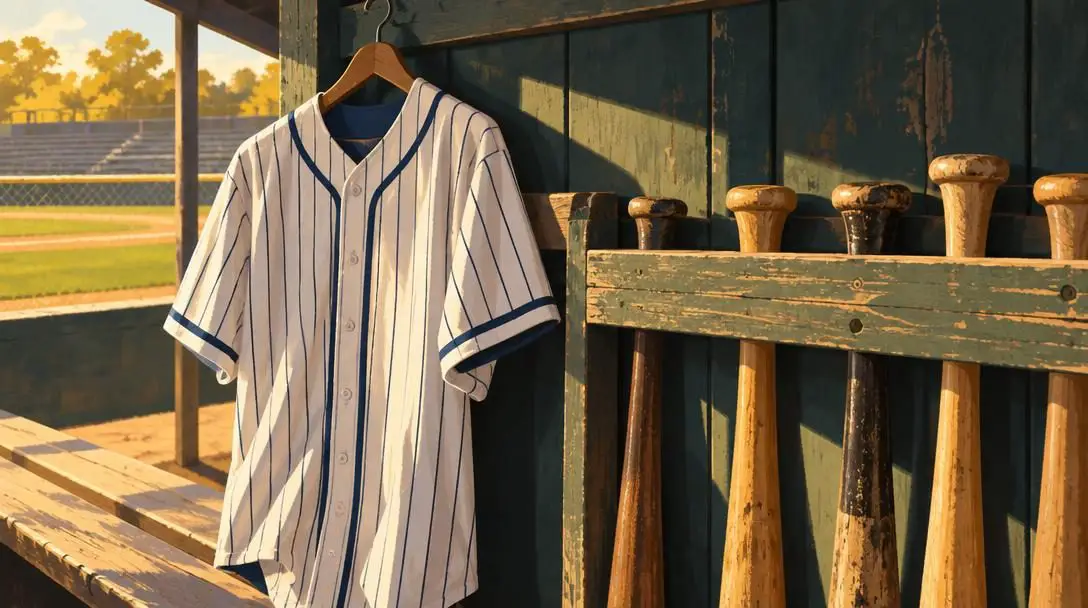
- League: Major League Baseball (MLB)
- Championship pedigree: 40 American League Pennants, 27 World Series titles
- Famous monikers: Bronx Bombers, Murderers' Row
- Signature look: Classic pinstripes
Few teams across the entirety of sports have experienced the sustained heights achieved by Major League Baseball’s New York Yankees. Performing consistently on one of the grandest media stages in the world, the club's classic pinstripes have become synonymous with the organization itself. Over generations of dominance, elite Yankees rosters earned fearsome monikers like the Bronx Bombers and Murderers' Row, striking fear into opponents before games even started.
These lineups delivered unmatched athletic results, accumulating 40 Pennants and 27 World Series titles. The franchise served as home to an unprecedented collection of baseball legends who made winning an organizational expectation rather than an occasional triumph. Household names such as Babe Ruth, Lou Gehrig, Joe DiMaggio, Mickey Mantle, Yogi Berra, Whitey Ford, Mariano Rivera, and Derek Jeter helped build and cement this unrelenting standard of excellence.
Complementing the sheer volume of championship titles are singular moments that live forever in American lore. Perhaps none is more famous than Babe Ruth defiantly calling his shot during the 1932 World Series, an act of sheer athletic theater that helped transform baseball into a national obsession.

An iconic team is an organization that transcends the field or arena, capturing the cultural imagination across generations of fans.
Boston Celtics

- League: National Basketball Association (NBA)
- Championship total: 17 NBA championships
- Legendary center: Bill Russell (11 titles, 22.5 career rebounds per game)
- Home playing surface: Classic parquet floor
The Boston Celtics share a historic mark with the Los Angeles Lakers, as both basketball powerhouses have captured 17 NBA championships. The fierce East-West rivalry reached absolute heights during the era when legends Magic Johnson and Larry Bird drove the lane against one another in recurring championship showdowns. However, in evaluating which organization is more iconic, the Celtics earn the nod over their longtime rivals.
This distinction is supported by the fact that five of the Lakers' titles were won when that franchise called Minnesota home, alongside Boston holding a superior head-to-head winning record over Los Angeles in championship clashes. The Celtics showcase an incredible lineage of household names who thoroughly dominated professional hoops across eras. Beyond the brilliance of Larry Bird, the parquet floor was ruled by stars like Paul Pierce, John Havlicek, Bill Walton, Tiny Archibald, Kevin McHale, Robert Parish, and the legendary Bill Russell.
Russell established unprecedented standards of interior dominance, capturing 11 championships and recording an astonishing average of 22.5 rebounds per game throughout his career. The team's lore is packed with grit, exemplified by an injured Bob Cousy returning directly to the court to guide the Celtics to a decisive Game 6 victory over the Lakers to take all the marbles in 1963.
Green Bay Packers

- Home venue: Lambeau Field (Green Bay, Wisconsin)
- Trophy namesake: Vince Lombardi (won first two Super Bowls)
- Legendary game: The 1967 Ice Bowl (-48 degree wind chill)
- Four-time MVP quarterback: Aaron Rodgers
Competing out of professional sports' quintessential small market, the Green Bay Packers arguably stand as the most storied franchise in NFL history. While supporters of massive rival brands like the Dallas Cowboys and New York Giants might disagree with that assessment, football's ultimate prize tells the story: Super Bowl champions hoist the Lombardi Trophy. The trophy is named in honor of former Packers head coach Vince Lombardi, who led the team to victories in the first two Super Bowls following the NFL-AFL merger and remains the most revered coach in league history.
The franchise has flourished across eras thanks to an exceptional roster of all-time players. Gridiron legends such as Bart Starr, Brett Favre, Reggie White, Ray Nitschke, Herb Adderley, Jim Taylor, and Sterling Sharpe built the club's legacy, while quarterback Aaron Rodgers captured four MVP honors during his tenure in green and gold.
The defining chapter of Packers history arrived in 1967 during the legendary Ice Bowl against the Dallas Cowboys. In brutal conditions featuring an on-field wind chill of -48 degrees, Bart Starr orchestrated a daring quarterback keeper into the end zone to secure the victory, etching Lambeau Field into football eternity.
Los Angeles Lakers
- Signature aesthetic: Purple and Gold
- Championship total: 17 NBA championships (including 5 in Minneapolis)
- Signature dynamic duo: Kobe Bryant and Shaquille O'Neal
- Defining playoff sequence: Bryant-to-O'Neal alley-oop comeback in Game 7
Even though the Boston Celtics hold the head-to-head edge over the California squad across their long-running rivalry, the Los Angeles Lakers have displayed a relentless commitment to top-tier competition that few organizations on Earth can match. The Lakers' historical roll call reads like an entire basketball wing of the Hall of Fame, featuring Magic Johnson, Kareem Abdul-Jabbar, Elgin Baylor, Jerry West, Wilt Chamberlain, Kobe Bryant, Bob McAdoo, and beloved center Shaquille O’Neal.
Defined by high-scoring playmakers and a distinct flair for dramatic comebacks, the purple-and-gold legacy includes countless high-stakes thrills. Among the most iconic of these sequences occurred during Game 7 of the Western Conference Finals, when Kobe Bryant lofted an unforgettable alley-oop pass to Shaquille O’Neal. The highlight capped an electric comeback from a 16-point fourth-quarter deficit, propelling the team directly into the NBA Finals and establishing a new modern dynasty.
At a glance: comparing the top franchises
Comparing iconic franchises requires balancing total championship silverware against historical moments and cultural visibility across decades.

| Franchise | League | Primary Era Highlights | Signature Historical Moment | Key Defining Trait |
|---|---|---|---|---|
| The Raiders | NFL | Al Davis era, 1970s–1980s dominance | The Holy Roller & Sea of Hands | Anti-establishment renegade culture |
| New York Yankees | MLB | Murderers' Row, 1990s dynasty | Babe Ruth's called shot (1932) | Unmatched 27 World Series titles |
| Boston Celtics | NBA | Russell's 11 titles, Bird era | Bob Cousy's 1963 Game 6 return | Head-to-head Finals dominance |
| Green Bay Packers | NFL | Lombardi dynasty, Favre & Rodgers eras | The Ice Bowl sneak (1967) | Small-market heritage and Lombardi legacy |
| Los Angeles Lakers | NBA | Showtime 1980s, Kobe & Shaq three-peat | Bryant-to-O'Neal Game 7 alley-oop | Star-studded glamour and dramatic comebacks |
How iconic status works in professional sports
Understanding what elevates a sports club into the upper echelon of iconic status requires looking well beyond basic league standings. While winning is essential, the transformation from a successful sports team into an enduring cultural touchstone operates through several specific mechanisms:
- Visual symbols and distinctive colors: Iconic teams establish branding that is instantly recognizable worldwide, even to casual observers. The clean pinstripes of the Yankees, the silver and black pirate logo of the Raiders, or the classic green aesthetic of the Celtics and Packers evoke immediate associations that transcend the games themselves.
- Generational narrative arcs: Teams achieve true iconic stature when their success spans across multiple eras rather than a single championship window. The transition from one legendary era to another—such as the Packers moving from Bart Starr to Brett Favre and Aaron Rodgers, or the Lakers featuring Jerry West, Magic Johnson, and Kobe Bryant—builds an unbroken chain of excellence.
- Unforgettable lore and named moments: Legendary sports clubs possess a catalog of plays so famous they are known universally by proper nouns. The Ice Bowl, the Holy Roller, the Immaculate Reception, and called shots serve as historical touchstones that keep the past vibrant in modern sports discussions.
- Cultural and social impact: Teams gain deeper relevance when their actions influence broader society. The Raiders moving between cities and Al Davis challenging league norms, paired with the franchise's pioneering history of diverse front-office and coaching hires, established an identity that reached far past ordinary athletic competition.
Practical steps for evaluating historic sports franchises
When fans, writers, and sports historians debate the standing of legendary franchises, relying purely on emotions often leads to unresolved arguments. Applying a structured approach can help individuals fairly evaluate where a team ranks in the pantheon of sports history.
- Examine championship pedigree across eras: Look at total titles, but pay close attention to how those championships are distributed. Elite organizations demonstrate an ability to rebuild, retool, and capture rings across distinct decades rather than fading away after one golden era.
- Factor in venue and relocation context: Consider how a team's physical journey shapes its narrative. Relocations—such as the Raiders traveling from Oakland to Los Angeles, back to Oakland, and on to Las Vegas, or the Lakers securing five of their titles while based in Minnesota—add crucial historical nuance to how a franchise's record should be interpreted.
- Assess head-to-head rivalry records: When two teams claim equal standing in championship counts, direct competition serves as a valuable tiebreaker. A primary reason the Celtics often gain the edge over the Lakers in historical debates is their head-to-head winning record against them in championship showdowns.
- Measure the magnitude of key moments: Determine whether the team's greatest achievements took place under extraordinary circumstances. A standard victory carries less historical weight than legendary performances, such as Bart Starr executing a goal-line sneak in the -48 degree wind chill of the Ice Bowl or an injured Bob Cousy stepping up to close out Game 6 in 1963.
- Evaluate star power and household recognition: Review the team's historical roster to see how many players became cultural figures. Lineups boasting names like Babe Ruth, Lou Gehrig, Vince Lombardi, Bill Russell, or Magic Johnson establish a level of prestige that ordinary franchises cannot match.
Common mistakes when comparing legendary teams
Discussions regarding sports greatness often get derailed by flawed comparisons and oversimplified measurements. Avoiding these standard pitfalls allows for a much more balanced assessment across eras:
- Equating raw title counts with cultural impact: While titles are vital, simply tallying championships ignores context. The Raiders do not match the 27 World Series rings of the New York Yankees or the 17 titles of the Boston Celtics, yet their cultural presence, legendary misfits, and widespread merchandise make them undeniably iconic.
- Ignoring franchise movement and lineage: Overlooking team relocations can skew historical comparisons. For example, crediting all 17 Lakers championships exclusively to Los Angeles ignores the five banners raised during their foundational years in Minnesota.
- Succumbing to recency bias: Modern fans often overvalue recent accomplishments while dismissing early sports history. Disregarding the foundational dominance of figures like Vince Lombardi or the early modern triumphs of the Yankees ignores the very roots that established these clubs as sports giants.
- Overlooking adversity and comebacks: Evaluating a team purely based on dominant blowouts misses the iconic appeal of resilience. Dramatic, high-pressure rallies—such as the Lakers overturning a 16-point deficit against Portland in Game 7—create lasting memories that define an organization's identity.
What to consider next in franchise debates
The landscape of professional sports never stops evolving, and the criteria used to define iconic organizations continues to develop over time. When reflecting on the standing of modern teams and legacy franchises, observers should watch how historical brands maintain their standing in the current era.
One primary consideration is how these historic clubs navigate modern transitions. The Raiders' relocation to Las Vegas under Mark Davis represents the latest chapter in a long history of nomadic, unconventional moves. Observers will watch to see if this new desert market maintains the classic Silver and Black persona built by Al Davis, Ken Stabler, and Bo Jackson.
Additionally, the ongoing battle for supremacy between long-standing rivals remains an active story. With the Celtics and Lakers tied at 17 NBA championships each, any future title won by either side will reshape their historical standing and reignite arguments regarding Boston's direct winning record versus the star-studded legacy of Los Angeles.
Finally, sports enthusiasts must contemplate whether newer, modern dynasties can ever truly match the iconic status of heritage brands. While modern organizations achieve impressive winning records, matching the timeless appeal of teams forged over almost a century of triumphs, heartbreak, and cultural influence remains a steep mountain to climb.
Frequently asked questions
Why are the Raiders ranked ahead of teams with more championships?
Iconic status relies heavily on cultural footprint, distinctive imagery, and memorable lore rather than trophy tallies alone. The Raiders' silver-and-black aesthetic, anti-establishment posture under Al Davis, historic plays like the Holy Roller, and trailblazing administrative hires give them a cultural recognition that transcends traditional sports fandom.
Why do the Boston Celtics rank ahead of the Los Angeles Lakers?
Although both franchises have won 17 NBA championships, the Celtics hold the edge because five of the Lakers' titles were won while the team was located in Minnesota. Furthermore, Boston possesses a superior head-to-head winning record over Los Angeles in championship series matchups.
What makes the Green Bay Packers unique among major sports franchises?
The Packers thrive in professional sports' smallest market and claim the game's ultimate prize namesake: the Vince Lombardi Trophy. In addition, their legacy features historic resilience like the 1967 Ice Bowl and an unbroken lineage of Hall of Fame quarterbacks from Bart Starr to Brett Favre and Aaron Rodgers.
Which franchise holds the record for the most championships on this list?
The New York Yankees hold the title record with 27 World Series championships and 40 American League Pennants, built on historic lineups like Murderers' Row and legendary players such as Babe Ruth, Lou Gehrig, and Derek Jeter.
The bottom line
Determining the most iconic sports franchise is an exercise that goes far beyond basic arithmetic. While championships and winning percentages provide the foundation for athletic greatness, true iconic stature is defined by emotional resonance, enduring color palettes, pioneering leadership, and moments frozen in time. Whether it is the renegade spirit of the Raiders, the pin-striped excellence of the Yankees, the parquet supremacy of the Celtics, the small-town grit of the Packers, or the Hollywood flair of the Lakers, these five organizations represent the absolute pinnacle of American sporting lore.