5 Most Memorable Winter Olympic Moments
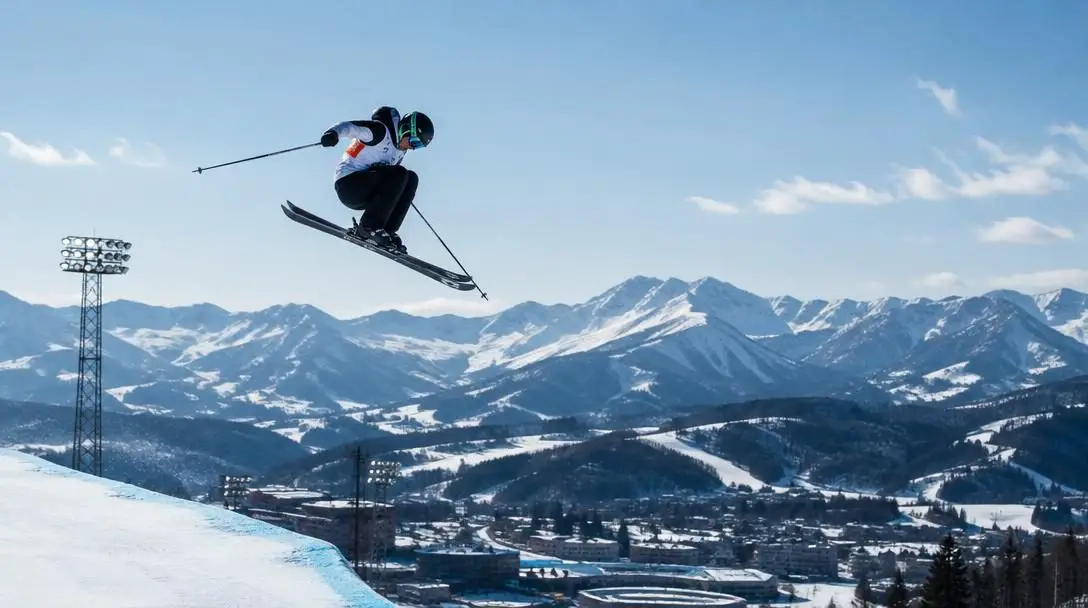
Every four years, the finest winter athletes on the planet assemble to compete on ice and snow. While the modern summer games trace their roots to the late nineteenth century, the Winter Olympics have a more condensed history, launching in 1924 in Chamonix, France. Despite having fewer total editions in the history books, the Winter Games have delivered an outsized share of global drama, unforgettable upsets, and emotional triumphs.
From the tension of the ice rink to the icy drops of the bobsled run, the Winter Olympics have evolved into an indispensable global spectacle. Looking back across the decades, five specific events stand above the rest. These moments not only reshaped competitive winter sports, but also generated Hollywood adaptations, sparked regulatory overhauls, and captured the imagination of millions around the globe.
Key takeaways
- The Winter Olympic Games debuted in 1924 in Chamonix, France, establishing a shorter but exceptionally dramatic competitive history than the Summer Games.
- Iconic underdog appearances by the 1988 Jamaican bobsled team and ski jumper Michael Edwards transformed pop culture and prompted the International Olympic Committee to tighten entry standards.
- The 1980 "Miracle on Ice" required the United States to defeat both the dominant Soviet Union and Finland in a round-robin medal format to secure gold.
- Sidney Crosby's 2010 sudden-death overtime goal in Vancouver created the most-watched broadcast in Canadian television history and remains the only event on this list without a dedicated feature film.
At a glance: Five unforgettable Olympic moments
Whether decided by a fraction of a second or an unprecedented upset, these five moments defined their respective eras and left an enduring mark on global popular culture.
tbody| Event | Year & Location | Sport | Key Outcome |
|---|---|---|---|
| "Miracle on Ice" | 1980 (Lake Placid) | Men's Ice Hockey | U.S. amateurs upset Soviet professionals 4-3 en route to gold |
| Jamaican Bobsled Debut | 1988 (Calgary) | Four-Man Bobsled | Tropical underdogs placed 30th overall; inspired Cool Runnings |
| Eddie the Eagle | 1988 (Calgary) | Ski Jumping | Edwards finished last after exploiting a 60-year national drought loophole |
| Kerrigan vs. Harding | 1994 (Lillehammer) | Women's Figure Skating | Kerrigan earned silver while Harding placed 8th amid global media frenzy |
| Crosby's Golden Goal | 2010 (Vancouver) | Men's Ice Hockey | Overtime winner delivered Canadian gold on home ice over the U.S. |
The five most memorable Winter Olympic moments
The following moments showcase the full spectrum of the Olympic experience: high-stakes geopolitical drama, whimsical underdog persistence, domestic rivalries that captured tabloid headlines, and the suffocating pressure of a host nation seeking redemption on home ice.
The 1980 U.S. Men's Hockey "Miracle on Ice"
- Year: 1980
- Location: Lake Placid, United States
- Key Result: United States defeated the Soviet Union 4-3
Heading into the 1980 Winter Olympics, virtually every hockey analyst predicted that the Soviet Union would cruise to a gold medal without facing genuine competition. The Soviets had claimed gold at the previous four Olympic tournaments, fielding elite, state-supported players who functioned as de facto professionals. By contrast, opposing squads, including the United States, were composed entirely of legitimate amateurs and collegiate athletes.
The Soviets breezed through their five opening group-stage games, joining the United States, Sweden, and Finland in the four-team medal round. The United States was heavily favored to lose by a wide margin against the Soviet machine. Instead, the young American roster engineered a stunning 4-3 upset, shocking the sporting world. To complete the championship run, the United States still needed to overcome an undermanned Finnish team in the final round-robin game, successfully winning the match to claim the Olympic gold medal.
The 1988 Jamaican Bobsled Team's Calgary Debut

- Year: 1988
- Location: Calgary, Canada
- Overall Placement: 30th place overall
- Best Heat: 22nd place
Snow does not fall in Jamaica, making the island nation an unthinkable contender for winter sports supremacy. Yet at the 1988 Calgary Games, Jamaica fielded its first-ever Olympic bobsled squad. Despite entering the competition with minimal experience on actual ice tracks, the team instantly won over the global sporting audience. Spectators gathered in freezing conditions while millions watched on television to see how the tropical newcomers would fare against powerhouse European and North American federations.
Though critics anticipated that the Jamaican team would finish dead last across every run, the squad put together a remarkably competitive performance. They claimed 22nd place in their single best heat and earned a respectable 30th-place finish overall. Their improbable journey became an enduring cultural phenomenon, serving as the basis for the 1993 Disney comedy Cool Runnings, a film that became a beloved touchstone for millennials and younger members of Generation X.

Michael "Eddie the Eagle" Edwards in 1988 Ski Jumping
- Year: 1988
- Nation: Great Britain
- Overall Placement: Last place
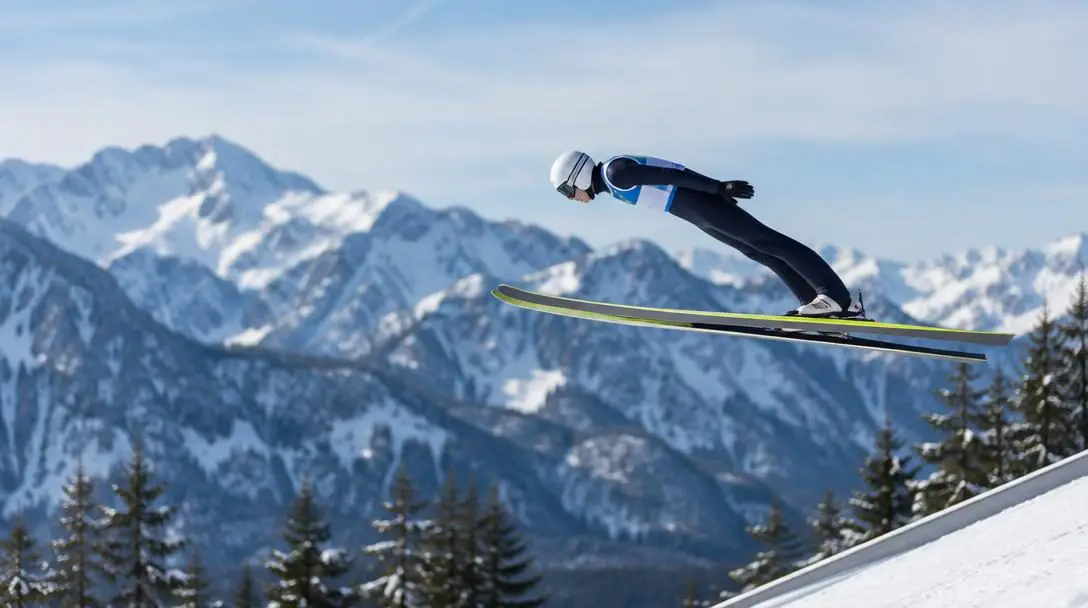
The 1988 Calgary Games proved to be an extraordinary showcase for unconventional competitors. Alongside the Jamaican bobsled team, British ski jumper Michael Edwards—affectionately nicknamed "Eddie the Eagle"—captured international headlines. Edwards was able to secure an Olympic berth thanks to a historical anomaly: Great Britain had not entered a competitor in Olympic ski jumping for 60 years. With no domestic challengers to surpass, Edwards exploited this qualification loophole to represent his country on the world stage.
Sporting thick prescription lenses beneath his goggles and possessing far less technical polish than his peers, Edwards finished dead last in his events. Despite the bottom-tier placement, his unvarnished enthusiasm and joy resonated deeply with audiences worldwide. However, the International Olympic Committee took notice of how easily the system had been bypassed. Following the Calgary Games, the governing body instituted strict performance minimums, effectively barring Edwards from returning for the 1992 Winter Olympics.
The 1994 Nancy Kerrigan and Tonya Harding Figure Skating Showdown
- Year: 1994
- Location: Lillehammer, Norway (Olympics) / Detroit, United States (Trials)
- Medal Outcome: Nancy Kerrigan (Silver), Tonya Harding (8th place)
On January 6, 1994, the rivalry between American figure skaters Nancy Kerrigan and Tonya Harding escalated into an unprecedented scandal at the U.S. Figure Skating Championships in Detroit. Kerrigan was widely viewed as a lock for the upcoming Olympic team, meaning that any disruption to her availability cleared an immediate path for Harding. Shortly before she was scheduled to take the ice, Kerrigan was clubbed on the knee by a then-unknown assailant, instantly casting suspicion across Harding's inner circle.
Harding maintained her innocence and captured gold at the Detroit event, securing her Olympic invitation. Despite her injury, Kerrigan was granted an Olympic spot by the national selection committee. Weeks later at the 1994 Winter Games in Lillehammer, Norway, global attention reached a fever pitch as both skaters took the ice. Harding struggled under intense media pressure, finishing in 8th place, while Kerrigan completed a triumphant recovery to capture the Olympic silver medal.
Sidney Crosby's 2010 Overtime "Golden Goal"
- Year: 2010
- Location: Vancouver, Canada
- Key Result: Canada defeated the United States in sudden-death overtime
In Canada, ice hockey carries unmatched cultural importance, and settling for anything less than Olympic gold on home ice is considered an outright disaster. That pressure reached a boiling point during the 2010 Vancouver Games. During preliminary group play, the rival United States squad handed Canada a humbling 5-3 defeat, maintaining an undefeated record and rattling the host nation's confidence.
Both powerhouses battled their way to a rematch in the gold medal game, which rapidly became the most-watched television broadcast in Canadian history. With Vancouver's close proximity to the border, the arena was filled with passionate supporters from both nations. After regulation ended in a deadlock, team captain Sidney Crosby snapped the winning shot past the American goaltender during sudden-death overtime. The eruption of celebration across Canada felt like a scripted cinematic climax, making it notable as the only event among these five that has not yet been produced as a feature film.
Sidney Crosby's overtime winner in 2010 produced a movie-like celebration across Canada and remains the only event on this list not adapted into a Hollywood feature film.
Tournament mechanics, rule evolution, and competition formats
To fully grasp how these historic milestones unfolded, one must understand the distinct operational systems, qualification rules, and scoring frameworks governing each sport.
Modern Olympic ice hockey, exemplified by the 2010 Vancouver tournament, utilizes an initial group stage followed by single-elimination knockout brackets. In the medal rounds, ties at the end of regulation trigger sudden-death overtime, where the contest terminates the moment a puck enters the net. In stark contrast, the 1980 Lake Placid tournament implemented a round-robin medal group following group play. Teams carried over points and played the qualifiers from the opposite group, meaning point totals across multiple games determined final podium standings rather than a single sudden-death final.
Eligibility structures have likewise undergone dramatic shifts. In 1980, strict amateurism definitions created glaring disparities between nations. While Western countries relied on amateur collegians who had never played professionally, the Soviet Union deployed seasoned, state-subsidized rosters that trained year-round as cohesive military units.
In bobsledding, final standings are calculated by aggregating the combined elapsed times across several individual runs, known as heats. This system explains how the 1988 Jamaican squad could achieve an impressive 22nd-place ranking on an individual run while posting an aggregate time that settled them into 30th place overall.
National figure skating federations utilize national championships as primary selection trials. However, governing bodies maintain official discretion to add proven frontrunners who miss competition due to injury or extraordinary circumstances—the exact procedural mechanism that permitted Nancy Kerrigan to be named to the 1994 U.S. Olympic roster despite missing the Detroit trials.
How to research Winter Olympic history
For students, sports writers, and fans eager to explore past Olympic tournaments, applying a structured research approach separates dramatic myth from historical fact.
- Consult official Olympic archives: Begin your research by reviewing primary event summaries, timing records, and heat sheets maintained by governing bodies dating back to the 1924 Chamonix Games.
- Examine international broadcast perspectives: Review contemporary media reports from both sides of a rivalry, such as studying American and Canadian news coverage of the 2010 gold medal game to understand how home-ice pressure was framed.
- Investigate contemporary rulebooks: Check the exact regulatory framework used during the year of competition, which explains why format variations like round-robin medal pools or sudden-death overtime dictated tactical choices.
- Compare pop-culture films to archival accounts: Screen cinematic adaptations such as Cool Runnings alongside original newsreels and timing sheets to identify where Hollywood dramatized real competitive runs.
- Track generational and cultural reception: Assess how moments resonated across different audiences over time, noting how events in Calgary and Lillehammer established lasting memories for Generation X and millennials.
Common misconceptions in Winter Olympic lore
Because these legendary moments are frequently retold through pop culture and condensed highlights, casual fans often hold mistaken impressions about the actual events.
- Assuming the U.S. won hockey gold against the Soviets: A widespread belief persists that the "Miracle on Ice" directly awarded gold to the Americans. In reality, the U.S. had to beat Finland in the final round-robin match to lock up first place.
- Believing beloved underdogs secured Olympic medals: Cinematic retellings often blur competitive finishes. Despite their massive public acclaim, the 1988 Jamaican bobsledders finished 30th, while Michael Edwards placed dead last in ski jumping.
- Assuming entry rules have always been strict: Many assume qualification standards were always stringent, overlooking that Edwards qualified solely because Great Britain had not fielded a ski jumper in six decades.
- Confusing the 1994 attack with the Olympic Games: The assault on Nancy Kerrigan occurred at the U.S. Figure Skating Championships in Detroit, not at the Olympic Games in Lillehammer.
- Equating the timeline of the Winter and Summer Games: Because the ancient Olympics and early modern summer revival carry a long lineage, many assume winter competition shares the same timeline, forgetting the Winter Games began in 1924.
Frequently asked questions
When and where were the first Winter Olympic Games held?
The inaugural Winter Olympics took place in 1924 in Chamonix, France, establishing an independent stage for cold-weather sports distinct from the Summer Games.
Did the 1988 Jamaican bobsled team win an Olympic medal?
No, the Jamaican team did not medal. They finished in 30th place overall, though their best single heat was an impressive 22nd place.
Why was Michael Edwards barred from competing in the 1992 Olympics?
Following his 1988 appearance, the International Olympic Committee tightened qualification rules to prevent underrepresented countries from entering competitors who had not met rigorous performance baselines.
Where did the Nancy Kerrigan attack occur?
The assault took place on January 6, 1994, in Detroit at the U.S. Figure Skating Championships, not at the Lillehammer Olympic Games.
Why was Sidney Crosby's 2010 goal referred to as a sudden-death winner?
In modern Olympic medal round play, overtime periods operate under sudden-death rules, meaning the very first goal scored instantly ends the game and crowns the winner.
The bottom line
The Winter Olympics have generated some of the most compelling narratives in athletic history. From amateur college students defeating seasoned Soviet powerhouses in Lake Placid to unexpected underdogs carving a path on the Calgary slopes, these moments reflect the unpredictable nature of winter sports. As qualification frameworks continue to evolve and host nations face immense scrutiny on the world stage, the lessons and memories of past tournaments ensure that every four years, global audiences remain eager to witness the next great chapter on ice and snow.