5 Most Prestigious Football Leagues in the World
Professional football is contested in virtually every sovereign state across the globe, yet the distribution of prestige, financial muscle, and sporting quality remains heavily concentrated. While nations with massive populations and well-structured athletic infrastructures—such as the United States, Japan, and Norway—boast thriving professional divisions, their domestic circuits cannot match the exceptional concentration of elite talent found in Western Europe. Domestic leagues across a small cluster of European nations command unprecedented viewership and the world's most lucrative commercial contracts.
A league's standing is determined not merely by contemporary spending power, but by decades of historical dominance, tactical influence, and success in pan-continental competitions. While leagues like the Dutch Eredivisie, the Portuguese Liga, Brazil's Serie A, and Mexico's Primera Division Torneo Clausura consistently nurture world-class performers and achieve continental glory, five traditional European circuits stand far above the rest as the definitive pinnacles of club football.
Key takeaways
- Western European domestic leagues maintain a near-total monopoly on elite footballing talent, media revenue, and international prestige.
- Italy Serie A is the oldest top-tier circuit among the elite five, while the English Premier League is the youngest yet commercially dominant.
- Domestic championships operate on an equitable double round-robin structure complemented by merit-based promotion and relegation.
- Historical legacy, sustained continental achievement, and iconic rivalries matter just as much as contemporary financial muscle when assessing league stature.
At a glance: The premier domestic leagues
Each of the world's elite five domestic circuits possesses distinct structural origins, flagship clubs, and sporting philosophies that separate them from other national tournaments across the globe.
| Rank | League | Inaugural Season | Most Dominant Club | Key Historical Icons |
|---|---|---|---|---|
| 1 | English Premier League | 1992 | Manchester United | Thierry Henry, Wayne Rooney, Steven Gerrard |
| 2 | German Bundesliga | 1963 | Bayern Munich | Franz Beckenbauer, Gerd Müller, Oliver Kahn |
| 3 | Spanish Primera Division (La Liga) | 1929 | Real Madrid & Barcelona | Lionel Messi, Alfredo Di Stéfano, Cristiano Ronaldo |
| 4 | Italy Serie A | 1898 | Juventus | Paolo Maldini, Diego Maradona, Gianluigi Buffon |
| 5 | French Ligue 1 | 1932 | Paris Saint-Germain & Saint-Étienne | Zinedine Zidane, Raymond Kopa, Jean-Pierre Papin |
Countdown of the 5 most prestigious football leagues
Ranking the world's finest domestic leagues requires balancing historical impact, commercial reach, and the caliber of legendary footballers who have competed for their top honors over generations.
French Ligue 1
- Year Established: 1932
- First Champion: Olympique Lillois (defunct 1944)
- Most Seasons Played: Marseille
- Historic Dominant Clubs: Paris Saint-Germain, Saint-Étienne, Marseille
At the dawn of the 1930s, professional football was entirely absent from the French sporting landscape. To address this glaring deficiency, national sporting administrators orchestrated a major structural reform that established Ligue 1 in 1932. Selection for the inaugural campaign was highly exclusive; organizers invited only clubs that possessed verified records of athletic merit alongside dependable commercial income. The very first league title was claimed by Olympique Lillois, an institution that ceased operations in 1944.
In the decades following its launch, French club football evolved into a showcase of technical flair and athleticism. Hegemony across the domestic league has shifted across different eras between Saint-Étienne, Marseille, and Paris Saint-Germain. Marseille holds the distinction of having contested more top-flight seasons than any domestic rival, while Saint-Étienne and Paris Saint-Germain have accumulated dozens of league crowns between them. Over nearly a century of competition, the French top tier has showcased some of the game's greatest visionaries, including Raymond Kopa, Jean-Pierre Papin, Zinedine Zidane, and Zlatan Ibrahimović.
Italy Serie A

- Year Established: 1898
- Format Unification: Circa 1923 (unified from regional tiers)
- All-Time Title Leader: Juventus
- Key Heavyweights: Juventus, Inter Milan, AC Milan, Roma
Holding the mantle of the oldest competition among world football's elite tier, Italy Serie A was founded in 1898. During its initial quarter-century, the tournament operated through fractured regional groupings before administrators united the clubs into a single, cohesive round-robin national tournament. This unified format catalyzed a golden period of European dominance, allowing Serie A to be widely recognized as the finest domestic football league on earth throughout extended stretches of the 20th century.

The tactical sophistication and defensive rigor of Italian football have historically been driven by legendary institutions like Roma, Inter Milan, AC Milan, and Juventus. Among them, Juventus has established a unique domestic supremacy, securing nearly as many Serie A championships as Milan rivals Inter and AC Milan combined. Serie A's immense pedigree was underscored when a 2017 historical survey revealed it was the single most represented domestic league among the top 100 footballers in history. The division's storied turf has been graced by iconic legends such as Paolo Maldini, Francesco Totti, Gianluigi Buffon, and Diego Maradona.
Spanish Primera Division (La Liga)
- Year Established: 1929
- Official Title: Campeonato Nacional de Liga de Primera División
- Combined Titles for Top Two: Over 60 championships
- Ever-Present Stalwarts: Athletic Bilbao, Barcelona, Real Madrid
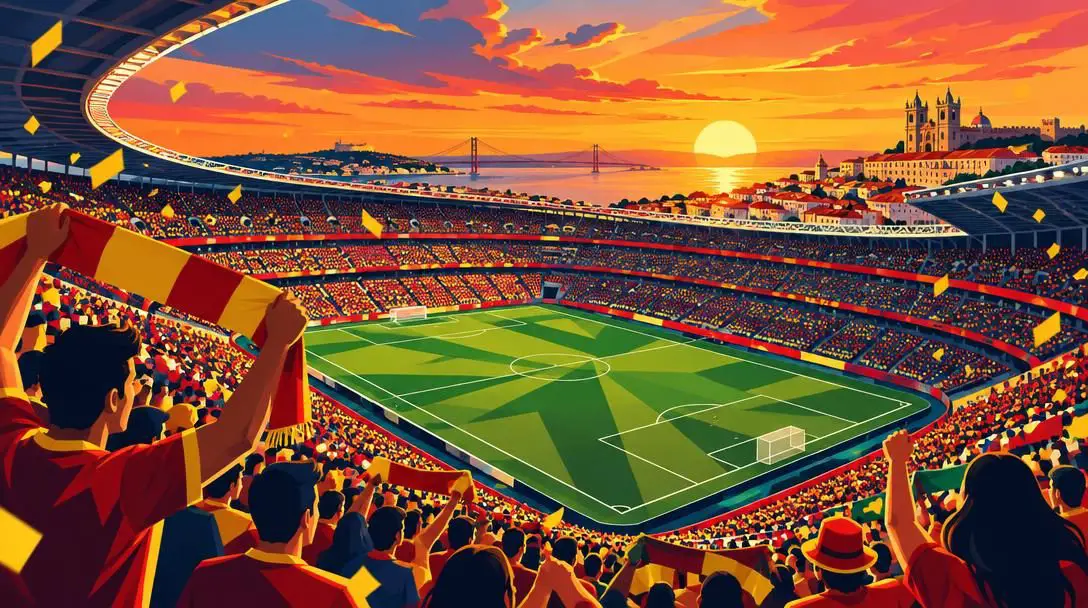
Formally titled the Campeonato Nacional de Liga de Primera División, the world knows Spain's premier football circuit simply as La Liga. Formed in 1929, it represents the second-oldest competition within the top five domestic circuits. Across several decades, La Liga matched and occasionally surpassed its continental rivals as the undisputed benchmark for artistic expression, technical precision, and tactical maturity in club football.
While historically respected outfits such as Valencia and Athletic Bilbao have maintained long, unbroken tenures in the division, the league's international reputation is overwhelmingly defined by its two monumental juggernauts: Real Madrid and Barcelona. These two rivals have captured more than 60 La Liga championships between them, staging some of the most fiercely watched sporting events on the planet. The technical standard cultivated in Spain has attracted the sport's greatest masters, serving as the home stage for generational talents including Alfredo Di Stéfano, Lionel Messi, Cristiano Ronaldo, Xavi, and Andrés Iniesta.
German Bundesliga
- Rank in Prestige: Second-highest worldwide
- Era of Continental Peak: Late 1970s through early 1980s
- Dominant Dynasty: Bayern Munich (over 30 titles)
- Key Challengers: Borussia Dortmund, Bayer Leverkusen, VfL Wolfsburg
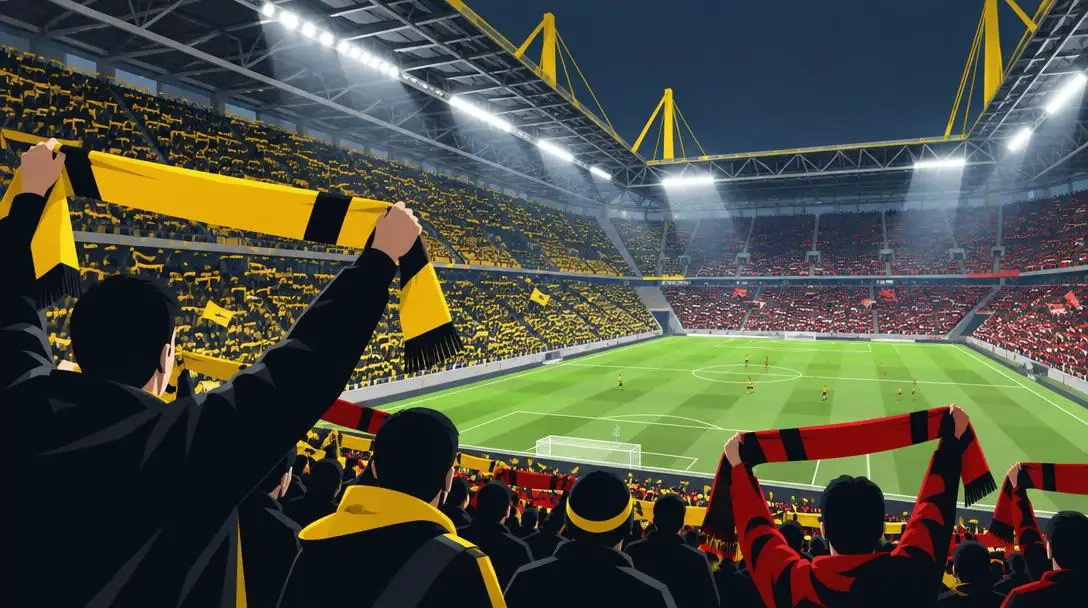
Despite being the second-youngest league among the elite tier, the German Bundesliga ranks as the second-most prestigious domestic club tournament in global football. During the late 1970s and early 1980s, the Bundesliga was widely acknowledged as the premier domestic competition anywhere on the planet, blending unmatched physical intensity with rapid tactical counter-play and exceptional spectator attendance.
Domestic success in Germany is indelibly linked to the peerless supremacy of Bayern Munich. Bayern has demonstrated unprecedented consistency by capturing more than 30 Bundesliga championships, while no competing club in the division's history has managed to secure more than five. Nevertheless, high-caliber contenders such as Borussia Dortmund, Bayer Leverkusen, and VfL Wolfsburg have routinely mounted formidable challenges and sustained the league's high-octane tempo. German football's legendary heritage has been sculpted by monumental figures like Franz Beckenbauer, Gerd Müller, Karl-Heinz Rummenigge, Oliver Kahn, and Robert Lewandowski.
English Premier League
- Year Established: 1992
- Inaugural Champion: Manchester United
- Primary Modern Powers: Manchester United, Manchester City, Chelsea
- Historic Mainstays: Everton, Tottenham Hotspur
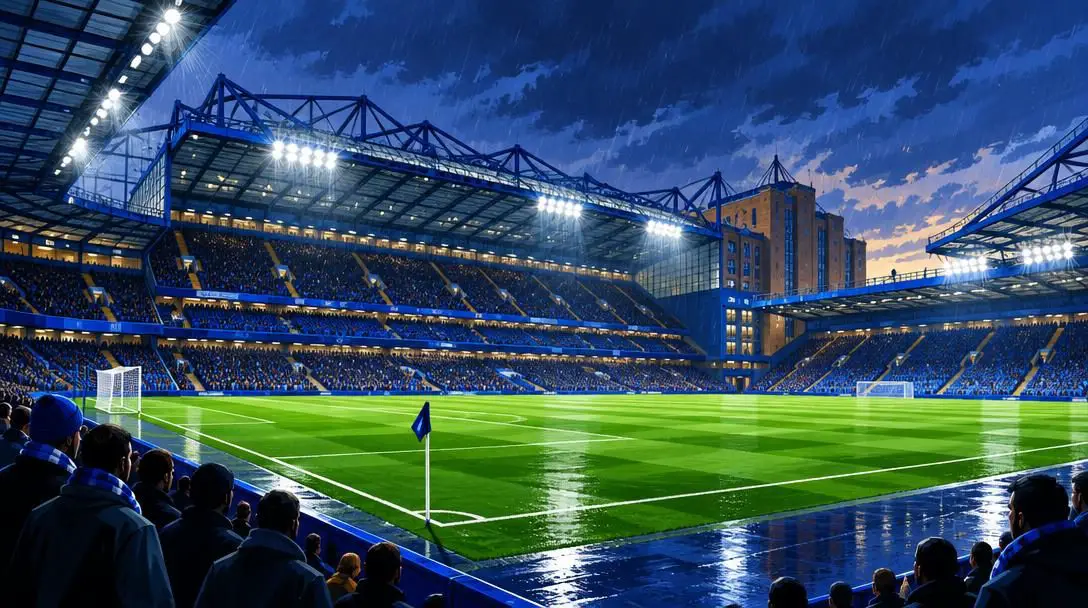
Standing at the very zenith of the sport in terms of prestige, viewership, and commercial value, the English Premier League is the youngest competition on this elite list. Established in 1992, the breakaway league was forged during a period of acute crisis for English club football. Stadium obsolescence, European competition bans, and dwindling match revenues prompted club directors and administrators to establish an autonomous commercial league designed to maximize television broadcasting revenues.
The commercial restructuring proved to be an astounding triumph. Manchester United claimed the inaugural Premier League trophy in 1992–93 and subsequently forged a domestic dynasty. Alongside emergent powerhouses Manchester City and Chelsea, these three sides have amassed over two dozen Premier League trophies between them. At the same time, historic clubs like Everton and Tottenham Hotspur have served as ever-present fixtures through decades of modern play. The league's extraordinary television visibility has drawn an unparalleled collection of world-class performers, immortalizing stars like Thierry Henry, Wayne Rooney, Frank Lampard, Steven Gerrard, and Cristiano Ronaldo.

Establishing a newly formed commercial competition to maximize revenues proved to be a masterstroke that revolutionized the global appeal and financial health of the sport in England.
Notable leagues just outside the top tier
While the top five domestic circuits command the vast majority of international media attention, several leagues narrowly miss the elite bracket. These competitions serve as vital proving grounds for global talent and maintain intense regional followings:
- Dutch Eredivisie: Renowned globally for innovative youth academies and fluid tactical philosophies, the Dutch top flight consistently exports elite talent to European heavyweights.
- Portuguese Liga: Operating as a crucial tactical bridge between South American talent and European competition, Portugal's dominant clubs routinely challenge the continental hierarchy.
- Brasileiro Série A: The spiritual epicenter of individual flair and raw skill, Brazil's national division remains one of the world's most fiercely competitive non-European championships.
- Mexican Primera División (Torneo Clausura): Boasting passionate fan bases, exceptional stadium infrastructure, and substantial financial resources, Mexico's premier circuit commands massive television audiences across North America.
How elite domestic football leagues operate
Top-flight national competitions preserve sporting fairness and commercial balance through standardized operational frameworks. The organizational mechanics common across Europe's top tiers include:
- Double Round-Robin Schedule: Every participating club plays each divisional opponent exactly twice per campaign—once at their home ground and once as an away team. This structure mitigates home-field advantage and ensures competitive equilibrium over a 34- to 38-game season.
- Standard Point Allocation: Match outcomes follow an unambiguous points structure: three points are credited for a victory, one point is awarded to each side for a draw, and zero points are granted for a defeat.
- Title Determination and Tiebreakers: The team perched atop the table after all fixtures have concluded is declared national champion. In instances where clubs finish level on points, administrative tiebreakers—predominantly goal difference, head-to-head records, or total goals scored—determine final rankings.
- Promotion and Relegation Dynamics: The European club ecosystem relies on open meritocracy. The lowest-ranking teams in the top division at the end of each season are automatically demoted to the second tier, while leading finishers from the lower division earn promotion to the elite league.
- Continental Qualification: Elite domestic placement unlocks entry into lucrative pan-European tournaments, granting top finishers access to continental group stages and substantial secondary prize money.
A step-by-step guide to following elite leagues
Navigating multiple foreign leagues with overlapping schedules, divergent broadcast agreements, and varying languages can overwhelm new football enthusiasts. Following these clear operational steps simplifies the journey:
- Identify your preferred tactical style: Evaluate whether you enjoy high-pressing intensity and physical pace (English Premier League and German Bundesliga) or technical possession and tactical chess matches (La Liga and Italy Serie A).
- Select a single anchor club: Rather than attempting to watch every televised fixture, pick one established institution—such as Bayern Munich, Barcelona, Paris Saint-Germain, or Manchester United—to develop an intuitive understanding of roster depth and domestic rivals.
- Audit domestic broadcasting rights: Television and streaming rights for European leagues are segmented across distinct regional media networks. Identify which domestic provider holds exclusive rights in your territory before committing to subscriptions.
- Track the competitive calendar: European leagues run from August through May. Familiarize yourself with mid-season cup competitions, international fixture pauses, and domestic winter breaks to anticipate scheduling interruptions.
- Follow seasonal transfer windows: Monitor the primary summer transfer window and the mid-season winter window to understand how strategic acquisitions and player departures reshape divisional balance.
Common mistakes when comparing domestic circuits
Spectators and commentators regularly fall prey to misconceptions when contrasting the relative merits of different national leagues. Avoiding these analytical pitfalls ensures a more nuanced appreciation of the sport:
- Equating financial wealth with tactical quality: While the English Premier League outspends its continental rivals by considerable margins, superior balance sheets do not inherently guarantee superior technical execution over traditional tactical powerhouses like Serie A or La Liga.
- Dismissing leagues due to single-team dominance: Critics frequently disparage the German Bundesliga or French Ligue 1 because Bayern Munich or Paris Saint-Germain collect consecutive titles. This dismissive viewpoint ignores the remarkable tactical depth and competitive quality exhibited across the rest of the table.
- Overlooking historical achievements: Evaluating prestige solely through the lens of recent results produces a distorted picture. Serie A's historical dominance during the late 20th century and its unmatched representation on historic player rankings cement its enduring status in football history.
- Ignoring domestic infrastructure and youth academies: Assuming leagues like the Portuguese Liga or Dutch Eredivisie are subpar because they lack billionaire backing overlooks their vital structural role as the primary developmental pipeline for global football.
Emerging trends shaping the future of club football
The global hierarchy of club football is never static. Several commercial, regulatory, and demographic shifts are poised to alter the competitive balance between Europe's traditional elite and the rest of the sporting world:
- Shifts in global broadcasting models: Direct-to-consumer streaming and centralized digital distributions are replacing traditional cable packages, potentially widening the revenue gulf separating the Premier League from other domestic competitions.
- Financial Fair Play enforcement: Governing bodies continue to tighten regulatory oversight regarding operating losses, squad-cost ratios, and external owner subsidies. These financial rules directly dictate how aggressively elite clubs can assemble and retain superstars.
- Rise of non-European financial centers: Wealthy leagues in North America, Asia, and the Middle East are investing unprecedented resources into stadium infrastructure and marquee international transfers, slowly challenging Europe's historical monopoly on elite athletes.
- Academy pipelines versus transfer spending: Elite clubs must constantly balance the escalating costs of elite transfer fees against the sustainable cultivation of domestic academy talent to meet financial solvency requirements.
Frequently asked questions
Why is the English Premier League considered the most prestigious league despite its young age?
Although founded in 1992, the Premier League harnessed revolutionary commercial broadcasting models, equitable media revenue distribution, and unmatched international marketing. This financial foundation enabled its clubs to recruit elite global players and managers, generating intense global viewership and unrivaled competitive depth.
Which domestic football league has the oldest history among the global top five?
Italy Serie A holds the deepest historical roots among the elite five competitions, having been established in 1898. It originally organized teams within regional pools before unifying into a comprehensive, single-division national format roughly twenty-five years later.
Why did French Ligue 1 arrive so much later than other European leagues?
Professional football was not officially recognized or permitted in France until the start of the 1930s. Sporting administrators established Ligue 1 in 1932 by hand-selecting an elite group of founding clubs that demonstrated athletic excellence alongside robust commercial viability.
How does promotion and relegation protect sporting integrity in European football?
Unlike closed-franchise systems common in North American sports, promotion and relegation guarantee that league status must be earned through merit on the pitch every single season. The threat of demotion prevents complacency among lower-ranking teams and rewards excellence in lower divisions.
Which club holds the most domestic championships in German Bundesliga history?
Bayern Munich represents the undisputed dynasty of German football, having secured more than 30 Bundesliga championships. By comparison, no other club in the history of the Bundesliga has managed to capture more than five league titles.
The bottom line
The global dominance of European football's top five leagues is the product of over a century of sporting heritage, fierce local rivalries, and commercial innovation. From the historic longevity of Italy's Serie A and the cultural resonance of Spain's La Liga to the commercial dominance of the English Premier League, these circuits represent the absolute summit of domestic competition. While non-European markets continue to invest heavily in their own domestic infrastructures, the traditional powerhouses of Western Europe remain the primary arena where footballing immortality is won.