5 Tips On Eating To Build Muscle

Building lean muscle requires far more precision than simply showing up to the gym and lifting heavy weights. A widespread misconception among beginners is that adding muscular size is merely a matter of eating as much food as physically possible. While an uncontrolled caloric surplus will certainly move the needle on the bathroom scale, it almost inevitably produces unwanted body fat rather than the dense, chiseled physique most lifters desire. Muscle tissue does not grow out of sheer dietary chaos; it demands an intentional, calculated supply of macro- and micronutrients.
To avoid the common trap of gaining soft bulk without meaningful muscular definition, you must view food as structural raw material and metabolic fuel. What happens in the kitchen dictates whether your training efforts stimulate genuine hypertrophy or simply leave you fatigued. By learning how to balance your macronutrient ratios, calculate your daily energy demands, and establish consistent meal timing, you provide your body with the exact physiological resources it needs to repair and synthesize new muscle tissue.
Key takeaways
- Aim for a caloric baseline of roughly 20 calories per pound of body weight to fuel muscle growth without excessive fat accumulation.
- Consume 1.2 to 1.7 grams of protein per kilogram of body weight each day, relying on lean sources like chicken breast and cod.
- Fuel high-intensity resistance training with 2 to 3 grams of carbohydrates per pound of body weight to prevent muscle breakdown.
- Eat balanced meals approximately every three hours to maintain a steady nutrient stream, steering clear of restrictive intermittent fasting.
The Fundamentals of Muscle-Building Nutrition
At its core, muscular development relies on the interplay between resistance exercise and nutritional support. When you lift weights, you create microscopic tears in your muscle fibers. The body repairs these micro-tears during periods of rest, reinforcing the fibers so they become thicker and more resilient. However, this adaptive process cannot occur in a nutritional deficit. Your physiology requires specific structural components to execute these cellular repairs, alongside sufficient energy to power the biological work of protein synthesis.
Achieving this requires a structured macronutrient balance. Protein provides the critical amino acid building blocks, carbohydrates supply the high-octane glycogen required for demanding workouts, and dietary fats sustain cellular function and baseline hormone production. Rather than guessing daily quantities, successful athletes rely on targeted ratios: allocating 20 to 30 percent of total calories to protein, 40 to 60 percent to carbohydrates, and dedicating the remaining balance to healthy dietary fats.
| Nutrient / Target | Recommended Intake | Percentage of Total Energy | Primary Role |
|---|---|---|---|
| Total Calories | ~20 calories per pound of body weight | 100% | Provides net energy for tissue synthesis and daily expenditure |
| Dietary Protein | 1.2 to 1.7 grams per kilogram of body weight | 20% to 30% | Supplies essential amino acids to rebuild broken-down muscle fibers |
| Carbohydrates | 2 to 3 grams per pound of body weight | 40% to 60% | Powers intense gym sessions and prevents muscle tissue catabolism |
| Dietary Fats | Remaining caloric balance | Balance (~15% to 30%) | Supports overall health, cellular integrity, and nutrient absorption |
Five Core Rules of Eating to Build Muscle
Implementing a successful nutritional protocol comes down to establishing reliable habits. By organizing your daily routine around the following five nutritional pillars, you eliminate guesswork and build a sustainable dietary foundation.
Prioritize Protein First
Protein is the indispensable macronutrient for anyone lifting weights. Without an adequate supply of dietary amino acids, the body cannot enter a net positive protein balance, which is the physiological prerequisite for muscle growth. Rather than letting protein be an afterthought, build every single meal around an explicit, high-quality protein anchor.
Lifters aiming for muscular hypertrophy should consume between 1.2 and 1.7 grams of protein per kilogram of body weight daily. Selecting lean animal proteins is the most efficient way to hit this figure without unintentionally overconsuming dietary fat. Lean chicken breast and white fish such as cod are exceptional staples because they deliver dense, highly bioavailable protein packages with minimal surplus calories.
Keep on Eating Throughout the Day
While intermittent fasting and compressed eating windows have gained traction for general weight control, they are often counterproductive for muscle growth. Muscle protein synthesis operates most effectively when there is an ongoing supply of amino acids circulating in the bloodstream. Extended periods without food force the body to rely on endogenous energy stores, which can lead to unwanted muscle tissue catabolism.
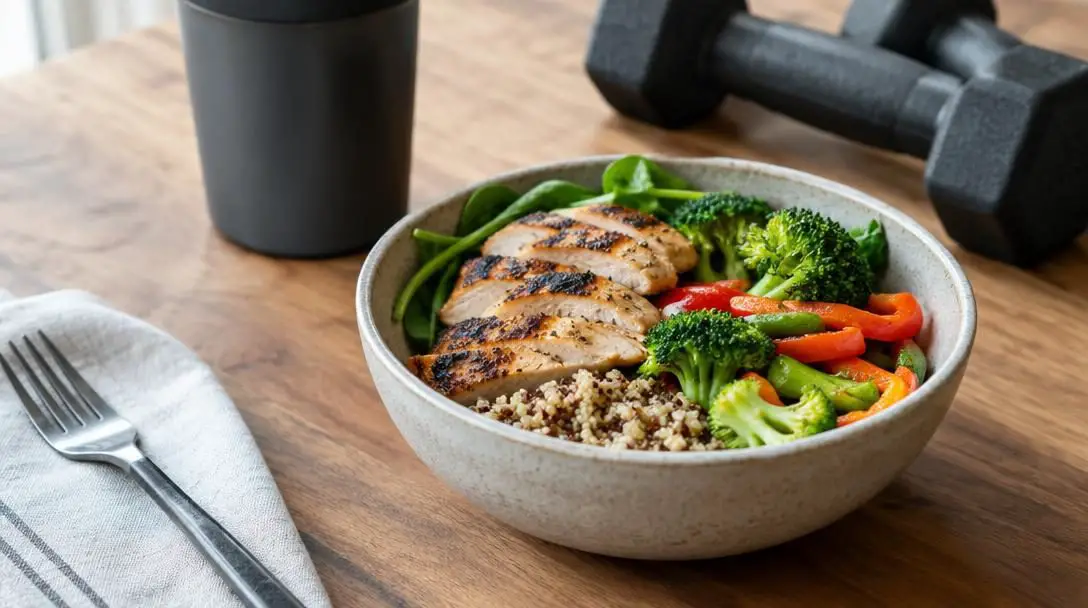
A superior strategy for muscle development is to eat frequent, evenly spaced meals throughout the day. Kick off your day with a balanced breakfast containing both protein and carbohydrates to end the overnight fast. From there, aim to consume meals roughly every three hours. This consistent pacing maintains stable energy levels, keeps protein synthesis elevated, and avoids the gastrointestinal discomfort of attempting to consume massive calorie amounts in one or two oversized sittings that stretch the stomach.
Do Not Fear Carbohydrates
Popular diet culture often demonizes carbohydrates as a direct cause of fat gain, leading many novice lifters to mistakenly slash them. In reality, carbohydrates are the primary fuel source for intense, anaerobic resistance training. When you lift heavy weights, your muscles rely heavily on stored muscle glycogen to generate explosive force.
If your carbohydrate stores are depleted, your training performance inevitably drops, and your body may begin breaking down existing muscle tissue through gluconeogenesis to fuel workouts. Consuming 2 to 3 grams of carbohydrates per pound of body weight (or per 0.45 kilograms) provides the systemic endurance required to complete high-volume sets while sparing your hard-earned muscle from being metabolized as fuel.
Carbohydrates are not your enemy; they are the primary fuel that protects your hard-earned muscle tissue from being burned during demanding workouts.
Follow Your Macros and Calorie Targets
Vague notions of "eating clean" are rarely enough to drive consistent muscular hypertrophy. Without objective data, most lifters either eat too little to support growth or eat far too much and accumulate unnecessary body fat. You must quantify your intake using specific caloric and macronutrient targets.
A reliable target for active muscle building is roughly 20 calories per pound of body weight. Within this daily calorie allotment, ensure that 20 to 30 percent of calories come from protein, 40 to 60 percent come from carbohydrates, and the remainder comes from dietary fats. To ensure absolute compliance, enter everything you consume into a modern nutrition tracking app rather than relying on mental estimates.
Get Used to Core Staple Foods Through Meal Prep
Consistency is the deciding factor in muscle growth. Leaving your meals to chance or relying on last-minute convenience foods almost always results in missed protein targets and poorly balanced macronutrient ratios. The most dependable athletes rely on disciplined food preparation to guarantee success.
Embrace straightforward, reliable staple ingredients that are easy to cook and portion in bulk. Clean staples like chicken breast, cod, and rice form the bedrock of a dependable muscle-building diet. By cooking these items ahead of time, you ensure that you always have access to the exact nutrients your body requires, regardless of how busy your daily schedule becomes.

Step-by-Step Blueprint to Set Up Your Daily Intake
Transitioning from theory to practical application requires an organized, step-by-step approach. Follow this structural process to calculate your baseline requirements and establish your daily meal system.
- Establish your baseline body weight and calorie target: Weigh yourself first thing in the morning on an empty stomach. Take your body weight in pounds and multiply it by 20 to determine your initial daily caloric target.
- Calculate your daily protein requirements: Convert your body weight into kilograms (by dividing your weight in pounds by 2.2) and multiply that number by 1.2 to 1.7 grams. Verify that the resulting calories from protein account for 20 to 30 percent of your total daily energy allowance.
- Determine your carbohydrate and fat needs: Multiply your body weight in pounds by 2 to 3 grams to find your daily carbohydrate goal, confirming it lands between 40 and 60 percent of your daily calories. Allocate whatever remaining calories you have to healthy dietary fats.
- Set up a digital nutrition log: Download a reputable nutrition tracking app and enter your customized caloric, protein, carbohydrate, and fat targets. Log all meals, snacks, and cooking oils to eliminate guesswork.
- Establish a set meal cadence: Plan out your day so that you begin with a balanced breakfast containing protein and complex carbohydrates, followed by meals spaced roughly three hours apart.
- Implement a weekly batch-cooking routine: Select one or two days each week to prepare your core staples in volume. Cook large batches of chicken breast, cod, and rice, portioning them into measured containers so your daily meals are ready to go.
Common Nutritional Mistakes That Stifle Growth
Even with great effort in the weight room, minor nutritional errors can prevent you from seeing visible results. Watch out for these frequent mistakes:
- Adopting an uncontrolled surplus: Eating everything in sight without calorie boundaries will cause rapid fat accumulation, obscuring muscular definition and harming metabolic health.
- Following restrictive fasting regimens: Attempting intermittent fasting while trying to build muscle limits your daily opportunity for protein synthesis and can lead to muscle breakdown during prolonged fasts.
- Eliminating carbohydrates out of fear: Cutting carbs deprives your muscle tissue of glycogen, sapping your workout strength and forcing the body to break down muscle fibers for energy.
- Relying on mental guesswork: Assuming you are hitting your numbers without logging your food in a tracking app almost always results in under-eating protein and overshooting fat intake.
- Failing to prepare food in advance: When you do not prepare staple meals ahead of time, you are forced to rely on takeout or convenience items that compromise your macronutrient balance.
Long-Term Progression and Dietary Adjustments
The estimated benchmark of 20 calories per pound of body weight serves as an effective starting point, but human metabolisms are dynamic. Factors such as non-exercise activity, metabolic rate, and training intensity vary from person to person. Consequently, you must monitor your physical response over time and make measured adjustments.
Assess your progress on a weekly basis rather than reacting to daily scale fluctuations, which are often caused by temporary water retention. Track your body weight weekly, record your strength progression in the gym, and assess your muscular definition in the mirror. If your body weight remains completely stagnant over several weeks and your strength is not increasing, your energy expenditure may exceed your intake; subtly increase your food volume to reignite progress.
Conversely, if you observe the scale climbing rapidly accompanied by a visible increase in body fat without corresponding strength gains, you are likely overshooting your caloric requirements. Re-examine your tracking logs to verify your accuracy, reduce hidden fats, and adjust your intake until your rate of gain reflects clean, lean tissue rather than excess body fat.
Frequently asked questions
Why is intermittent fasting discouraged when trying to build muscle?
Intermittent fasting compresses your food intake into a small window, leaving your body without circulating nutrients for extended periods. When building muscle, your body benefits from a continuous supply of amino acids roughly every three hours to maintain protein synthesis and prevent muscle breakdown. Fasting also makes it difficult to consume the large caloric volume needed for growth without feeling uncomfortably full.
How much protein do I actually need to build muscle?
To support active muscle repair and hypertrophy, consume between 1.2 and 1.7 grams of protein per kilogram of body weight each day. This is substantially higher than the standard baseline of 0.8 grams per kilogram required for basic sedentary health, ensuring you have enough amino acids to repair exercise-induced micro-tears.
Will eating carbohydrates make me gain body fat instead of muscle?
No, carbohydrates do not automatically cause fat gain when consumed within an organized macronutrient plan. Lifters require 2 to 3 grams of carbohydrates per pound of body weight to replenish muscle glycogen stores. Carbohydrates fuel intense workouts and protect existing muscle tissue from being broken down for energy.
What are the best staple foods for a muscle-building diet?
Lean animal proteins and digestible carbohydrates form the best foundation. Chicken breast and white fish such as cod provide high-quality protein without excess fat, while white or brown rice serves as an easily digestible carbohydrate source that fuels workouts and supports recovery.
How many total calories should I consume each day?
A proven baseline for muscle growth is approximately 20 calories per pound of body weight. Within this caloric total, 20 to 30 percent of energy should come from protein, 40 to 60 percent from carbohydrates, and the remaining amount from dietary fats.
The Bottom Line
Achieving a muscular, well-defined physique is not an accidental outcome of chaotic eating or brute force in the gym. It is the direct biological result of targeted, disciplined nutrition repeated over months of training. By establishing a caloric baseline around 20 calories per pound of body weight, prioritizing lean proteins like chicken breast and cod, fueling intense sessions with adequate carbohydrates, and spacing your meals every three hours, you create the optimal environment for hypertrophy. Take control of your kitchen through consistent meal prep and digital tracking, and your physique will steadily reflect your hard work.