5 Worst Signings In AC Milan History
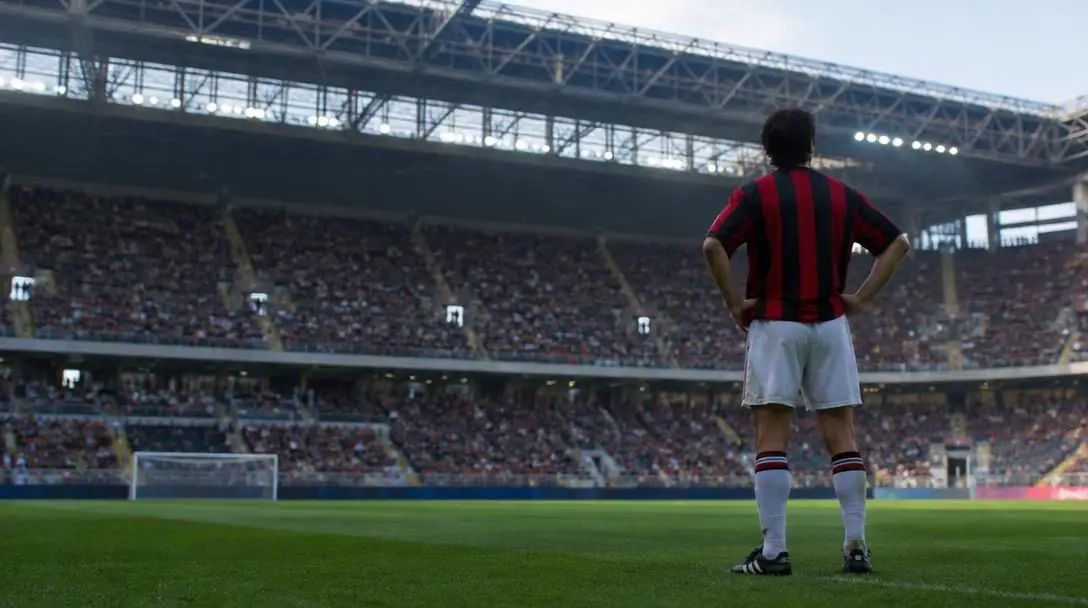
AC Milan holds an indisputable place among the titans of world football. Founded toward the close of the nineteenth century, the Italian institution has assembled an enviable trophy room laden with Serie A scudetti, European Cups, and world championships. Backed across various eras by deep financial reservoirs, the Rossoneri have frequently commanded the market, acquiring generational talents capable of dominating European competition under the lights of San Siro.
Yet vast financial resources and historic prestige offer no absolute protection against the volatile nature of the transfer market. For every legendary acquisition who lifted silverware in the iconic red and black stripes, other high-profile signings unraveled into sporting and economic disasters. Whether undermined by devastating physical trauma, tactical friction, or a sheer inability to break into the matchday squad, these miscalculations stand as sobering reminders of the risks embedded in elite football recruitment.
Key takeaways
- Financial muscle and past pedigree do not guarantee that high-profile signings will adapt successfully to AC Milan's tactical environment.
- Catastrophic injuries can completely erase multi-million-euro investments before players ever log a single league appearance.
- Reactionary swap transactions and long-term contracts frequently saddle clubs with unmovable wage commitments and protracted loan cycles.
- Fernando Redondo demonstrated unprecedented integrity by waiving his salary and perks while spending years sidelined with injury.
The high stakes of recruitment at San Siro
Operating at the pinnacle of European football requires continuous squad renewal, but the margin between visionary business and catastrophic waste is razor thin. Over the decades, Milan supporters have witnessed several close calls and misfires that narrowly avoided the bottom tier of historic failures. Attackers like Ricardo Oliveira, Luther Blissett, and Jose Mari each arrived with sizable reputations or lofty price tags, yet struggled to adapt to the rigorous demands of Italian football. While their tenures fell well short of expectations, other signings proved vastly more disastrous in terms of financial cost, lost opportunity, and lack of on-field utility.
To quantify the true scale of these market missteps, one must look at the investments that delivered virtually nothing in competitive domestic league play. The following comparative overview outlines the five most disastrous transfers in the club's storied history.
| Player | Position | Reported Cost | Serie A Matches | Primary Complication |
|---|---|---|---|---|
| Leonardo Bonucci | Center-back | €42 million | 35 | Tactical mismatch, rapid departure after one trophy-less year |
| Mattia Caldara | Center-back | €35 million (swap) | 0 | Ruptured ACL and recurring physical trauma |
| Digao | Center-back | Lucrative contract | 1 | Failed to crack squad; spent tenure on endless loans |
| Oguchi Onyewu | Center-back | Free transfer (3-year deal) | 0 | Persistent severe injuries; limited to one continental match |
| Fernando Redondo | Midfielder | £11 million | Handful (late tenure) | Severe physical injury requiring over two years of recovery |
The 5 worst signings in AC Milan history
Transfer miscalculations take varied forms: some collapse under tactical pressure and captaincy burdens, while others are thwarted by medical tragedy before their careers in Milan can properly begin. The five players detailed below represent the costliest and most frustrating gambles the Rossoneri ever made.
Leonardo Bonucci
- Position: Center-back
- Acquisition fee: €42 million
- Contract length: Five years (served one)
- Total Serie A matches: 35
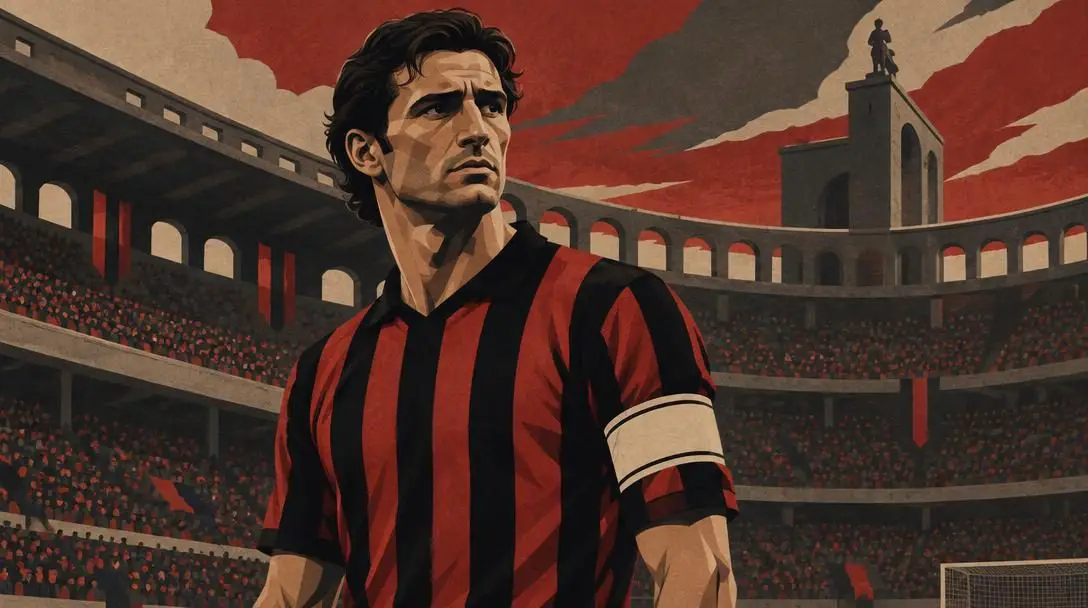
The arrival of Leonardo Bonucci in July 2017 was meant to announce the dawn of a new, assertive era for Milan under fresh ownership. Bonucci had established himself as one of the premier defenders on the continent during an exceptional seven-year period with Juventus, where he made 227 league appearances, scored 13 goals, and claimed multiple Serie A crowns. Seeking to destabilize their historic rivals and instantly solve their defensive leadership questions, the Milan hierarchy completed a €42 million deal, tied Bonucci to a five-year contract, and immediately handed him the team captain's armband.
The move swiftly unraveled on the pitch. Stripped of the cohesive three-man defensive structure that maximized his strengths in Turin, Bonucci's individual displays were erratic and unconvincing. Rather than transforming the Rossoneri into title contenders, the club ended the season empty-handed without any major silverware. Acknowledging the failed experiment after only 35 league games and two goals, Milan cut their losses after just twelve months, packaging Bonucci back to Juventus in a direct swap agreement.
Mattia Caldara
- Position: Center-back
- Transaction valuation: €35 million (direct swap)
- Serie A appearances: 0
- Notable loan spells: Atalanta, Venezia, Spezia
Arriving at Milanello as the direct counterpart in the transaction that returned Bonucci to Juventus in 2018, Mattia Caldara was perceived as the long-term future of Italy's backline. Caldara had climbed through the Atalanta youth academy, honed his game through loan stints at Trapani and Cesena, and earned a transfer to Juventus while spending productive loan minutes shining for his boyhood club in Bergamo. Milan committed €35 million in value to secure him on a five-year contract, envisioning an agile, modern central defense.
Instead, Caldara's tenure turned into a heartbreaking medical catastrophe. Shortly after his arrival, he suffered a ruptured anterior cruciate ligament (ACL) alongside a sequence of debilitating muscular injuries. The physical setbacks were so severe and relentless that Caldara never played a single minute of Serie A football for AC Milan. Barring isolated outings in the Coppa Italia and the Europa League, his multi-year contract was spent in treatment rooms and on cyclical loan departures to Atalanta, Venezia, and Spezia, completely erasing the athletic and financial value of the original deal.
Digao
- Position: Center-back
- Senior debut: 2005
- Serie A appearances: 1
- Subsequent clubs: Rimini, Lecce, Crotone, New York Red Bulls
Young Brazilian defender Digao entered European football enveloped in considerable buzz, widely monitored by international scouts as an emerging prospect from the Sao Paulo youth academy. After an initial introduction to Italian football with Sampdoria, Milan secured the young defender on an initial temporary arrangement before awarding him a lucrative, long-term permanent contract, leading up to his senior debut in 2005.
Despite the initial hype and financial commitment, Digao proved utterly incapable of breaking into Milan's world-class matchday rotation. Over the course of six full years under contract, he managed just one solitary appearance in Serie A. Milan's technical staff spent years attempting to protect their investment by sending him across Europe on temporary assignments, dispatching him to Rimini, Standard Liege, Lecce, Crotone, and Portuguese side Penafiel. None of these spells reignited his trajectory, and he eventually closed out his professional journey with a short stint at the New York Red Bulls in Major League Soccer.
Long-term financial commitments to untested prospects can tie up roster spots for years when development stalls and starting positions remain completely out of reach.
Oguchi Onyewu
- Position: Center-back
- Contract length: Three years
- Serie A appearances: 0
- Continental outings: 1 (UEFA Champions League)
Towering central defender Oguchi Onyewu took a remarkable path to the Italian top flight. Raised in the United States, Onyewu honed his skills at the IMG Academy and Clemson University before departing for Europe in 2002. Over the following seven years, he assembled a strong European resume across tenures with Metz, La Louviere, Standard Liege, and Newcastle United. Drawn to his imposing physical frame and extensive international experience with the United States national team, AC Milan signed him to a three-year contract in 2009.
Unfortunately, Onyewu's time in Milan was thoroughly decimated by severe, persistent physical trauma. The American defender was sidelined almost immediately by major knee injuries, which prevented him from ever making his debut in Serie A. Across his two full years under contract with the Rossoneri, his entire competitive contribution amounted to one solitary Champions League fixture. Following a short loan spell with Dutch club Twente, Onyewu departed Milan in 2011, having his physical prime derailed to the point where he managed only 60 total league matches across the final six seasons of his career.
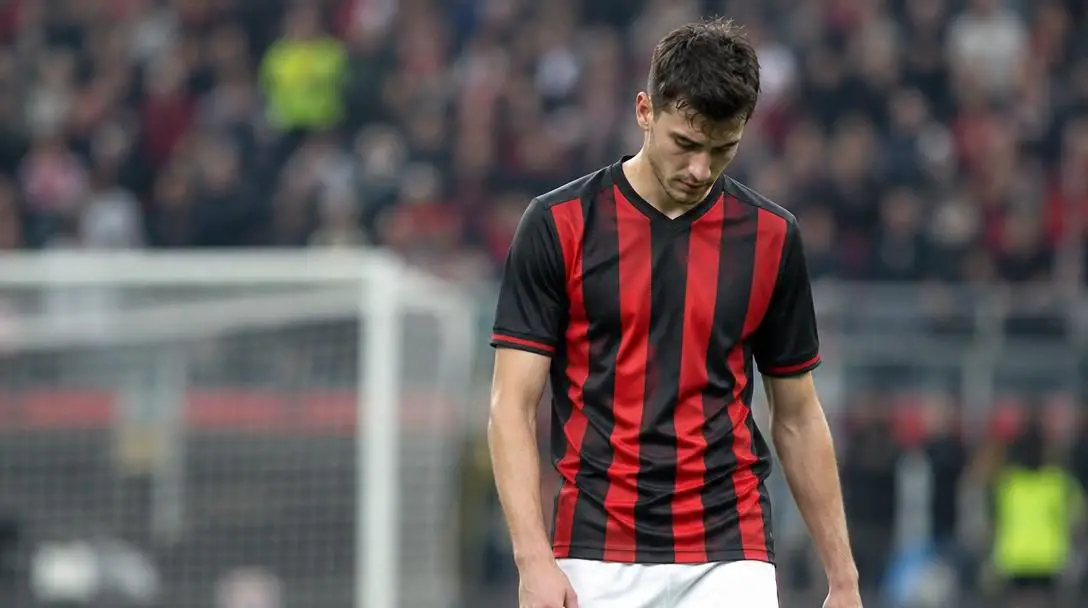
Fernando Redondo
- Position: Defensive midfielder
- Transfer fee: £11 million
- Previous clubs: Argentinos Juniors, Tenerife, Real Madrid
- Key distinction: Voluntarily waived salary during multi-year rehabilitation
The acquisition of Argentine maestro Fernando Redondo remains one of the most poignant episodes in modern transfer history. Throughout the late 1990s, Redondo had established himself as arguably the most elegant deep-lying playmaker in the world, spearheading Real Madrid's midfield to multiple Champions League titles. In 2000, AC Milan negotiated an £11 million fee to bring him to San Siro—a blockbuster transfer arranged primarily between the two boardroom hierarchies without Redondo initially requesting the move.
Disaster struck almost immediately upon his arrival at Milanello. During pre-season training, Redondo sustained a catastrophic knee ligament injury that derailed his integration and required multiple surgical interventions. The physical damage kept the Argentine sidelined for over two full years. In an extraordinary gesture of personal integrity rarely matched in modern sports, Redondo refused to draw his multi-million salary while medically unfit to play, even offering to return the house and car provided by the club. Although he eventually battled back to make a handful of appearances late in his career, the vast bulk of his expensive contract was spent in painful rehabilitation rather than orchestrating the Milan midfield.
How elite football transfers work
To fully understand how investments of this magnitude collapse, readers must understand the complex operational pipeline required to execute a high-profile signing. Multi-million-euro transactions require extensive coordination across legal, financial, and sporting departments before any player steps onto the pitch:
- Scouting and performance profiling: Technical scouts, data analysts, and coaching staffs assess tactical fit, physical benchmarks, and performance metrics to identify players who can address specific roster deficiencies.
- Club-to-club fee negotiations: The purchasing side meets with the selling team to settle transfer fees, installment plans, performance add-ons, or player-swap values (such as the Bonucci-for-Caldara exchange).
- Personal terms negotiation: Team directors negotiate directly with the player's licensed representatives to finalize base wage scales, contract duration, appearance incentives, and image-rights compensation.
- Comprehensive medical screening: The athlete undergoes detailed musculoskeletal, joint, and cardiovascular testing designed to uncover chronic joint degradation, prior surgical flaws, or acute physical vulnerabilities.
- Administrative registration: Upon passing physicals and signing documentation, international clearances and registration rights are filed through relevant football governing bodies to establish match eligibility.
Practical steps clubs take to mitigate transfer risks
Given the immense capital committed to multi-year contracts, modern clubs continuously develop management strategies to insulate their balance sheets from unmitigated transfer disasters:
- Rigorous physical screenings: Teams deploy advanced MRI imaging, functional movement screens, and stress tests to detect hidden joint issues, particularly around the knees and ankles.
- Incentive-based contract structures: Organizations structure deals with lower guaranteed base pay and heavier incentives tied to appearances, competition qualification, and trophies won.
- Asset-protection insurance: Clubs secure dedicated insurance policies to offset wage liabilities and book depreciation if an athlete suffers a catastrophic medical event.
- Strategic loan deployments: When an acquisition cannot break into the first team, sending them on loan preserves their market value, showcases them to potential buyers, and shifts wage burdens.
- Controlled physical integration: Medical and coaching staffs manage the transition of new arrivals carefully to avoid overloading joints and soft tissue unaccustomed to new training intensities.
Common mistakes made in high-profile transfers
Despite access to sophisticated analytics and deep scouting networks, elite European teams frequently fall victim to predictable recruitment traps:
- Overvaluing system-dependent success: Assuming an athlete who dominated inside one specific tactical setup (like Bonucci in Turin) can automatically produce identical results in an entirely different structure.
- Executing reactionary swaps: Engineering hasty player exchanges under deadline pressure without conducting exhaustive due diligence on the incoming player's immediate health.
- Overlooking medical red flags: Dismissing minor chronic pain markers or soft-tissue fatigue in the rush to sign a celebrated name before a transfer window closes.
- Contractual over-commitment: Handing lengthy four- or five-year deals with rigid wage obligations to aging veterans or untested foreign prospects, rendering them untransferable when performance drops.
- Director-led signings without manager buy-in: Securing talent driven by commercial visibility or boardroom preferences rather than the explicit tactical vision of the head coach.
Frequently asked questions
Why did Leonardo Bonucci leave AC Milan after only one season?
Bonucci struggled to replicate his Juventus form within Milan's tactical system and faced intense scrutiny as the club missed out on major silverware. Recognizing that the project was not working for either party, Milan arranged a swap with Juventus that sent Bonucci back to Turin after just twelve months.
Did Mattia Caldara ever play a league game for AC Milan?
No, Mattia Caldara never made a single Serie A appearance for AC Milan. A ruptured ACL and persistent physical complications restricted his involvement to brief outings in cup competitions before he was dispatched on repeated loans.
How many competitive matches did Oguchi Onyewu play for Milan?
Onyewu participated in only one competitive match during his two seasons under contract with AC Milan, which came in the UEFA Champions League. Severe injuries prevented him from ever taking the pitch in Serie A.
Why did Fernando Redondo refuse to accept his salary at Milan?
After suffering a devastating knee injury during pre-season training that sidelined him for over two years, Redondo voluntarily gave up his wages and offered to surrender the car and house provided by Milan, demonstrating exceptional personal ethics until he was medically cleared.
Which players narrowly missed this list of worst signings?
Attackers such as Ricardo Oliveira, Luther Blissett, and Jose Mari narrowly missed the absolute bottom tier. While each arrived with significant hype or price tags and disappointed on the pitch, they still featured more regularly than signings who missed entire campaigns due to catastrophic injury or squad exclusion.
The bottom line
The history of AC Milan's transfer misadventures illustrates that prestige and wealth cannot shield an elite institution from the inherent uncertainties of professional football. Whether undone by structural knee injuries, tactical dissonance, or developmental dead ends, acquisitions like Bonucci, Caldara, Digao, Onyewu, and Redondo serve as enduring case studies in football economics. As transfer fees and wage bills climb ever higher, the lesson from San Siro remains clear: sustainable success relies as much on rigorous medical evaluation, tactical foresight, and contractual discipline as it does on financial power.