A Tiny Course In Quantum Physics: 5 Facts and Insights to Get a Sense of This Fascinating Subject
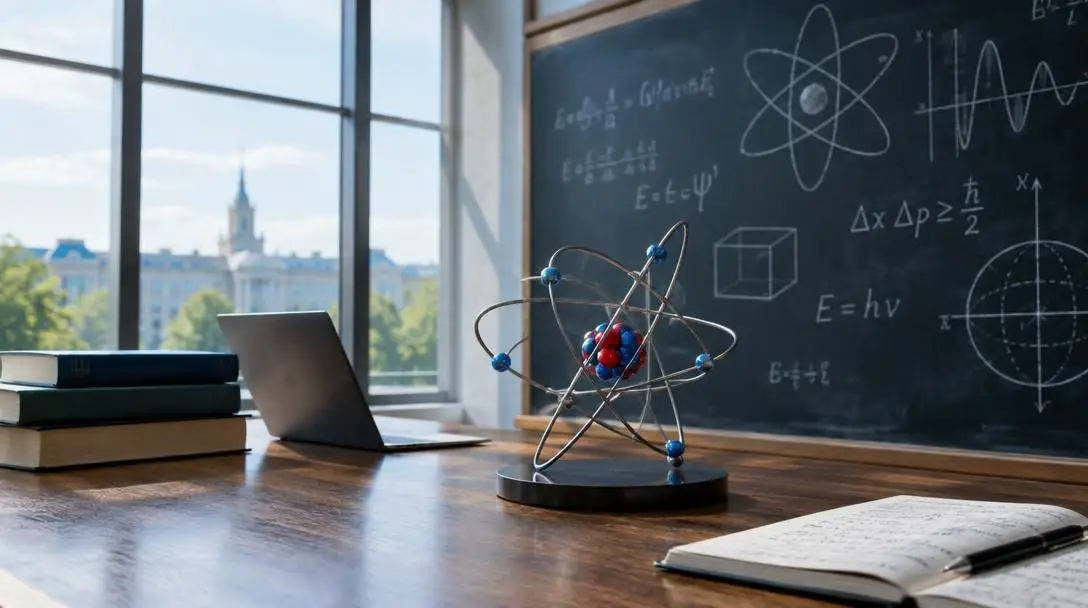
Quantum physics is an extraordinary branch of science that took shape during the early 20th century, forever changing how we perceive the building blocks of reality. While classical physics offered a reliable framework for understanding the macroscopic world—such as the motion of celestial bodies, projectiles, and everyday machinery—it rapidly disintegrated when researchers turned their attention to atoms and subatomic particles. In this microscopic realm, the predictable rules of cause and effect give way to mathematical equations driven by probabilities, dynamic wave states, and counterintuitive interactions.
Far from being an isolated academic puzzle, quantum mechanics serves as the engine behind modern life. Breakthroughs in this field have enabled the development of semiconductors, high-speed computers, advanced telecommunications, and sophisticated medical equipment like magnetic resonance imaging. Navigating the quantum landscape requires setting aside everyday intuition and embracing a universe where particles can inhabit multiple states at once, mirror each other across vast expanses of space, and refuse to reveal both their location and speed simultaneously.
Key takeaways
- Classical physics models the universe as continuous and deterministic, whereas quantum mechanics relies on probabilities and mathematical equations to explain subatomic behavior.
- Wave-particle duality reveals that microscopic entities like electrons exhibit either particle-like or wave-like characteristics depending on how they are measured.
- Quantum entanglement links the physical properties of separated particles instantaneously, defying classical assumptions of local realism.
- The uncertainty principle establishes an intrinsic physical limit on how precisely paired attributes, such as position and momentum, can be co-defined.
- Superposition allows quantum particles to exist across multiple simultaneous configurations, powering revolutionary technologies like quantum computing.
The Shift from Classical Mechanics to Quantum Theory
For centuries, the scientific consensus rested on the deterministic foundation of classical physics. This worldview treated the universe as an elaborate, continuous clockwork machine. If an observer possessed sufficient knowledge of an object's initial position, velocity, and the external forces acting upon it, classical mechanics assumed that its historical trajectory and future states could be calculated with flawless precision. Within this paradigm, matter consisted of hard, localized particles that occupied clearly defined coordinates, while energy traveled in smooth, uninterrupted waves.
This tidy separation began to crumble near the start of the 20th century as laboratory instruments grew refined enough to probe atomic and subatomic structures. Rather than behaving like tiny planets revolving around a central sun, electrons defied classical orbital mechanics. Furthermore, experiments demonstrated that light, previously understood purely as an electromagnetic wave, exhibited discrete packet-like behavior, while solid matter displayed interference patterns characteristic of ripples on water.
Faced with these anomalies, physicists recognized that the subatomic realm was not simply a miniaturized version of macroscopic reality. They developed quantum mechanics—a mathematical framework that abandoned deterministic certainty in favor of statistical distributions and state vectors. In doing so, they revealed that our everyday intuition does not reflect the fundamental mechanics of the universe.
Five Core Facts and Insights of the Quantum Realm
To establish a solid foundation in quantum theory, it is helpful to explore the core phenomena and technological horizons that define how particles operate at the quantum level. The following table provides an overview of these critical concepts before examining each in detail.
| Quantum Concept | Primary Characteristic | Key Physical Implication | Practical Application |
|---|---|---|---|
| Wave-Particle Duality | Entities exhibit wave and particle traits | Physical manifestation depends on the measurement setup | Electron microscopy and sensor design |
| Quantum Entanglement | Particles share correlated quantum states | State alterations occur regardless of separation distance | Quantum key distribution and secure communication |
| The Uncertainty Principle | Position and momentum cannot both be precise | Represents an intrinsic limit of physical nature | Nanotechnology and fundamental atomic modeling |
| Superposition | Particles exist in multiple states simultaneously | Definitive values resolve only upon measurement | Qubits in high-efficiency quantum computing |
| The Future of Quantum Physics | Translating theory into advanced engineering | Unlocks molecular modeling beyond classical limits | Materials discovery, energy storage, and medicine |
Wave-Particle Duality
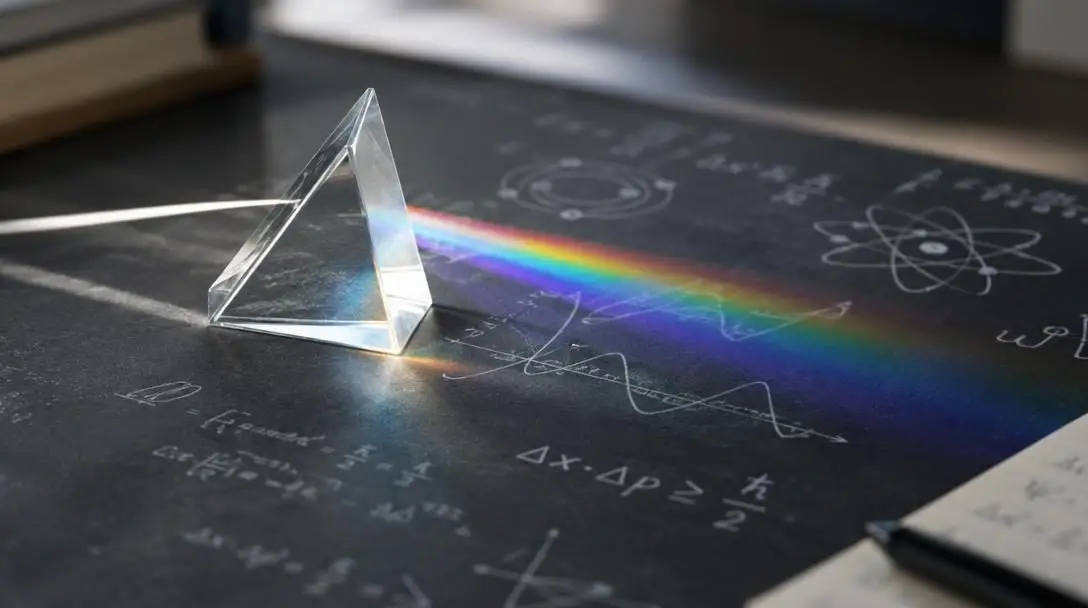
One of the cornerstone insights of quantum physics is wave-particle duality. In classical physics, physical phenomena fell neatly into one of two mutually exclusive categories: localized particles possessing mass and position, or continuous waves that diffuse throughout a medium. Quantum mechanics demonstrates that subatomic entities, such as electrons and photons, refuse to obey this rigid classification.
Under specific experimental conditions, an electron behaves like a localized, solid projectile, leaving a distinct, pinpoint impact on a detection screen. Yet, if that same electron passes through narrow barriers without being localized, it produces an interference pattern—a signature behavior of spreading waves washing over one another. The crucial insight of wave-particle duality is that nature does not assign an immutable classical identity to microscopic matter. Instead, the experimental arrangement and the act of observation itself determine whether particle-like or wave-like properties emerge.
Quantum Entanglement
Perhaps no phenomenon illustrates the departure from classical logic more vividly than quantum entanglement. When two or more particles interact in specific configurations, their quantum states become inextricably linked. Once entangled, the mathematical description of the pair forms a unified system, meaning the properties of one particle cannot be specified independently of the other, regardless of how much physical distance separates them.
If the quantum state of one entangled electron is observed or altered, the corresponding state of its partner reflects this condition instantaneously. In the macroscopic realm, objects interact strictly through local contact or through electromagnetic and gravitational signals traveling at finite speeds across space. Entanglement completely bypasses classical locality, establishing correlations that persist across laboratory benches or light-years. This interconnectedness has shifted from a theoretical debate into the practical cornerstone of ultra-secure quantum communication systems and high-speed processing architectures.
The Uncertainty Principle
Formulated as a fundamental law of subatomic systems, the uncertainty principle states that paired complementary variables—most famously position and momentum—cannot both be known with arbitrary precision at the same moment. The more accurately an experimenter measures where a particle resides, the less accurately the particle's momentum (and therefore its velocity) can be determined, and vice versa.
In everyday engineering, measurement limitations are attributed to clumsy instruments or environmental interference. A mechanic with a sufficiently precise laser can measure a car's speed and position without disturbing either. At the quantum level, however, uncertainty is an intrinsic, mathematical property of nature itself. Particles do not possess simultaneous, well-defined positions and trajectories that our sensors simply fail to catch; rather, precise localization structurally blurs the particle's wave properties, making its momentum inherently indeterminate.
Superposition
In our day-to-day experience, macroscopic objects exist in definitive, binary states. A light switch is either toggled on or off; an object rests in one room or another; a coin lands on heads or tails. In the quantum realm, entities operate under the principle of superposition, which dictates that a particle can exist across multiple possible states simultaneously until an observation forces a resolution.
At the quantum level, until a definitive measurement occurs, a particle is best described by mathematical equations that represent a combination of all its possible configurations at once.
Consider an electron within an atom: rather than orbiting at a single static energy tier, it can exist in a linear combination of several energy states simultaneously. This principle unlocks the transformative potential of quantum computing. Classical computers rely on silicon bits that represent either a zero or a one. In contrast, quantum computers utilize quantum bits, or qubits, which leverage superposition to embody zeros, ones, or any probabilistic combination of both at the same time. This capability allows quantum processors to evaluate vast computational pathways concurrently, completing tasks that would stall classical supercomputers for millennia.
The Future of Quantum Physics
The progression of quantum mechanics has evolved from a race to comprehend atomic oddities into an applied discipline shaping the next era of global infrastructure. The future of quantum physics spans several groundbreaking disciplines, moving abstract equations out of theoretical papers and into commercial hardware.
Among the most active areas of development are quantum sensors, which offer unprecedented levels of measurement sensitivity for geological mapping and navigation, and quantum cryptography, which leverages the physical laws of quantum mechanics to establish unhackable data channels. Furthermore, quantum processors are projected to revolutionize materials science, pharmacology, and green energy. Classical supercomputers struggle to simulate even moderately complex molecules due to the overwhelming number of atomic interactions involved. Because quantum processors naturally operate according to the same rules as atoms, they provide the exact computational platform needed to model chemical reactions, invent novel superconductors, and synthesize life-saving pharmaceuticals.
Practical Roadmap: How to Learn and Explore Quantum Physics
Because the subatomic world defies everyday sensory experience, attempting to study quantum mechanics without a methodical strategy can quickly lead to frustration. Building a rigorous mental model requires balancing historical context, mathematical concepts, and technological applications. Follow these structured steps to navigate your studies effectively:
- Solidify your foundational math skills: Quantum mechanics is articulated through mathematical equations. Becoming comfortable with core algebra, trigonometry, vectors, and basic probability theory provides the necessary literacy to understand state descriptions and wave mechanics without getting lost in abstraction.
- Review the limits of classical mechanics: Examine the historical experiments near the end of the 19th century that classical physics could not explain. Understanding why continuous wave models and classical mechanics failed to account for atomic stability clarifies why radical quantum equations were necessary.
- Study core quantum phenomena individually: Avoid attempting to digest the entire discipline simultaneously. Isolate each concept—wave-particle duality, superposition, quantum entanglement, and the uncertainty principle—and review the specific experimental frameworks that proved each one.
- Engage with interactive software and visual models: Leverage modern academic simulations to visualize wave functions, electron probability clouds, and the operational logic of qubits. Seeing visual models bridge the gap between static mathematical formulas and physical systems.
- Track modern practical applications: Stay informed on how quantum mechanics is applied today across computers, communication networks, and medical diagnostics. Monitoring advancements in quantum sensors, quantum cryptography, and materials science anchors theoretical lessons in tangible technologies.
Traps and Misconceptions: Common Mistakes to Avoid
Due to the bizarre implications of quantum phenomena, introductory learners and popular culture frequently fall prey to misinterpretations. Keeping an eye out for these widespread errors will preserve the accuracy of your understanding:
- Confusing the uncertainty principle with measurement error: Believing that uncertainty is merely an experimental flaw caused by instruments jarring particles is a common pitfall. The limit is structural, mathematical, and unavoidable.
- Treating particles as tiny billiard balls: Visualizing electrons as miniature hard marbles orbiting a nucleus creates immediate confusion. Subatomic entities are dynamic wave packets that spread across space and exhibit interference.
- Misinterpreting quantum entanglement as ordinary communication: Assuming that entangled pairs allow people to send everyday messages faster than light misunderstands quantum states. Entanglement demonstrates a shared correlation, not a standard physical radio signal or transmission line.
- Assuming classical intuition applies to subatomic scales: Forcing quantum systems to conform to common-sense expectations will impede progress. At the atomic scale, the classical rules of continuous motion and distinct locality no longer apply.
- Overlooking the importance of mathematical equations: While analogies provide a helpful starting point, verbal descriptions alone cannot capture how physical states evolve. Engaging with the mathematical foundations yields genuine comprehension.
Expanding Horizons: Where to Direct Your Focus Next
Once you have developed a firm grasp of the fundamental concepts, you can explore several specialized disciplines where quantum principles are driving industrial and scientific revolutions. These areas bridge the gap between theoretical physics and next-generation engineering:
A prime avenue to pursue is quantum computing architecture. Exploring how physical hardware—such as trapped ions or superconducting circuits—is engineered to isolate and manipulate qubits provides direct insight into the challenges of quantum coherence. Understanding how superposition and entanglement are harnessed inside algorithmic gates illustrates why quantum hardware processes complex problems at speeds unattainable by classical chips.
Another critical sector is quantum cryptography and communication. With the rise of powerful digital processors, traditional mathematical encryption methods face potential vulnerabilities. Quantum key distribution uses the fundamental truth of quantum mechanics—that the act of measurement alters the system—to detect any unauthorized eavesdropping immediately. Investigating how quantum-secured networks operate sheds light on the future of global cybersecurity.
Finally, consider monitoring breakthroughs in materials science, medicine, and energy. Researchers are currently using quantum-based modeling to study chemical catalysts for carbon capture, design higher-capacity batteries, and map complex protein folding mechanisms. Following these real-world deployments demonstrates how the microscopic insights discovered a century ago continue to redefine the physical capabilities of human civilization.
Frequently asked questions
Why does classical physics fail to explain the behavior of atoms?
Classical physics assumed that matter and energy behave continuously and deterministically, with particles occupying specific points in space and energy traveling strictly in smooth waves. At the atomic scale, researchers discovered that energy is absorbed and emitted in discrete packets, and matter exhibits wave-like interference. Because classical mechanics could not account for stable electron configurations or the probabilistic nature of subatomic interactions, an entirely new mathematical framework—quantum mechanics—had to be developed.
Does wave-particle duality mean particles change their shape?
No, wave-particle duality does not mean an electron morphs from a physical sphere into a visible wave. Instead, it means that quantum entities cannot be fully described by classical labels. Depending on the design of the experiment, an electron will manifest particle-like properties, such as a localized impact point, or wave-like properties, such as an interference pattern. The nature of the measurement environment dictates which characteristics are observed.
Can quantum entanglement be used to transmit messages faster than light?
No, quantum entanglement cannot be used to send faster-than-light signals or communications. While measuring one entangled particle instantaneously determines the state of its partner, the outcome of that initial measurement is fundamentally random. Because an observer at the other end only sees random outcomes until they compare notes with the first observer via a classical communication channel, no usable information or message travels faster than light.
Why can we not build microscopes precise enough to beat the uncertainty principle?
The uncertainty principle is an intrinsic mathematical feature of wave-based quantum systems, not a limitation of our laboratory sensors. In quantum physics, a particle's position and momentum are complementary properties described by wave mechanics. Narrowing down the wave to pinpoint a precise location inherently spreads out its wavelength, making its momentum indeterminate. No sensor, regardless of how advanced, can overcome this fundamental law of the universe.
How does superposition make quantum computers faster than classical computers?
Classical computers rely on bits that represent a single value—either a zero or a one—at any given moment. Quantum computers utilize qubits, which exploit superposition to exist in combinations of zero and one simultaneously. This allows a quantum processor to evaluate vast numbers of potential computational outcomes concurrently rather than checking them sequentially, resulting in exponential speedups for specialized problems like molecular modeling and complex data optimization.
The bottom line
Quantum physics fundamentally transformed our understanding of the universe by replacing the rigid, clockwork certainties of classical mechanics with a dynamic framework governed by probability, wave mechanics, and interconnected states. Concepts like wave-particle duality, quantum entanglement, the uncertainty principle, and superposition reveal that nature at the subatomic level functions in ways that overturn everyday intuition. As modern science translates these theoretical principles into quantum computing, ultra-secure communication systems, and revolutionary materials, grasping the foundational rules of the quantum realm is no longer just an intellectual curiosity—it is essential for understanding the technological landscape of the 21st century.