Blue Chip College Football Players Who Busted In The NFL
Every autumn, millions of football fans follow the journey of exceptional collegiate athletes attempting to transition into the National Football League. In recruiting and scouting circles, the designation blue chip represents the gold standard of amateur ability, signaling an athlete who pairs prototype physical measurements with verifiable elite production. Yet while the leap from high school to college competition weeds out thousands of hopefuls, the transition from college stardom to the professional gridiron represents a vastly steeper precipice.
In the professional ranks, every opposing roster is stocked with premier athletes, eliminating the raw athletic advantages that college superstars exploit on Saturdays. Quarterbacks face the most unforgiving evaluation of all, tasked with deciphering complex defensive coverages under relentless pressure while serving as the operational leader of an entire franchise. When decorated collegiate legends fail to establish sustainable professional careers, they enter football lore with the unwelcome designation of draft busts.
Key takeaways
- Elite college production and individual hardware do not guarantee translatable success in the National Football League.
- Quarterbacks face unique operational hurdles, where processing speed, emotional maturity, and work ethic outweigh raw arm strength.
- Flawed talent evaluation often stems from overvaluing physical traits while ignoring scheme inflation and off-field warning signs.
- Front offices work to mitigate draft day risk by distinguishing between system-driven college output and genuine individual traits.
At a glance: Five legendary college quarterbacks who struggled in the NFL
| Player | College Program | Major College Honors | NFL Draft Slot | NFL Career Starts |
|---|---|---|---|---|
| Troy Smith | Ohio State | 2006 Heisman Trophy (91.63% vote) | Round 5, 2007 | 8 starts |
| Matt Leinart | USC | 2004 Heisman Trophy, 99 college passing TDs | Round 1 (No. 10), 2006 | Intermittent (33 games played) |
| Tim Tebow | Florida | Heisman Trophy, 2 BCS National Championships | Round 1 (No. 25), 2010 | 16 starts |
| JaMarcus Russell | LSU | 2006 Manning Award | Round 1 (No. 1), 2007 | 3-season career |
| Johnny Manziel | Texas A&M | 2012 Heisman Trophy, 93 total college TDs | Round 1 (No. 22), 2014 | Out of NFL after 2 seasons |
Five blue-chip college legends who busted in the pros
The following athletes attained legendary status in college football, collecting national championships, rewriting school record books, and hoisting prestigious awards. Despite their collegiate dominance, each saw their professional ambitions dismantled by scheme mismatches, roster depth competition, work ethic hurdles, or off-field distractions.
Troy Smith
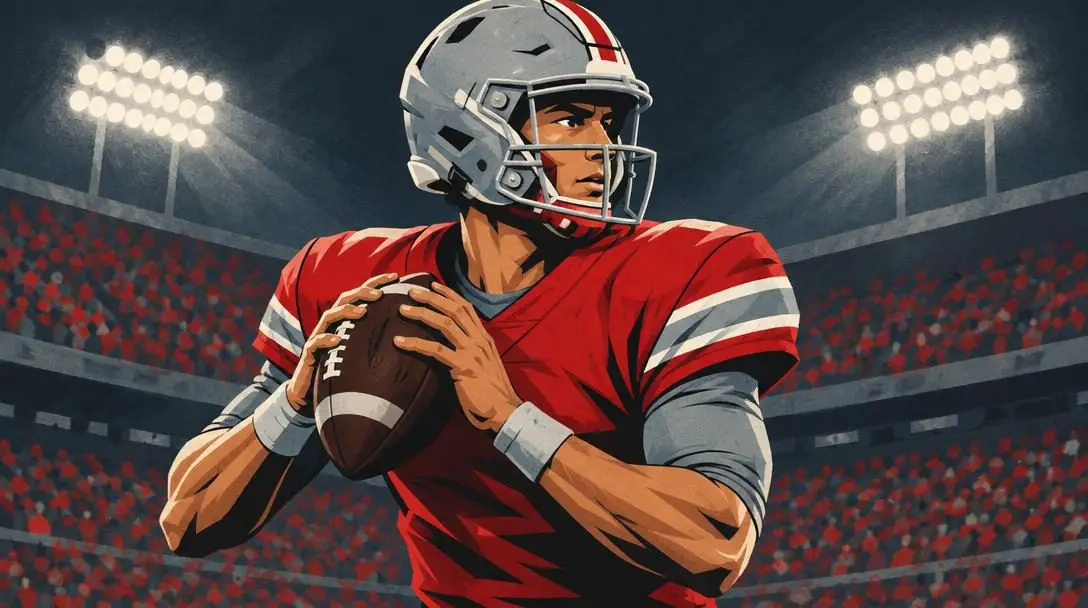
- College: Ohio State University
- Draft selection: Round 5, 2007 NFL Draft
- College milestone: 91.63 percent of the 2006 Heisman vote
- NFL passing yards: 1,734 yards
Ohio State University has sent a steady succession of signal-callers to the professional ranks, but few captured the imagination of Columbus quite like Troy Smith. After spending over two years waiting for his opportunity on the Buckeyes' sideline, Smith secured the starting role and orchestrated a dominant three-season tenure. During his breakout 2005 campaign, he recorded 2,282 passing yards, 16 passing touchdowns, and just four interceptions, while adding 611 rushing yards and 11 scores on the ground.
By 2006, Smith transformed into a polished pocket distributor. He dominated the national award circuit, claiming the Heisman Trophy by earning a staggering 91.63 percent of the available vote. Despite that historic collegiate output, NFL evaluators harbored reservations regarding his prototype size and transition to pro-style concepts. Smith slid to the fifth round of the 2007 NFL Draft. His time in the league was brief and turbulent; he made only eight career starts and threw for 1,734 passing yards before heading north to continue his career in the Canadian Football League.
Matt Leinart
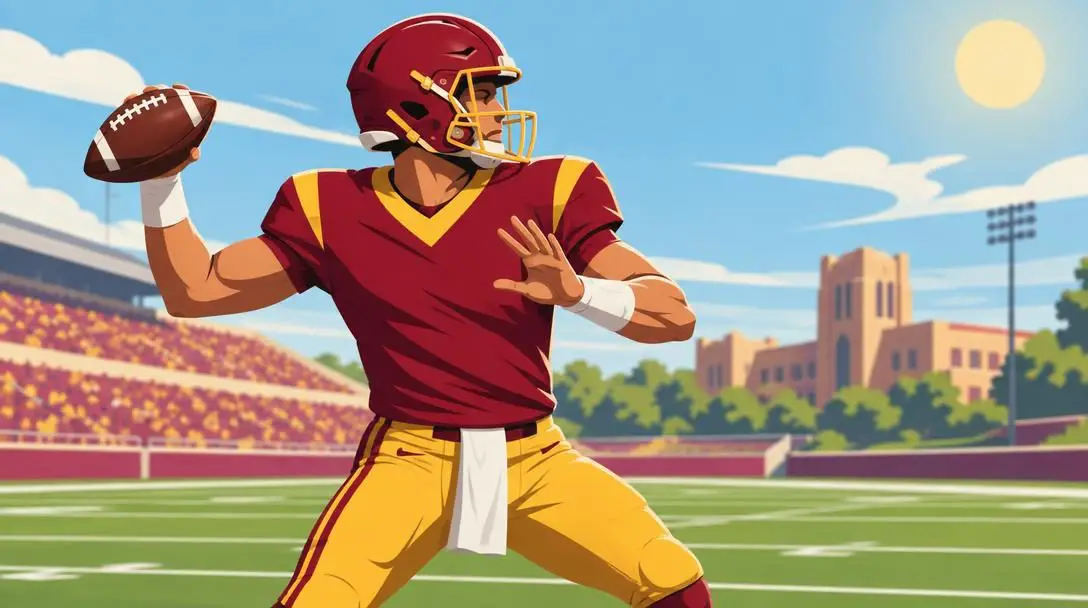
- College: University of Southern California (USC)
- Draft selection: Round 1 (10th overall), 2006 NFL Draft
- College milestone: 2004 Heisman Trophy winner
- NFL statistics: 4,065 passing yards, 15 TDs, 21 INTs
Arriving at the University of Southern California as an elite prep recruit, Matt Leinart stood at the center of one of modern college football's most celebrated dynasties. Operating as the Trojans' starting quarterback for three consecutive campaigns, Leinart amassed over a dozen major individual accolades, including the 2004 Heisman Trophy. Throughout his three seasons under center, he posted 10,693 passing yards and delivered 99 touchdowns, dictating games with rhythm and efficiency.
The Arizona Cardinals drafted Leinart with the 10th overall pick in the 2006 NFL Draft, projecting him as their franchise anchor. However, the professional game posed challenges that Leinart could not overcome. He never secured a firm grip on an everyday starting role, battling injuries and falling behind veteran competition. Over an eight-year NFL career spread across four separate franchises, Leinart appeared in 33 games, starting intermittently and compiling 4,065 yards, 15 touchdowns, and 21 interceptions.
Tim Tebow
- College: University of Florida
- Draft selection: Round 1 (25th overall), 2010 NFL Draft
- College milestone: 2 BCS National Championships, 2007 Heisman Trophy
- NFL passing yards: 2,422 yards
Few figures in American sports history have matched the cultural footprint of Tim Tebow during his tenure with the Florida Gators. A dual-threat battering ram, Tebow captured two BCS National Championships, two Maxwell Awards, and the 2007 Heisman Trophy. His impassioned leadership and bruising running style made him one of the most celebrated and decorated amateur competitors in college football history.
The Denver Broncos invested a first-round selection on Tebow, taking him 25th overall in the 2010 NFL Draft. While Tebow provided theatrical fourth-quarter comebacks and a memorable playoff victory against the Pittsburgh Steelers, that postseason triumph was steered primarily by wide receiver Demaryius Thomas and a ferocious Denver defense. Tebow's elongated throwing motion, inconsistent pocket mechanics, and limited field vision curtailed his longevity as a passer. He logged only 16 starts in the NFL, throwing for 2,422 career yards before his tenure as an NFL quarterback ended.
JaMarcus Russell
- College: Louisiana State University (LSU)
- Draft selection: Round 1 (1st overall), 2007 NFL Draft
- College milestone: 2006 Manning Award winner
- NFL tenure: 3 seasons with the Oakland Raiders
Unlike his peers on this list, JaMarcus Russell never took home the Heisman Trophy, but his pre-draft evaluation sparked extraordinary hype. Towering in stature with jaw-dropping arm strength at LSU, Russell garnered praise from talent evaluators as the most gifted quarterback prospect since Peyton Manning. After leading LSU to national prominence and earning the 2006 Manning Award, Russell was chosen first overall by the Oakland Raiders in the 2007 NFL Draft.
Russell's professional tenure deteriorated almost immediately. He arrived with questionable conditioning, held out through training camp over contract negotiations, and struggled with the mental discipline required to study complex NFL defensive game plans. His lack of personal dedication cut his career short after just three seasons in Oakland. Making the misstep even more devastating for the Raiders franchise, the next two selections off the board in 2007 were wide receiver Calvin Johnson and offensive tackle Joe Thomas, both of whom assembled Hall of Fame careers.
Johnny Manziel
- College: Texas A&M University
- Draft selection: Round 1 (22nd overall), 2014 NFL Draft
- College milestone: 2012 Heisman Trophy winner
- NFL career duration: 2 seasons (Cleveland Browns)
Known across the sporting landscape as "Johnny Football," Johnny Manziel entered Texas A&M as a modest three-star recruit before becoming a national sensation. In 2012, Manziel captured the Heisman Trophy as a redshirt freshman by racking up 5,116 yards of total offense, 47 total touchdowns, and nine interceptions. He followed that historic effort with another electrifying season in 2013, compiling 4,873 total yards and 46 total touchdowns through off-script scrambles and improvised passing plays.
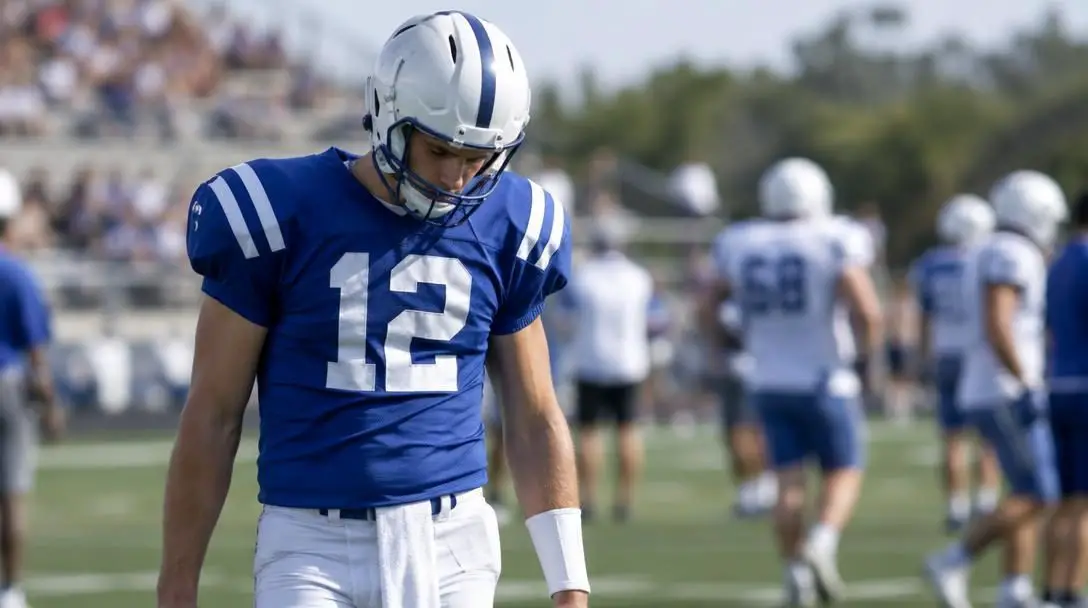
The Cleveland Browns selected Manziel with the 22nd overall pick in the 2014 NFL Draft, wagering that his playground playmaking could translate to Sunday afternoons. However, Manziel's commitment to the responsibilities of professional football vanished quickly. Beset by persistent off-field controversies, missed meetings, and erratic lifestyle choices, he squandered his opportunities to claim the starting job. By the close of the 2015 regular season, after just two tumultuous years, his NFL career had reached a permanent halt.
Talent is only one component of professional success; mental discipline, emotional maturity, and dedication ultimately determine whether a college star becomes an NFL legend or a draft bust.
How the scouting and evaluation process operates
Evaluating an amateur athlete for the professional ranks is a multi-million-dollar exercise in risk management. NFL franchises commit massive financial resources toward vetting prospective draft picks, seeking to confirm whether collegiate production will endure against elite professionals. The evaluation protocol focuses on four critical analytical pillars:
- Film study: Personnel executives review hundreds of hours of game footage to observe how a player responds to pressure, manages assignments, and performs against premium collegiate opponents.
- Physical measurements: At events such as the NFL Scouting Combine, prospects undergo exact measurements of height, weight, hand size, and arm length, while testing functional athletic metrics like sprint speed and jumping capability.
- System analysis: Scouts inspect the offensive or defensive scheme the player operated in during college, determining whether their production was a product of high-end coaching schemes or translatable individual skill.
- Psychological and cognitive review: Front offices interview prospects to measure emotional maturity, work habits, football IQ, and the capacity to handle professional autonomy and intense media scrutiny.
Practical steps front offices use to reduce draft risk
Because missing on an early-round draft pick can handicap a franchise for half a decade, modern front offices use structured, disciplined steps to pressure-test prospect profiles before handing in their draft cards.
- Separate scheme production from individual traits: Evaluators determine whether a passer's gaudy statistics were manufactured by wide-open receivers in spread systems or generated by anticipatory throws into tight windows.
- Verify work ethic through background checks: Teams interview university support staff, trainers, equipment managers, and former teammates to verify personal accountability and daily habits.
- Evaluate mental processing under duress: Front offices assess how rapidly an athlete processes coverage changes in real time when initial play designs collapse.
- Establish tailored player transition plans: Organizations determine whether a rookie must start immediately or if their development is better served by sitting behind a veteran to master professional preparation.
- Prioritize draft board value and roster depth: Teams evaluate class depth across every position group to avoid reaching for a volatile prospect simply to plug an immediate starting hole.
Common mistakes in evaluating college quarterbacks
Despite decades of scouting data, personnel executives continue to fall victim to common evaluation traps when projecting college stars into the NFL. The careers of Smith, Leinart, Tebow, Russell, and Manziel showcase predictable misjudgments made by front offices.
- Overvaluing pure arm strength: Fixating on raw throwing velocity while ignoring an athlete's work ethic and preparation habits often leads to disaster, as evidenced by the selection of JaMarcus Russell.
- Ignoring off-field warning signs: Dismissing lifestyle flags or behavioral instability because an athlete displays generational playmaking frequently backfires once the player receives substantial guaranteed money.
- Relying on collegiate supporting casts: Overlooking that a prospect operated behind a dominant offensive line with superior skill-position talent, which hid footwork flaws and mechanical hitches.
- Confusing scrambling with pocket navigation: Expecting an athlete to outrun professional pass rushers the way they evaded college defenders, leaving them helpless when forced to operate from a congested pocket.
- Drafting for celebrity appeal: Permitting fan excitement, ticket sales, or media hype to influence football operations, prompting teams to reach for recognizable names ahead of more polished prospects.
Frequently asked questions
What defines a blue-chip prospect in football recruiting?
A blue-chip prospect is an elite amateur athlete possessing verified physical measurements, superior athletic capability, and demonstrated production against premium high school or collegiate competition.
Why did JaMarcus Russell fail to succeed with the Oakland Raiders?
Despite possessing unmatched arm strength, Russell lacked the internal motivation, self-discipline, and work habits necessary to master an NFL playbook and maintain professional conditioning.
How did Tim Tebow perform during his time in the NFL?
Tebow started 16 regular-season games and produced 2,422 passing yards, scoring a famous playoff upset over Pittsburgh before mechanical throwing issues and limited pocket vision ended his quarterback career.
Why do Heisman Trophy winners often struggle to transition to the pros?
The Heisman Trophy rewards exceptional college production, which is frequently inflated by specialized spread offenses, elite supporting talent, and scrambling ability that professional defenses easily neutralize.
What were the primary factors behind Johnny Manziel's rapid exit from the NFL?
Manziel struggled to adapt his unstructured playing style to disciplined NFL defenses, while persistent off-field controversies and a lack of dedication led to the loss of his starting role in Cleveland after two seasons.
The bottom line
The leap from college football to the NFL remains one of the most demanding transitions in professional athletics. As the careers of Troy Smith, Matt Leinart, Tim Tebow, JaMarcus Russell, and Johnny Manziel demonstrate, historic Saturdays, national trophies, and rare physical attributes provide no safety net against professional reality. For fans and front offices analyzing future draft prospects, the lesson is straightforward: raw talent provides the opportunity, but mental processing, structural adaptability, and sustained commitment determine who survives at the highest level.