How Step Goals Can Boost Your Health

Modern living has engineered physical activity out of ordinary daily routines. Prolonged work hours in front of computer displays, lengthy vehicle commutes, and evening pastimes dominated by digital screens have combined to form a largely sedentary society. In countries like the United States, average daily activity has settled into an inactive baseline of merely 3,000 to 4,000 steps, leaving an enormous deficit in the physical movement required to support normal human biology.
To combat this widespread immobility, digital step tracking has evolved from a niche hobby into an essential wellness practice. While the legendary target of 10,000 daily steps originally arose as a marketing initiative by the Japanese company Yamasa for an early wearable pedometer, contemporary scientific research confirms that tracking daily steps provides a structured, measurable mechanism to improve physiological resilience, promote metabolic health, and extend longevity.
Key takeaways
- Adults in sedentary environments typically take only 3,000 to 4,000 steps per day, which falls far short of baseline physical needs.
- Adults over 60 experience significant reductions in premature mortality at roughly 6,000 steps daily, while adults under 60 require approximately 8,000 to 10,000 steps.
- Harvard University research reveals that people who consistently track their steps lose an average of up to six pounds more than non-trackers.
- Interrupting sitting every 30 minutes and completing 60 to 70 minutes of brisk walking daily offsets the cardiovascular risks of prolonged desk work.
- Advancing to 12,000 to 15,000 steps per day accelerates weight management when paired with deliberate nutritional choices.
The Physiology and Psychology of Step Tracking
The human body is fundamentally structured for frequent physical exertion. Extended periods of sitting force energy expenditure to plunge, slow the vascular circulation of blood, and diminish the biological systems tasked with regulating blood sugar and clearing fatty acids. By standing up and walking, you immediately recruit major lower-body muscle groups, including the quadriceps, hamstrings, gluteal muscles, and calves. The rhythmic contraction of these large muscles acts as an auxiliary muscular pump, driving venous blood return toward the heart, activating the cardiovascular system, and prompting the respiratory system to deliver fresh oxygen throughout the body.
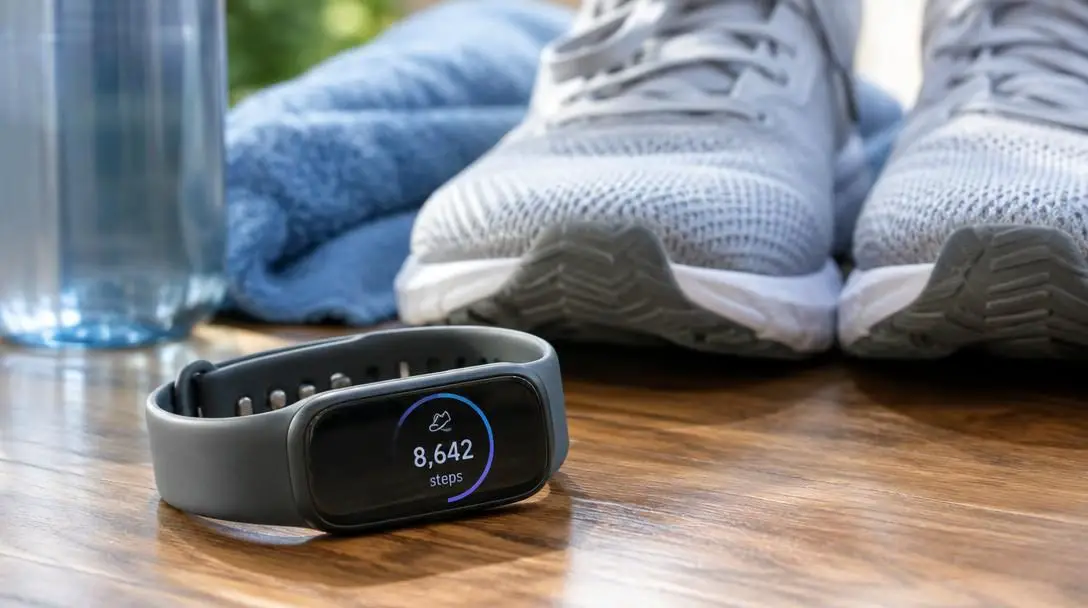
Alongside these physiological adaptations, step tracking capitalizes on basic behavioral psychology. Digital smartwatches and pedometers rely on internal accelerometers to quantify daily mechanical motion. This constant measurement provides immediate visual feedback, transforming vague health goals into concrete, actionable metrics. When people monitor their numbers in real time, incidental movements—such as taking the stairs or walking across an office complex—become deliberate achievements. Furthermore, automatic hourly reminders break up periods of continuous immobility before sedentary inertia takes hold.
Key Health Benefits of Reaching Daily Step Goals
Consistently reaching a daily step target creates systemic improvements that influence daily energy levels, physical body composition, and lifetime longevity.
Structured Time Management: Wearing an activity monitor encourages individuals to divide their workdays into productive, structured intervals. When a smartwatch issues an alert after an hour of immobility, it creates a natural boundary for a brief physical break. Pacing during phone calls or taking short walking breaks eases musculoskeletal stiffness, restores mental clarity during difficult work tasks, and encourages better nighttime sleep patterns.
Measurable Weight Loss Support: Consistently monitoring step totals introduces accountability that directly supports healthy weight loss. Research conducted by Harvard University established that individuals who track their daily steps lose up to six pounds more on average than those who do not monitor their daily movement. Wearing a pedometer or smartwatch keeps movement top of mind, which often inspires better choices around meal timing and nutritional quality.
Reduced Signs of Aging and Lower Mortality: Routine step accumulation serves as a powerful defense against biological aging. Epidemiological studies demonstrate that step requirements shift across the lifespan: individuals aged 60 and older achieve a dramatic drop in their premature mortality risk by reaching approximately 6,000 steps each day. For individuals younger than 60, logging 8,000 to 10,000 steps per day provides an equivalent defense against early mortality and degenerative health declines.
Breaking up prolonged periods of immobility with regular walking reactivates major muscle groups and counters the cardiovascular damage caused by desk-bound routines.
Cardiovascular Protection: Cardiovascular wellness forms the engine behind the anti-aging benefits of walking. Across more than a dozen major clinical studies, prolonged and unbroken sitting has been proven harmful to the heart and vascular system. Scientific evidence highlights two essential interventions: interrupting seated posture every 30 minutes, and logging roughly 60 to 70 minutes of brisk walking per day. This combination delivers the cardiovascular conditioning necessary to counteract hours spent sitting at an office desk or relaxing on the couch.
Daily Step Targets by Age and Objective
Identifying the ideal step count depends on individual age, baseline activity levels, and personal health targets. While the 10,000-step benchmark introduced by Yamasa remains a dependable general target, modern research shows that health benefits manifest along a graduated spectrum.
| Target Tier | Daily Step Range | Primary Audience | Primary Health Benefit |
|---|---|---|---|
| Sedentary Baseline | 3,000 to 4,000 | Inactive adults in modern office settings | Minimal baseline; carries elevated cardiovascular risks |
| Longevity Target for Older Adults | 6,000 | Adults aged 60 and older | Substantial reduction in premature mortality risk |
| General Health and Youth Target | 8,000 to 10,000 | Adults under 60 seeking overall wellness | Cardiovascular defense and reduced early mortality |
| Targeted Weight Loss | 12,000 to 15,000 | Individuals pursuing active fat loss | Heightened caloric expenditure and metabolic stimulation |
Sedentary Baseline (3,000 to 4,000 Steps)
This range represents the unassisted daily average for many adults working in desk-bound occupations. Logging fewer than 4,000 steps per day indicates prolonged sitting throughout the morning, afternoon, and evening. Remaining at this activity level leaves the cardiovascular system unchallenged, impairs metabolic clearing of glucose, and elevates long-term mortality risks.
Longevity Target for Older Adults (6,000 Steps)
For individuals aged 60 and above, clinical research demonstrates that optimal longevity gains do not require reaching 10,000 steps. Reaching approximately 6,000 steps per day produces a major reduction in the risk of premature death, protecting cardiovascular function while accommodating joint comfort and natural physical capacities.
General Health and Youth Target (8,000 to 10,000 Steps)
For adults younger than 60, achieving between 8,000 and 10,000 daily steps supplies the physiological stimulus needed to preserve heart health, sustain metabolic flexibility, and dramatically reduce the risk of early mortality. Reaching this bracket counteracts the modern seated work routine and establishes a strong cardiovascular baseline.

Targeted Weight Loss (12,000 to 15,000 Steps)
While maintaining 10,000 daily steps is sufficient for weight maintenance, individuals aiming to lose excess weight benefit from raising their daily target to between 12,000 and 15,000 steps. This higher volume elevates total daily caloric expenditure, creating an energy deficit that, when combined with healthy dietary patterns, supports steady fat reduction.
How to Build a Sustainable Daily Step Habit
Transitioning from an inactive lifestyle to a consistent movement habit requires incremental behavioral changes rather than sporadic bursts of excessive exercise. Integrating steps naturally into everyday routines ensures long-term consistency.
- Obtain a reliable tracking tool: Choose a dedicated pedometer or smartwatch equipped with an internal accelerometer and automated hourly activity alerts to measure your steps accurately.
- Determine your starting baseline: Wear your device for three to five consecutive days without altering your normal routine to see whether your starting point matches the typical 3,000 to 4,000 sedentary range.
- Establish hourly movement triggers: Comply with cardiovascular recommendations by breaking up seated posture every 30 minutes; stand up, stretch, and pace the room whenever your wearable signals an hour of inactivity.
- Dedicate time for brisk walking: Schedule 60 to 70 minutes of brisk walking spread throughout your day, such as a 20-minute morning session, a 20-minute lunch walk, and a 25-minute evening stroll.
- Modify commuting and errand habits: Reduce automotive inactivity by parking at the distant end of parking lots, taking pedestrian paths, and pacing along transit platforms while waiting.
- Combine steps with daily routines: Convert passive seated time into dynamic movement by pacing during phone conversations or listening to podcasts and audiobooks while walking.
- Align activity with nutritional habits: When pushing your daily output toward 12,000 to 15,000 steps for weight reduction, pair your physical movement with nutritious, balanced meals to support recovery and caloric balance.
Common Step-Tracking Mistakes to Avoid
Adopting a step goal is straightforward, but common misunderstandings can disrupt consistency and lead to burnout or injury.
- Jumping immediately to extreme targets: Attempting to leap directly from a 3,000-step baseline to 15,000 steps per day can trigger muscle strains and mental exhaustion. Progress gradually by adding 1,000 steps per day each week.
- Ignoring sitting breaks: Completing one brisk morning walk and then sitting motionless for eight straight hours at a desk undermines your results. Studies emphasize that breaking up sitting every 30 minutes is paramount for cardiovascular protection.
- Relying solely on steps for weight management: Although Harvard researchers proved that people who track steps lose up to six pounds more on average, physical activity cannot fully compensate for poor nutrition. Caloric balance and food quality remain critical.
- Disregarding walking pace: A relaxed stroll does not deliver the same cardiovascular adaptations as purposeful, brisk walking. Incorporate periods of brisk pacing to elevate your heart rate.
- Neglecting daily consistency: Accumulating 25,000 steps on Saturday and Sunday while sitting all week long fails to produce the continuous metabolic stimulation needed to counteract aging and improve sleep quality.
Frequently asked questions
Where did the original 10,000-step goal come from?
The 10,000-step benchmark originated as a promotional marketing campaign created by a Japanese company named Yamasa to sell an early wearable pedometer, rather than from formal clinical trials. However, modern scientific studies confirm that walking 8,000 to 10,000 steps daily provides legitimate cardiovascular and longevity benefits.
Do older adults really need 10,000 steps per day?
No. Research shows that adults aged 60 and older experience a dramatic drop in their premature mortality risk at approximately 6,000 steps per day. Aiming for 6,000 steps allows older individuals to achieve significant longevity benefits without placing excessive wear on their joints.
How much weight can step tracking help you lose?
According to research conducted by Harvard University, individuals who track their daily steps lose an average of up to six pounds more than non-trackers. Tracking promotes accountability, encourages active habits, and increases awareness of dietary choices.
How often should I interrupt seated desk work?
Major cardiovascular studies indicate that you should break up your seated posture every 30 minutes. Responding to wearable activity alerts after an hour of sitting and accumulating 60 to 70 minutes of brisk walking throughout the day helps counteract the negative vascular effects of desk jobs.
Can I lose weight just by walking without changing my diet?
While elevating your daily activity to 12,000 or 15,000 steps burns significant energy, physical activity alone cannot counteract an unmanaged diet. Sustainable fat loss requires pairing increased daily movement with deliberate, healthy nutritional choices.
The bottom line
Step tracking provides a practical, quantifiable solution to the health risks of modern sedentary routines. Whether your objective is lowering cardiovascular risk, maintaining a healthy body weight, or maximizing longevity, establishing a clear movement target creates necessary physical accountability. Younger adults thrive when aiming for 8,000 to 10,000 steps, older adults capture dramatic longevity gains near 6,000 steps, and those targeting fat loss can advance toward 12,000 to 15,000 steps alongside proper nutrition.
True success comes from consistency rather than extreme, occasional efforts. By wearing a dependable tracking tool, rising from your desk every 30 minutes, and dedicating 60 to 70 minutes to brisk walking each day, you can successfully counter the hazards of sitting and build a lifelong foundation of vitality.