How To Get Better At Scrabble – Without Needing To Cheat
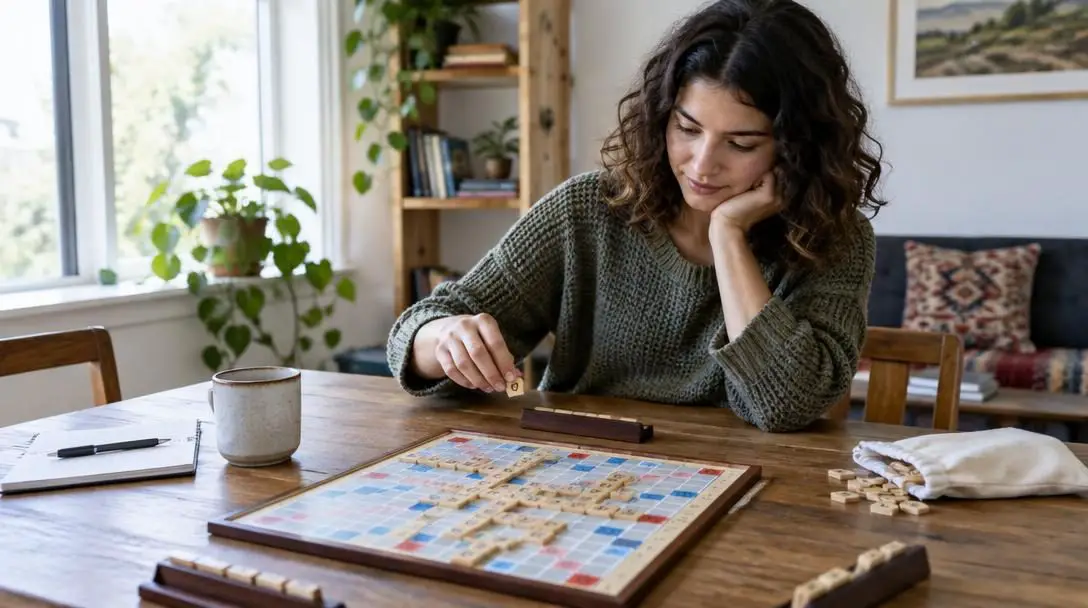
Scrabble has long been recognized as a classic board game that continues to withstand the test of time, evolving from kitchen table pastimes into a global competitive phenomenon. Thousands of dedicated clubs operate across more than 100 countries, uniting players of all ages who share a deep appreciation for linguistic skill, mathematical precision, and spatial tactics. The rise of digital platforms and mobile apps such as Scrabble GO—which reached more than 2.5 million daily players at its peak—has introduced this tile-based contest to a massive, modern audience playing across touchscreens and living room turntables alike.
With this surge in digital competition comes the temptation to rely on external word finders and anagram solvers hidden behind the curtain of online anonymity. However, true mastery of the board requires no shortcuts or illicit tools. Top competitive players demonstrate that by mastering core game mechanics, tile arithmetic, and spatial geometry, casual competitors can elevate their performance and raise their average scores by up to 50 points per game through legitimate play alone.
Key takeaways
- Memorizing the official list of over 100 two-letter words unlocks massive scoring potential through parallel cross-plays.
- Strategic rack management demands discarding heavy consonants early to avoid devastating endgame tile penalty deductions.
- Blank wildcard tiles should be safeguarded for high-leverage scoring bursts rather than squandered on low-value, routine plays.
- Defensive board management prevents opponents from accessing high-value bonus multipliers like Triple Word squares.
- Practicing against advanced computer AI exposes players to complex board navigation and unconventional words without social pressure.
The Hidden Architecture of Scrabble Mechanics
To improve consistently, a player must stop treating the board as a blank spelling tablet and recognize it as an economic and spatial matrix. Board geography dictates scoring efficiency. The grid contains strategically placed bonus cells: Double Letter, Triple Letter, Double Word, and Triple Word squares. The player who commands these spaces controls the tempo and point distribution of the entire match. Every letter dropped onto the board changes the accessibility of nearby multipliers, creating new tactical opportunities or handing sudden advantages to an adversary.
Parallel play represents the single most important mechanical concept separating novice spellers from seasoned tacticians. While beginners typically look to attach letters to the beginning or end of an existing entry, experienced competitors lay words alongside existing ones. Utilizing two-letter words allows a player to score in two directions simultaneously. When a played tile serves as part of both an across word and a down word, its face value—along with any square multipliers it occupies—is tallied twice.
Endgame tile accounting is another critical mechanic that frequently determines match outcomes. When the tile bag empties and one player plays their final remaining tile, the point values of all letters left on the opposing player's rack are totaled, deducted from that player's score, and added to the winner's tally. Holding heavy consonants when an opponent goes out transforms a comfortable lead into an abrupt, agonizing defeat.
Essential Strategies to Elevate Your Score
Reaching elite scoring tiers does not require memorizing the entire lexicon. Instead, competitive mastery relies on focused tactical habits, sharp positioning, and deliberate risk management across every move.
Study the Official Two-Letter Word List
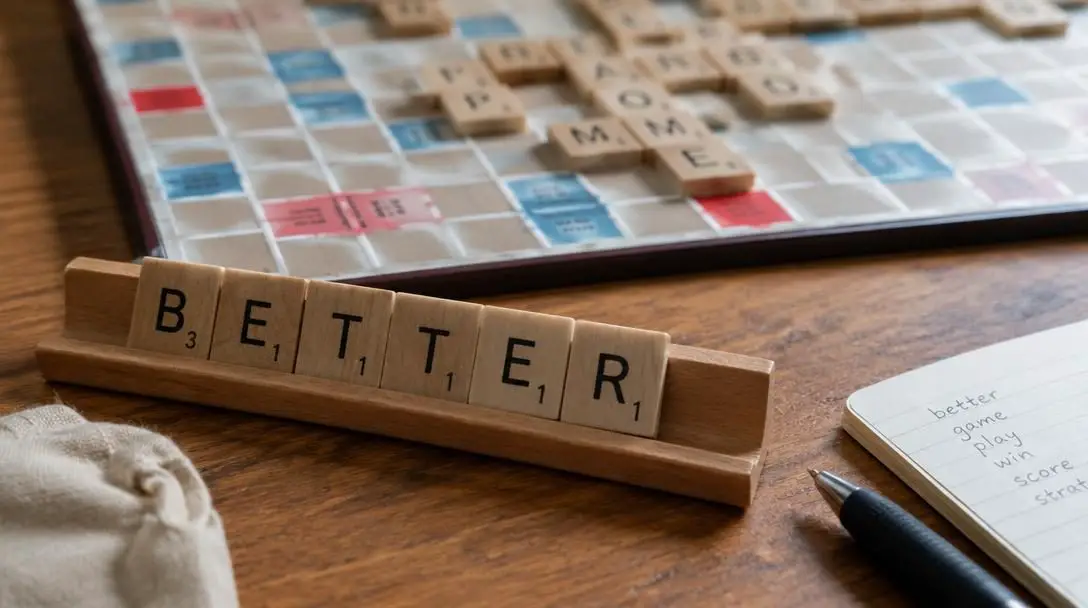
The foundation of serious Scrabble play rests on short words. The official Scrabble dictionary recognizes more than 100 two-letter words, and committing them to memory yields immediate dividends. These miniature lexical tools allow you to slip into tight, congested pockets of the board where longer words cannot fit. More importantly, two-letter words serve as the connective tissue for parallel plays, letting you create multiple cross-words in a single move while capturing multiplier squares that would otherwise sit out of reach.
Exploit High-Value Multiplier Squares
High-scoring consonants should never be played passively on standard beige tiles if a multiplier square is available. High-value tiles like the letter Z provide exceptional leverage when aligned with premium spaces. For example, dropping a Z onto a Triple Letter square positioned directly above an existing open vowel like an A generates 30 points from the Z alone, before factoring in the rest of the word. Designing plays that position these heavy tiles on intersection points creates immediate, game-defining point surges.
Play Defense to Deny Open Scoring Lanes
Offense generates headlines, but disciplined defense wins tight matches. Every turn requires calculating not just what you score, but what you concede to your opponent on their subsequent turn. If your move opens a direct path to a Triple Word score or leaves a vowel floating adjacent to a Triple Letter square, you risk granting your opponent an easy 40- or 50-point counterattack. Elite competitors actively block open lanes, cover vulnerable bonus zones, and starve their rivals of premium scoring real estate.
Diversify Your Competition Across Global Platforms
Playing exclusively against the same friends or family members creates strategic stagnation. When you routinely face the same opponents, you fall into predictable vocabulary patterns and shared tactical habits. Leveraging digital platforms to challenge anonymous opponents from around the globe exposes you to diverse playstyles, aggressive board openings, and unfamiliar vocabulary. Experiencing different offensive configurations accelerates your tactical evolution far faster than casual domestic play.
Practice Against High-Difficulty Computer Opponents
Advanced digital engines provide an ideal training ground for honing spatial awareness and vocabulary expansion. Playing against top-tier AI forces you to confront near-flawless rack management and precise positional defense. Computer opponents will frequently utilize obscure, highly specialized words—such as playing the interjection "Pfft"—demonstrating how short, vowel-free combinations can escape tight board pinches. Advanced AI offers an analytical, pressure-free arena where you can test theories, absorb tough losses, and refine your board vision.
Maintain Strategic Rack Balance and Protect Wildcards
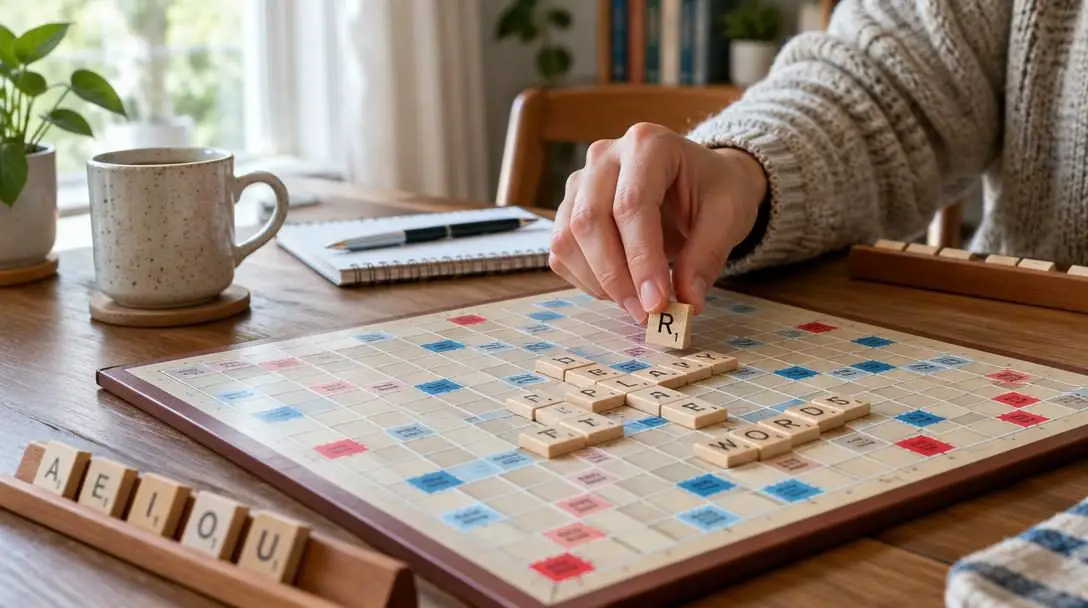
Managing the seven tiles behind your rack is just as critical as analyzing the grid. A balanced rack contains a healthy mix of vowels and flexible consonants, preventing you from becoming trapped with unplayable combinations. Unload duplicate letters and heavy consonants early in the match so they do not burden your late-game maneuvers. Conversely, treat blank tiles as prized assets. While worth zero points on their own, blank tiles serve as universal wildcards capable of completing high-scoring combinations or bridging difficult gaps to reach Triple Word bonuses.
True mastery of the board requires no shortcuts, because legitimate tactical positioning routinely outplays brute lexical memorization.
Evaluating Core Scrabble Assets
Every tile and bonus space on the board carries distinct tactical value. Recognizing the strategic role, scoring ceiling, and relative risk of each element enables you to deploy your resources with tournament-level efficiency.
| Game Element | Primary Strategic Role | Scoring Ceiling | Tactical Risk |
|---|---|---|---|
| Two-Letter Words | Parallel plays and tight board navigation | Moderate (accumulative) | Low |
| Premium Consonants (e.g., Z) | High-impact point spikes on letter multipliers | Extremely high | High if stranded on rack |
| Blank Wildcard Tiles | Universal connection to premium bonus lanes | High (strategic enabler) | Low on board; waste risk if rushed |
| Triple Word Multipliers | Game-altering offensive point surges | Massive | Severe if left open to counterplay |
Costly Tactical Mistakes That Drain Points
Intermediate players often hit a scoring ceiling not because their vocabulary is lacking, but because their unforced errors surrender dozens of points per match. Eliminating these habitual oversights is the fastest way to add 30 to 50 points to your scorecard.
- Hoarding heavy letters: Holding high-value consonants for multiple turns hoping to craft an elaborate play clogs your rack. If your opponent empties their rack unexpectedly, remaining tiles are deducted from your total, which can erase a lead and transform a 10-point advantage into a 20-point loss instantly.
- Wasting blank tiles prematurely: Spending a blank wildcard on a modest 15-point word simply to complete a turn squanders one of your greatest tactical weapons. Blanks should be reserved for high-stakes turns that access major multipliers or secure decisive endgame positions.
- Ignoring the defensive perimeter: Focusing solely on your own point yield while leaving lucrative multiplier lanes wide open invites immediate disaster. Leaving an open vowel directly adjacent to a Triple Word score gives your opponent an easy pathway to a match-winning score.
- Overlooking parallel board opportunities: Confining your vision to standard linear attachments limits scoring potential. Neglecting parallel placements deprives you of multiple simultaneous cross-words that double or triple tile values across dense board sectors.
- Restricting your circle of opponents: Playing only against familiar casual partners shields you from dynamic board strategies. Stepping outside your comfort zone online tests your adaptability against competitors who actively punish positional mistakes.
A Step-by-Step Match Analysis Routine
Developing an analytical post-game routine is the most reliable method for converting tough losses into lasting tactical skill. Top tournament competitors consistently evaluate their decisions after every contest.
- Review the final board layout to identify high-scoring parallel lanes that were missed during live play.
- Calculate the point differential of moves where you prioritized high-point words over defensive lane closure.
- Examine the timing of your blank tile deployments to assess whether they achieved maximum board leverage.
- Check your rack leave balance across turns to determine if excessive consonants or vowels hindered your scoring pace.
- Record any unfamiliar acceptable words played by opponents or high-difficulty AI for future reference and study.
Frequently asked questions
How many two-letter words are recognized in official Scrabble play?
There are over 100 acceptable two-letter words in the official Scrabble dictionary. Learning these words is essential for executing parallel plays and navigating congested board spaces.
Why are blank tiles considered so valuable if they carry zero points?
Blank tiles function as universal wildcards, granting maximum flexibility to bridge gaps, complete difficult long plays, and access high-value multiplier squares that would otherwise remain unreachable.
How does the endgame tile deduction penalty work?
When one player empties their rack and the tile bag is exhausted, the values of any unplayed tiles remaining on other players' racks are deducted from their scores and awarded to the player who went out.
How can playing against a computer AI improve my vocabulary?
High-difficulty AI opponents regularly deploy valid, unconventional words—such as "Pfft"—demonstrating how unusual letter combinations can be used effectively to score in tight positions.
Can learning fundamental board strategy really increase my score by 50 points?
Yes. Mastering parallel plays, exploiting multiplier intersections, balancing your tile rack, and denying scoring lanes to your opponent systematically increases scoring opportunities while preventing costly deductions.
The Bottom Line
Excelling at Scrabble is fundamentally a test of spatial geometry, resource control, and tactical discipline rather than sheer dictionary memorization or digital shortcuts. By mastering short two-letter words, actively seeking out multiplier intersections, safeguarding wildcard tiles, and maintaining defensive awareness, you take command of the board's underlying mechanics. Consistent practice against global players and high-level AI will steadily sharpen your instincts, providing the lasting satisfaction of legitimate, hard-earned victories.