How To Make Healthy Choices When Eating Out

Dining out serves as a cornerstone of modern social life, professional networking, milestone celebrations, and weekday convenience. Gathering around a shared table gives people an opportunity to unwind, experience creative culinary traditions, and take a well-deserved break from meal planning, grocery shopping, and dishwashing. Yet, entering a restaurant environment poses real challenges for anyone striving to maintain a balanced, nutrient-dense diet. In a home kitchen, you maintain complete oversight over the cooking oils, seasonings, and portion sizes that reach your plate. In contrast, commercial kitchens operate under an entirely different mandate: maximizing sensory pleasure, aroma, mouthfeel, and visual presentation.
To achieve those intense flavors, professional kitchens routinely enrich dishes with generous amounts of butter, finishing oils, refined sugars, and sodium. The dining atmosphere itself is subtly calibrated to lower inhibitions, using warm lighting, curated playlists, seductive aromas, and poetic menu descriptions that encourage indulgence. Compounding this, restaurant portion sizes have expanded significantly over recent decades, delivering single plates that hold enough food for two or three standard meals. Navigating this landscape does not require abandoning restaurant dining altogether; rather, it demands an understanding of how commercial food preparation works so you can order with intention, clarity, and ease.
Key takeaways
- Restaurant kitchens prioritize flavor and texture over nutritional restraint, frequently relying on butter, refined oils, sodium, and hidden sugars.
- Planning your meal ahead of time using online menus removes the pressure of hunger, peer choices, and sensory triggers.
- Anchoring orders around lean proteins, high-volume vegetables, and sauces requested on the side significantly cuts excess energy intake.
- Managing portion distortion early—such as boxing half your entrée immediately or splitting dishes—prevents unintentional overeating.
- Long-term dietary success comes from flexible consistency rather than an all-or-nothing mindset over a single restaurant outing.
The Hidden Mechanics of Restaurant Food Preparation
Understanding why restaurant meals differ so dramatically from home-cooked dishes requires examining the culinary techniques and physiological triggers at play in dining rooms. Commercial chefs rely on the trio of fat, salt, and sugar because these components carry flavor across the palate, soften textures, and create immediate customer satisfaction. A vegetable side dish that would be quickly steamed or dry-sautéed at home is frequently finished in a professional kitchen with several tablespoons of butter or tossed in a sweetened glaze reduction. Similarly, marinades, braising liquids, pan sauces, and house dressings often conceal concentrated oils and sweeteners that dramatically inflate caloric density without providing lasting satiety.
Commercial kitchens naturally prioritize aroma, texture, and taste over dietary restraint, relying on butter, salt, and sugar to elevate every course.
Beyond preparation methods, portion distortion plays an enormous role in how much food people consume when dining out. Human appetite regulation relies heavily on visual benchmarks rather than purely physiological fullness cues. When an oversized plate loaded with rich food is set on the table, the brain instinctively calibrates consumption to the visible boundary of the dish. Biological satiety signals are easily overridden, prompting diners to consume far more than their bodies actually require.
Beverages introduce a parallel physiological hurdle. Liquid energy derived from regular sodas, sweetened iced teas, craft cocktails, and specialty coffees bypasses the normal chewing process and fails to trigger digestive fullness hormones. As a result, diners can easily drink hundreds of calories before their first course arrives without registering any meaningful reduction in appetite.
Step-by-Step Strategies for Navigating Restaurant Menus
Adopting a structured routine turns menu navigation from an overwhelming guessing game into a predictable, empowering practice. Applying these sequential steps helps align your dining experience with your personal wellness targets across virtually any dining establishment.
- Review the establishment's digital menu in advance to decide on your entrée before sensory triggers take over.
- Identify a lean animal or plant-based protein source to serve as the structural anchor of your meal.
- Scan the menu for fibrous, high-volume vegetable sides prepared with minimal added fats.
- Request that all dressings, condiments, gravies, and rich sauces be served on the side.
- Establish a clear portion plan by requesting a takeout container early or arranging to share an entrée.
- Politely communicate simple ingredient swaps, such as requesting a garden salad instead of french fries.
- Select calorie-free hydration, such as water or unsweetened tea, to avoid unneeded liquid sugars.
1. Review the Menu Prior to Arrival
Taking advantage of online menus allows you to evaluate your food selections in a cool, rational frame of mind. When browsing at home or at the office, you are free from acute hunger pangs, social chatter, and the aromas of a bustling kitchen. Look specifically for preparation terms that indicate lighter cooking methods, including grilled, baked, roasted, or steamed. At the same time, make a conscious mental note to bypass items described as battered, pan-fried, tempura, crispy, or breaded, which carry substantial amounts of cooking oil.
2. Anchor the Meal With Lean or Plant-Based Protein
Centering your plate on high-quality protein creates sustained fullness and supports muscle maintenance while curbing overall saturated fat. Opt for poultry selections such as skinless chicken breast or turkey cutlets, or choose fresh fish and seafood over dense cuts of marbled beef, ribs, or standard burgers. If you prefer plant-based dining, seek out dishes built around beans, lentils, or tofu. Make sure these vegetarian sources are not obscured by thick layers of melted cheese, creamy dairy sauces, or deep-fried batters that neutralize their nutritional advantages.
3. Select High-Volume Vegetable Sides and Salads
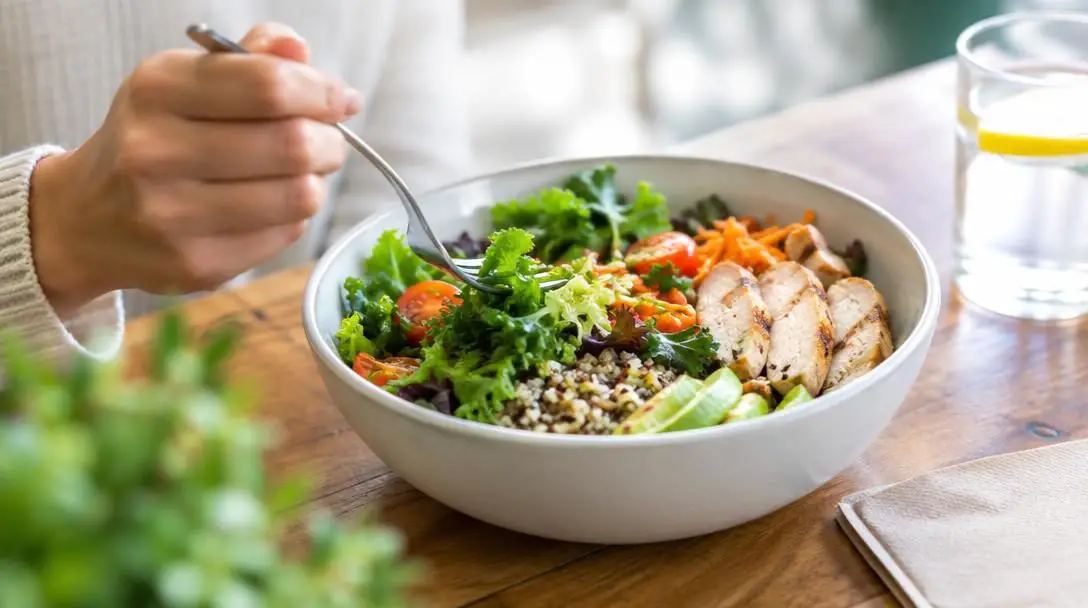
Vegetables supply vital micronutrients, dietary fiber, and satisfying plate volume with minimal energy density. Seek out sides such as roasted broccoli or grilled asparagus to expand your meal. If an entrée salad appeals to you, inspect the ingredient list with care. Prioritize dark leafy greens, cucumbers, tomatoes, radishes, and peppers, while keeping a watchful eye on high-calorie garnishes like candied nuts, fried noodles, bacon crumbles, and croutons. Ask for a clean oil-and-vinegar cruet, a light vinaigrette, or fresh lemon wedges instead of heavy cream-based dressings.
4. Establish Boundaries for Sauces and Dressings
Because culinary sauces are dense reservoirs of added fat and sugar, ordering them on the side gives you direct control over your meal. Rather than allowing kitchen staff to submerge your greens or protein under a heavy blanket of sauce, apply modest amounts yourself. The fork-dip technique—touching the tines of your fork into the dressing ramekin before picking up each bite—ensures full flavor distribution across the palate while leaving the vast majority of the sauce unused in the bowl.
5. Regulate Portion Sizes Before Taking the First Bite
Modern restaurant portions routinely equal two or even three standard servings. Taking control of the plate right when it lands at the table prevents mindless overeating. You can ask your server to bring an empty takeout box alongside your meal, immediately stowing half of the entrée away for tomorrow's lunch. Alternatively, partner with a dining companion to split an entrée, or assemble a complete meal out of a nutrient-rich vegetable starter and a lean protein appetizer.
6. Request Simple and Clear Ingredient Substitutions
Contemporary hospitality teams are well-versed in accommodating diner preferences. Keep your requests clear, concise, and manageable for the kitchen line. Excellent go-to swaps include trading deep-fried potatoes for steamed seasonal vegetables or a mixed green side salad, substituting refined white starches for whole grains, or asking that your fish or poultry be prepared dry without finishing butter. Straightforward requests are executed with higher consistency than complex culinary overhauls.
7. Prioritize Low-Calorie and Calorie-Free Beverages
Drink choices can silently undo an otherwise thoughtful dinner order. Establish still water, sparkling water, unsweetened iced tea, or black coffee as your primary table beverages. If you choose to drink alcohol, keep it to a single serving and select simpler choices, such as a glass of dry wine or a light beer. Elaborate mixed drinks, margaritas, and dessert cocktails pack substantial measures of simple syrups, fruit purees, and cordials that supply an immense surge of liquid sugar.
Strategic Ordering: Menu Swaps at a Glance
Making thoughtful choices does not require total deprivation. Often, simple substitutions allow you to enjoy the identical dining atmosphere and culinary satisfaction with significantly enhanced nutrition.
| Menu Category | Common Default Option | Nutrient-Dense Alternative | Primary Health Benefit |
|---|---|---|---|
| Cooking Method | Deep-fried, tempura, breaded | Grilled, steamed, roasted, baked | Reduces excess refined oil and saturated fat |
| Protein Choice | Marbled steak, bacon burger | Skinless chicken, fish, tofu, lentils | Delivers lean amino acids with lower saturated fat |
| Side Accompaniment | French fries, loaded potatoes | Steamed vegetables, garden side salad | Adds micronutrients and dietary fiber with low density |
| Sauce Distribution | Poured over entrée in kitchen | Served on the side; fork-dip method | Grants direct control over hidden fats and sugars |
| Table Beverage | Craft cocktail, sweetened iced tea | Sparkling water with lemon, unsweetened tea | Eliminates unneeded liquid sugars that bypass satiety |
Six Common Pitfalls Diners Encounter at Restaurants
Even seasoned health-conscious diners run into psychological and behavioral hurdles when dining away from home. Recognizing these traps in advance makes them simple to sidestep.
Arriving at the Table Overly Hungry
Starving yourself during the afternoon in anticipation of a big dinner almost always backfires. Severe hunger compromises cognitive impulse control, elevates ghrelin, and turns the arrival of the complimentary bread basket or tortilla chips into an irresistible trigger. Maintain regular, well-balanced meal timing earlier in the day so you sit down at the restaurant feeling composed and in control.
Falling Prey to the Health Halo
Assuming that a menu selection is inherently good for you simply because it includes the word salad, wrap, or vegetarian is a frequent mistake. A salad layered with breaded poultry strips, glazed pecans, bacon crumbles, shredded cheddar, and blue cheese dressing routinely delivers more energy, salt, and fat than a standard cheeseburger. Always evaluate the full list of ingredients rather than the overarching category label.
Overlooking Liquid Calories in Drinks
Liquid refreshments often fly under the personal radar. Sipping through multiple glasses of sweetened tea, fruit punch, or dessert-like blended coffees introduces concentrated energy directly into your system without creating the sensation of having eaten a real meal. Treat specialty beverages as intentional treats rather than mindless accompaniments to water.

Overcomplicating Custom Kitchen Requests
Attempting to rewrite a chef's intricate entrée creates friction for the kitchen staff, increases the likelihood of an incorrect order, and introduces unnecessary awkwardness into social gatherings. Focus on one or two simple, polite adjustments—such as omitting finishing butter or placing a dressing on the side—instead of demanding an entirely bespoke preparation.
Succumbing to the Clean Plate Habit
Many individuals carry an ingrained psychological urge to polish off every crumb on their plate, whether from childhood upbringing or a feeling of financial obligation. However, the financial transaction is already finished once the food arrives at your table; eating beyond the point of comfortable fullness does not retrieve that money. Prioritize your physical vitality and bodily comfort over an empty plate.
Adopting an All-or-Nothing Mindset
Labeling an entire week as ruined simply because you enjoyed an unplanned appetizer or a slice of warm sourdough bread triggers unproductive guilt. This binary view often fuels secondary overeating under the mistaken impression that the day's goals are completely lost. Sustainable health is established across thousands of routine meals, not destroyed by a single evening out.
Cultivating Long-Term Balance Across Global Cuisines
As you build confidence in dining out, take time to appreciate how various cultural culinary traditions approach wholesome cooking. Exploring international cuisines provides an enjoyable avenue for discovering fresh flavor combinations that naturally support personal wellness goals.
Many global culinary styles instinctively place nutrient-dense ingredients at center stage. Mediterranean dining, for example, emphasizes grilled seafood, fresh herbs, tomatoes, cucumbers, and cold-pressed olive oils. Traditional East and Southeast Asian cuisines frequently highlight steamed greens, lean broths, ginger, garlic, and lightly seared proteins. Latin culinary traditions offer delicious fiber-rich staples including black beans, pinto beans, fresh pico de gallo, and avocado. Conversely, certain styles rely heavily on deep-frying, thickened cream emulsions, and heavily refined starches. Learning to recognize the healthiest preparation traditions across different regional restaurants allows you to explore diverse food cultures without abandoning your health commitments.
Ultimately, true dietary balance means developing intuitive flexibility. It involves knowing when to lean on deliberate strategies—such as online menu previews, portion splitting, and dressing ramekins—and knowing when to savor a celebratory meal without internal friction. Approaching every meal out as an enjoyable learning opportunity ensures you can participate fully in social gatherings while supporting your long-term health and energy.
Frequently asked questions
How can I handle complimentary bread baskets or chips placed on the table?
The easiest strategy is to politely decline them when your server arrives, or immediately ask that the basket be removed from the table. If your dining partners wish to enjoy them, you can deliberately position the basket out of arm's reach or decide in advance to enjoy a single, mindful portion before setting your focus entirely on conversation and water.
Is it rude to ask for adjustments or substitutions at a restaurant?
Not at all, provided the requests are basic, polite, and reasonable. Asking for salad dressing on the side, requesting steamed broccoli instead of french fries, or asking that fish be broiled rather than pan-fried in extra butter are standard daily requests for kitchen teams. Avoid attempting to re-engineer an intricate signature entrée completely from scratch.
Are vegetarian or vegan menu selections always the healthiest choice?
No. Many plant-based selections rely on heavy deep-frying, battered meat substitutes, generous amounts of melted cheese, and sweetened sauces to build flavor and texture. A vegetarian wrap or pasta dish can easily contain more refined flour and saturated fat than a simple piece of grilled chicken or fish accompanied by vegetables. Inspect the specific preparation method and toppings.
What should I do if a restaurant does not publish its menu online?
If you cannot preview the menu in advance, fall back on reliable general principles once you sit down. Scan the list specifically for simple protein anchors that are grilled, roasted, or steamed. Ask your server how specific dishes are prepared, request that all rich sauces or gravies be served in separate ramekins, and swap out deep-fried starches for seasonal vegetable sides.
How can I manage social pressure from friends or colleagues to overindulge?
Place your order early in the sequence so you are not swayed by the indulgent selections of others at the table. Keep your focus directed on the social connection, dialogue, and shared atmosphere rather than making your dietary choices a topic of debate. A confident, casual approach prevents your healthy decisions from feeling restrictive to those around you.
The bottom line
Eating out does not have to be an obstacle to your health goals or an exercise in social deprivation. While commercial kitchens operate with an emphasis on rich fats, concentrated sugars, and generous portions, you have full authority over how you engage with the menu. By doing a brief preliminary review online, choosing lean proteins, filling your plate with nutrient-dense vegetable sides, and managing sauces and portions proactively, you can comfortably navigate any culinary setting.
Above all, remember that sustainable nutrition is built on long-term habits rather than rigid perfection at any individual meal. Treat restaurant meals as opportunities to practice mindful ordering, enjoy good company, and celebrate food culture without guilt. With simple preparation and clear boundaries, dining out can remain one of life's genuine pleasures while supporting your ongoing health, vitality, and well-being.