Ranking The 5 Michigan College Football Stadiums
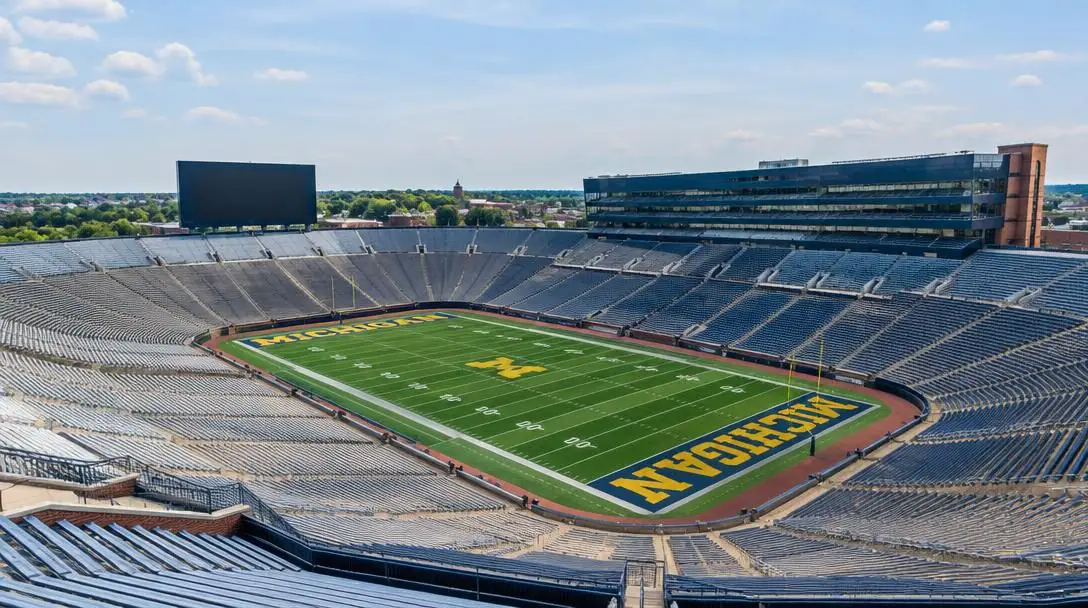
College football holds a central place in Michigan sports culture, sparking fierce debates among supporters across the state. Michigan is home to five universities competing in the Football Bowl Subdivision (FBS), each bound by geographic rivalries and proud athletic traditions. From modest Mid-American Conference (MAC) venues to colossal Big Ten showpieces, the facilities that host these Saturday contests vary dramatically in scale, architectural heritage, and game-day atmosphere.
Evaluating and ranking these five venues highlights stark differences in modern amenities, seating layouts, and historical significance. While personal allegiances often shape individual preferences, a comprehensive assessment of design, acoustics, and attendee experience reveals a distinct hierarchy among the state's premier football stadiums.
Key takeaways
- Michigan's five FBS college football stadiums range from regional 30,000-seat facilities to the largest collegiate venue in the nation.
- Central Michigan University's Kelly/Shorts Stadium ranks highest among the state's three Mid-American Conference programs following ongoing modern facility upgrades.
- Spartan Stadium and Michigan Stadium deliver massive home advantages fueled by steep grandstands, high capacities, and substantial Big Ten conference revenue.
- Distinct architectural features, such as running tracks around the turf or sunken-bowl profiles, strongly influence sightlines and crowd energy across each campus.
The five FBS stadiums in Michigan, ranked
Every FBS football stadium in Michigan brings a distinct character to Saturday afternoons, reflecting its school's conference affiliations and capital investments. Here is how the state's five FBS stadiums compare from fifth to first.
5. Rynearson Stadium
- University: Eastern Michigan University
- Location: Ypsilanti, Michigan
- Opened: September 1969
- Seating capacity: Over 30,000
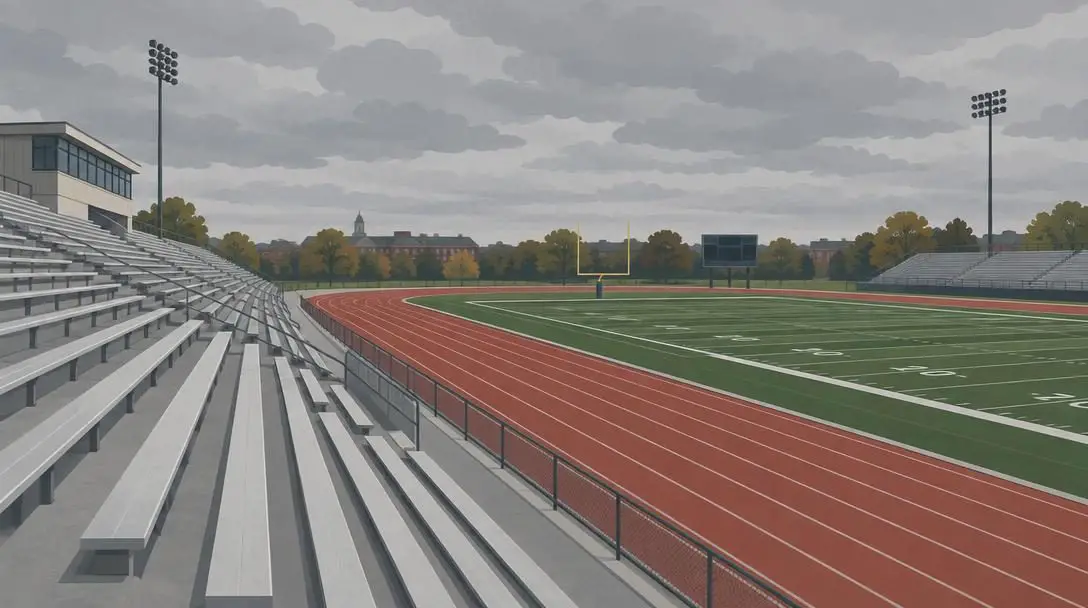
Positioned on the northern edge of Eastern Michigan University's campus in Ypsilanti, Rynearson Stadium sits at the bottom of the state ranking. Although the facility has undergone two distinct expansions since its debut in September 1969, it consistently trails behind rival venues across the region in terms of updated fan amenities and architectural appeal.
One of the primary complaints from spectators is the regulation running track separating the grandstands from the playing turf. This physical buffer pushes attendees back from the sidelines, significantly softening the acoustic impact of the crowd and diminishing game-day energy. Despite offering a capacity of over 30,000 spectators, the venue has struggled with turnstile draw, having yet to exceed 87 percent capacity for any single contest. A major facelift and modernized concourse footprint remain necessary steps to bring the venue up to modern FBS standards.
4. Waldo Stadium

- University: Western Michigan University
- Location: Kalamazoo, Michigan
- Opened: 1939
- Current capacity: 30,200
Representing a noticeable upgrade over Rynearson Stadium, Waldo Stadium in Kalamazoo serves as the long-standing home of the Western Michigan Broncos. Built for an initial investment that totals just over $4 million when adjusted for inflation, Waldo Stadium first welcomed spectators in 1939 with a modest baseline of 15,000 seats. Continuous development over the decades has pushed that official threshold to 30,200.
The facility has proven capable of hosting energetic, over-capacity crowds for marquee non-conference and rivalry games. A prominent example occurred during a 2000 showdown against Indiana State, when attendance surged past 36,000 fans. However, the venue suffers from a notable geographic vulnerability: Waldo Stadium sits at the lowest elevation point in the entire city of Kalamazoo. As a result, sudden downpours and sustained regional precipitation can cause water runoff to accumulate quickly, creating serious flooding hazards in and around the facility.
3. Kelly/Shorts Stadium
- University: Central Michigan University
- Location: Mount Pleasant, Michigan
- Opened: 1972
- Current capacity: Over 30,000
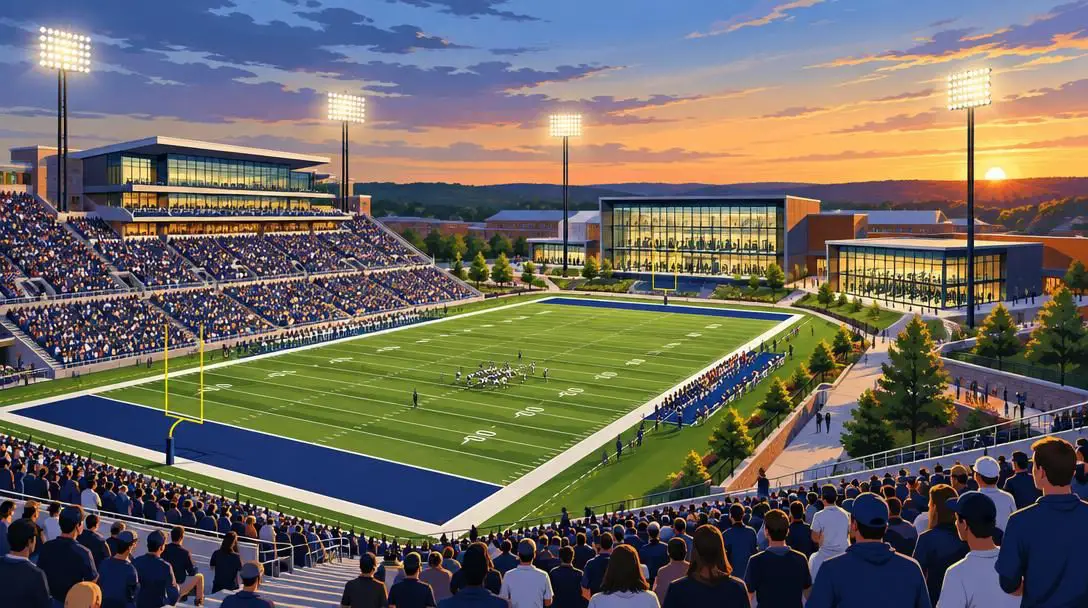
Holding the top spot among Michigan's three MAC venues, Kelly/Shorts Stadium in Mount Pleasant has climbed the ranks thanks to persistent reinvestment. Originally opening its turnstiles in 1972 with 20,000 seats, the venue has expanded its capacity to accommodate over 30,000 Chippewa supporters. It proved its ceiling in 2012 by setting a stadium attendance record of 35,127 during a visit from Michigan State.
The trajectory of Kelly/Shorts Stadium altered noticeably during and immediately following the head coaching tenure of Brian Kelly. Thoughtful capital improvements transformed the facility into an attractive, functional venue. Key enhancements include permanent lighting arrays that facilitate nationally broadcast evening kickoffs, alongside dedicated athletic and training facilities built directly into the end zones. These additions create a unified, professional environment that separates Central Michigan from its regional conference peers.
2. Spartan Stadium
- University: Michigan State University
- Location: East Lansing, Michigan
- Opened: 1923 (as College Field)
- Current capacity: Over 80,400
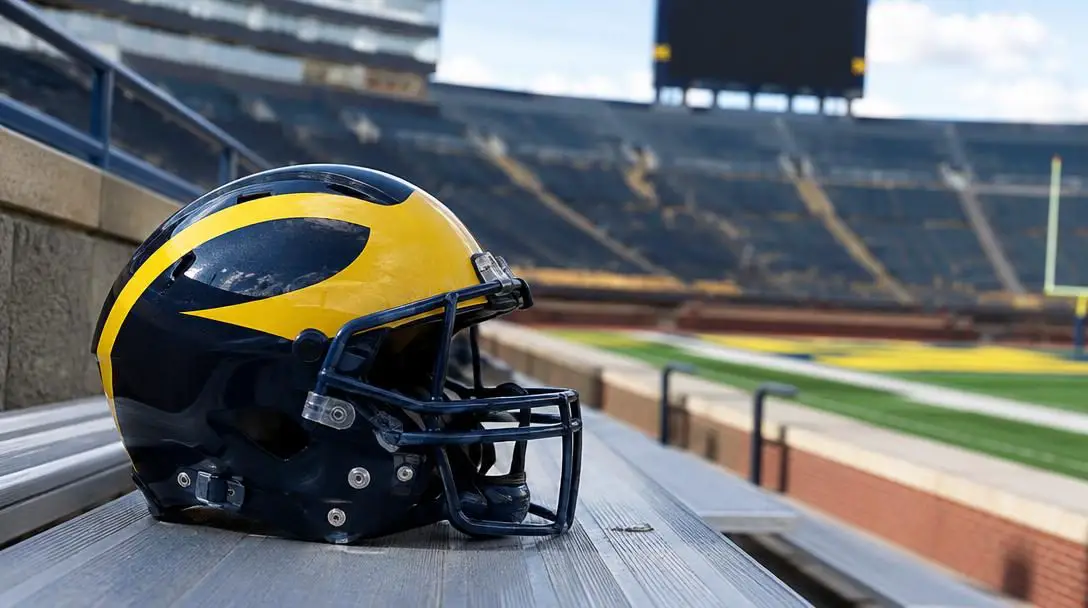
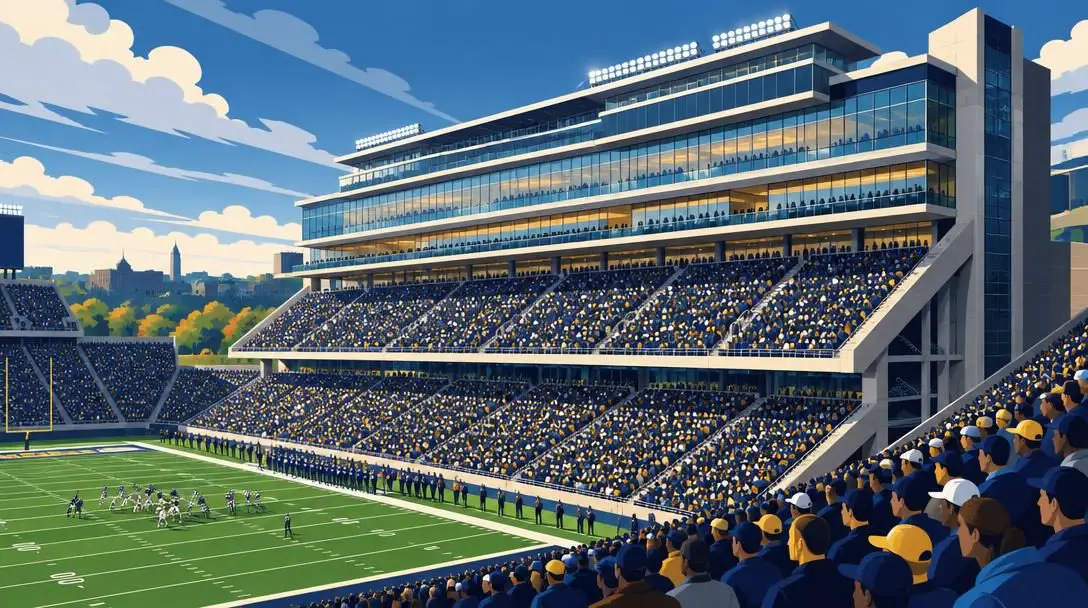
Stepping into the upper tier of national collegiate venues, Spartan Stadium in East Lansing stands as a traditional Big Ten powerhouse. Originally christened as College Field upon its 1923 opening, the venue has evolved across a century of competition into a high-capacity fortress that now seats over 80,400 fans. The stadium's tightly packed seating banks keep spectators close to the turf, generating a booming acoustic environment that gives the home team a clear tactical edge.
The modern era has brought substantial structural modernization to the East Lansing icon. Two major renovation and expansion initiatives completed since 2005 introduced expansive luxury suites, upgraded media centers, and cutting-edge press boxes. Backed by steady, expanding media distributions from the Big Ten Conference, Spartan Stadium continues to update its game-day infrastructure, cementing its reputation as one of the most hostile road environments in collegiate football.
1. Michigan Stadium
- University: University of Michigan
- Location: Ann Arbor, Michigan
- Opened: 1927
- Current capacity: 107,601
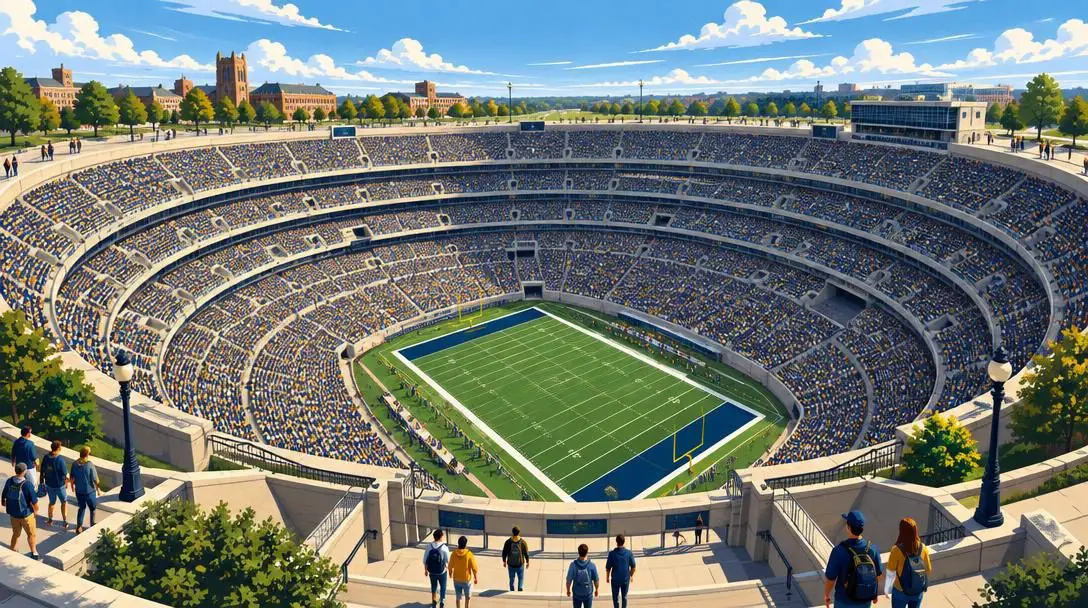
Securing the undisputed top position in the state, Michigan Stadium—affectionately nicknamed "The Big House"—commands international recognition for its historic grandeur and monumental scale. Designed and built in 1927 with an initial footprint of 72,000 seats, ongoing expansions have steadily lifted its official maximum capacity to 107,601, making it the largest collegiate stadium in the United States.
The stadium routinely shatters its official baseline during marquee matchups. In 2013, a historic clash against Notre Dame drew a staggering record gathering of over 115,100 spectators. Architecturally, Michigan Stadium is famous for its subterranean, sunken-bowl design. Because a substantial portion of the grandstand is recessed into the earth, the facility presents an unassuming exterior profile at street level. Once guests navigate through the outer gates, the interior opens up like a self-contained city. Notably, the venue was engineered from its inception with the structural capability to expand outward to 150,000 seats should future demand require it.
The stadium is built into the ground and is unassuming for fans from the outside, and feels like its own large city when you have passed through the gates.
Michigan FBS venues at a glance
Comparing the primary characteristics of each venue illustrates how conference alignments, historical expansions, and baseline investments separate Michigan's collegiate football stadiums.
| Stadium | University | Conference | Year Opened | Listed Capacity | Record Attendance |
|---|---|---|---|---|---|
| Michigan Stadium | Michigan | Big Ten | 1927 | 107,601 | 115,100 (2013) |
| Spartan Stadium | Michigan State | Big Ten | 1923 | Over 80,400 | 80,400+ |
| Kelly/Shorts Stadium | Central Michigan | MAC | 1972 | Over 30,000 | 35,127 (2012) |
| Waldo Stadium | Western Michigan | MAC | 1939 | 30,200 | Over 36,000 (2000) |
| Rynearson Stadium | Eastern Michigan | MAC | 1969 | Over 30,000 | Under 88% capacity |
Architectural evolution and design mechanics
The stark functional contrasts across Michigan's college football stadiums stem directly from twentieth-century engineering strategies and diverging athletic budgets. Understanding how physical layouts influence the attendee experience helps clarify why certain venues thrive while others struggle with atmosphere.
Stadium sightlines and noise retention depend heavily on whether a track separates spectators from the field. At Rynearson Stadium, the broad running perimeter pushes the front row dozens of feet away from the action. This separation dampens collective crowd reactions, as acoustic energy disperses upward into open air rather than deflecting back onto the turf. Conversely, venues such as Spartan Stadium feature upright, compact grandstands. These steep rows angle spectators right along the perimeter lines, reflecting noise downward and amplifying every roar.
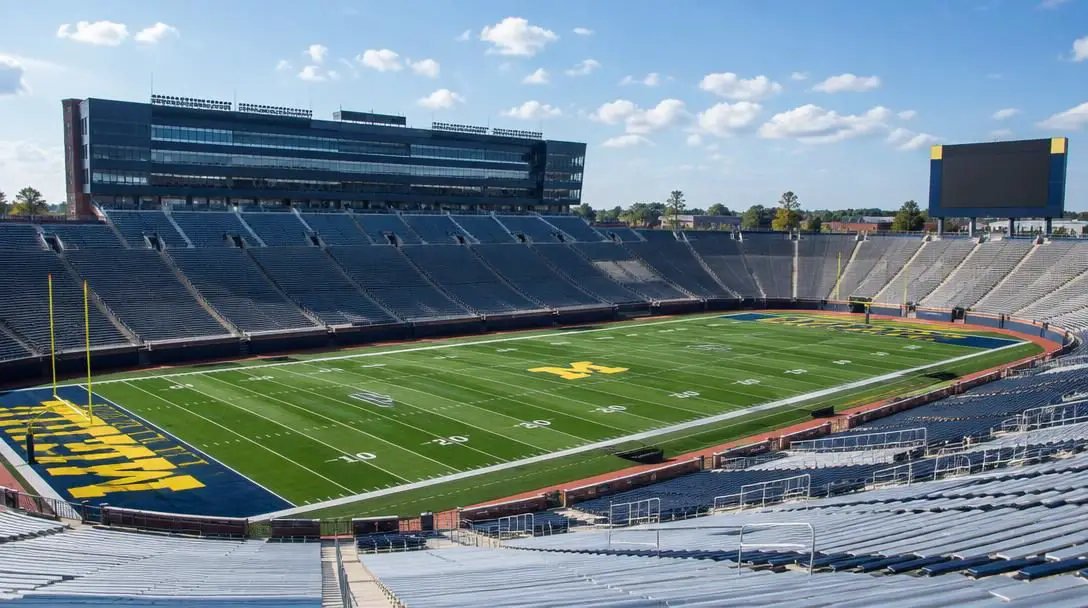
Engineering beneath ground level creates a completely different dynamic at Michigan Stadium. By excavating the playing surface and lower seating tiers into the ground, architects minimized wind turbulence while establishing an exceptionally stable foundation for continuous, tiered expansions. This subterranean design allowed the venue to grow seamlessly from 72,000 seats in 1927 to its current six-figure total, while retaining the foundational capacity to theoretically scale to 150,000 seats.
Step-by-step game-day planning for Michigan stadiums
Attending a game at any of these five campuses involves dealing with differing crowd volumes, campus geographies, and weather constraints. Spectators can follow these organized steps to optimize their game-day experience:
- Check venue capacity and attendance trends: Evaluate historical ticket sales before departing. Large-scale venues like Spartan Stadium and Michigan Stadium host massive crowds that require early arrival, whereas smaller venues like Rynearson Stadium offer simpler access and less concourse congestion.
- Assess regional weather and venue topography: Review localized forecasts carefully, particularly when traveling to Waldo Stadium. Because Western Michigan's venue occupies the lowest elevation point in Kalamazoo, intense rain can create immediate standing water on pedestrian routes.
- Allocate extended arrival windows for subterranean gates: Budget ample time when entering Michigan Stadium. Navigating the concourses and locating specific portal numbers within a venue hosting over 100,000 people takes significantly longer than entering typical outdoor grandstands.
- Map designated campus access routes: Match your route to the stadium's precise campus location. Eastern Michigan's Rynearson Stadium sits along the northern perimeter of the Ypsilanti campus, whereas Michigan State's Spartan Stadium sits near the core of East Lansing, necessitating structured pedestrian planning.
- Confirm kickoff time and lighting configurations: Verify whether the venue utilizes modern lighting fixtures. Modern lighting at facilities like Kelly/Shorts Stadium allows for evening kickoffs, fundamentally altering tailgating hours and departure logistics compared to early afternoon games.
Mistakes to avoid when visiting Michigan venues
Navigating collegiate athletic facilities across the state presents logistical hurdles that can disrupt a Saturday trip. Visitors frequently encounter several preventable pitfalls:
- Misjudging internal concourse distances at The Big House: Because Michigan Stadium maintains a modest, low-slung visual profile from the street, first-time visitors frequently assume the interior is compact, only to find themselves running late to their seats while navigating through massive concourses.
- Ignoring low-elevation flood risks in Kalamazoo: Spectators at Waldo Stadium often fail to check surface conditions following severe rain, encountering saturated pathways and flooded low points caused by the stadium's position at the lowest elevation in Kalamazoo.
- Assuming sellout atmospheres across every campus: Expecting packed grandstands at every venue can lead to surprise. While Central Michigan, Michigan State, and Michigan regularly pack their seats, Rynearson Stadium has never surpassed 87 percent capacity for a contest.
- Underestimating rivalry traffic spikes: High-profile games—such as Central Michigan hosting Michigan State in front of 35,127 fans in 2012, or Michigan welcoming 115,100 attendees against Notre Dame in 2013—cause extreme highway delays and long ticket lines that require hours of extra preparation.
Future investments and venue outlook
The coming years will bring distinct financial and physical challenges to Michigan's college football venues. Reinvestment strategies will depend heavily on the financial health of their respective athletic conferences.
For Big Ten venues, expanding conference revenues will continue to fund state-of-the-art facility overhauls. Spartan Stadium has already demonstrated the power of continuous reinvestment, completing major upgrades since 2005 to refine luxury suites and media complexes. Michigan Stadium continues to anchor its operational standing through meticulous maintenance of its vast infrastructure, holding open the historic possibility of pushing capacity closer to its original 150,000-seat design limit.
For the Mid-American Conference facilities, strategic, targeted investments remain the key to staying competitive. Central Michigan's work on Kelly/Shorts Stadium shows that modern end-zone facilities and field lighting can elevate a regional venue to the top of its conference tier. Conversely, Eastern Michigan's future standing hinges on whether the university chooses to overhaul Rynearson Stadium, where removing or reconfiguring the perimeter track could bridge the atmospheric gap with its in-state rivals.
Frequently asked questions
Which college football stadium is the largest in Michigan?
Michigan Stadium, home to the University of Michigan in Ann Arbor, is the largest stadium in the state and the entire country, boasting an official seating capacity of 107,601.
Why does Waldo Stadium experience frequent flooding issues?
Waldo Stadium sits at the lowest elevation point in the city of Kalamazoo, which causes heavy rain and surrounding surface water to collect near the facility during severe storms.
Which MAC football stadium ranks highest in the state of Michigan?
Kelly/Shorts Stadium at Central Michigan University ranks as the premier MAC venue in the state, buoyed by major upgrades such as permanent lighting arrays and dedicated end-zone facilities.
What is the single-game attendance record at Michigan Stadium?
The venue's record attendance was established in 2013 during a home game against Notre Dame, when 115,100 spectators packed into the Ann Arbor facility.
What design factor hurts the game-day atmosphere at Rynearson Stadium?
A standard running track completely encircles the football field at Rynearson Stadium, pushing the grandstands away from the sidelines and dampening crowd noise.
The bottom line
The hierarchy of Michigan's five FBS stadiums reflects the distinct architectural eras, economic resources, and fan expectations of each athletic department. Michigan Stadium stands alone as a global sports cathedral, blending subterranean engineering with unmatched seating volume, while Spartan Stadium delivers an electric, high-density Big Ten environment supported by recent multi-million-dollar modernization projects.
Among the state's mid-major programs, Kelly/Shorts Stadium illustrates how targeted investments can elevate a 1970s venue into a polished, modern facility. While Waldo Stadium maintains strong historical charm despite localized flooding concerns, Rynearson Stadium remains in clear need of a facelift to close the gap with its peers. As conference revenues continue to reshape collegiate athletics, these five stadiums will remain the vibrant, contested battlegrounds for Michigan's deep-rooted football rivalries.